

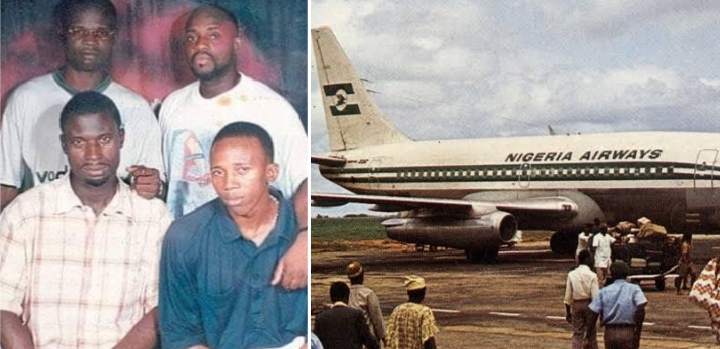
The morning of October 25, 1993, began like any other in Nigeria’s fragile new capital—routine flights lifting off, passengers boarding with little more on their minds than work, family, and the bustle of a week ahead. But as Flight 470 cut through the skies toward Abuja, an ordinary journey was about to rupture into extraordinary history.
Hidden among clerks, students, and traders on board were four teenagers carrying nothing more lethal than toy guns, cans of gasoline, and an idea burning hotter than any weapon: to confront the military regime that had silenced the people’s democratic choice just months earlier.
What unfolded stunned a nation still reeling from the annulled June 12 election, placed Abuja at the center of a tense standoff that revealed both the daring of youth and the fragility of power.
The Hijackers: Youth, Conviction, and Rebellion

The four young Nigerians—Richard Ogunderu, Kabir Adenuga, Benneth Oluwadaisi, and Kenny Rasaq-Lawal—were unlikely revolutionaries. Barely out of their teens, they were united by anger over what they saw as the theft of Nigeria’s democratic future. June 12, 1993, was meant to be a historic day: Moshood Abiola, widely regarded as the rightful winner of Nigeria’s presidential election, had been denied office by the military regime.
This annulment ignited frustration and despair, especially among the youth who believed in change.
Richard Ogunderu was the spokesperson and strategist. Kabir Adenuga brought eloquence and clarity to the group’s messages. Benneth Oluwadaisi was the most impassioned, often pushing the group toward action. And Kenny Rasaq-Lawal was the youngest, yet his resolve matched the oldest of them.
Together, they devised a plan: hijack a plane bound for Abuja and use it as a platform to demand the reinstatement of Abiola and the resignation of the interim government.
Their tools were rudimentary—toy guns and gasoline—but their conviction was formidable. They did not seek ransom; they sought attention for a cause that official channels had ignored. Every passenger, every crew member, and the city awaiting the flight’s landing became part of their message.
The Flight to Abuja: Suspense in the Skies
As Flight 470 ascended from Lagos, the aircraft hummed with the ordinary sounds of travel: conversations, overhead announcements, the occasional laughter of children. Then, almost imperceptibly at first, the hijackers made their move. A voice rose from the rear cabin: “Ladies and gentlemen, this plane has been taken over by the Movement for the Advancement of Democracy in Nigeria.”
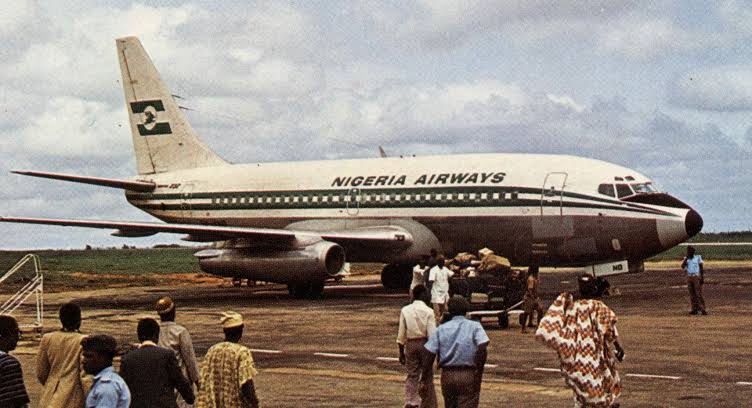
Panic rippled through the cabin. Some passengers froze, eyes wide with disbelief. Others whispered prayers under their breath. Crew members, trained for emergencies but never this, tried to calm the situation. The teenagers brandished their toy guns and issued instructions, their voices trembling with adrenaline but resolute in purpose.
The intended landing at Abuja Airport now hung in the balance. Would the flight be diverted? Would the passengers survive the ordeal? Below, the city of Abuja carried on unaware, yet the shadow of the event was already stretching toward its airport, its government offices, and its anxious citizens waiting to hear news.
Negotiations began mid-air. The hijackers demanded the reinstatement of Abiola and the resignation of the interim government led by Ernest Shonekan. International attention grew as the plane was forced to divert to Niamey, Niger, for refueling.
Three Days of Tension: Niamey and Abuja on Edge
The diversion to Niamey Airport in Niger transformed an ordinary flight into a three-day suspenseful ordeal. For the passengers, what began as an anxious anticipation of landing in Abuja turned into terror, uncertainty, and a fragile hope that somehow, they would survive. The airport in Niamey became a temporary stage for a drama that would ripple across Nigeria and the international community.
Inside the plane, fear was palpable. Families clutched each other, children cried quietly, and conversations were swallowed by the hum of the aircraft. The hijackers, teenagers driven by political idealism, tried to maintain control with a mix of threats and reasoned explanations. “We are not here to hurt anyone,” they declared, “we are here to demand justice for Nigeria.” Yet their inexperience, coupled with the gravity of the situation, only heightened anxiety among the passengers.
Back in Abuja, news of the hijack spread quickly. Airport authorities, security forces, and government officials monitored the situation with bated breath. Though physically distant from Niamey, Abuja Airport was the intended landing point, the symbolic center of the nation, and the hub of Nigeria’s political elite. The city’s collective pulse quickened with every radio update and news bulletin. For the citizens watching from their homes or offices, it was a grim reminder of the political tensions that had gripped the nation since June 12.
During negotiations, Nigerian officials, caught between diplomatic protocol and the urgent need to protect lives, engaged in a delicate balancing act. Every decision had potential consequences—not just for the passengers, but for Abuja, the capital, and the fragile image of the nation abroad.
As the hours stretched into days, passengers began to share their fears and fleeting acts of courage. Flight attendants calmed children with whispered reassurances, elderly passengers offered prayers to steady themselves, and some travelers attempted quiet negotiations with the hijackers, appealing to their youth and idealism. Despite the danger, moments of humanity emerged—gestures of kindness that highlighted the resilience of ordinary Nigerians amidst extraordinary circumstances.
The Raid: Resolution and Sacrifice
The standoff finally ended with a military operation led by Nigerien forces. As dawn broke over Niamey, armed personnel surrounded the aircraft. Inside, tension was suffocating. The hijackers knew that the authorities were prepared to storm the plane. In a matter of minutes, the raid unfolded—a mix of chaos, adrenaline, and decisive action.
One crew member, Ethel Igwe, tragically lost her life in the operation, becoming an unexpected symbol of the human cost of political idealism.

Richard Ogunderu and the other young rebels were arrested, ending their three-day gamble but leaving an indelible mark on Nigeria’s consciousness. The remaining passengers, though shaken, were finally allowed to resume their journey to Abuja Airport—a city that had anxiously awaited their return and now bore witness to a dramatic chapter in its history.
Abuja Airport, the intended landing site, was indirectly transformed by the event. Its corridors, though physically untouched, became a symbol of tension, political struggle, and the fragile bridge between the government and its citizens. In the days that followed, the airport became a hub of discussions about security, political legitimacy, and the reach of youth activism in shaping national discourse.
Returning to Abuja: Fear, Relief, and Reflection
When Flight 470 finally approached Abuja Airport, the city below seemed unchanged—the same streets, the same government buildings—but for the passengers and crew, nothing felt ordinary anymore. Relief washed over them as the runway lights drew closer, each engine roar a heartbeat signaling survival. Families clutched each other tightly, and some passengers silently gave thanks for life itself.
Inside the cabin, conversations were hushed but filled with a new understanding. Strangers had become witnesses to courage, both their own and that of the hijackers, who, despite their radical methods, had sought a cause larger than themselves. Passengers recalled moments of unexpected humanity during the ordeal: a teenage hijacker offering reassurance to a frightened child, a fellow traveler sharing water with an elderly passenger, and crew members holding the plane together with calm professionalism. These human moments contrasted sharply with the political tensions that had ignited the hijacking in the first place.
Abuja Airport, once just a stop on a routine domestic flight, had now become a symbol—a threshold between fear and safety, chaos and order, despair and hope. The airport staff, who had anxiously monitored the flight from the control tower, witnessed firsthand the fragility of life and the unexpected ways politics could touch the ordinary citizen. Security protocols were strengthened, training intensified, and the airport, though physically unchanged, carried a newfound sense of gravity and purpose.
Aftermath: Nigeria’s Political Landscape Shifts
The hijacking, while largely forgotten by many today, had immediate political repercussions. Shortly after the incident, General Sani Abacha seized power, dissolving the interim government. While the hijackers’ demands were not fully realized, their audacity underscored the depth of public frustration and the lengths to which young Nigerians would go to demand democracy.
For Abuja, the incident was a stark lesson in the importance of security and vigilance at the nation’s central hub. Airport protocols were reviewed, emergency response strategies were revised, and officials recognized that political unrest could manifest in unexpected and dangerous ways—even in the skies above their city.
The hijackers themselves spent years in Nigerien prisons, reflecting the harsh consequences of their daring actions. Yet, their story resurfaced decades later in popular media, reminding Nigerians and the world of a moment when four teenagers dared to challenge a nation from the cabin of a commercial airliner.
Legacy of the Hijack: Forgotten Yet Resonant
The hijacking of Flight 470 remains a largely forgotten chapter in Nigeria’s history, yet its resonance persists.
The young nigeriand—Ogunderu, Adenuga, Oluwadaisi, and Rasaq-Lawal imprisoned for years, their audacity overshadowed by the nation’s turbulent political climate. Abacha’s rise to power shortly after the incident meant their calls for justice went unanswered in the immediate term.
Yet, the event highlighted key truths about Nigeria:
- The power of youth activism, even when it takes extreme forms.
- The limits and responsibilities of governance, particularly in times of political uncertainty.
- Abuja Airport as a stage for history, not just logistics, where ordinary infrastructure intersects with extraordinary events.
Decades later, the story was brought to a wider audience through media portrayals and documentaries. Films like Hijack ’93 reignited interest in the event, prompting reflection on how far ordinary citizens—and even teenagers—would go for the ideals of democracy.

Historians, journalists, and political analysts now reference the hijack as an early, dramatic expression of popular dissatisfaction in Nigeria’s turbulent 1990s.
Abuja Airport’s Role in Memory and History
For Abuja, the airport became more than a terminal; it became a symbol of vigilance and civic awareness. Security measures, emergency response planning, and political awareness were forever altered. Pilots, staff, and government officials would carry the memory of Flight 470 as a cautionary tale: even routine operations can intersect with politics, youth rebellion, and historical moments.
The city itself, rising as Nigeria’s political heart, learned to integrate such lessons into its identity. Abuja Airport’s role in the hijacking cemented its place not merely as infrastructure but as a witness to Nigeria’s ongoing struggle for democracy—a stage where ordinary people, government officials, and young revolutionaries intersected under extraordinary circumstances.
Lessons Beyond the Runway
The Abuja Airport hijack attempt was more than a dramatic incident; it was a mirror reflecting Nigeria’s political fragility, the urgency of justice, and the potential of youth to demand change. In the echo of engines, the terror of confined cabins, and the anxious anticipation at Abuja Airport, one finds a microcosm of a nation grappling with lost democracy.
Though largely forgotten, the story reminds Nigerians—and the world—of the courage and recklessness that define moments of historical significance. Abuja Airport, once a backdrop to everyday travel, became an unwitting witness to heroism, fear, and political aspiration.
And while the hijackers’ methods remain controversial, their message—a plea for recognition, fairness, and democracy—lingers in the collective memory, silently urging the nation to remember the past even as it moves forward.
Discussion about this post