

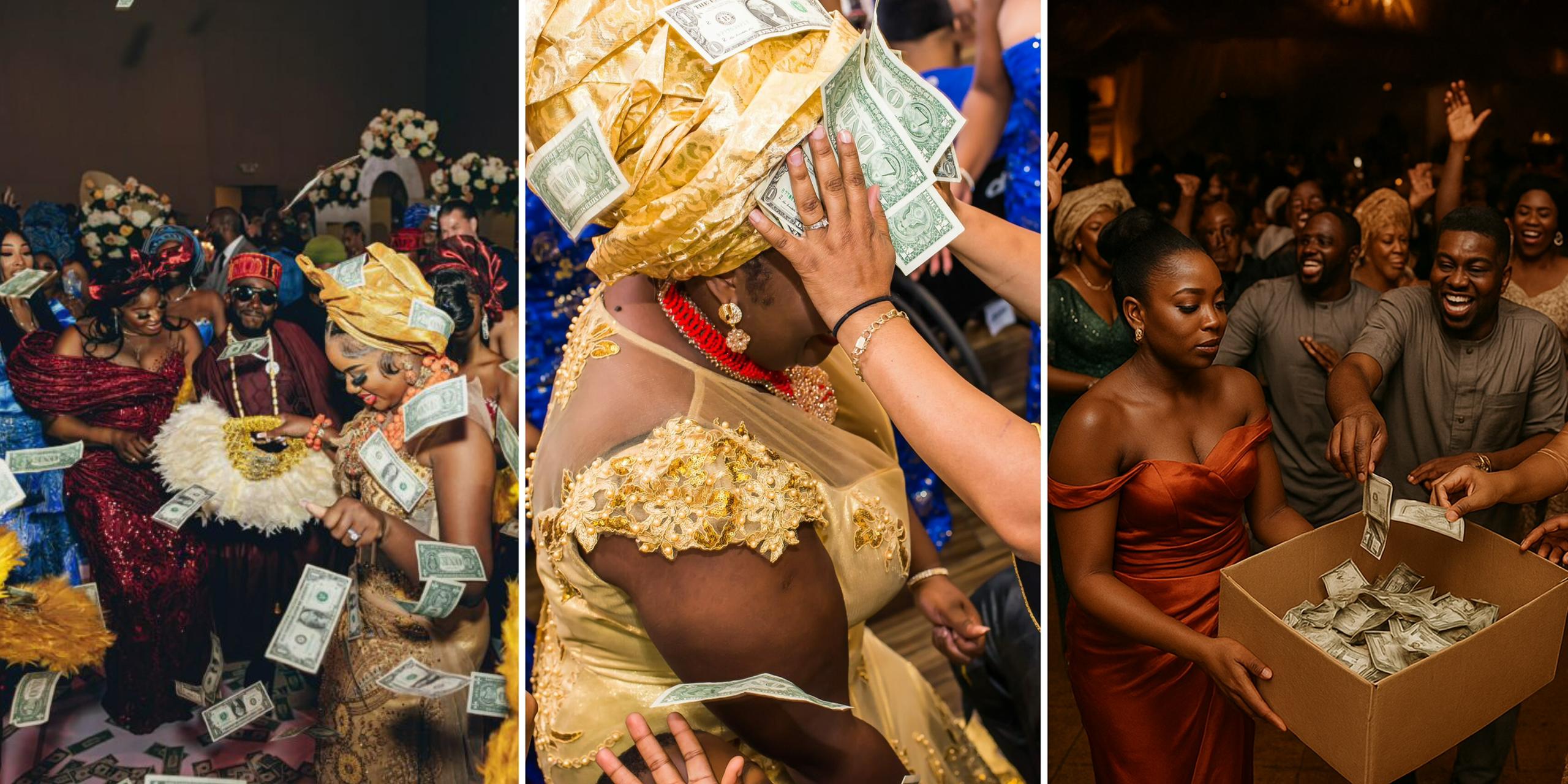
If you have ever been to a Nigerian party that qualifies as an Owambe, you already know it is not just about food or fashion. It is a full performance.
Guests arrive in carefully chosen aso-ebi, musicians turn the dancefloor into a stage, and somewhere between the drums and the flashing cameras, crisp naira notes begin to fly.
This act of spraying or splashing money has become the heart of Owambe culture. Yet in recent years it has also become one of its biggest controversies. Is it an innocent tradition, a loud display of status, or now a dangerous legal risk?
A cultural heartbeat that grew into a spectacle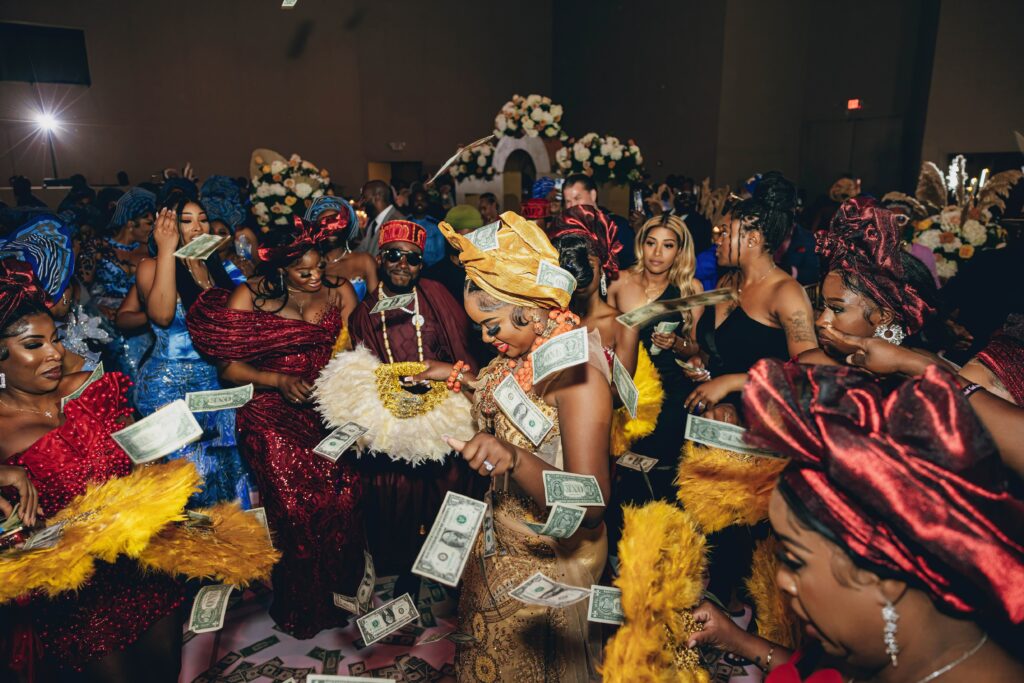
The Yoruba word Owambe has long described gatherings that are larger than life. From weddings and birthdays to funerals, these events are as much about community as they are about celebration.
Spraying money started as an intimate gesture. Relatives would press small notes on the foreheads of a couple to bless their union. Elders would hand out cash to show support for a host. The act was tied to generosity and joy. Over time, as parties became bigger and Lagos grew into a hub of music and entertainment, this quiet blessing transformed into open theatre.
Musicians began to praise-sing those who sprayed, rewarding them with songs that immortalised their names. Guests discovered that the more you sprayed, the more attention you received. Soon the practice became an open scoreboard of wealth and status.
Today it is not unusual to see guests load money into machines or money guns that rain cash like confetti. Social media made this even louder. What once stayed within the walls of a party is now clipped, shared and replayed thousands of times online. In a country where image and prestige can open doors, the dancefloor became a red carpet.
The economy around spraying money
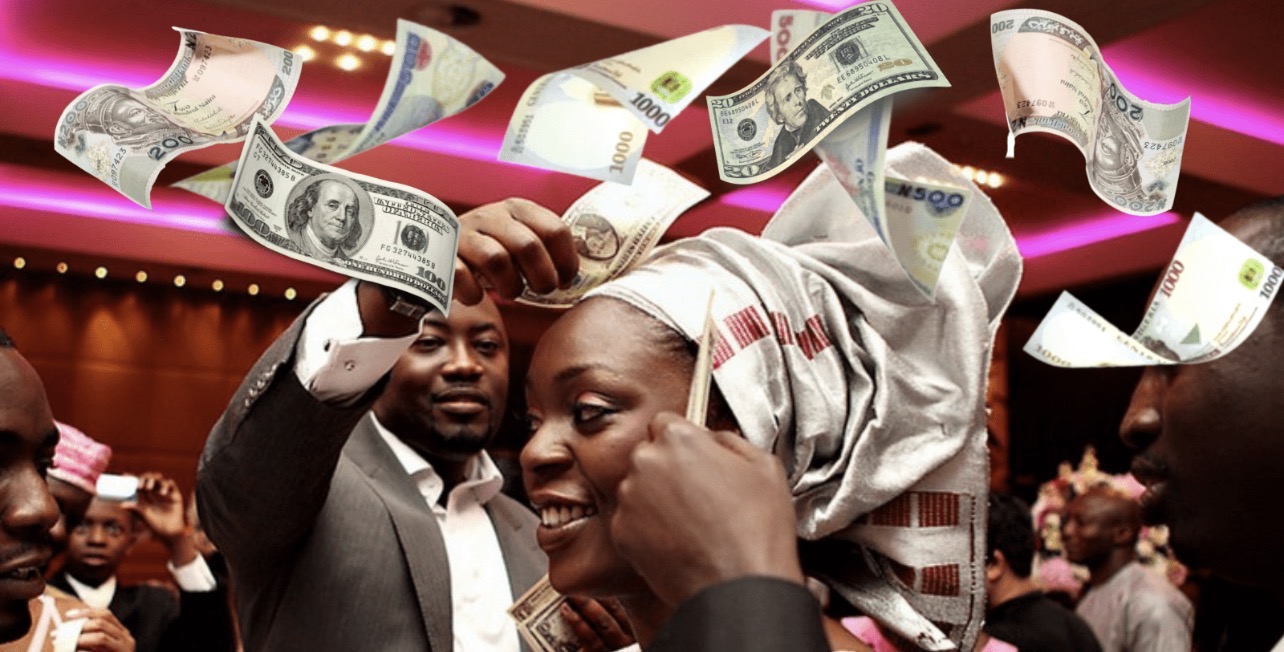
There is more to this practice than ego. An entire micro-economy has grown around spraying at parties. Event vendors often report that sprayed notes are part of how they get paid. Guests sometimes buy bundles of naira on the dancefloor itself.
Hawkers linger around event centres with crisp notes, selling them at an extra cost for those who want to participate in the spraying performance.
Musicians and DJs count on being sprayed directly as part of their income. In this sense, spraying has evolved into both cultural expression and economic exchange.
The legal wall that culture has hit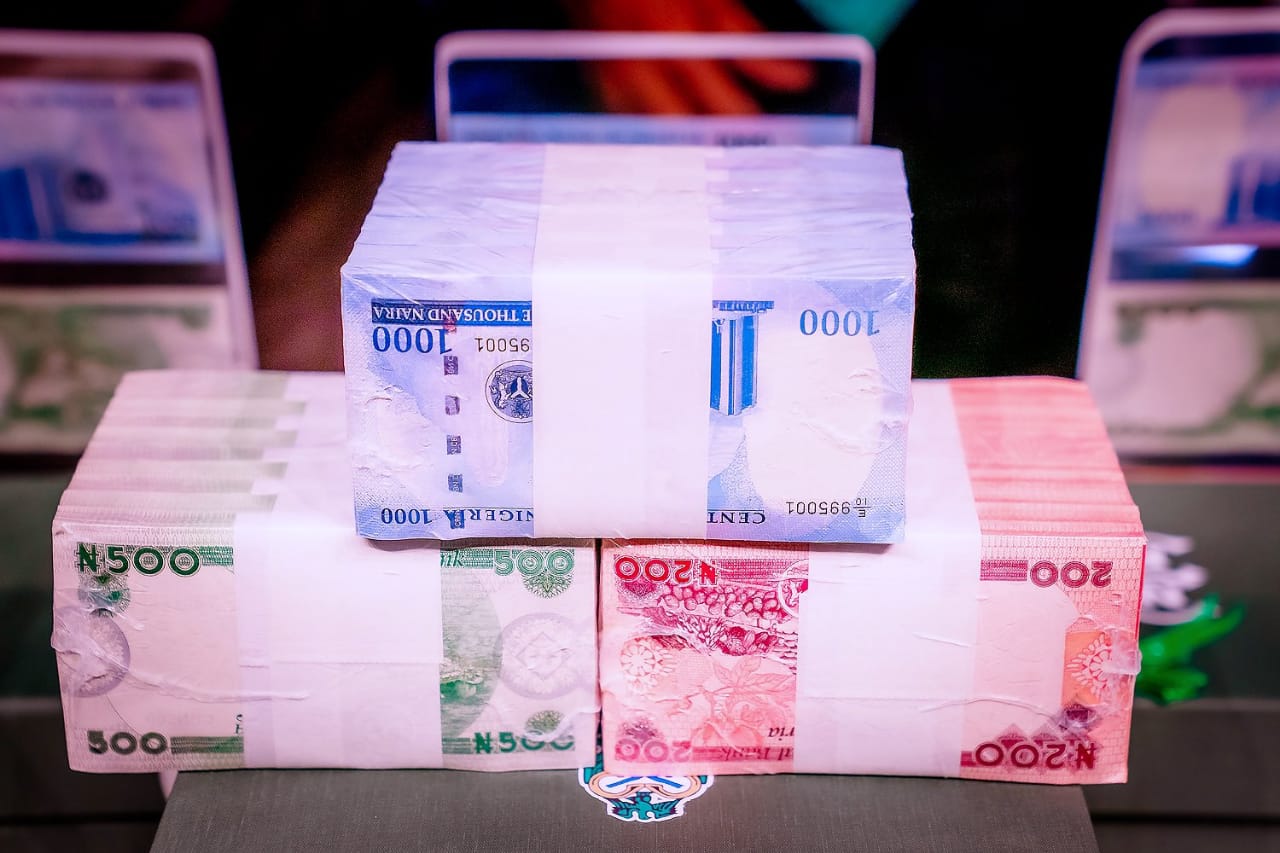
For all its colour and energy, spraying naira notes has landed celebrants in the crosshairs of the law. Nigeria’s Central Bank has long had regulations against the abuse of currency. Section 21 of the CBN Act clearly prohibits tampering with banknotes. This includes writing on them, mutilating them or, as the CBN specifically pointed out, spraying and stepping on them during parties.
For years, enforcement was soft and many Nigerians assumed it was one of those laws that existed only on paper. That perception has changed.
Recent high profile arrests and prosecutions have jolted the culture. Popular influencer Bobrisky was sentenced after videos of him spraying money circulated widely.
Several other party goers and socialites have faced fines and jail terms for the same offence. The Economic and Financial Crimes Commission has stepped up enforcement, warning event centres and even musicians to discourage spraying. The message is clear. The law is not only on the books, it is being actively applied.
The debate that will not go away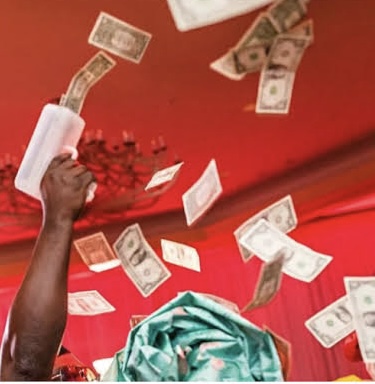
Not everyone agrees with this hard stance. Critics of spraying say it cheapens the national currency, creates a secondary black market for cash and portrays Nigerians as reckless with money at a time when the economy is fragile. They point out that sprayed notes often end up mutilated on dirty dancefloors. Others say the enforcement is selective, targeting popular figures while political and business elites continue the practice freely.
Supporters of spraying defend it as cultural identity. To them it is a way of showing joy and support, not of disrespecting the naira. Many argue that instead of criminalising the practice, the government should focus on fixing the economy and creating jobs.
They also point to the thousands of caterers, tailors, photographers and entertainers who benefit directly from the Owambe ecosystem. In their view, to attack spraying is to misunderstand its role in a cultural economy that feeds many households.
The new face of Owambe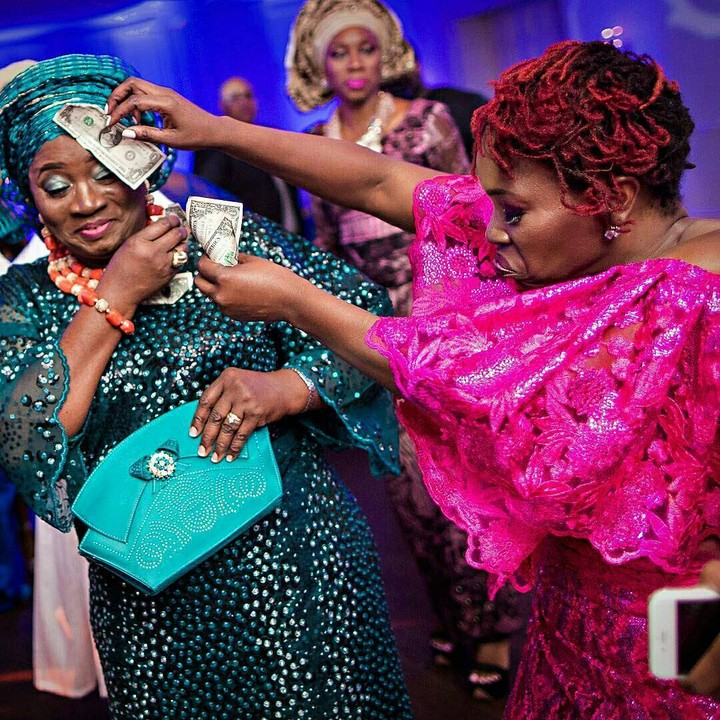
As the debate continues, party culture is slowly adjusting. Some hosts now prefer to provide collection boxes where guests can drop cash gifts discreetly. Others encourage digital transfers, displaying bank details or even QR codes on programs. This way the celebrant still receives financial blessings but without legal risk. A growing number of parties also use prop money or customised notes that look festive but have no legal tender value.
For the guests who still cannot resist the urge to make it rain, the safest option has become to keep the real naira in your pocket and join the dancefloor with play notes. That way you enjoy the fun of spraying without the knock on your door from the EFCC.
What the CBN Act Really Says About Spraying Money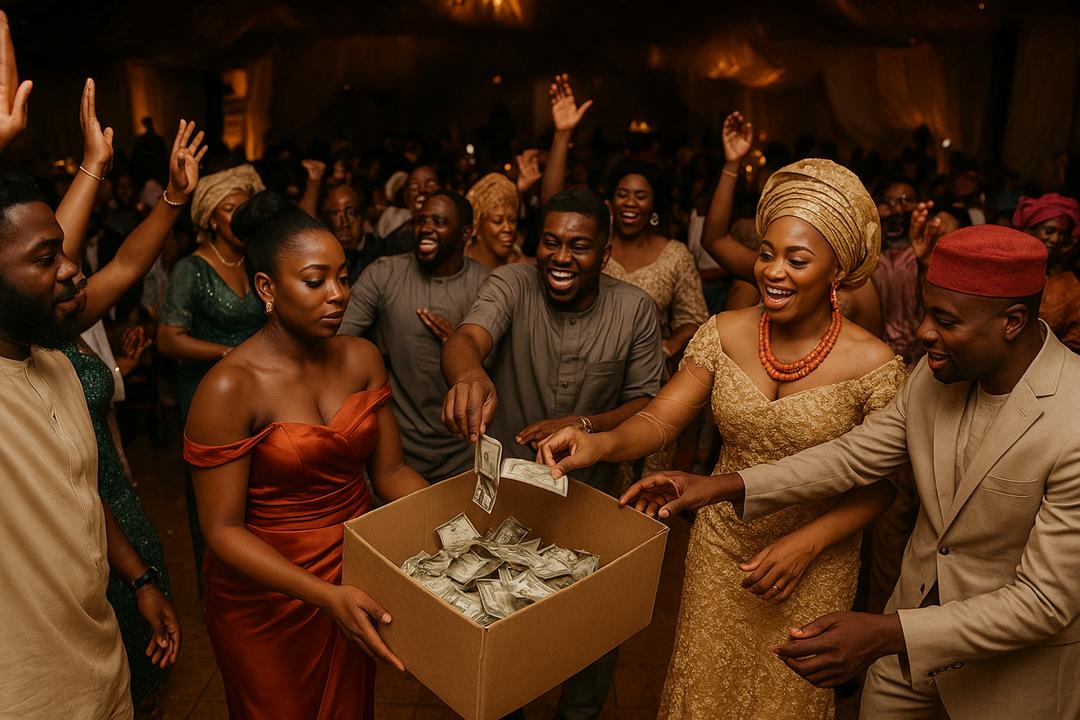
Many Nigerians are still unsure whether spraying cash at parties is simply frowned upon or actually against the law. Section 21 of the Central Bank of Nigeria (CBN) Act settles the matter clearly.
The Act makes it an offence to tamper with the naira in any form. This includes selling banknotes outside of banks, mutilating notes, writing on them, stapling them, and importantly, spraying them at parties where they are likely to be stepped on or damaged.
The law also states that anyone caught abusing the currency can be fined or sentenced to jail. That is the basis on which recent arrests and convictions have been made.
In plain terms, if you spray naira notes at a wedding or birthday party, you risk breaking the law. The CBN has encouraged Nigerians to adopt other ways of celebrating such as giving gifts in envelopes, using digital transfers, or adopting symbolic prop money that is not legal tender.
So while spraying money remains one of the most colourful traditions of Owambe parties, it is no longer just a cultural matter. It is also a legal one, and celebrants need to be aware of the risks before stepping on the dancefloor with bundles of naira.
Conclusion
It is hard to imagine Owambe without the spectacle of money floating in the air. The practice has become too deeply tied to identity, music and social performance. Yet with the naira under constant pressure and government keen on tightening regulations, the way Nigerians celebrate is changing. The joy of Owambe will remain, but the dancefloor may look different in years to come. Instead of mountains of cash underfoot, you may see QR codes and sleek envelopes.
At its heart, Owambe is about community, generosity and joy. Those values will always endure. What is being renegotiated is how they are expressed in a modern Nigeria where tradition collides with law, technology and economic reality. The smartest celebrants today are those who find creative ways to preserve the soul of Owambe while avoiding the traps of currency abuse.
In the end, splashing cash at parties may have started as a blessing, grown into a spectacle and now turned into a legal hazard. But like every cultural practice that adapts to survive, Owambe is proving once again that Nigerian celebrations are too vibrant to be silenced. The music will play, the guests will dance, and the culture will evolve. The only question is how much cash will still be flying in the air when the cameras roll.
Discussion about this post