

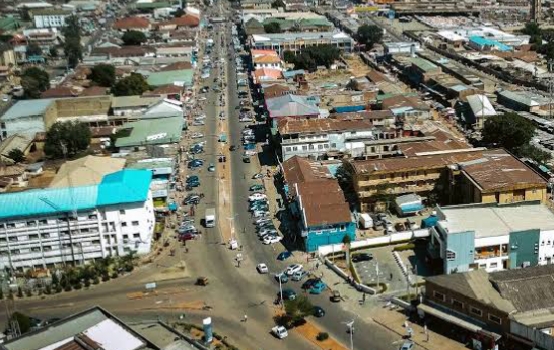
In Jos, the evenings used to sound like memory. Brass bands rose from school yards, children sang in round harmonies, and wind blew across the Plateau with a melody only the mountains could understand. But now, the same wind carries a quieter tune. You can hear it if you walk through Terminus Market after the traders have gone—just the hum of tired generators, the murmur of soldiers at their posts, and the distant echo of a city still waiting for its rhythm to return.
Once, Jos was not just a place; it was a metaphor. It was the sound of Nigeria learning to breathe after war, a city where the hills taught harmony. The British had left behind mining shafts and tin tracks, but the people forged something softer—music, theatre, laughter, and a culture that refused to mirror the divisions beyond the Plateau. To be from Jos was to be from a melody of coexistence: where the Fulani herder shared songs with the Berom farmer, where the Igbo trader called the Hausa artisan brother.
But silence is deceptive. The quiet that now hovers over Jos is not peace—it is memory refusing to fade. Streets that once carried the laughter of university students now echo with the rumble of armored patrols. At night, the air is thick with uncertainty; people still draw their curtains early, instinctively checking for smoke in the distance. In some corners, old men still keep transistor radios by their bedsides, as if waiting for another announcement that will split the night in two.
What remains, however, is the Plateau itself—ancient, patient, and strangely forgiving. The rocks around Riyom still rise like witnesses, their shapes unchanging, their silence almost divine. Beneath them lies the soil that made Jos rich and cursed: tin mixed with tension, minerals mixed with memory. It is as though the city’s soul was mined out with the ore, leaving behind both beauty and a wound that never closed.
The City That Once Sang
There was a time when Jos was the melody line in Nigeria’s orchestra. In the 1960s and 1970s, the city was a highland paradise—a cool refuge from the humidity of Lagos, a place where expatriates built cottages on the slopes, and locals opened piano schools beside them. Tin mining brought Europeans, but it was the locals who gave the place its warmth. Markets thrived with spices from every ethnic corner of the country. Cinemas showed Indian classics, and in the evenings, the air carried guitar notes from makeshift bars.
Jos was where Nigeria’s postwar generation found its new rhythm. Civil servants transferred from the South called it “the Switzerland of Africa.” Young soldiers who had survived the civil war sought peace there. Filmmakers like Jab Adu and Ladi Ladebo shot early Nigerian films against its tranquil hills. Choirs rehearsed under mango trees. Even churches became music schools. The Nigerian Television Authority’s Jos station became a cultural hub, training voices that would later define national media.
Every community brought something distinct. The Berom people kept their flutes and ancestral drums alive. The Afizere taught call-and-response songs that wove into the new gospel era. The Hausa-Fulani blended praise poetry with rhythm, creating the early soundscape that would later inspire MI Abaga’s introspective hip-hop decades later. Jos was not merely creative—it was collaborative. In every street performance, there was unity disguised as music.
But every melody has its underlying chord—the one you don’t hear until the song changes key. As Jos expanded, wealth and identity became entangled. Tin mining declined in the 1980s, leaving jobless miners and quiet shafts. Population grew, but opportunities shrank. Behind the laughter in the bars and the beauty of its festivals, something restless began to hum beneath the surface. The city was still singing, but the key was shifting.
When the Plateau Was Still a Stage
Through the 1970s to the late 1990s, Jos evolved into more than a mining town; it became a metaphor for Nigeria’s ambition to be whole. Its altitude kept it cool, its cosmopolitan spirit kept it alive, and its people turned art into diplomacy. On weekends, the city was a living rehearsal room — actors, journalists, and dreamers crossing paths at the University of Jos or at Hill Station Hotel. When Lagos was chaotic, Jos was contemplative. When other cities argued over identity, Jos turned diversity into a melody.
Radio stations like Plateau Radio Television Corporation (PRTV) gave voice to poets and young broadcasters who understood that sound could unify. The local theatre groups recreated histories of resistance and hope; school competitions trained an entire generation of confident speakers. By the mid-1980s, Jos had become Nigeria’s quiet cultural headquarters. Musicians like Panam Percy Paul and Bongos Ikwue passed through, blending gospel with highlife, jazz with Hausa melody. It was not unusual to find a concert in one corner of the city while, on the other side, young artists painted murals celebrating peace.

This harmony, however, was fragile. Beneath the city’s calm rhythm was a growing tension between indigene and settler identities — an argument older than independence, but one Jos had kept at bay through culture and tolerance. The concept of “indigeneity” — who truly belonged to the Plateau — was quietly reshaping politics. The Berom, Afizere, and Anaguta saw themselves as custodians of the land, while the Hausa-Fulani community, who had lived there for generations, sought equal recognition. For decades, this debate remained a muted undertone in daily life, not yet discordant enough to break the song.
Then came Nigeria’s return to civilian rule in 1999 — and with it, new contests for local power. Politicians rediscovered the potency of identity. The once-neutral Plateau became a battleground of meaning. Suddenly, elections were no longer about policies but about origins. Those who had once sung together now asked who truly belonged. The Plateau that had been a stage for Nigeria’s creative imagination was about to become its cautionary tale.
The Spark That Split the Sky
The year 2001 changed Jos forever. It began as a local government appointment dispute — who should head a council in a city that belonged to everyone and no one. But in Jos, politics is never just politics; it is the shadow of belonging. By September, a simple disagreement over chairmanship ignited long-suppressed grievances. Streets that once hosted festivals became frontlines overnight. The first gunshots sounded in areas that had never heard such noise before.
The city’s beauty turned to smoke. Entire neighborhoods like Angwan Rogo, Congo Russia, and Bukuru went up in flames. Churches and mosques that had coexisted for decades were suddenly symbols of fear. The air, once filled with guitar notes and laughter, now carried the sound of mourning and megaphones calling for calm. By the time the violence subsided, hundreds were dead, and Jos’s image as Nigeria’s model of peaceful coexistence was shattered.
In the aftermath, residents spoke of betrayal more than hatred. Friends discovered that boundaries they thought invisible had suddenly become maps of survival. Checkpoints appeared like scars across the city. Military convoys replaced music bands. Children who once attended the same schools were now divided by street names. Jos’s rhythm — that delicate balance of faith, tribe, and art — had been broken, and every attempt to repair it only revealed more fractures beneath.
The world watched, puzzled. How could a city so cultured, so educated, so serene, unravel so quickly? The answer lay deep within its foundations — in the legacy of colonial settlement patterns, in the politics of indigene certificates, in the slow erosion of mining wealth that once funded unity through employment. When the economy fell silent, identity filled the void. Jos did not simply burn; it imploded under the weight of unspoken questions it had postponed for generations.
Where Tin Became Ash
Long before the riots and the checkpoints, Jos’s story had already been quietly rewriting itself underground. Tin — the grey mineral that once defined the Plateau’s destiny — had lost its shine. The mines that once attracted colonial engineers and migrant workers now stood as abandoned scars on the landscape, their tunnels filled with water and silence. In the 1960s and 1970s, Jos had glittered with tin wealth; mining companies funded schools, hospitals, and the arts. By the late 1980s, however, global demand collapsed, and with it, the city’s economic pulse.
The aftermath was brutal. Thousands of workers were laid off; whole communities built around the mines sank into poverty. The bustling settlements near Bukuru and Barkin Ladi turned into ghost zones where rusted equipment lay beside forgotten dreams. With the collapse of mining came unemployment and idleness — the twin architects of anger. Young men who once carried pickaxes began to carry something else: resentment. For the first time, Jos felt hunger — not just for food, but for purpose.
The cultural heartbeat tried to persist. Painters kept painting; musicians kept singing. But the city’s attention shifted from creation to survival. Traders began to lock their stalls earlier; the laughter that used to define nightlife faded. Where wealth once flowed through trade and mining, new economies emerged — informal markets, street hustles, and, at times, crime. Tin’s end was not just an economic event; it was a social disintegration. The metal that had once united ethnic groups through shared labor now lay buried, leaving behind competition for what remained.
When the first waves of conflict came, they found fertile ground in this economic emptiness. The youth who had nothing to lose became easy recruits for revenge. Political actors and extremists found in them the perfect instruments — people who still remembered what it felt like to be useful, now seeking any purpose at all. Tin had turned to ash, and Jos, the city once built on shared industry, now stood divided by the ruins of what used to feed it.
Children of a Divided Melody
For the generation born after 2001, Jos was never the paradise their parents described. They grew up behind curfews and checkpoints, learning to measure safety by the direction of smoke or the tone of sirens. To them, “peace” was not the music of harmony but the silence that follows gunfire. In Angwan Rukuba or Tudun Wada, children learned early that some streets were no longer theirs. The innocence of geography was gone.
Schools became miniature borders. Some institutions closed permanently; others rebuilt with fences high enough to separate faiths. Football pitches that once mixed boys from every background now echoed with empty nets. Yet, paradoxically, it was in these very ruins that resilience began to form. Teenagers turned trauma into creativity — rap battles became therapy sessions, gospel choirs replaced protests, and street art became both rebellion and reconciliation. The children of conflict began to teach themselves how to feel joy without permission.
In the 2010s, the rhythm of Jos shifted again — slowly, almost imperceptibly. Social media gave voice to its young people, connecting them to a world that had forgotten them. Artistes like Ice Prince, Jesse Jagz, and MI Abaga carried the city’s pain and pride into Nigeria’s pop consciousness. Their lyrics spoke of survival, ambition, and identity — echoes of a city refusing to die quietly. Beneath their beats was the unspoken question every Jos youth carried: can a city heal if its melody is divided?

Yet, healing in Jos is not romantic. It is daily, exhausting work. Every shared meal, every reopened school, every interfaith marriage is a negotiation with history. The children of this divided melody walk carefully between forgiveness and memory. They are not trying to restore what was lost — they are composing something new. Their rhythm is different, but it is theirs, and it may be the only thing strong enough to keep Jos from forgetting how to sing again.
The Streets Where Memory Sleeps
To walk through Jos today is to walk through a museum of invisible walls. The city looks alive—markets open, motorcycles buzz, laughter leaks from beer parlors—but beneath the surface, every corner carries its own memory. In Terminus, where the 2010 bombings tore through traders and travelers, rebuilt stalls stand as monuments to survival. At night, the hum of traffic returns, but those who lived through the explosion still flinch at sudden sounds. Trauma here is ambient; it moves with the wind.
In neighborhoods like Du and Dadin Kowa, the streets hold stories no camera ever caught. Burnt houses stand half-repaired, their charred walls turned into reminders. Some residents have returned; others never will. The city is full of quiet reunions—Muslim and Christian families who now trade again after years of separation, sharing cautious smiles over market stalls. In the Plateau, forgiveness does not come with speeches; it comes with transactions and time.
Yet, memory remains stubborn. The children who grew up during the crises now raise their own families under the same uncertain sky. They teach their kids which roads are safe, which hours are quiet, which questions are dangerous. Peace, in Jos, is not the absence of violence—it is the discipline of remembering without revenge. Every shared greeting across faith lines feels like an act of defiance.
The government’s presence is uneven—checkpoints still dot the highways, and soldiers still stand where musicians once performed. Yet, it is in these same spaces that young filmmakers shoot documentaries, that street poets perform under flickering bulbs. The city’s ghosts have not left; they have learned to coexist with the living. Jos, in all its brokenness, has mastered a strange kind of grace—the art of breathing among ruins.
Rhythms That Refused to Die
Even when the Plateau fell quiet, rhythm never truly left Jos—it only changed its instruments. From the ashes of chaos, a generation of creators emerged with something deeper than ambition: memory. They were born in curfew years, raised on fragments of lullabies their parents sang before the riots, and shaped by a determination to prove that their city was more than its headlines.
In the 2010s, small cultural initiatives began sprouting again. Community theatres in Rayfield and Kufang reopened; film collectives started documenting the everyday peacebuilding efforts the world never saw. Fashion designers began weaving the Plateau’s indigenous motifs into urban style, telling stories of coexistence through fabric. These were not mere careers—they were declarations. Each artist, painter, or craftsman carried the city’s pulse like a relic, proving that culture could rebuild what politics had broken.
Music, too, found new veins. The youth who could not afford Lagos still made beats from their phones, uploading them to global platforms. The world might not have noticed, but Jos was quietly reshaping Nigerian creativity once more—underground rappers speaking of unity, spoken-word artists narrating the ghosts of their neighborhoods, gospel choirs reviving the harmonies that once filled the tin valleys. In every performance, there was defiance: a refusal to let despair define destiny.
Slowly, festivals returned. The Jos Carnival reemerged, tentative at first, then louder each year. Universities began hosting interfaith debates again, the kind that once shaped a generation of thinkers. In these moments, Jos rediscovered its rhythm—not the unbroken melody of the past, but a newer, rawer sound, built from survival. It was not perfect, but it was real. The city had become its own instrument, learning to play even when half the strings were gone.
Return of the Harmattan Wind
Every December, the Harmattan descends upon Jos with the same authority as history itself. The air dries, the wind turns cold, and visibility softens into memory. From the hills, the city looks deceptively peaceful—rooftops glint under a dusty sun, and the horizon seems endless. But beneath that stillness lies a profound truth: Jos has changed forever, yet somehow endures.
The Plateau’s wounds are layered into its soil. You can still see them—in the ruins of burned churches that now host new congregations, in the rebuilt mosques standing beside Christian schools, in the songs sung at weddings that mix Hausa and Berom languages in the same verse. Pain and coexistence have become inseparable, like rhythm and silence. The city’s rhythm now moves differently—slower, wiser, aware of its fragility.
If you listen closely during Harmattan evenings, you can still hear echoes of the old Jos: the laughter of students on University Hill, the crackling of radios from roadside suya spots, the distant hum of a guitar from a nearby flat. These sounds are not illusions; they are continuities. The Plateau, for all its heartbreak, refuses extinction. Its rhythm might falter, but it always returns.
Jos teaches Nigeria—and perhaps the world—something universal: that peace is not a possession but a practice, a rhythm one must keep even when the instruments are gone. A city that has seen both harmony and horror now carries both in its breath. And as the Harmattan wind passes through the rocks and valleys, it carries the sound of survival—the whisper of a cradle learning to hum again.
Parting Words: The City That Learns to Listen
Jos does not announce its recovery with fanfare. It teaches through the small, stubborn movements of daily life: the vendor reopening a burnt stall, the teacher coaxing children to learn together, the musician tuning a guitar beneath a wary sky. Its story is not of grand victories but of quiet perseverance, each act of courage a subtle pulse beneath the city’s surface.
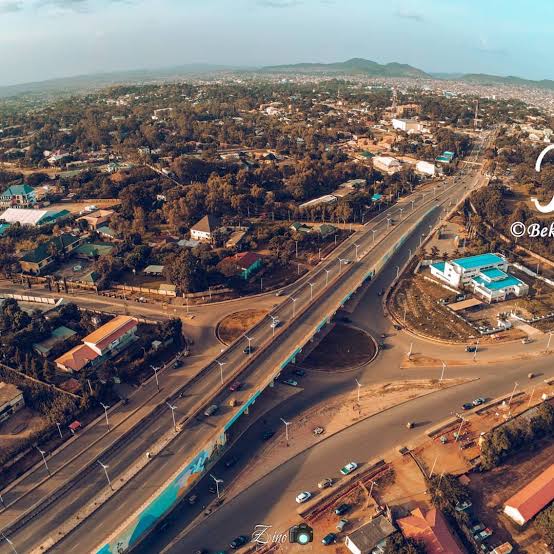
Here, survival is measured not by what is rebuilt but by what continues despite the scars. Streets still carry the weight of memory, yet they host conversations, laughter, and negotiations that were once impossible. Every cautious step forward is a testament to the city’s capacity to adapt, to find rhythm where before there was only fracture, to create spaces for coexistence without denying the past.
The lesson of Jos is not easily summarized. It is neither tragedy nor triumph, but a layered understanding that human resilience often grows in the smallest cracks. In the city’s muted mornings and restless nights, one witnesses the persistence of life itself—complex, tentative, and defiant. Jos shows that even when harmony is broken, meaning can be forged from the fragments.
And perhaps the most enduring sound in Jos is not music or laughter, but attention: the city listening to itself, to its people, to its history, and learning how to move forward without forgetting. In that listening, there is hope—not loud, not declarative, but real. Jos has become a teacher, and those willing to hear are the ones who carry its lessons beyond the Plateau.
Discussion about this post