

It began, as many stories of disbelief do, with whispers that crawled from the edge of the market into the folds of a neighborhood too familiar with silence. In Akure, the Ondo State capital, the morning sun came slow, filtered through orange dust and low roofs that remembered every harmattan before it. But that morning — the one the city would later recall with shame and fascination — held a strange, tight stillness. The kind that grips a town before the first accusation leaves a child’s mouth.
In the narrow lane of Idole Street, a crowd had gathered. Two small girls — sisters — stood barefoot before a circle of elders, their heads bowed, their faces dry with dust and sleep. Idayat, the older one, spoke first. Her voice, caught somewhere between a child’s fear and an ancient knowing, carried into the murmuring air: “We are witches.” Her sister Kudirat, younger, barely ten, repeated the words with the obedience of a child repeating her school creed.
It was not an ordinary confession. It was a cultural collision — between a world that still held the unseen as real, and a generation that had been taught to name fear as evil. By the time the girls finished speaking, Akure had already divided itself in two: those who believed they had heard truth, and those who believed they had just witnessed the dangerous theatre of mass hysteria.
No one could have imagined that two girls’ trembling words would birth a witch-hunt that would stretch into homes, mosques, churches, and the most private fears of a community that believed in both God and ghosts.
The Confession That Split a City
The report came quietly, on a Sunday morning in August 2018, but its ripples carried into the following year as the “Akure Witchcraft Case.” Six pupils, one boy and five girls, were said to have confessed to witchcraft activities in the Danjuma area of Akure. Among them were sisters Idayat and Kudirat — children barely out of primary school, whose testimonies would spark both outrage and sympathy.
Their mother, Mrs. Anuoluwapo, was a market trader, known to many by her loud, generous laughter and her regular place near the Oja Oba stalls. She had no idea that by midyear her daughters’ names would appear on national news feeds beside words like “initiation,” “coven,” and “sacrifice.” According to the report, Idayat, the eldest, had described herself as one of the “highly ranked” members of a spiritual order. She claimed that she and another girl, Eunice, possessed “four different birds each in our bellies” — an image both horrifying and metaphoric, spoken by a child in a language of faith and fear she could not have invented alone.
The local Alfa — her father — was drawn into the confusion. The Within Nigeria article quoted the mother blaming him for neglect, while community elders debated whether the confession was genuine or coerced. In many parts of Ondo State, witchcraft beliefs still straddle the line between cultural reality and social control. It was not unusual, then, for such confessions to unfold publicly, almost ritually, as if the act of naming evil could itself exorcise it.
For Idayat and Kudirat, however, the confessional moment would not end in deliverance but in public spectacle. What began as a frightened child’s story grew into a televised morality tale — replayed, reposted, and reinterpreted until the girls themselves became footnotes in the larger Nigerian debate over faith, childhood, and the unseen.
Between Faith and Fear: Witchcraft as Social Language in Akure
To understand what happened in Akure, one must enter the dense forest of Nigerian belief — where Christianity, Islam, and indigenous spirituality coexist, each borrowing the other’s shadows. In this world, witchcraft is not merely a superstition; it is a vocabulary of suffering, an ancient grammar through which communities explain misfortune, envy, and loss.
For decades, Akure’s quiet suburbs have been dotted with churches offering “deliverance from the powers of darkness” and Qur’anic schools teaching how to ward off unseen forces. Here, a confession like Idayat’s does not emerge in a vacuum — it grows from sermons, from the fevered testimony of revival tents, from whispers that every hardship has a hidden cause.
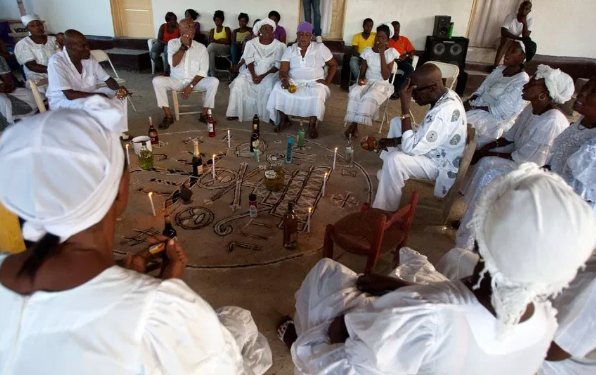
Researchers from the Child’s Rights and Rehabilitation Network (CRARN) and UNICEF have documented similar child-witchcraft confessions across Southern Nigeria, especially in Akwa Ibom and Cross River States. Many children had been influenced by religious rhetoric that equated spiritual possession with sin. Akure’s case, however, was unique for its setting — an urban capital where education and traditional belief coexist uneasily.
When the sisters confessed, the town responded not with calm inquiry but with ritual panic. Prayers were held, fasting declared, neighbors warned each other to “avoid the house of the witches.” In that reaction lay a mirror of Nigeria’s unresolved identity crisis — the friction between modern rationality and ancestral cosmology.
For many parents, witchcraft is not fantasy; it is moral architecture. The child’s confession is both a warning and a weapon — proof that evil can dwell in innocence, that a mother’s misfortune might wear her daughter’s face.
Idayat’s Voice: Between Innocence and Invention
Idayat was thirteen, thin and quiet, the kind of girl whose presence was barely felt until she spoke. When she did, her words came shaped by fear and adult imagination. “They told me to eat meat in a dream,” she said in the Within Nigeria report. “Then I saw myself flying at night.” To her, these experiences were not metaphors — they were reality framed by the adults who interpreted them.
Her father, a local Alfa, read her symptoms differently. To him, it was spiritual interference — a demonic infiltration requiring prayer and exorcism. Her mother saw something more worldly: a child under stress, perhaps suffering from trauma or suggestion. Between their opposing interpretations, Idayat’s childhood dissolved.
The confession became a story other people told about her. Her own understanding of it — if she ever had one — was drowned out by sermons, interviews, and fearful commentary. Like many children in similar circumstances, she learned to perform what adults expected: the tears, the pauses, the trembling references to unseen powers. It was safer that way.
Her younger sister Kudirat’s role was smaller, more tragic. She merely repeated what Idayat said, and yet her echo carried equal weight. In witchcraft narratives, repetition is affirmation. The younger voice, trembling in agreement, became proof. The town’s conclusion was swift: where there are two confessions, there must be truth.
The Anatomy of a Witch-Hunt
Every witch-hunt begins not with evil, but with fear pretending to be faith. Akure’s version followed a pattern old as colonial memory. First came the confessions; then the preachers arrived, their voices trembling with the satisfaction of prophecy fulfilled. Deliverance sessions were held, the girls made to recount their “sins,” and their words were broadcast to reinforce the faith of believers.
But in private, neighbors began to keep distance. The mother’s shop suffered. Rumors spread that anyone who touched her goods might inherit her daughters’ curse. The family became both spectacle and warning — a living sermon in a city that needed symbols more than truth.
In Nigeria’s long archive of witchcraft cases, this one was relatively mild. No one was lynched or burned. Yet the psychological violence was severe. The children’s schooling stopped. Their home became a kind of exile. In interviews conducted months later by local journalists, the mother lamented that “nobody believes in their innocence anymore.”
This is how belief hardens into judgment. Witchcraft accusations feed on narrative momentum; once the first confession is made, every coincidence confirms it. A missing goat, a sick child, a broken marriage — all become evidence of what the accused had “confessed.” By 2019, the sisters’ names were still circulating online, ghostly echoes in Akure’s digital folklore.
The Long Aftermath: What Became of Idayat and Kudirat
By early 2019, the case had faded from headlines but not from memory. Local reporters traced the family to another part of town. The girls, according to neighbors, were withdrawn — no longer speaking publicly about what happened. The father had left, the mother moved closer to her relatives. The scars were social, not visible.
In Akure’s schools, teachers began to use the sisters’ story as a cautionary tale — not about witchcraft, but about belief. NGOs like the Ondo Child Protection Network held small workshops urging parents to report abuse rather than resort to accusation. Yet, the silence surrounding the actual girls remained. No state inquiry was opened. No counseling offered. Their names existed only as headlines, detached from the humans who once bore them.
For journalists and researchers, the Idayat and Kudirat case became emblematic of how the machinery of fear works in modern Nigeria — how a society torn between religion and science still interprets childhood behavior through a lens of metaphysical guilt.
Faith, Fear, and the Nigerian Child
The witchcraft accusation phenomenon has deep colonial and theological roots. British missionaries once dismissed indigenous cosmologies as “pagan,” yet imported their own fear-based theology that demonized spiritual symbols. Over time, Pentecostal and Islamic movements inherited this binary — good versus evil, light versus darkness — and localized it. Children became the canvas on which these fears were painted.
In Akure, the power of confession lies in its drama. It satisfies the audience’s hunger for proof that the invisible exists. But the cost is borne by children like Idayat and Kudirat, whose words are extracted and performed before they even understand what guilt means.
Psychologists studying similar cases have found that suggestibility, trauma, and parental pressure often lead to self-incriminating narratives. A child exposed to repeated religious explanations of misfortune can internalize them until dream and doctrine merge. When such a child confesses, she is speaking not from deceit, but from a reality shaped by fear.
Akure’s Silence: Lessons Unlearned
By the time 2020 arrived, Akure had moved on to new rumors — another prophet, another confession, another crisis. But the ghost of Idayat’s voice still lingers in the city’s folklore. Locals mention the “girls who spoke to spirits” in half-joking tones, as if to measure distance from their own superstition. Yet, beneath the humor lies unresolved guilt.
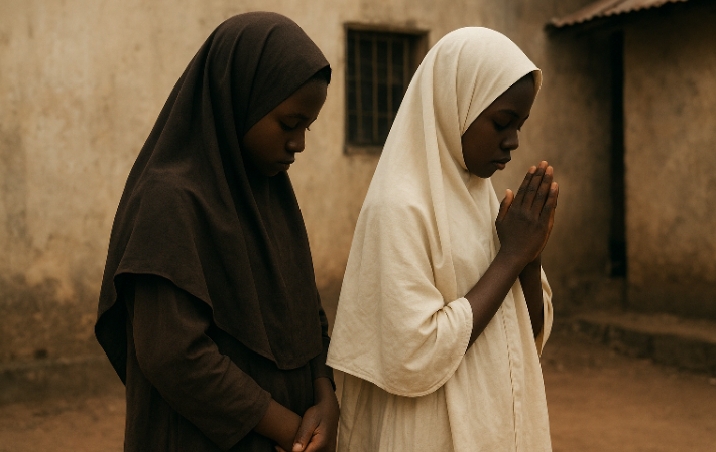
For a city that prides itself on education and progress, Akure remains haunted by the contradictions of belief. Science and superstition live side by side, each claiming to protect the same children. The witch-hunt, though unspoken now, remains embedded in the moral architecture of the community — proof that the old fears never truly die; they only change language.
Reflection: The Weight of a Whisper
When Idayat first said the words — “We are witches” — she did not know that she was naming not herself, but the wound of an entire city. Her confession was not a crime, but a mirror. It reflected how deeply Akure’s soul remains divided between modern reason and ancestral dread.
Today, no one remembers exactly what happened to the girls. Their names resurface occasionally in local debates about witchcraft, faith, or child rights, like faint echoes returning through static. But if Akure has learned anything from their story, it is this: that the human mind, when starved of understanding, feeds on fear; and that every confession extracted from a child carries the weight of a society still negotiating its ghosts.
Their story is not about witchcraft. It is about belief — and the thin, trembling line between salvation and superstition.
Discussion about this post