


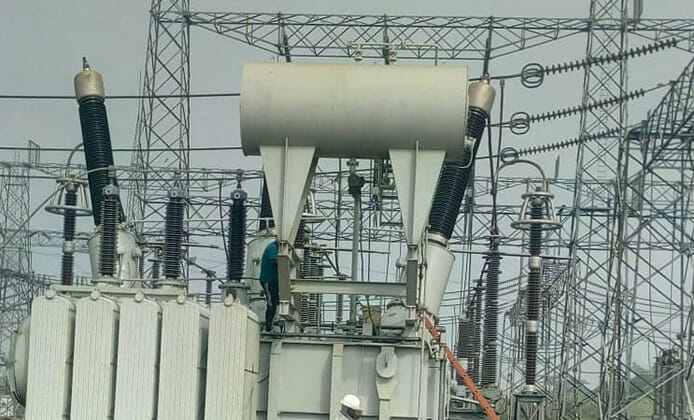

The Federal Government and the 36 governors have reportedly reached an agreement on the proposed plan to sell-off the five National Integrated Power Projects (NIPPs).
The Director-General (DG), Bureau of Public Enterprises (BPE), Alex Okoh, who disclosed this yesterday in Abuja, said the expected N260 billion proceeds from the sale of the five power plants will go into next year’s fiscal plan.
Okoh said the bidding process for the plants could reach the final stage before the end of this year, with the pact coming after the governors’ initial opposition.
The five NIPPs being managed by the Niger Delta Power Holding Company (NDPHC) belong to the federal, states and local governments.
They are located at Geregu, Ajaokuta (Kogi State); Omotoso (Ondo State); Olurunsogo (Ogun State); Calabar (Cross River State) and Ihovbor (Edo State).
The BPE DG admonished that raking in revenue from non-functional assets should be preferable to borrowing that will compound the nation’s debt profile.
He noted that the Bureau has the mandate of raising revenue from idle government entities to boost the economy.
Okoh said: “Of course, we have other mandates to ensure we are able to raise revenue from redundant government assets and enterprises to augumement and stall cost.
“But if you have assets that are redundant, rather than borrow, we should consider how to realize revenue from those assets instead of compounding the debt issue by borrowing.”
Noting that governors that had kicked against privatising the power plants are now on the same page with the BPE, Okoh also said that the proceeds would be shared between the federal and state governments.
Okoh said: “The expectation in the (FG) 2023 Fiscal Plan is to contribute N260 billion (as privatisation proceeds) and the key assets that we are looking at the energy assets.
“Incidentally, we are reaching some understanding with the state governors for the sale of those five power plants. That is what has dragged this transaction for, at least, the past two years-just getting a common-stakeholder understanding on the critical need to realise value from these assets before they depreciate beyond value.
“Thankfully, last week, we were able to resolve the issue with the governors. So, for these assets, we are likely to reach financial opening of the bids before the end of this year, probably, next week. But the proceeds will come in in the first quarter of next year.”
According to him, the privatisation proceeds contribution to the budget in the 2023 Fiscal Year would exceed the projected N260 billion, after a successful sale of the five power plants.
He said the assets have been categorized as federation assets, since they were built with federation revenue, ordinarily shared between the three tiers of government.
Okoh explained that the Federal Government would receive the statutory 47 per cent of the privatisatioin proceeds, while the balance of 53 per cent would be distributed among the states.
He said his bureau was not involved in the fresh process to concession the Ajaokuta Steel Complex in Kogi State.
The DG noted that the process was being handled by the Federal Ministry of Mines and Steel Development, but that BPE was involved in the resolution of the ownership issues
His words: “But I can say that we were involved in the resolution of the initial concessioning that went sour because one of the assets that was pledged under the Global Concession, the Warri Port, had actually been concessioned by the BPE.
“So, we were involved in negotiations with Global Infrastructure to take them out of Ajaokuta. But the current concessioning process, I believe, is being handled by the Ministry of Mines and Steel Development.”
On health reform, Okoh explained that the health sector reform embarked upon in 2019 was receiving a boostm having engaged a consultant to do a diagnostic review on the health sector with the aim of ensuring the availability of health care for out-of-pocket expenses.
He said: ”You notice that, at least, 80 per cent of the population is not covered by any form of health insurance. So, when they engage in any form of health care delivery, they have to pay directly from their pockets.
“As such, as we see in other climes, the government decided to take responsibility for providing health care across the citizens.
“We dimensioned the various segments of the health sector, from primary to tertiary. We found out that the major challenge is round funding. Although there are challenges around the administrative framework, the major problem is funding.
“So, the President set up the health reform committee, which is headed by the vice president and we looked at the health sector along specific themes. Incidentally, the committee met about three weeks ago and we have come up with what we called the great paper – a Concept Note. Essentially, the concept is on how to restructure the healthcare delivery system in Nigeria.
“Apart from funding, we are looking at how to move administrative and decision-making powers to the institutions themselves, especially at the medical centres and the teaching hospitals, where healthcare is delivered.
“We are trying to reposition the healthcare delivery framework for Nigerians along the line of what you have in the NHIS in the United Kingdom (UK) where the public can consume healthcare delivery and the government, through various means, including insurance, would pay.”
Discussion about this post