


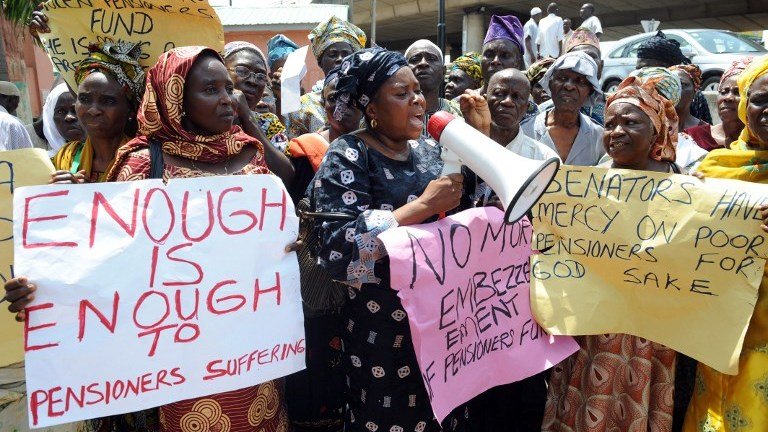

- Retirees under the Defined Benefits Scheme often experience years-long delays due to underfunding and bureaucratic inefficiencies.
- Pensioners face hardship as unpaid arrears accumulate, leaving many without income or support for basic living needs.
In Nigeria, retirement is often not the peaceful phase of life it is meant to be. For many retirees, the transition from active service to dependence on pensions is fraught with uncertainty, hardship, and systemic delays.
Despite reforms in the pension sector, the experiences of retirees reflect a persistent gap between policy intent and practical outcomes.
Nigeria operates a dual pension system: the Contributory Pension Scheme (CPS) and the Defined Benefits Scheme (DBS).
The CPS, introduced by the Pension Reform Act of 2004 (amended in 2014), mandates regular contributions from both employers and employees into Retirement Savings Accounts (RSAs) managed by Pension Fund Administrators (PFAs).
It covers workers in the formal private sector and government employees who joined service after 2004.
The DBS, on the other hand, remains in place for public servants who retired before the introduction of CPS.
Under this scheme, the government is solely responsible for the payment of retirees’ pensions.
This structure is managed by the Pension Transitional Arrangement Directorate (PTAD), which oversees the payment of pensions for various categories, including civil service, police, and parastatals.
One of the most common issues faced by Nigerian retirees is the delay in pension payments. Many pensioners, especially those under the DBS, experience prolonged waiting periods before receiving their entitlements.
In some cases, retirees wait years to access their pension, due to bureaucratic bottlenecks, verification delays, or shortfalls in government funding.
Arrears accumulation is another critical concern. It is not uncommon for pensioners to be owed months or even years of unpaid benefits.
These arrears often accumulate due to budgetary constraints, underfunding of pension obligations, or administrative lapses.
Consequently, many retirees live in poverty or become dependent on family members for survival.
Retirees are required to undergo periodic verification exercises to continue receiving their pensions.
While these exercises aim to prevent fraud and eliminate ghost beneficiaries, they are often physically demanding and poorly coordinated.
Elderly pensioners frequently travel long distances and endure hours of waiting in crowded centers to complete verification.
These verification processes, often manual, are also plagued by documentation mismatches and incomplete service records.
Pensioners with missing or inconsistent documentation face prolonged delays or outright exclusion from the pension payroll.
In such cases, the burden of proof rests entirely on the retiree, even when the discrepancies originate from their employing agencies.
Under the CPS, PFAs are tasked with managing workers’ retirement savings and ensuring timely disbursement upon retirement.
While the system has introduced some degree of efficiency, complaints remain regarding low pension payouts.
Factors such as short contribution periods, low salaries, and conservative investment returns result in modest retirement benefits.
Moreover, some retirees under CPS report delays in accessing lump sum payments and monthly stipends, despite meeting all exit requirements.
These delays are often attributed to internal processing timelines and inter-agency coordination between PFAs, the National Pension Commission (PenCom), and the employer.
The absence of a structured post-retirement healthcare system further compounds the difficulties faced by retirees.
With limited or no income and increasing medical needs due to aging, many pensioners struggle to afford treatment for chronic conditions.
Public healthcare facilities, which could offer relief, are often under-equipped or require out-of-pocket payments that retirees cannot afford.
In the absence of adequate support structures, many pensioners become vulnerable to poverty, ill-health, and social neglect.
While some state governments and organizations have introduced welfare programs, these efforts remain inconsistent and inadequate in scope.
The Nigerian government, through agencies like PenCom and PTAD, continues to implement reforms aimed at improving pension administration.
These include digitization of records, automation of verification exercises, and efforts to clear pension arrears. However, the scale of challenges remains significant.
A major policy gap lies in the uneven adoption of CPS across states. As of 2025, several states are yet to fully implement or comply with the contributory scheme, leaving state retirees under fragmented and unsustainable systems.
Despite decades of service to the nation, many Nigerian retirees face a pension system that is slow, underfunded, and administratively burdensome.
The disparity between public and private sector retiree experiences, persistent payment delays, and healthcare challenges point to the need for more coordinated and accountable pension governance.
Bridging these gaps is essential to ensure that retirement does not become a nightmare but a well-deserved rest for Nigeria’s aging workforce.
Discussion about this post