


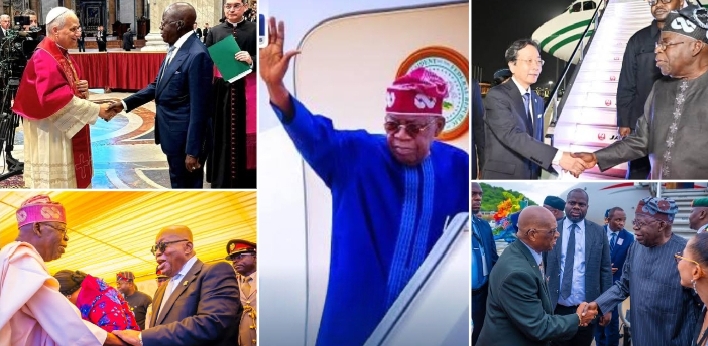

In 2025, President Bola Tinubu has navigated a fast-paced global itinerary—an outward-focused foreign policy designed to secure investment, energy support, and strategic alliances.
His diplomatic outings have spanned continents, blending statecraft with quest for economic transformation. Amidst domestic criticism of national austerity, these visits send a clear signal: Nigeria is doubling down on global relevance.
As of August, Tinubu’s Brazil stop represents both a culmination of strategic outreach and a pivotal moment in his foreign policy calendar.
Below, we detail the total number of his international trips in 2025, the countries he’s visited, and the significance of Brazil in this broader narrative.
The running tally (January–August 25, 2025)
1) Ghana — Accra (January 6–7, 2025)
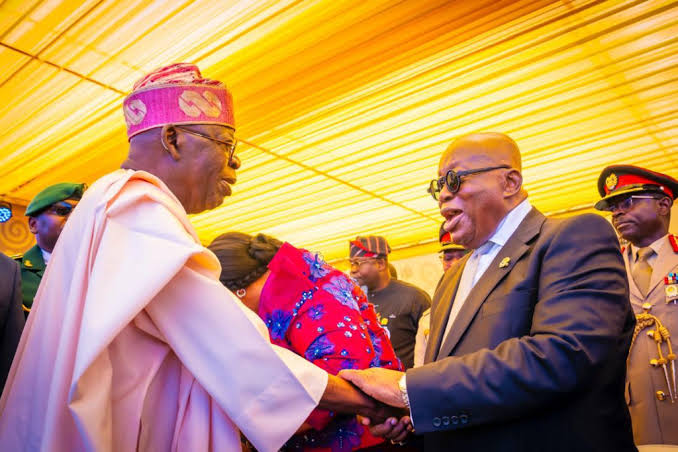
Tinubu’s year opened with a democratic ritual close to home: the inauguration of Ghana’s President John Dramani Mahama. The Nigerian leader’s presence in Accra doubled as a reset moment for ECOWAS diplomacy in a tense Sahelian neighbourhood.
Why it mattered:
Symbolism aside, showing up in Accra was about continuity: Abuja and Accra are the anchor capitals of Anglophone West Africa. With ECOWAS facing a strategic rethink after walkouts by Sahel states, visibility and rapport with Ghana’s new administration mattered.
2) United Arab Emirates — Abu Dhabi (mid-January 2025)
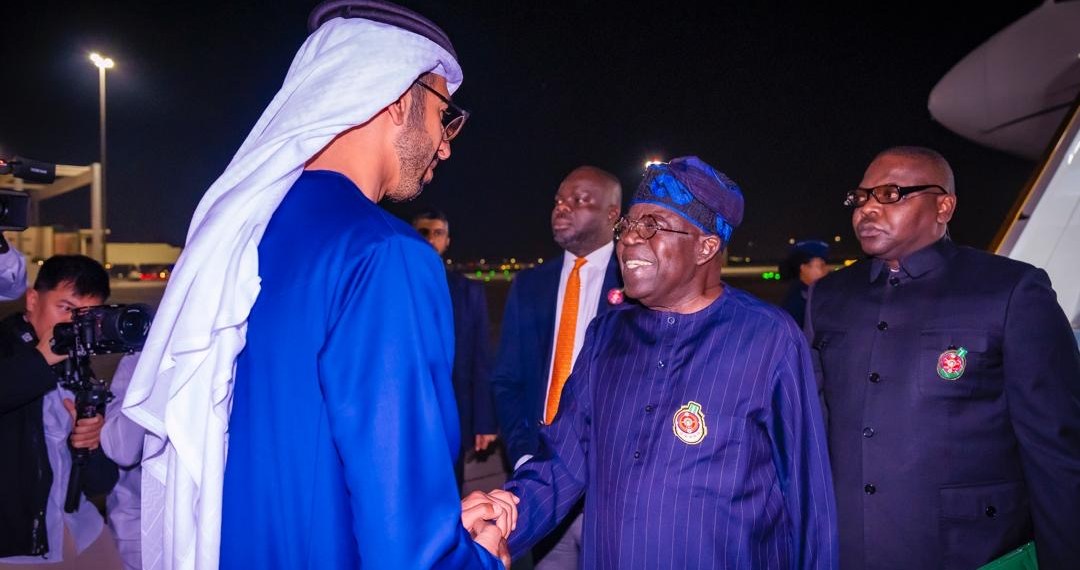
Within days, Tinubu flew to Abu Dhabi Sustainability Week (ADSW), courting Gulf capital and clean-energy partnerships while discussing a reciprocal high-level visit from the UAE presidency later in the year.
Why it mattered:
Nigeria’s energy transition requires private finance; the UAE is both a source of capital and a logistics node. The bilateral optics also fed a domestic narrative that foreign trips should convert to pipelines of investment and policy support.
3) Tanzania — Dar es Salaam (January 27–28, 2025)
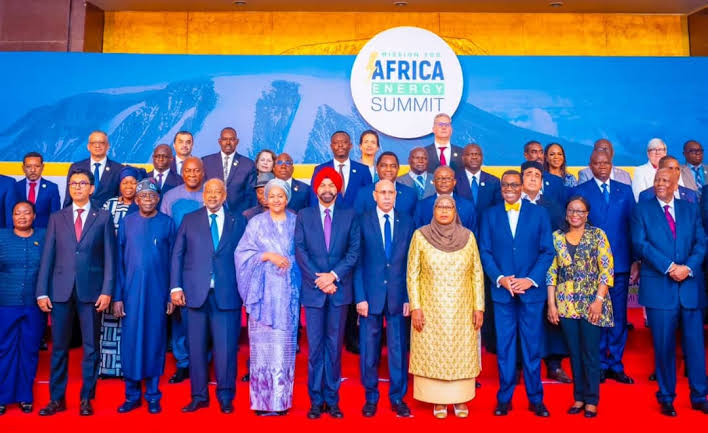
Tinubu then joined African leaders at the Africa Heads of State Energy Summit (Mission 300) in Dar es Salaam, focused on connecting 300 million Africans to electricity by 2030. State House briefings confirm his attendance and wrap-up.
Why it mattered:
Energy access is the foundation of Nigeria’s industrial policy. Dar es Salaam gave Abuja a seat at the design table of a flagship initiative coordinated with the AU, AfDB, and the World Bank.
4) France — Paris (from April 2, 2025)
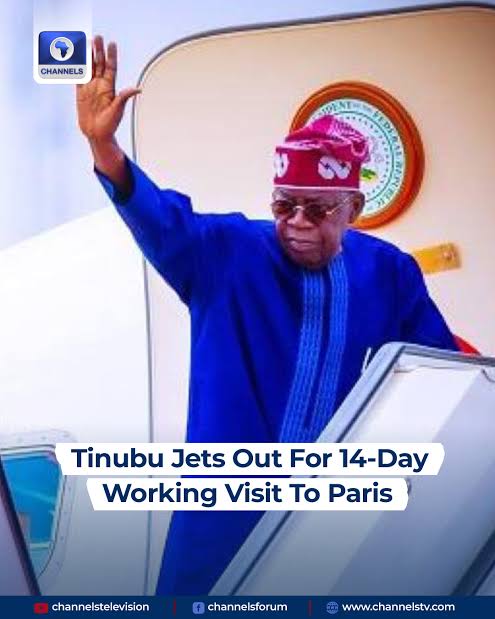
On April 2, Tinubu departed for a working visit to Paris—framed as a two-week strategic retreat to review reforms and mid-term milestones.
Channels TV and State House aligned on timing and rationale; commentary pages and explainer pieces debated optics and outcomes.
Why it mattered:
Paris is a favoured hub for discreet meetings with financiers, multilateral partners, and corporate lobbies. The presidency cast the trip as governance housekeeping, not deal-signing—yet it kept alive debates about time abroad versus domestic presence.
5) Italy — Rome/Vatican (May 17–18, 2025)
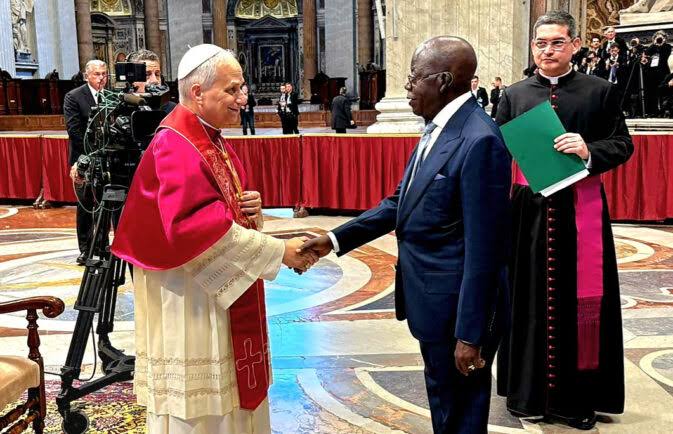
In mid-May, Tinubu travelled to Rome for the inauguration of Pope Leo XIV—a ceremonial stop with soft-power value for a multi-faith nation. The official note is crisp: depart Abuja Saturday; Mass on Sunday at St. Peter’s Square.
Why it mattered:
This was diplomatic protocol—yet it added a relational layer with Italy and the Holy See, useful for migration corridors, cultural diplomacy, and NGO interlocutors headquartered in Rome.
6) Saint Lucia — Castries (June 28–July 4, 2025)
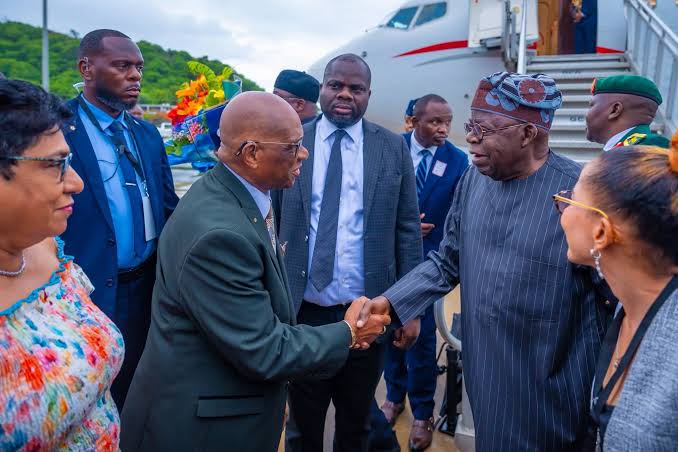
Caribbean outreach came next. Tinubu arrived for a state visit to Saint Lucia framed around the African diaspora (“Sixth Region”) agenda and OECS ties; regional press and OECS channels documented stops like Sir Arthur Lewis Community College. Some coverage noted that only a subset of the stay counted as official days, with the remainder classed as personal time.
Why it mattered:
This was South–South engagement beyond Africa—diaspora bonds, tourism flows, maritime training, creative industries, and potentially agritech exchanges with small-island economies seeking new partners.
7) Japan — Yokohama (August 18–22, 2025)
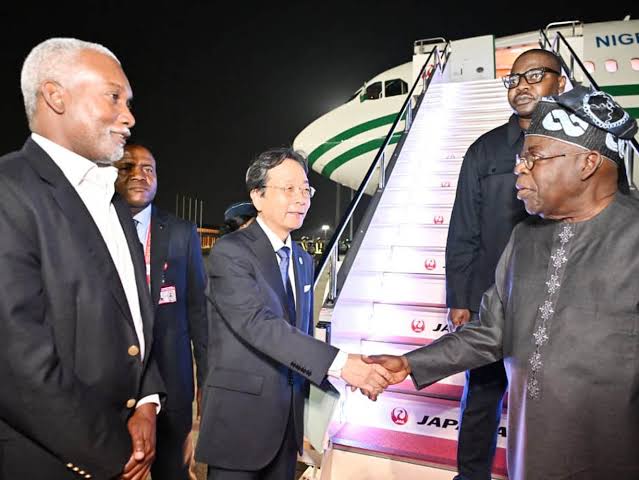
Tinubu attended TICAD9 in Yokohama, the long-running Japan–Africa forum that leans heavily on private-sector deal-flow and infrastructure funding. The presidency briefed that after TICAD, Tinubu would proceed to Brazil for a state visit—exactly how the itinerary unfolded.
Why it mattered:
Japan’s development banks and trading houses (sōgō shōsha) have deep experience in power, transport, and health systems. Nigeria’s reform story needs sovereign risk appetite; TICAD provides a shop window.
8) Brazil — Brasília (August 24–25, 2025)
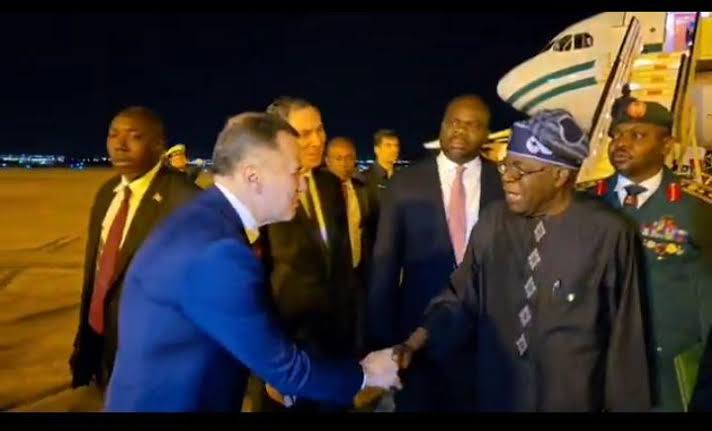
Finally, the Brazil state visit: bilateral with President Luiz Inácio Lula da Silva, institutional meetings across the legislature and Supreme Federal Court, an investment forum, and MoUs expected on agriculture mechanisation (reviving the “Green Imperative” programme), a Bilateral Air Services Agreement to unlock direct flights, and sectoral cooperation in energy transition, culture, and security. State House and multiple outlets confirm the aims and cadence.
Why it mattered:
Brazil mirrors Nigeria in scale of agriculture, biofuels expertise, and aviation demand. Direct flights could cut travel times to around eight hours, and agricultural kit/skills transfer can move the needle on food security if financing is structured well. (Officials have previously associated the Green Imperative with a multi-billion-dollar outlay over time; what matters now is execution detail in the signed text.)
What the critics and defenders say
Defenders’ case: Presidency surrogates argue the trips are strategic—particularly Brazil, for agriculture mechanisation and direct air links; and the broader 2023–2025 travel slate has helped court FDI pledges and placed Nigeria back in senior rooms after a period of drift.
Critics’ case: Opponents question time spent abroad and tangible conversion of trips to jobs, power capacity, or food output, warning that optics without delivery fuel cynicism.
Both frames will be tested by paper (what the MoUs actually say) and performance (what lands on the ground in 6–18 months).
Brazil is a good stress test: if the Green Imperative is genuinely financed and delivered (equipment, extension services, and off-take logistics), it’s measurable. If direct flights launch, consumers know. If trade volumes lift, customs data will show it.
The strategic through-line: what 2025’s map says about Abuja’s priorities
1. Energy access & transition (Tanzania, UAE, Japan)
Dar es Salaam was about Mission 300—grid and off-grid pathways for basic electricity. Abu Dhabi was about climate-finance gravity. Yokohama engages Japanese development finance institutions and corporates who build hard infrastructure. That triangle maps onto Abuja’s “power first” thesis.
2. Regional leadership & legitimacy (Ghana)
Turning up for Mahama’s swearing-in and keeping ECOWAS channels open helps Nigeria’s case as a regional stabiliser against the background hum of Sahel realignment.
3. Capital markets & policy house-keeping (France)
Paris is not only symbolism. It’s where multilateral and private finance meet European regulation, with pragmatic windows for debt operations, aviation, and energy deals. The Presidency pitched April as a planning window; public debate at home is the counter-weight.
4. Soft power & faith diplomacy (Italy/Rome)
Participating in the start of a papacy is protocol, yet it shores up Nigeria’s pluralist image, with downstream cooperation potential via religious orders active in health and education.
5. Diaspora & South–South linkages (Saint Lucia)
Caribbean links (education, creative industries, tourism, and maritime services) support the “four Ds” foreign-policy frame—Democracy, Development, Diaspora, Demography—that Aso Rock uses to justify the Caribbean push.
6. Commodity, aviation, and agri-mechanisation (Brazil)
Brazil fits Nigeria’s needs almost perfectly: large-scale agro-equipment, tropical agronomy, and a consumer-to-consumer flight corridor that’s currently underserved. The state visit’s value will be legible in direct flights and farm mechanisation rollouts.
Bottom line
As of August 25, 2025, President Tinubu has made at least eight foreign visits to eight countries in 2025, Ghana, UAE, Tanzania, France, Italy, Saint Lucia, Japan, and Brazil, with the Brazil state visit offering one of the year’s most concrete test cases for direct, citizen-visible outcomes (mechanised agriculture and direct flights).
The year’s map sketches a presidency trying to balance energy access, capital raising, regional leadership, and South–South bridges. The verdict, like any travel-heavy strategy, will turn on execution at home.
Discussion about this post