


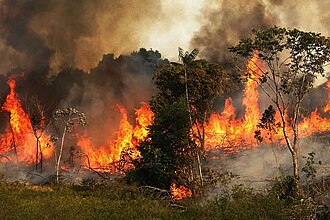

Bush burning remains a common sight across Nigeria, despite years of campaigns and policies warning of its dangers.
From villages to urban fringes, dry season often comes with smoke rising in the distance, signalling farmland or grassland being set on fire.
Experts say the practice has been part of farming culture for centuries, used to clear land quickly for planting.
Once described bush burning as a “silent destroyer” that contributes to soil degradation and climate change.
“Bush burning releases harmful gases into the air and destroys the fertility of the soil,” he said at a stakeholder meeting in Abuja earlier this year.
Farmers, however, argue that the method remains the cheapest and fastest way to prepare land.
But environmental scientists point out that while the land may appear ready, fire strips away organic matter that sustains the soil.
The danger also goes beyond farming.
Every year, the National Emergency Management Agency (NEMA) reports cases of uncontrolled bush fires spreading to homes and farmlands.
In some states, bush burning has destroyed cash crops, killed livestock, and displaced families.
The Nigeria Security and Civil Defence Corps (NSCDC) in January said bush burning was behind several fire outbreaks in the north-west during the harmattan season.
The agency warned that hunters and herders often use fire to drive animals out of hiding, but such fires easily spiral out of control.
Apart from immediate losses, bush burning contributes to climate change by releasing carbon dioxide into the atmosphere.
According to the Food and Agriculture Organisation (FAO), land fires are a significant source of greenhouse gas emissions in Africa.
Health officials also warn of respiratory risks when smoke fills the air.
Despite the risks, enforcement of anti-bush burning laws remains weak.
Many state governments have laws against the practice, but limited manpower makes monitoring difficult.
In Benue, for instance, officials say most farmers still prefer bush burning because they cannot afford tractors or herbicides.
Civil society groups believe the solution lies in providing alternatives rather than just punishment.
An environmental NGO, Green Earth Nigeria, has been training farmers in parts of Kaduna and Nasarawa on the use of composting and cover crops.
International partners are also beginning to step in.
In 2024, the United Nations Development Programme (UNDP) launched a project with local communities in Taraba to reduce bush burning by promoting sustainable farming methods.
Still, for many rural dwellers, fire remains the simplest tool.
Analysts believe this mixture of tradition, poverty, and lack of awareness explains why bush burning persists.
Until cheaper and accessible alternatives reach farming communities, the practice is unlikely to disappear.
For now, the sight of flames licking through dry grass at the edge of the forest remains a symbol of an old habit still shaping life in rural Nigeria.
Discussion about this post