


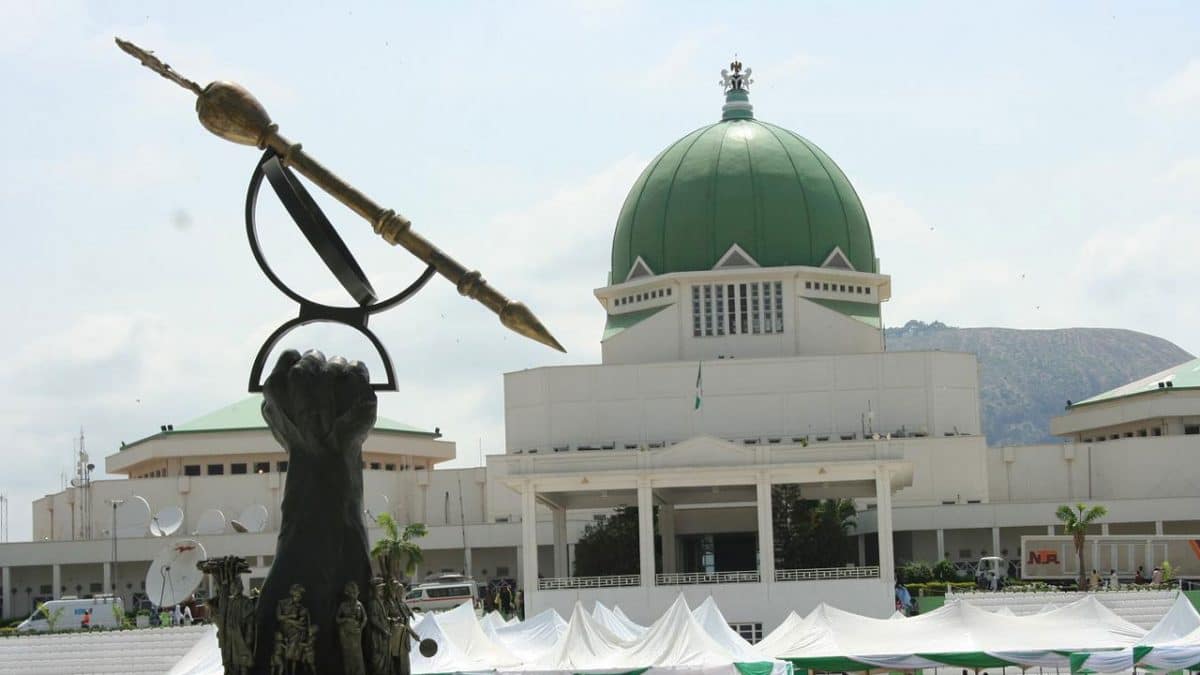

The debate on women’s special seats in the national assembly has returned to the centre of legislative discussion in Nigeria.
The proposal seeks to increase the number of women in parliament by reserving specific seats across both chambers of the federal legislature.
First introduced in the 9th national assembly as part of constitutional amendments, the bill was initially rejected during voting in 2022.
At that time, it was one of several gender-related reform bills designed to address the underrepresentation of women in governance.
The earlier version proposed 111 additional seats, with three reserved seats for women in each state and one in the federal capital territory (FCT).
Concerns over expanding the size of the legislature later led to a revised proposal under HB 1349, which reduced the figure to 74 seats.
The current draft includes a review clause, which provides for an assessment and possible termination after 16 years of implementation.
This provision aims to evaluate whether women’s participation has improved sufficiently to sustain equal representation without reserved seats.
The bill has advanced to the committee stage in the house of representatives, marking significant progress compared to earlier attempts.
Advocates of the measure argue that it could help bridge Nigeria’s long-standing gender gap in political representation.
Available data show that women occupy less than 5 percent of elective positions in Nigeria, one of the lowest rates in Africa.
Countries such as Rwanda, Senegal, and South Africa have adopted similar strategies, with notable improvements in women’s parliamentary presence.
In Rwanda, for example, constitutional quotas have contributed to women holding over 60 percent of parliamentary seats.
The Nigerian proposal, if passed, would establish a structured pathway for women to participate in decision-making at the national level.
Supporters highlight that increased representation could strengthen democratic governance by including a broader range of perspectives.
Issues such as health, education, social welfare, and gender-based violence are often cited as areas where women’s involvement could bring stronger focus.
Opponents, however, argue that reserved seats may not address deeper cultural and structural barriers that hinder women’s participation.
Critics also express concern about the financial implications of creating additional seats in the legislature.
The review clause has been introduced to address these concerns and ensure that the system remains temporary and subject to assessment.
International partners, including multilateral organisations, have encouraged Nigeria to consider policies that expand women’s participation in governance.
Such recommendations align with global targets under the United Nations Sustainable Development Goals on gender equality and inclusive institutions.
Beyond legislation, experts suggest that investments in education, mentorship, and political training for women remain critical.
They also stress that political parties play an important role in selecting and supporting female candidates during elections.
Historically, party structures in Nigeria have been dominated by men, limiting opportunities for women to secure party tickets.
Reserved seats are therefore presented as a complementary measure to other reforms aimed at reducing barriers to women’s political advancement.
Data also indicate that more inclusive legislatures tend to produce policies that address social and economic development more effectively.
By expanding participation, legislatures are better positioned to reflect the demographics and diversity of the societies they serve.
Women’s special seats in the National Assembly could therefore be viewed as part of a broader effort to strengthen representation.
The initiative also reflects a growing recognition that structural adjustments are sometimes necessary to achieve long-term equality.
Globally, more than 60 countries have adopted some form of gender quota in their legislative systems.
Nigeria’s consideration of this approach signals a gradual alignment with international practices in democratic governance.
Whether the proposed bill will pass into law remains uncertain, as constitutional amendments require broad support across both chambers and state legislatures.
The outcome will depend on political consensus, public acceptance, and the willingness of institutions to adopt change.
What remains clear is that the discussion has placed women’s representation firmly on the legislative agenda.
The coming months are expected to determine whether Nigeria takes a decisive step toward expanding women’s role in parliament.
If implemented, the review process will provide future assemblies with an opportunity to assess the effectiveness of the policy.
Until then, the issue of women’s special seats continues to generate debate, reflecting ongoing questions about inclusivity in Nigeria’s democracy.
Discussion about this post