


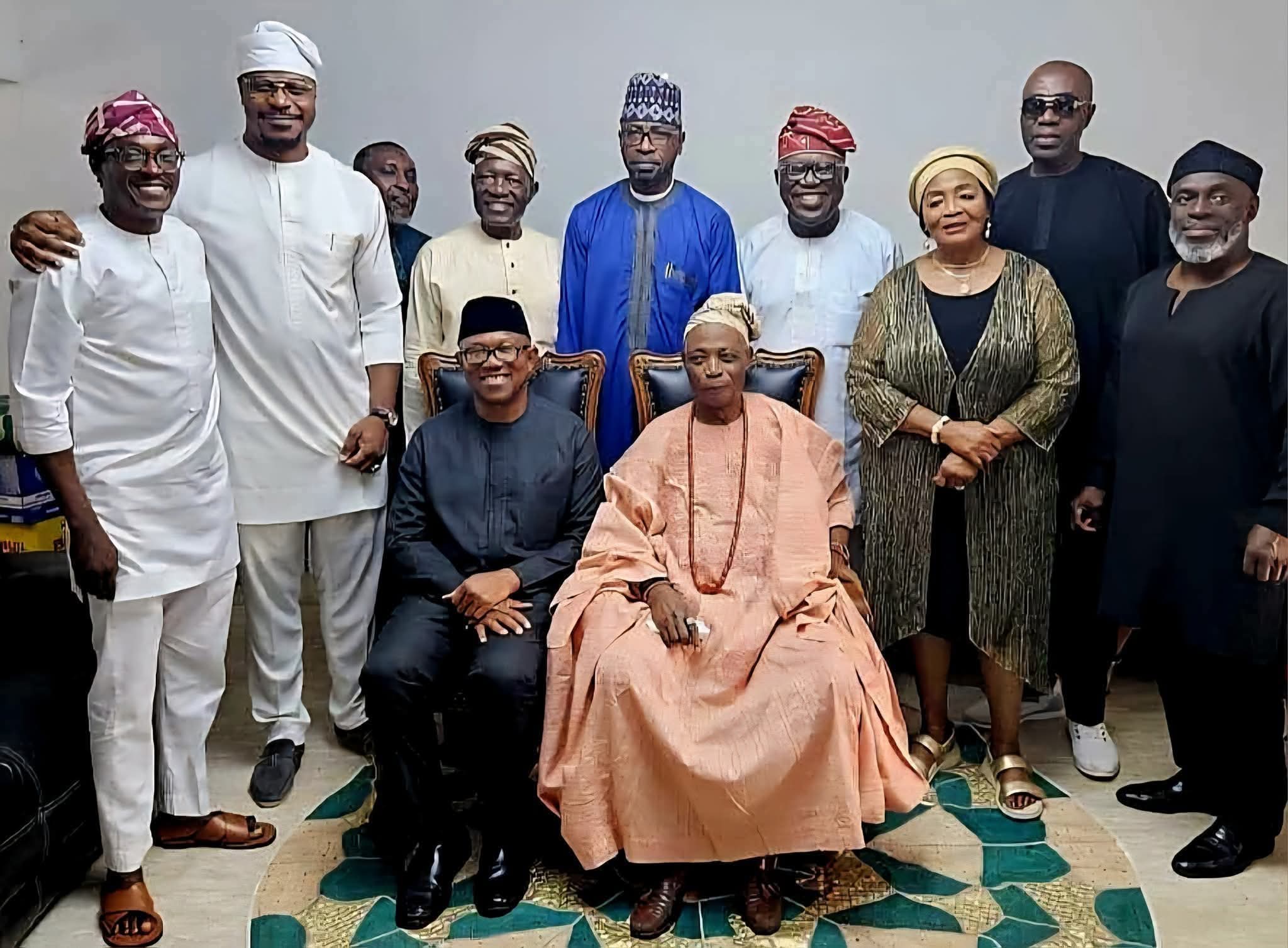

While they vent their spleens and pour out their bile in grandiloquent sophisms to castigate Obi under the guise of conservatism and protection of sacred Yoruba tradition, they excused President Tinubu’s description of Oba Ladoja as his brother and justified the same heresy they wanted to crucify Obi for because the whole outrage was not really about a harmless appellation.
Last week, Ibadan stood still for the coronation of his royal majesty, Rashidi Ladoja, as the Olubadan of Ibadan. The tranquillity and serenity of the picturesque Mapo Hill atop which the grand and monumental Mapo Hall sits was punctuated by the seesaw of sirens and blaring of horns from the endless stream of convoys of dignitaries, including president Bola Tinubu, governors and other powerful and influential Nigerians, who trooped into the idyllic town for the coronation of Oba Ladoja as the 44th Olubadan.
It was a momentous day that marked the tremendous climax in the journey of man whose life is riddled with political persecution, social ostracism, setbacks, travails and tribulations. The journey has become a metaphor for perseverance, endurance and patience. He has not only outlived many of his adversaries and sworn political enemies who extinguished the smouldering embers of his governorship ambition and unceremoniously kicked him out of office as a democratically elected governor, but he has ascended one of Nigeria’s coveted and highly revered thrones.
However, while many joyous Nigerians were engrossed in the rich, beautiful traditions and enthralling pageantry and the overall pomp of the coronation, a drama was unfolding on social media. What was supposed to be a simple, warm heartfelt congratulatory post to the new Olubadan sparked a mass hysteria and furore over an endearing label many deemed a disrespect to the new monarch. The former governor of Anambra State and the presidential candidate of the Labour Party in 2023, Peter Obi, in a post on X (formerly Twitter), congratulated the new Olubadan, describing him as “my dear brother”.
No sooner had he made the post than some self-acclaimed Yoruba conservatives latched on to it, took umbrage at and expressed their displeasure at what they described as a disrespect and disregard for the sacred throne of the monarch and Yoruba tradition. One of the unintended consequences of Obi vying for the presidency in 2023 is that it made him the target of trolls and demagogues. The outcome of the election, which elevated his political status and somewhat cemented his place as one of Nigeria’s leading and influential politicians, made him the cynosure of the public and constantly put him in the eye of the storm.
His actions are exceedingly scrutinised, his foibles are magnified, his weaknesses are amplified and his shortcomings are needlessly dwelt on. Where other influential and powerful people get a free pass and are largely ignored for certain untoward actions, Obi is pummelled and vilified for the slightest infractions. Where others are mollycoddled, he is subject to rebuke and reproach. It is this backdrop of bias and prejudice that spurred the angst and infuriation of those who took offence at Obi’s description of King Rashidi Ladoja as his brother. Never mind that President Bola Tinubu and former Vice President, Alhaji Atiku Abubakar, also described the monarch as a brother in their respective congratulatory messages, and no one made a fuss about their choice of words.
There are those, especially Obi’s supporters, who could not possibly understand what the outrage over the description of a monarch as brother — by a politician who happened to be a governor at the same time the monarch was a governor—was all about. Any objective and dispassionate observer of the whole furore would easily see through the hypocrisy, double standards and shenanigans of those who were up in arms and were calling for Obi’s head for calling Olubadan his brother.
While they vent their spleens and pour out their bile in grandiloquent sophisms to castigate Obi under the guise of conservatism and protection of sacred Yoruba tradition, they excused President Tinubu’s description of Oba Ladoja as his brother and justified the same heresy they wanted to crucify Obi for because the whole outrage was not really about a harmless appellation. It was a hysteria driven by an insatiable need to display an unfathomable level of dogwhistles and bigotry towards a certain person and a group of people.
Honestly, one would have no problem with seeing for what they were what these latter-day protectors of Yoruba tradition and self-styled custodians of our culture wanted us to believe their outrage and uproar were all about and even lend our voice to the reproach of the person they deemed to have committed a sacrilege, if they had displayed such aggression, assertiveness and militancy when Yoruba monarchs and traditional institutions were ostensibly belittled and disrespected by a Yoruba politician in the past.
There are many occasions where our highly revered monarchs have been treated with scorn by top Yoruba politicians. In 2018, in the build-up to the Osun State gubernatorial election, at the palace of Ataoja of Osogbo, Jimoh Olanipekun, President Bola Tinubu, who was the national leader of the All Progressives Congress at the time, boasted that “Osun doesn’t have my kind of money”. Also, Tinubu’s son, Seyi, was once photographed some years back playfully stroking and fiddling with the beard of Oba of Lagos, Riliwan Akinolu. In these two instances, we did not see a stern unambiguous condemnation of the debasement of the two monarchs and affront to the Yoruba traditional institutions and culture.
Furthermore, Obi has since clarified his use of ‘brother’ to describe Olubadan. He stated that he did not mean to disrespect the king by calling him his brother. Any open-minded, sane and objective person could not have possibly interpreted Obi’s description of the monarch as his brother to mean he is ridiculing and deriding the king. Any reasonable and sensible person knows that when a man identifies another man with whom he has no familial relationship as a brother then it means great affection. Obi, trying to explain that he meant no disrespect with his appellation, is like trying to wake a man who pretends to be sleeping.
In his bid to be seen as a forthright, accountable, compassionate, approachable and listening leader, he opens himself up to the antics of unruly and overbearing and rabble-rousing chauvinists who are bent on finding fault in even his most altruistic action and noblest gesture. In being implicitly solicitous and utterly civil, he has become a people pleaser, hence rewarding their nuisance and inadvertently reinforcing the pejorative insinuation of a wimp. If a northern politician like Kwankwaso had called the new Olubadan his brother, the same people who are baying for Obi’s blood who have hailed and cheered him for displaying great camaraderie and extending a handshake across the Niger.
Many Nigerians know Obi’s disposition and public persona underscore humility and diplomacy. He must, however, understand that in Nigeria’s perilous, tough and unforgiving socio-political terrain, assertiveness, braggadocio, ruthlessness and occasionally disregard for the governed are often seen as features of sound and good leadership. He cannot continue to treat his pernicious traducers with pernickety deference. He cannot continue to walk on eggshells while he gets trampled upon by those who do not care about him.
Discussion about this post