


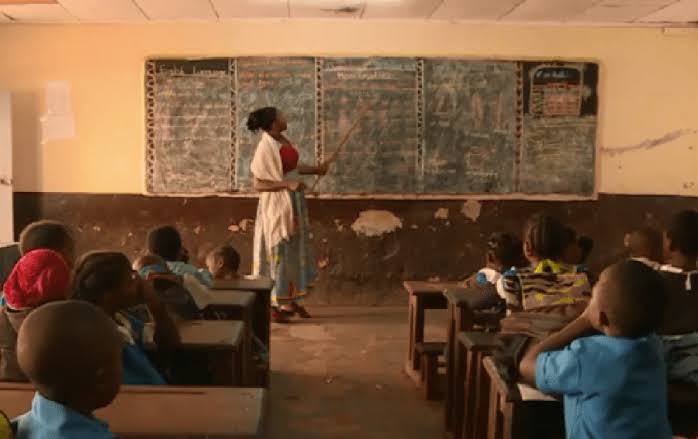

Across Nigeria, the shortage of qualified teachers in basic schools has become a growing concern for parents, educators, and policymakers.
For years, many public schools have struggled with low teacher numbers, especially in rural communities where education facilities are already limited.
Classrooms are overcrowded, and one teacher is often responsible for multiple subjects or levels at the same time.
This has affected the quality of learning, as pupils receive less attention and guidance in core subjects such as mathematics, English, and science.
The challenge is not entirely new but has deepened with population growth and the expansion of school enrolment across states.
Education experts have repeatedly identified teacher shortage as one of the main barriers to achieving quality education in the country.
While the government continues to build schools, the number of available teachers has not kept pace with the rising number of learners.
Recruitment drives are sometimes delayed due to funding constraints, leaving many classrooms without trained instructors.
In some rural areas, volunteer teachers or youth corps members temporarily fill the gap, but this is rarely a long-term solution.
Many qualified teachers prefer urban postings where working conditions and infrastructure are better.
As a result, rural schools often depend on untrained or underqualified personnel to manage daily teaching activities.
This imbalance contributes to poor learning outcomes and wide performance gaps between urban and rural pupils.
The situation is further complicated by the ageing teaching workforce, with many experienced educators nearing retirement.
Replacement is often slow, as recruitment processes are lengthy and budgets for salaries remain limited in several states.
Teacher motivation is another concern, as delays in salary payment, poor welfare, and lack of career progression discourage many from staying in the profession.
In some states, teachers face long commutes and inadequate housing, making it difficult to remain committed to their jobs.
Training opportunities are also limited, leaving many teachers without access to updated teaching methods or materials.
The use of outdated instructional techniques affects pupils’ understanding and reduces classroom engagement.
Government agencies have introduced various initiatives to attract and retain teachers, including professional development programmes and digital learning tools.
These efforts aim to equip teachers with modern skills and make the profession more appealing to young graduates.
Despite these interventions, the shortage continues to grow, especially at the basic education level where early learning is most critical.
The Universal Basic Education scheme has improved access to schooling, but the shortage of teachers has slowed progress in quality delivery.
In some communities, parents and local groups have taken it upon themselves to support schools through volunteer teaching or local funding.
While this helps in the short term, education specialists stress that consistent government involvement is essential for sustainability.
Technology has been proposed as one of the ways to bridge the gap, with e-learning platforms and radio lessons supporting classroom teaching.
However, poor internet connectivity and lack of digital devices limit the success of such innovations in rural areas.
Data from education authorities show that the pupil-to-teacher ratio in many public schools far exceeds recommended standards.
In some cases, one teacher handles more than 80 pupils per class, making effective learning almost impossible.
The imbalance also places stress on teachers, leading to burnout and reduced classroom performance.
To tackle the crisis, many states have begun reviewing recruitment policies and exploring decentralised hiring processes.
This allows local education boards to identify and employ teachers based on community needs rather than central allocation.
Efforts are also being made to improve teacher training colleges and make teaching more attractive through incentives and recognition.
Some states have introduced bonus payments, housing support, and rural posting allowances to encourage teachers to serve in remote locations.
Experts say these incentives could make a difference if implemented consistently and transparently.
The teacher shortage has long-term effects on the nation’s human capital development, as basic education forms the foundation for future learning.
Without enough trained teachers, Nigeria risks a generation of pupils who lack the skills needed for higher education and employment.
Stakeholders continue to call for stronger collaboration between federal, state, and local governments to prioritise teacher welfare and recruitment.
Investing in teachers, they argue, is not just about salaries but about building the capacity to shape the country’s future workforce.
Addressing the silent crisis requires consistent funding, accountability, and recognition of teachers as essential partners in national development.
Until the shortage is properly addressed, the dream of quality education for every Nigerian child will remain difficult to achieve.
Discussion about this post