


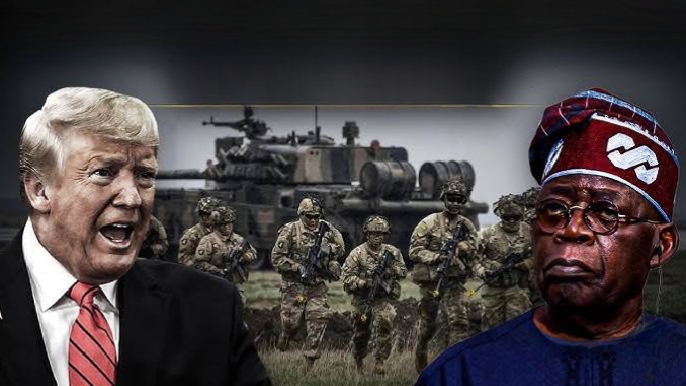

A dusty late‑afternoon in Abuja, the sun already dipping behind the red‑brown skyline of the Nigerian capital, set the stage for an extraordinary diplomatic tremor. Government officials gathered in quiet conference rooms. Military commanders exchanged terse messages. On the other side of the Atlantic, in Washington, a public message landed—sharp, uncompromising, loud. Donald Trump had declared that the United States might soon intervene militarily in Nigeria. The trigger: what he called a Christian genocide—mass killings of Christians in Nigeria whose government, in his words, “allows” them to continue. The shockwaves were immediate. In Nigeria’s federal capital, in the Middle Belt towns battered by insurgency, among Christian and Muslim communities alike, the question rose: Could a U.S. president legally order troops into this sovereign African state? And if so, under what authority—and with what risks?
Against a backdrop of insecurity, disputed data and patriotic sovereignty, the rhetorical threat floated by Trump carried a weight rarely seen in U.S.–Africa relations. The idea of a U.S. military operation in Africa often evokes images of small counter‑terrorism teams—not full‑scale invasion. Yet here the threat was explicit: “using military force,” “invade Nigeria,” “guns‑a‑blazing,” the rhetoric went. The story that follows charts how we arrived at this moment: the allegations, the law, the responses, the implications. It attempts to humanize what otherwise might read like dry legal‑theory: the lives of Nigerians caught in the cross‑hairs of violence, the diplomats scrambling to prevent escalation, the legal scholars raising red flags. Ultimately, this is both a story about whether the United States can do this—and whether it should.
The Allegation: Christian Genocide in Nigeria
For decades, Nigeria has lived on the fault lines of competing pressures: ethnic tensions, religious diversity, armed insurgency, herder‑farmer conflict, banditry, and weak governance. Within that complexity, claims emerged that one dimension of violence was being under‑reported: Christian communities targeted, according to some observers, for their faith. The term “genocide” is rarely used lightly in international affairs; to apply it demands the legal threshold of intent to destroy in whole or part a religious or ethnic group.
Trump’s claim centred on just that: “Christianity is facing an existential threat in Nigeria,” he wrote, alleging that “radical Islamists” were slaughtering Christians and that Nigeria’s government was not acting. But the moment the allegation was made, critics offered pointed rebuttals. Nigeria’s government insisted the killings, while real, affect all faiths and are driven by land disputes, insurgency and banditry rather than a systematic campaign against Christians.
The narrative of Christian genocide gained traction in part because of high‑profile violent incidents: attacks on villages, reported deaths of hundreds, scenes of displacement. But legal scholars caution the term may overshoot the documented facts. Some argue the violence is too unevenly documented and the motive too diffuse to meet the strict definition of genocide under the Genocide Convention.

What happens when a U.S. president frames the situation in such a stark way? The implication is that moral urgency justifies extraordinary response. But the danger lies in simplifying a multifaceted conflict into a binary of persecutors and victims, faiths and killers. In Nigeria, Christian and Muslim communities alike feel under threat. In the Middle Belt and the North‑West, farmers and herders clash, bandits raid indiscriminately, and insurgents attack both Christians and Muslims. The result: a story of violence, heartbreak and failure of state protection—not necessarily a clear‑cut genocide. The human toll is significant—but clarity of motive and structure matters for the law.
U.S. Threat: Military Force on the Table
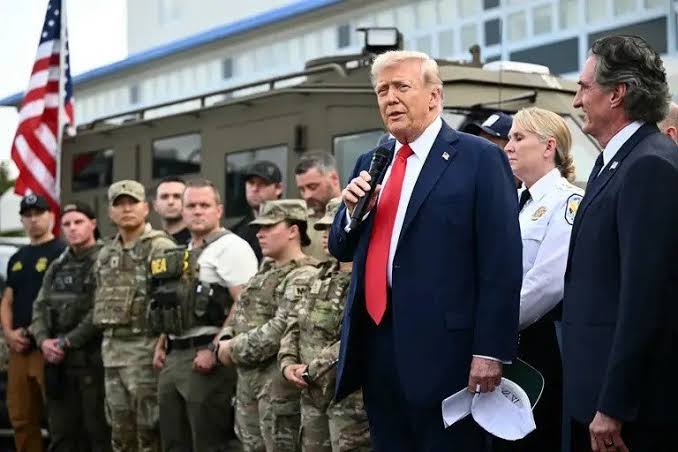
On 31 October–1 November 2025, President Trump announced that he had instructed the U.S. Department of Defence (re‑branded the “Department of War” in his rhetoric) to “prepare for possible action” in Nigeria if the government failed to stop the killings of Christians. He said: “If we attack, it will be fast, vicious and sweet, just like the terrorist thugs attack our cherished Christians!”
He also framed Nigeria as returning to a list of “Countries of Particular Concern” (CPC) for religious‑freedom violations, signalling diplomatic and economic sanctions alongside military options.
The reaction in Nigeria was immediate. Officials publicly rejected the characterization of state‑backed religious persecution and emphasised Nigeria’s constitutional guarantee of religious freedom. Analysts pointed out that even if the U.S. military were to engage in Nigeria, it would not look like a typical U.S. ground invasion, more likely a joint operation or air‑strike scenario—but the language of “invade” and “guns‑a‑blazing” intentionally raised the stakes. The threat itself became a geopolitical lever.
What does it mean when the world’s most powerful military powers publicly state they are “ready” to use force in another sovereign country over alleged human‑rights breaches? To many observers, this represents a shift—where humanitarian narrative blends with militarised doctrine. The crucial question is not just what Trump says he will do, but by what authority he believes he can do it.
International Law: The Strict Limits on Military Intervention
Under modern international law, the starting point is clear: States must refrain from the threat or use of force against the territorial integrity or political independence of any other state. This is enshrined in Article 2(4) of the United Nations Charter.
Legal commentary has emphasised that not only the use of force but also a threat of force can violate that prohibition. For instance, the International Court of Justice’s jurisprudence establishes that expressions of intent to use force may in themselves be wrongful acts.
There are only two recognized exceptions to the prohibition: self‑defence (where a state is subject to an armed attack) and action authorised by the UN Security Council under Chapter VII of the Charter. Neither appears to apply here. Nigeria has not attacked the U.S., nor is there a public UN Security Council resolution authorising U.S. force. Legal scholars in Nigeria agree: any unilateral U.S. action would lack legal basis.
On the U.S. side, domestic law also limits presidential power. The U.S. Constitution vests the power to declare war in Congress. The War Powers Resolution (1973) requires consultation and authorisation for introducing U.S. forces into hostilities. Scholars argue that deploying troops or launching strikes in Nigeria without congressional approval would breach those rules.
Therefore, the basic legal verdict is that the threat to “invade Nigeria using military force” lacks a clear legal foundation in either international or U.S. domestic law. That does not render the rhetoric harmless, however—it triggers diplomatic, economic and security consequences. As one Nigerian legal expert put it: “The U.S. redesignation of Nigeria as a ‘Country of Particular Concern’ is legitimate; using that as a cover for invasion is not.”
Nigerian Sovereignty and Regional Implications
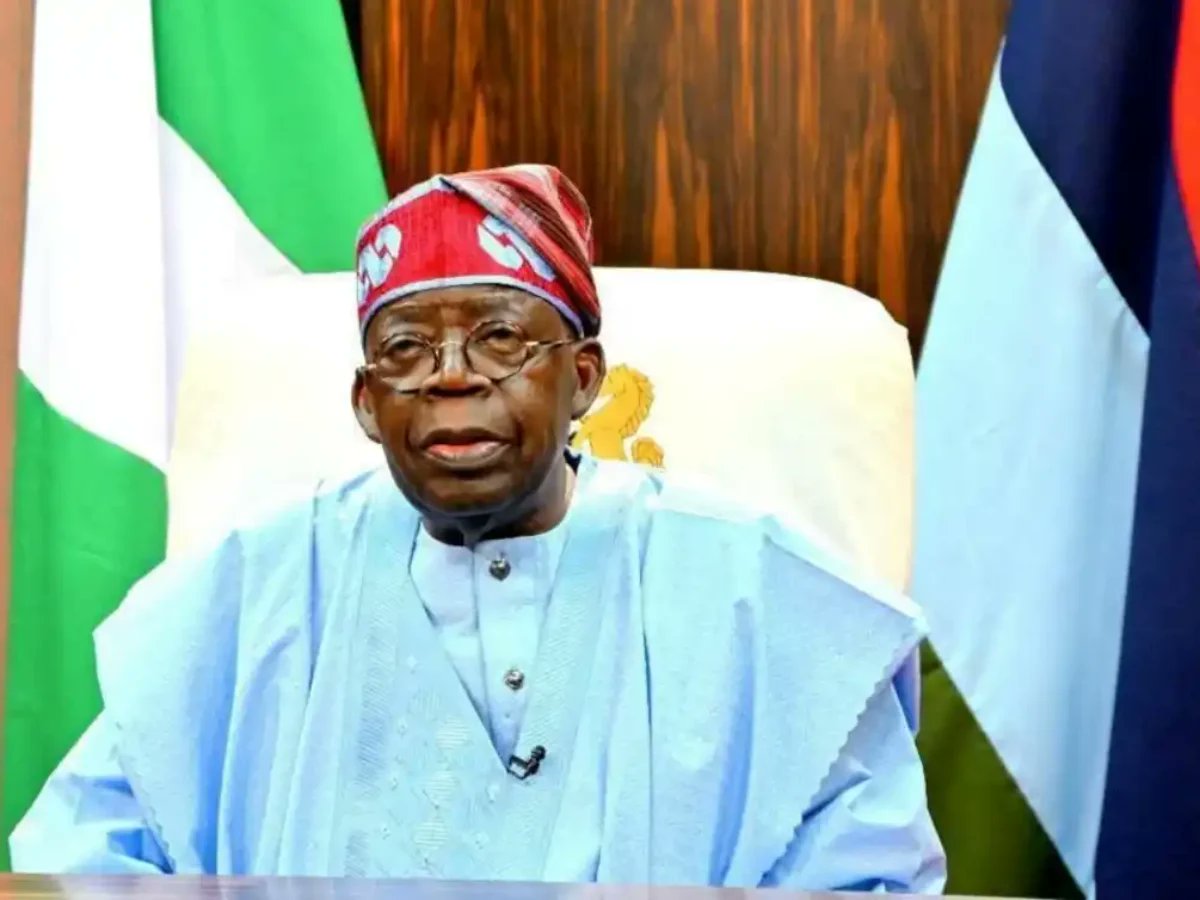
Nigeria is Africa’s most populous country and one of its most geopolitically significant. Its constitution guarantees secular governance and religious freedom, and its government has stressed repeatedly that it rejects any form of state‑backed religious persecution.
A threat of foreign military intervention—no matter how rhetorically framed—strikes at the heart of sovereignty. In Abuja and beyond, the reaction was two‑fold: frustration over the violence, and alarm about external pressure. In some circles, the U.S. talk was seen less as protection than as leverage. According to one analysis, the military threat may serve less as immediate action and more as a diplomatic bargaining chip.
Regionally, any U.S. force deployment in Nigeria would send ripples across West Africa, potentially altering how the continent perceives U.S. engagement. Would Nigeria invite U.S. troops? Would regional organisation such as Economic Community of West African States (ECOWAS) accept such involvement? What of neighbouring countries worried about foreign forces on African soil? These are not theoretical—they tether to how African nations guard sovereignty and how global powers project force. The Nigerian government insisted that any assistance from foreign partners must respect Nigeria’s territorial integrity.
The Human Under‑belly: Lives Worn by Conflict
Behind the headlines and legal arguments are communities feeling the brunt of violence. In the Middle Belt—states such as Plateau, Benue and Kaduna—farmers say they sleep with doors unlocked and guns within reach. Villages that once celebrated harvest now bury bullet‑ridden bodies. Christian and Muslim alike recount similar traumas; neither has a monopoly on suffering. Some survivors say they felt abandoned by local security forces, others say they struggle to reconcile when faith becomes the lens of conflict rather than shared humanity.
For those communities, external intervention might seem both seductive and terrifying. A U.S. military deployment could promise protection—but also foreign boots, collateral damage, new forms of instability. A ground invasion raises the spectre of air strikes, proxies and unintended casualties. What happens if the intervention meets resistance from militants? Or if it fuels retaliatory attacks? The fear is that violence could escalate rather than end, leaving local people deeper in the cross‑fire.
Civil society voices in Nigeria also raise fears of narrative capture: when “Christian genocide” becomes the accepted frame, local nuances fade. Many incidents of violence are driven by land grabs, climate change, resource depletion, and criminal networks—factors beyond any single faith identity. To some Nigerian observers, the risk is that foreign intervention will treat a complex, multifaceted crisis as a simple religious war—and thus mis‑target responses.
Strategic Motives and the Question of Will
Why would a U.S. president threaten military intervention in Nigeria? Several threads come together. First, pressure from evangelical Christian groups in the U.S.—who see the protection of Nigerian Christians as a moral imperative. Second, electoral and ideological incentives—tough foreign‑policy stances often resonate with certain domestic constituencies. Third, broader geostrategic competition in Africa: Nigeria holds oil, gas, minerals, strategic location, and influence in West Africa; losing it to other power blocs would matter. Some analysts therefore see the “genocide” frame as one piece of a broader strategic jigsaw.
But threats of intervention are easier to issue than to execute. Deploying troops abroad is expensive, politically risky, and highly visible. Logistical challenges in the Nigerian terrain are substantial. Intelligence about militant groups is imperfect. Coordination with local forces would be mandatory for any meaningful operation. If Nigeria does not invite U.S. forces, then any unilateral move becomes diplomatically toxic. In that sense, the threat may function less as an intention to invade than as a signal of leverage. Whether the will to follow through exists is an open question.
If It Went Ahead: Legal and Practical Scenarios
Suppose the U.S. did initiate military action in Nigeria. What would that look like, and under what legal basis? The most plausible scenario would be a joint operation: Nigeria invites U.S. forces to assist in counter‑terror operations targeting insurgents who kill Christians and Muslims alike. That scenario would respect sovereignty and avoid the label of invasion. If instead U.S. forces entered unilaterally, without Nigeria’s consent and without UN authorisation, it would constitute a breach of international law and risk international condemnation.
From the U.S. side, Congress would need to authorise use of force (via the War Powers Resolution or a new AUMF). Failure to do so would raise domestic legal challenges. Even with that in place, the U.S. would need a Status of Forces Agreement (SOFA) to clarify legal protections for its troops. Without such arrangements, political and legal risks multiply.
On the ground, the operation would face innumerable hazards: distinguishing combatants from civilians, avoiding collateral damage, respecting human rights standards, coordinating with Nigerian forces whose capabilities are variable, and managing local civilian expectations. Historically, interventions framed as rescue missions often face backlash—especially when local communities feel bypassed. The point: even if legal, such an operation would be messy, risky and morally fraught.
Scenarios and Risks for Nigeria
Nigeria finds itself between a rock and a hard place. On one hand, the violence against Christian and Muslim communities alike continues. On the other hand, the threat of foreign intervention provokes nationalistic backlash, undermines sovereignty and diverts attention from the root problems of governance, accountability and resource conflict. If U.S. forces did deploy, even with invitation, Nigerian government would have to make hard decisions: share intelligence, host foreign troops, risk domestic criticism, and monitor civilian protection outcomes.
Regional actors would watch closely. ECOWAS might face pressure to respond. Other African states may view this as a dangerous precedent—of major powers using human‑rights rhetoric as pretext for intervention. Within Nigeria, militant groups would likely exploit any foreign presence as propaganda: “foreign boots on our soil” can become a recruitment tool. Domestic disputes over land, ethnicity and religion could escalate if locals perceive the intervention as siding with one group.
In economic terms, the mere threat has already had consequences: investor confidence declines, bond yields may rise, Nigeria’s foreign policy flexibility shrinks. If the U.S. follows through, Nigeria might pivot more decisively toward China, Russia or other partners less conditional on internal reforms. For Nigeria the real risk may not be war—but strategic drift.
Closing Reflection
The disturbing images of villages razed, of families bereft of protection, demand responses. They cry out for justice, accountability and sustained security efforts. Yet the question of whether the United States can lawfully “invade Nigeria using military force” must be answered with clarity: as publicised, the threat lacks a clear legal basis under international law and U.S. constitutional norms. The language of “Christian genocide” may rally moral urgency, but legal framework demands far more rigorous foundation.
For Nigeria, the moment demands not just diplomatic defiance but serious internal reform: strengthening rule of law, ensuring accountability, protecting all citizens regardless of faith, repairing governance failures that allow violence to thrive. The U.S. threat may represent a moment of external pressure, but it cannot substitute for domestic action.
In the final analysis, the question is not simply whether the U.S. can invade—but whether it should. Military force carries heavy costs, moral and material. If the goal is the protection of vulnerable citizens, then a broader strategy of partnership, reform and prevention may offer more durable results than the thunder of guns. The syrinx of intervention may carry power—but wisdom lies in knowing when its call is appropriate.
Discussion about this post