



It is the government’s own inability to act decisively on matters of security and deal ruthlessly with those who have made destruction of their own land and spilling the blood of their compatriots for sport that has forced the people to take the words of misguided agents of destabilisation posing as secessionists over the sensible and reasonable commands of a constituted authority.
When the checkered history of Nigerians is written, whether in the near or distant future, the indigenous people of Biafra will likely occupy a dark and repulsive place in it. They may have started out as a peaceful organisation seeking the secession of the South East geopolitical zone and some parts of the South-South. They are not just trying to revive, reenact and actualise the separatist struggle of the eastern region of yore spearheaded by the late Odumegwu Ojukwu, during which millions of Nigerians lost their lives in the protracted three-year civil war that the secession agitation engendered.
The issue of Nnamdi Kanu, the leader of IPOB, and his band of fellow misguided journeymen separatists has become a debilitating fishbone that is stuck in the throat of the Nigerian state, hard to swallow and equally difficult to spit out. After fleeing Nigeria in 2017 following a deadly raid on his home in Abia State by the Nigerian security forces, Kanu fled to London, where he continued his vicious and destructive campaign of hate and sedition against the Nigerian state using the infamous Radio Biafra.
This dangerous, divisive and abhorrent rhetoric plunges the South East region, an enclave largely hitherto immune to the violence and upheaval that envelops most parts of Nigeria, into chaos and instability. Bloodshed, wanton killings, violent attacks and social upheavals became the order of the day. His campaign of mayhem and destabilisation turned the nation’s most thriving commercial region into a dormant and soulless entity. It stunts its growth and destroys its socio-economic ecosystem.
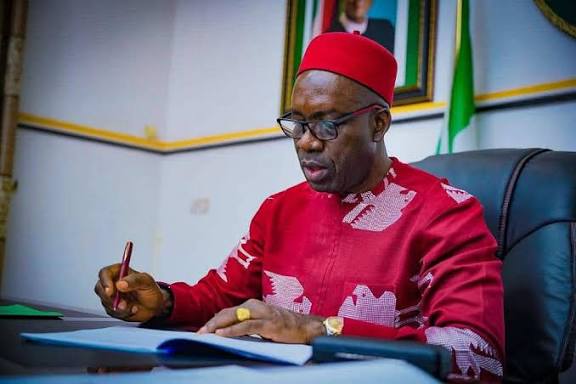
On Thursday, Anambra State governor, Professor Chukwuma Soludo, shut down Onitsha Main Market over the traders’ decision to observe the Monday sit-at-home in the state, which has cripple socio-economic and commercial activities in the state. The governor also declared a total crackdown on what he called economic sabotage by the traders.
According to the governor, the shutdown will last for a week; if the market is not reopened by next week, it will be extended to one month. It is easy for the state government to grandstand and threaten those who obey the Sit-at-home order but the IPOB became the menace they are now because politicians and elders in the East either tacitly supported their cause or kept a safe distance for fear of being labelled accomplices of subversive elements.
By shutting their Onitsha market, the governor is putting the cart before the horse. In Nigeria, as it is with many other countries, especially those whose government has lost the monopoly of violence then fear, intimidation and violence are instruments of coercion. The government cannot punish the people for its dereliction of duty. If the government watches on as IPOB uses violence to enforce a sit-at-home order and does little or nothing to stop such troubling shenanigans of the non-state actors, it then loses the authority to nudge people in the direction of normalcy.
The government cannot compel people who have been at the receiving end of IPOB’s barbarous and terror campaign — people who have been the victims of IPOB’s mindless atrocities, people who have witnessed firsthand the brutal spitefulness and murderous behaviour of IPOB, people who have watched their land desecrated and defiled by the destructive deeds of those who couch barbarism and terrorism in the garb of noble and rightful secessionist cause — to obey its orders to defy and disobey the directive of those it cannot protect them from their wrath.
A government that is serious and determined to end the sit-at-home scourge must make the consequences of issuing such an order grave. It must meet the recklessness and impunity of those who issue the reprehensible and distasteful with full force and might of the law. The government must replace the fear and doubt the enforcer of the Sit-at-home order has instilled in the people with total assurance of their security and guarantee of their safety. What the government should have done before issuing the blanket order is to go after the very people whose actions undermine its authority, whose fiat and fatwa the largely timorous people distressfully obeyed over the legally binding order, constitutionally backed proclamation of the state governor.
The state government needs to go beyond its somewhat perfunctory order and threat of market closure that does nothing to tackle the real issue but only puts the people in harm’s way. It will be exceedingly difficult for the Anambra State government to convince the state residents that it is perfectly fine for them to come out on Monday and go about their normal daily activities if their life is at risk and the threats of violence and terror loom large above them. And this can already be seen in the reaction to Governor Soludo’s stern directive from the state government that workers who fail to report for duty on Mondays will henceforth lose their pay; many schools and offices remained closed in the state.
This is not the people defying the orders of the state government, it’s the people yielding to the fear and peril of going against murderous armed non-state actors. It is the government’s own inability to act decisively on matters of security of lives and properties and deal ruthlessly with those who have made destruction of their own land and spilling the blood of their innocent fellow countrymen for sport that has forced the people to take the words of misguided agent of destabilisation posturing as secessionists over the sensible and reasonable commands of a constituted authority.
Discussion about this post