


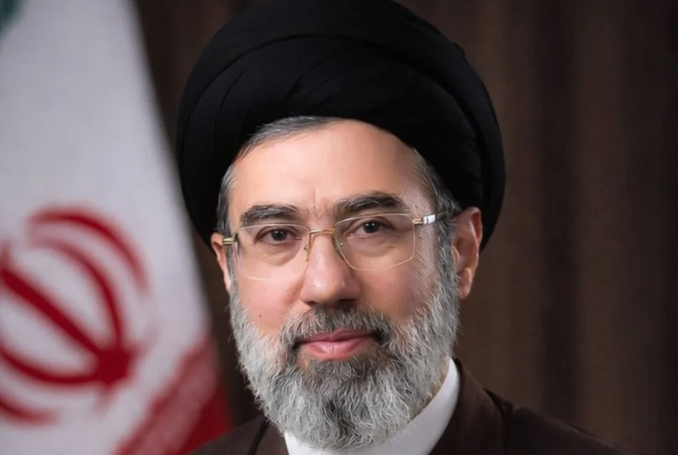

Unlike his father who favoured diplomacy, conciliation and rapprochement as ways to fix Iran’s strained relationship with it foreign adversaries, particular the West, as he had repeatedly shown restrain in the face of unprovoked aggression and attack and was widely reported to have put a leash, through his many fatwas, on the country’s ownership of deadly and sophisticated armament and weaponry, especially the enrichment of uranium for nuclear weapon and building of missiles of certain range and capabilities, Khamenei is believed to fancy a belligerent and militaristic approach to solving the nation’s problems especially when it comes to dealing with Isreal and the United States.
On Sunday, Iran announced the appointment of Mojtaba Khamenei as its new Supreme Leader and head of state. Mojtaba will be succeeding his father who was killed in the early hours of the renewed conflict between Iran and Israel which started late February after a joint missile attack on his home in Tehran. The 56-year-old Khamenei was elected as his father’s successor after a vote by the Assembly of Experts, a group of clerics saddled with the task of appointing Iran’s highest authority
Mojtaba’s ascension to the Supreme Leader position makes him the country’s third supreme leader after his father and Ayatollah Ruhollah Khomeini. It is also the first time a son will be succeeding his father since the Iranian revolution that created the Islamic Republic and established the position of supreme leader as the foundation and cornerstone of the country’s theocratic leadership. Before the revolution, the nation was ruled by a monarchy under the Pahlavi dynasty.
But how did Mojtaba Khamenei rise to power and occupy the most powerful and influential position in the country? This is everything we know about him
The younger Khamenei was born on September 8, 1969, he was the unseen hand that pulled the strings behind the scenes. He was the ayatollah’s second-oldest son. He is a key and practically indispensable power broker. One of the most fascinating and contradictory facts about the younger Khamenei is his largely reclusive and discreet life leaving the public with little knowledge about his life, at least before his announcement as the new supreme leader.
Long before his appointment, Khamenei had always been popular and widely liked by the rank-and-file of the Iranian theocratic government structure, especially its military wing, the Iranian revolution guard Corp. He has always been deeply involved in the day-to-day running of the country and the management of the state affairs, albeit discreetly. He studied under the tutelage of religious conservatives in seminaries in the city of Qom and is viewed by many as a radical and hardliner with close ties to the Islamic Revolutionary Guard Corps (IRGC), where he served in the Habib Battalion during the Iran-Iraq War. He had a very cordial and close relationship with his father and later attained the position of deputy chief of staff for political and security affairs in his office while the ayatollah was alive. Khamenei has never held government office but was said to be a gatekeeper to his father.
Even though the pendulum of succession has always swung heavily to his side with state and international media touting him as the next leader of the country, the assumption of many analysts and observers is that the deep-seated resentment and widespread grievances among majority of Iranians occasioned by struggling economy, an increasingly autocratic and repressive action and foreign policy objectives that further compounded the woes and troubles of the country towards the end of his father’s regime, could work against him.
SANCTIONED BY THE US
He came under US sanctions alongside his father and close associates in 2019. They were sanctioned for having “oppressed the Iranian people, exported terrorism, and advanced destabilising policies around the world” over decades. Khamenei was also sanctioned for representing his father in an official capacity despite never being elected or appointed to a government position aside from work in the ayatollah’s office. According to the US, Khamenei worked closely with the IRGC Qods Force and also the Basij Resistance Force (Basij) to advance his father’s “destabilising regional ambitions and oppressive domestic objectives”. The sanctions aimed to block funds from flowing to a shadow network of the late ayatollah’s military and foreign affairs advisors
CALCULATED AND STRATEGIC The office of the supreme leader has a highly coordinated and complex system of more than 100 departments and sub-organisations. The heads of these multilayered organisations are only answerable to the supreme leader, not to the government.
Within this intricate maze of multifaceted institutions that underpins the office of the supreme leader, Khamenei reported having established two centres of power during his father’s reign: an intelligence gathering wing that has seventeen agencies and the propaganda apparatus, which includes state media and the influential directorate for Friday prayer imams.
According to the Washington Institute, sources familiar with the inner workings of the Supreme Leader’s office disclosed that Khamenei appointed loyalists and henchmen from around the same age group to head these centres and then used them to systematically broaden his influence as he deftly manoeuvres the treacherous terrain of power.
During the 2005 presidential election, Khamenei was said to have prevailed on his father to throw his weight behind hardline candidate Mahmoud Ahmadinejad, the former Iranian president. And when Ahmadinejad won a second term in 2009, Khamenei allegedly masterminded the ruthless quelling of the resultant mass protests, with active support from Hossein Taeb, the Basij militia chief who would later become IRGC head of intelligence. According to reports, Khamenei’s close cooperation with Ahmadinejad allowed him to enjoy “illegal proceeds” from oil smuggling running into billions of dollars. A Bloomberg investigation revealed how the 56-year-old hid behind strawmen investors in Europe while using regime assets to amass a real estate empire
QUESTIONS OVER RELIGIOUS AUTHORITY
One of the concerns about Khamenei’s succession to his father is his palpable lack of sufficient knowledge on Islamic jurisprudence which is a vital requirement for anyone occupying the position of the supreme leader. Iran’s law mandates the supreme leader to have a broad understanding and deep knowledge of Islamic jurisprudence and be recognised as a senior religious authority.
Ayatollah is a high-ranking title in Twelver Shia Islam, meaning “Sign of God”. It is awarded to senior Shia clerics who demonstrate exceptional religious scholarship and authority to interpret Islamic law. In Iran’s political system, it carries immense weight. Khamenei, however, is not widely considered to be among the highest-ranking clerics in Iran.
Though he studied in the seminaries of Qom under many renowned and respected ultra-conservative scholars, he does not hold the rank of ayatollah. But Iran’s political system has ditched constitutional rigidity for expediency historically and shown flexibility when elite consensus unites around a candidate. Shortly before Khomeini’s death, Iran’s constitution was amended to allow a lower-ranking Shia cleric, who Khamenei’s father was at the time, to become the supreme leader.
Khamenei takes the helm as Iran confronts strikes from the US and Israel, mounting economic pressure. As a radical and hardliner, his reign is expected to be markedly different from that of his father in areas of security, politics and foreign policy. Unlike his father who favoured diplomacy, conciliation and rapprochement as ways to fix Iran’s strained relationship with it foreign adversaries, particular the West, and was widely reported to have put a leash, through his many fatwas, on the country’s ownership of deadly and sophisticated armament and weaponry, especially the enrichment of uranium for nuclear weapon and building of missiles of certain range and capabilities, Khamenei is believed to fancy a belligerent and militaristic approach to solving the nation’s problems especially when it comes to dealing with Isreal and the United States. There are also unconfirmed reports that he may greenlight the enrichment of uranium for a nuclear weapon. Additionally, losing his father, mother and sister and other members of his family may have further hardened him and given him the much-needed incentive to continue the war.
.
Discussion about this post