
On July 11, 2024, the Supreme Court of Nigeria granted full autonomy to the 774 local government areas.
In the landmark judgment, the apex court ruled that local governments must receive their allocations directly from the Federation Account, describing the long-standing practice of routing the funds through state governments as unconstitutional.
However, one year after the judgment, findings by WITHIN NIGERIA showed that the state governors have continued to retain control of council allocations totaling N4.5tn, thereby defying the landmark judgment that mandated direct funding to local governments.
In response, the Federal Government constituted an inter-agency panel to oversee the implementation of the ruling and directed the Central Bank of Nigeria to open individual accounts for each of the 774 local government councils across the country to facilitate direct disbursements.
Local government allocations have continued to pass through state governments amid delays and disputes between the Central Bank, state governments, local government authorities, and other relevant agencies.
Breakdown of the allocation
An analysis of data from the Federation Account Allocation Committee reveals that between July 2024 and June 2025, the sum of N4.496tn was disbursed to local government councils.
This represents 24.87 per cent of the N18.074tn shared among the three tiers of government over the 12-month period.
According to the monthly communiqués released by FAAC, N337.02bn was allocated to LGs in July 2024, N343.70bn in August, N306.53bn in September, N329.86bn in October, and N355.62bn in November.
In December, local governments received N402.55bn, followed by N361.75bn in January 2025, N434.57bn in February, and N410.56bn in March.
Subsequent allocations included N387bn in April, N406.63bn in May, and N419.97bn in June.
Although the percentage of the total allocation going to local governments has remained steady, ranging between 24 and 25 per cent each month, the method of disbursement continues to breach the Supreme Court’s judgment.
An official at the Office of The Attorney General of the Federation, told newsmen that the AGF had done his bit, stating that the FG set up a committee to work on ensuring that the LGs were granted full autonomy.
Our source said, “The Attorney General is not the one in charge of disbursing of funds. The implementation committee raised by the Federal Government is chaired by the Secretary to the Government of the Federation. AGF is just a member there and he is not even the secretary. The Minister of Finance is there.
“The AGF has already gone to court and won the case and the moratorium, which was given to the governors before, was for them to conduct their local government elections, which I think all of them have complied with.
“The committee that was raised, ALGON is part of it, Labour is part of it. Those are the people to direct some of these questions to.”
The General Secretary of the Association of Local Governments Employees, Muhammed Abubakar, while speaking with newsmen on Thursday evening said the association was patiently waiting on the Office of the Secretary to the Government of the Federation to give updates on the documents submitted to President Bola Tinubu.
According to Abubakar, Tinubu listened to the concerns of the governors and mandated the Secretary to the Government of the Federation, George Akume, and the Attorney General of the Federation, Lateef Fagbemi (SAN) to work on the bottlenecks affecting the implementation of the judgment.
“No one has gone quiet. The process is still ongoing. The governors had some concerns and the President gave a listening ear to the governors. The President then mandated the SGF and AGF to work on the bottlenecks and concerns raised by the governors. They have communicated it to the Presidency. We are just waiting for the SGF to share updates on whether the President has received all the details.”
Confirming the delay in implementing the court ruling, the Gombe State, NLC chairman, Yusuf Bello, said nothing has changed nationwide.
He noted that appointed chairmen still lacked control over funds, while autonomy remained elusive.
According to him, only local government elections conducted by the FG can bring meaningful change and improve grassroots governance.
He said, “Does any chairman have the right to touch the money? It’s still pocketed, it’s the same scenario all over the nation.”
A source at the NULGE Gombe office, who spoke on condition of anonymity, told newsmen that the challenge of implementation is nationwide.
In his words, “I can confirm that all paper works have been completed. Implementation is not only a Gombe issue, it’s nationwide. Gombe is not one of the states where the executive puts eyes on the resources each LGA is allowed to spend freely.”
At the same time, our reporter also learnt that the 16 LGs in Kwara State were yet to open account with the CBN.
The Chairman, NULGE, Kwara chapter, Seun Oyinlade, disclosed this in a telephone conversation with WITHIN NIGERIA correspondent in Ilorin on Tuesday.
“The local government chairmen are yet to open accounts with the CBN.”
Chairman of the state branch of the Nigeria Labour Congress, Comrade Saheed Olayinka said he was not aware that the LGs had opened the CBN account, adding that the accounts might be opened this month.
WITHIN NIGERIA further learnt that the 44 LGs in Kano State were yet to comply with the directive of the CBN on the opening of accounts at the apex bank.
A reliable source at the Ministry for Local Government and Chieftaincy Affairs, who spoke on condition of anonymity, told newsmen “To my knowledge, none of the 44 councils in the state has opened accounts with the CBN.
“We heard that the apex bank has opened an account for each of the local governments and what remains is to regularise the accounts, which is yet to be done,” the source said.
Our source accused the local government council chairmen and the NULGE officials of not making moves or efforts to ensure that the councils opened the accounts as directed by the apex bank because of what he described as personal benefits.
The Kano State Commissioner for Information and Internal Affairs, Ibrahim Waiya, confirmed that local governments in the state were yet to begin receiving statutory allocations directly from the FG.
He described the issue as national, adding that most northern states had not completed the internal requirements needed for full compliance, including setting up LG service commissions.
Waiya said Kano has made progress by establishing its own commission, chaired by Malam Ibrahim Jibrin.
He added that Governor Abba Kabir Yusuf had granted LGs autonomy to manage resources independently.
Bayelsa is also not left out in this dealy as the Chairman, NULGE, in the state, Comrade ThankGod Singer, says states and local government councils all over Nigeria operated the Joint Account Allocation Committee.
Singer said several local government councils were yet to open dedicated accounts with the CBN but added that there was no problem in Bayelsa as the state government and the local government councils sat at JAAC to manage the allocations.
“JAAC is still being operated all over the country and here in Bayelsa State, we have no problem. Salaries are being paid, projects are going on and the state government is assisting the local governments in the payment of teachers’ salaries,” he stated.
WITHIN NIGERIA also leant that the Benue State Government was yet to comply with the Supreme Court ruling.
Despite public claims by the government that autonomy had been implemented, findings by our correspondent indicated otherwise, with several local government chairmen in the state dismissing such claims as false and misleading.
Three council chairmen, who spoke on condition of anonymity, said the administration’s declaration of local government autonomy was a mere facade.
One chairman from Benue North East expressed disappointment with the recent statement by the state ALGON chairman, Maurice Orwourgh, who claimed that local councils in the state operated autonomously.
He stated, “If autonomy truly exists, why does the state government still allocate us N10m monthly as security votes? The least LGs receive is N385m monthly from federal allocation—why do we need state subvention?”
Another chairman from Benue North West lamented that none of the 23 LGAs has executed any meaningful project since the current administration came on board.
“Not even a culvert has been constructed,” he said, describing the government’s position as lip service.
From Benue South, a chairman linked the denial of LG funds to rising insecurity.
“What can N10m do as security vote in a month? It can’t even cover fuel costs,” he said.
Former governor Samuel Ortom also criticised the incumbent Governor Hyacinth Alia for flouting the Supreme Court judgment.
In a statement issued through his media adviser, Terver Akase, Ortom questioned why the governor is still controlling council finances, despite the court’s directive.
“That none of the 23 LGAs has constructed even a single culvert shows how starved they are of their funds,” he said.
SANs fault non-implementation
Some of Nigeria’s most prominent constitutional lawyers have faulted the continued disregard for the Supreme Court’s ruling on local government autonomy, one year after the landmark judgement was delivered.
Senior Advocates of Nigeria, in separate interviews, described the non-compliance as a blatant affront to the rule of law, with some calling out both the Federal and state governments for frustrating enforcement.
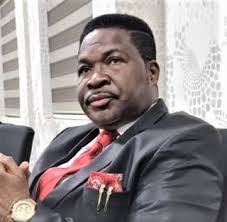
Professor Mike Ozekhome (SAN) condemned what he described as a deliberate effort by state governors to circumvent and disobey the Supreme Court’s judgement.
He noted that the ruling was unambiguous in declaring that allocations from the Federation Account under Section 162 of the 1999 Constitution should no longer be routed through the State Joint Local Government Account, but paid directly to the councils.
“The judgment was clear, as clean as a whistle. It was meant to end the practice where governors deduct funds at source, starving the third tier of government of the resources needed to serve grassroots communities,” he said.
Ozekhome also pointed to the power imbalance between state governors and local government chairmen, many of whom, he argued, never truly won elections but were appointed and remain beholden to the governors.
“The story has not changed. The Supreme Court judgement is so far consigned to mere Law Reports,” he added.
Femi Falana (SAN) took aim at the Federal Government, particularly the Attorney General of the Federation, Mr Lateef Fagbemi (SAN), whom he accused of failing to enforce the very judgment he once celebrated. Falana questioned why the AGF had not invoked the provisions of the Constitution to compel compliance, especially after publicly warning that non-compliance would amount to treason.
“The Central Bank asked LGs to open accounts, and they did. Then they were told to provide two years of audited reports. But how can councils produce audit reports for periods when they never directly handled funds?” he queried.
Citing Section 287 of the Constitution, Falana maintained that judgments of the Supreme Court are binding on all persons and authorities and must be obeyed regardless of convenience or politics.
In contrast, Professor Itse Sagay (SAN) offered a nuanced view, admitting that while the judgment had good intentions, it contradicted existing constitutional provisions.
He explained that the Constitution currently recognises the State Joint Local Government Account, and until an amendment is made, direct payment to LGs may technically breach the law.
“The Supreme Court meant well, but it ignored the reality of what the Constitution provides. The Constitution has to be amended before that judgment can be fully and legitimately enforced,” he said.

Another senior lawyer, Adedayo Adedeji (SAN), described the ruling as a landmark affirmation of local government autonomy but lamented its hollow implementation.
He said that state governments remain unwilling to give up their control, both politically and financially, over local councils.
“The states are still running caretaker committees and controlling joint accounts in violation of both the Constitution and the judgment,” he stated.
Adedeji also placed part of the blame on the Federal Government, noting that it is the constitutional duty of the Attorney General to ensure enforcement.
“What we are seeing is a lack of political will by both tiers of government. Until they commit to respecting constitutional governance, this ruling will remain a legal milestone with no practical impact,” he added.
Also, Paul Obi (SAN) stated, “It’s quite unfortunate that despite the clear provisions of the constitution on this subject matter and the extant judgment of the Supreme Court on this, the governors are deliberately and intentionally kicking against the judgment and observing the directives more in breach than in conformity.
“It’s quite sad, but that’s what happens when you have politicians that are self-centered and fight only for their personal interest and not the common good. Truly sad.”
Barr. Odo lends voice against the delay
An Enugu-born lawyer, Barr. Onuora Odo has lamented the delay in the implementation of the local government autonomy in the country.
Barr. Odo told WITHIN NIGERIA in an exclusive chat that “it’s quite unfortunate that after one year the supreme court of Nigeria granted full autonomy to the 774 LGAs in the country, the Federal Government has continued to channel allocations through the state governments.
”Let me state pointedly that the implication is highly bizarre and very bad for democracy. It lends credence to Senator Ekweremadu’s postulation that what we practice in Nigeria is “feeding bottle federalism”.
“The Supreme Court’s judgment granting full autonomy to Nigeria’s 774 local governments has some negative implications, given the current situation where the Federal Government continues to channel allocations through state government.
“Firstly, the state governments’ actions may be interpreted to mean contempt of court; that is total and flagrant disobedience to a valid court order.
“In other climes where democracy is at work and legal consciousness is higher, the judgment may trigger further legal battles between local governments and state governments over fund control.”
Explaining further, Barr. Odo said that “in terms of financial implications, the Local governments may continue to face financial constraints, hindering their ability to deliver basic services and implement developmental projects. On the same token, the lack of direct access to funds may perpetuate corruption and mismanagement of resources at the state level.
“On the strength of the foregoing, it’s my opinion that the Federal Government and state governments should comply with the Supreme Court’s judgment to ensure local governments receive direct funding.
“It’s also my candid opinion that a clear framework for implementing local government autonomy should be established to avoid further conflicts.”
Fashola argues against LG autonomy
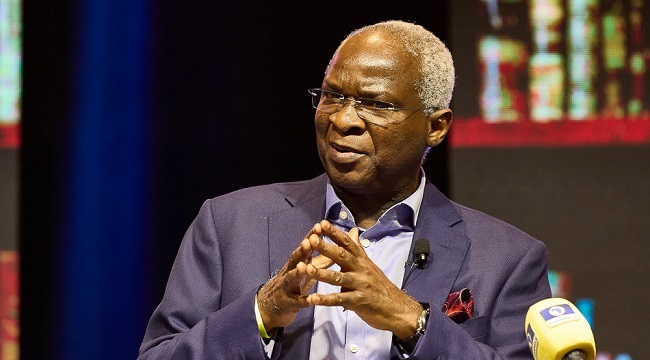
On Saturday, former Lagos State governor, Babatunde Fashola, said it is “unrealistic” to expect local governments in Nigeria to function independently under the current constitution.
Fashola, a senior advocate, SAN, shared this view on Channels Television’s Sunrise on Saturday, July 19.
This came amid the growing call for local government autonomy, following a recent Supreme Court ruling.
In his argument, Fashola pointed out that local councils cannot carry out their responsibilities without the interference of the State House of Assembly and the State Government.
He said the state houses of assembly make laws for local governments, which are external influences that contradict the idea of autonomy.
“I think that the debate we must have is whether we really want autonomous local governments. It’s a debate that must be heard. As it stands today, it is unrealistic to expect autonomy for local governments created by the Constitution.
“They were not meant to be autonomous; that is my view after a very close reading of certain provisions of the Constitution. Some of those provisions provide, for example, that the local government in its economic activities and all of that will have laws made for it by the state House of Assembly,” Fashola said.
According to him, the legal and ordinary meaning of autonomy suggests that one is acting independently without any outside influence and authority.
The fact that state houses of assembly make laws on how local governments function, Fashola maintained that this external influence contradicts the idea of autonomy.
He further posited that land, which is an asset that local governments require to provide infrastructure, is controlled by the state governments.
“The next thing, of course, is to look in the Fourth Schedule of the constitution and look at all of the responsibilities that are assigned to local governments, such as the operation of slaughterhouses, abattoirs for animals, cemeteries, building of rules, advertising hoardings, primary schools, primary healthcare centres, all of those responsibilities are dependent on one item, land.
“And to the extent that the state government controls land, which affects how the local governments will carry out these functions, I didn’t think that autonomy was intended. Now, if we decide that we want autonomous local governments, those are some of the things we have to free up if that is our decision, Fashola argued.
To Fashola, autonomy was not intended, but what he thinks is some sort of collaboration, supervision, and oversight of local governments.
This is what is inherent and can be found in Section 162 of the Constitution, which he cites, that deals with the state’s joint local government account.
He further argued that the cases of many local governments defaulting in the payment of salaries and pensions of primary healthcare workers, primary school teachers, at the return of democracy in 1999, partly gave rise to a joint account between the states and the councils.
“And there’s history behind the enactment of that section because up till 1999, the local governments used to collect their money directly from the Federation account under a process that I think was known as JAAC (Joint Accounts and Allocation or something).
“But in the advent of the democratic era, it was found out that there were so many of them, or not a few of them, who had defaulted in the very basic obligation of paying staff salaries, primary healthcare workers, primary school teachers, salaries and pensions, and there was a backlog of debt, and I met some of that debt when I became Governor and we were working there,” Fashola explained.
He, however, noted that the conduct of council elections was a good step towards making local governments independent.



Discussion about this post