
Lagos sits like a restless dream — a city where the past clings to its present in the heat of its alleys and the sway of its high‑rises. On a day in 1993, the city’s skyline was already humming with possibility and fear, political hope and the weight of history. More than three decades later, that same city pulses through celluloid, flickering in projectors across the world. In 2025, filmmakers returned to Lagos not merely to set stories, but to excavate memory, identity, and history.
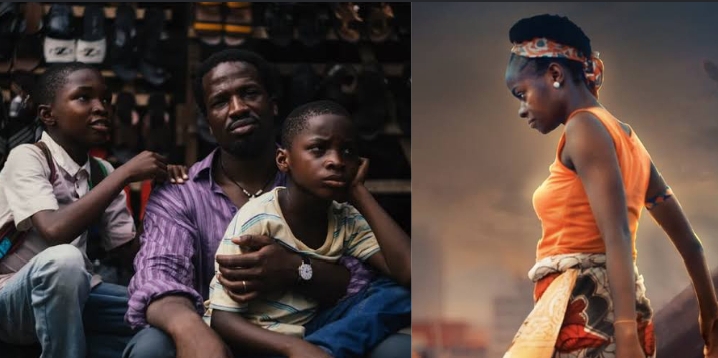
This is not just Lagos as backdrop. In My Father’s Shadow, the city becomes a tapestry of flux — a place where two young brothers walk its dusty streets, questioning where they belong, guided by an absent father whose own past is tethered to the city’s political turmoil. The city’s mood swells in every frame: a mirror to national ambition and private grief.
Across films, Lagos takes on a voice — sometimes gentle, sometimes defiant, often unforgiving. In slum communities by the lagoon, in waterfront shanties facing eviction, mothers walk through murky waters carrying more than just their children. Their stories are rooted in real events, in real injustice, and in real resistance. Lagos becomes their battleground.
By weaving together these fact-based stories, 2024 – 2025’s cinema does more than entertain. It holds a mirror to Lagos, to its contradictions, to its trauma, and to its unyielding hope. The city speaks — and the films listen.
Lagos as a Living Archive: My Father’s Shadow and Political Memory
My Father’s Shadow opens on June 23, 1993 — the day Nigeria’s democratic hopes trembled after the annulment of the June 12 election. That day, Lagos is not just a location; it is a witness to history, carrying the weight of collective disappointment and personal longing. Two brothers, Akin and Remi, driven by a sudden reappearance of their estranged father, wind their way through the city on an urgent mission: to reclaim what is owed.
The brothers’ journey is at once literal and metaphorical. As they move through Lagos, they navigate traffic, street sagas, and the city’s geography, but they are also tracing the contours of a fractured family. Their father, Folarin (played by Ṣọpẹ́ Dìrísù), carries with him both the burden of financial demands — unpaid wages, a claim he must press — and an emotional distance from the sons he left behind.
What makes the film strikingly authentic is its foundation in the director’s life. Akinola Davies Jr. co-wrote the script with his brother Wale, basing it on their own memories of a father who died when they were young. This deeply personal origin elevates Lagos from setting to collaborator: it is the place where their childhood, their loss, and their longing converge. The city’s textures — its heat, its chaos, its promise — shape their reconciliation.

Critics have noted how the film marries poetic imagery with political realism. According to Vanguard, the film celebrates “memory, identity, fatherhood, and nationhood,” reminding viewers that Lagos is as much about individual memory as it is about national history. The brothers’ day in the city becomes an emotional archive, a meditation on what it means to reclaim both a father and a country.
Waterfront Struggles and Slum Resistance: The Legend of the Vagabond Queen of Lagos
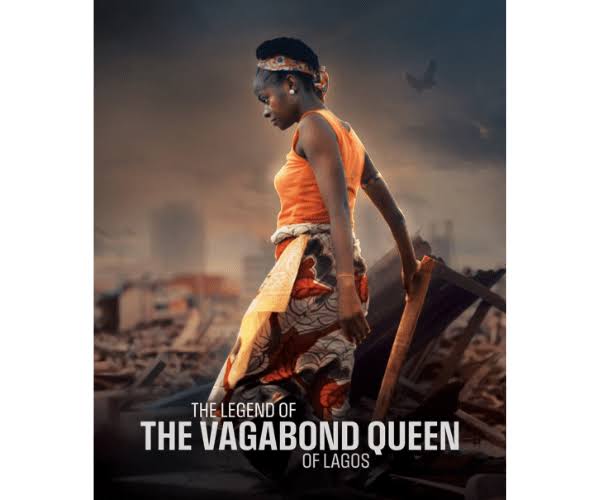
In contrast to the structured streets of Lagos captured in My Father’s Shadow, The Legend of the Vagabond Queen of Lagos dives into the city’s invisible margins: the lagoon-front slums, the water communities, and the people pushed to the edges by development and corruption.
Here, Lagos is not just a backdrop — it is a site of conflict. Juwa, a young mother from a shanty community, finds herself at the heart of a moral and political storm when she discovers corrupt “blood money.” Her discovery sparks resistance, solidarity, and a confrontation with powerful forces willing to displace her community.
The real-life inspiration behind the film gives it weight. The story mirrors documented evictions and the precarious existence of Lagos’ waterfront slums. These are not fictional struggles: they resonate with the lived experiences of many Lagosians who dwell in informal communities, often on tenuous legal ground.
Visually, the film uses Lagos’ lagoon as a character itself. The water shimmers precariously under the sun, carrying both the burden of survival and the threat of erasure. As Juwa and her community mobilize, they are not just fighting for land — they are fighting for their dignity, their history, and their place in a city that often looks the other way.
The social critique is sharp: corruption, displacement, and the abuse of power are not just thematic threads — they are systemic realities. The film’s success — including a jury prize at NollywoodWeek — shows how Lagos’ stories can be deeply political and deeply human.
Historical Memory Beyond Lagos: Lisabi: A Legend Is Born and Cultural Identity
Though Lisabi: A Legend Is Born is primarily set in Ogun State rather than Lagos, its inclusion in the 2025 cinematic landscape is vital for understanding how Nigerian filmmakers are grappling with history, identity, and legacy.
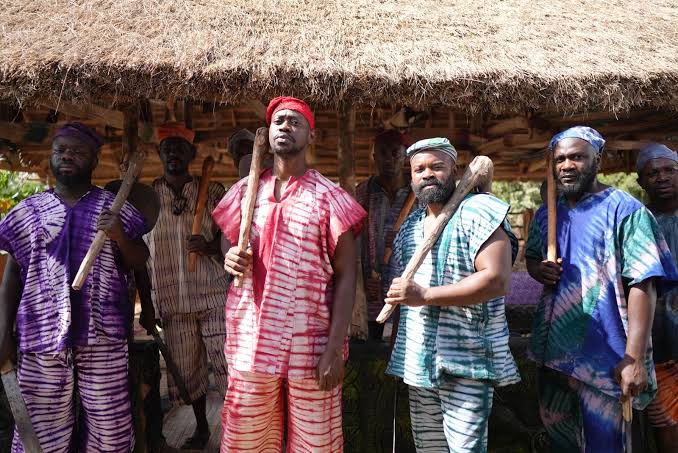
Lisabi is a folkloric and historical hero: a symbol of resistance, leadership, and communal sovereignty among the Egba people. The film reimagines his life, his struggles, and his triumphs in a politically charged era, reminding audiences of a pre-colonial past rooted in collective memory.
Its premiere in Lagos — at the John Randle Centre for Yoruba Culture and History — is symbolic. By launching in Lagos, the film underscores the city’s role as a cultural hub, where history is not just remembered but celebrated and reinterpreted.
Although Lisabi is not “fact-based” in the sense of contemporary political events, it resonates with the themes of resistance and identity that define Lagos’ cinematic portrayals in 2025. The film’s focus on legendary biography enriches the broader narrative: Nigeria’s history is not only its painful present but also its indelible past.
The Controversy of Representation: Who Gets to Tell Lagos’ Story?
When filmmakers turn their cameras on Lagos, they also inherit its contradictions. The city is a character of many faces — elite skyscrapers, informal settlements, political centers, and forgotten peripheries. But which Lagos do the films of 2025 choose to show? And more importantly, who is allowed to craft its narrative?
In My Father’s Shadow, Lagos is framed through a personal, almost tender lens. The emotional stakes are intimate: a father-son reunion, a journey through memory, a quest for belonging. Yet, some critics argue that this perspective risks romanticizing a city deeply scarred by political violence and social inequality. By focusing on a middle-class family’s experience, does the film sideline the stories of those less privileged?
Conversely, The Legend of the Vagabond Queen of Lagos centers its narrative on a marginalized community, but it also raises questions about the ethics of representation. When filmmakers depict slum resistance, do they amplify the voices of the people, or do they risk turning their suffering into a cinematic spectacle? There’s a delicate tension between activism and voyeurism, between social justice and storytelling.
Moreover, production itself has sparked debates. Shooting in Lagos’ informal communities often requires navigating bureaucratic, legal, and ethical minefields. Filmmakers must ask themselves: are they empowering communities, or are they extracting stories for global audiences? The question of consent—both social and cinematic—is never far from these projects.
Audience reactions reflect this tension. Some praise the authenticity and courage of these films; others worry about exploitation or misrepresentation. Through both praise and critique, Lagos remains alive on screen — not just as setting, but as a contested space where history, power, and narrative collide.
Audience Reactions and Social Media: Lagos in the Digital Mirror
The Lagos of 2025 films does not exist solely on the silver screen; it lives in tweets, TikTok clips, Instagram reels, and endless online debates. After the premiere of My Father’s Shadow, Lagosians flooded social media with reflections on how the city was portrayed. Some praised its authenticity — the way street corners, markets, and residential alleys carried the weight of political history. Others argued that the film’s representation of certain neighborhoods leaned toward middle-class nostalgia, overlooking the city’s sprawling economic disparities.
Social media amplified these debates, turning Lagos itself into a topic of discussion. Clips of Akin and Remi walking along the Third Mainland Bridge went viral, not just for cinematic beauty but for sparking memories among Lagos commuters who recognized the unfiltered reality of traffic, chaos, and rhythm. The city became a collective memory shared across platforms, with each comment and share layering additional meaning onto the cinematic experience.
The Legend of the Vagabond Queen of Lagos sparked a different kind of conversation. Its portrayal of slum communities under threat of eviction resonated deeply with residents of Makoko, Otodo Gbame, and other lagoon-front areas. Hashtags like #VagabondQueenLagos and #ProtectOurLagos floated through social feeds, blending cinematic storytelling with civic activism. Audiences debated the ethics of displacement, the responsibility of city planners, and the resilience of communities — all framed through the lens of cinema.
Even international audiences engaged, seeing Lagos through a dual perspective: as a chaotic, vibrant metropolis and as a city grappling with social and political challenges. Film blogs in Europe and North America highlighted the films’ ability to capture Lagos’ “living contradictions,” praising directors who refused to sanitize the city for global viewers. In essence, Lagos became both character and co-creator, shaping reactions as much as it shaped narrative.
Lagos’ Cinematic Infrastructure: Studios, Streets, and Storytelling
Filmmaking in Lagos in 2025 required an intricate understanding of the city’s physical and logistical landscape. From high-rise studios in Victoria Island to impromptu sets on the Lagos Lagoon, filmmakers navigated complex bureaucracies, energetic streets, and unpredictable weather. Shooting a scene could take hours longer than anticipated simply because the city refused to conform to schedules. Street vendors, traffic snarls, or local events often dictated the pace of production, making Lagos itself an uncredited production manager.
The emergence of modern studios, like ROK Studios’ expansion and Anthill Studios’ high-tech facilities, enabled filmmakers to combine controlled environments with the city’s authentic textures. Yet even within soundstages, the influence of Lagos was pervasive. Cinematographers drew inspiration from the city’s light, shadows, and architecture, using them to evoke mood and emotion. Street scenes, carefully orchestrated to balance chaos with clarity, became central to the storytelling process.
Producers noted that Lagos’ unique combination of infrastructure and unpredictability was both a blessing and a challenge. The city offered unparalleled authenticity — the markets, the waterfronts, the bridges — but required flexibility and adaptive planning. Some filmmakers embraced this unpredictability as a narrative tool, allowing the city to dictate improvisation, dialogue, and camera movement. In essence, Lagos was simultaneously collaborator, critic, and audience.
The city’s energy also influenced emerging talent. Aspiring actors, location scouts, and production assistants learned early that Lagos was not a passive space. The rhythm of the city, its textures, and its tension informed every performance, every scene, and every narrative decision. This dynamic gave 2025 films a depth rarely seen in previous decades: a Lagos that does not just exist in the background, but actively shapes character and plot.
The Cultural Intersection: Music, Fashion, and Lagos on Screen
2025’s films captured Lagos not only visually but sonically and aesthetically. Soundtracks leaned heavily on Afrobeat, Fuji, and contemporary Nigerian hip-hop, reflecting the city’s eclectic musical identity. In My Father’s Shadow, the subtle layering of Sikiru Adepoju’s percussive rhythms and street sounds amplified tension during political scenes. Meanwhile, The Legend of the Vagabond Queen of Lagos incorporated traditional folk chants from lagoon communities, grounding the narrative in cultural specificity.
Fashion also became a storytelling device. Lagos’ 2025 films showcased a blend of streetwear, designer labels, and indigenous fabrics, reflecting both aspiration and reality. Costume designers carefully curated each outfit to align with character, class, and context, turning clothing into visual shorthand for social hierarchy and urban identity. From Akin’s slightly worn school uniform to Juwa’s hand-sewn attire for the lagoon, Lagos’ sartorial textures became narrative cues, conveying character resilience, creativity, and cultural pride.
This integration of music and fashion reinforced Lagos as a living, breathing character. The city influenced not only dialogue and plot but also mood, rhythm, and style. Cinematographers captured dance sequences in crowded alleys, spontaneous musical performances in markets, and rooftop gatherings overlooking the lagoon, creating a cinematic Lagos that audiences could recognize instantly — whether they lived in the city or only imagined it.
Even controversies reflected this cultural layering. Critics debated the authenticity of musical choices and the representation of certain styles. Audiences argued over whether some portrayals glamorized hardship or celebrated ingenuity. Through these debates, Lagos’ identity was contested, performed, and appreciated in multiple layers, proving the city’s indelible influence on storytelling.
Urban Landscapes as Narrative Force: Waterfronts, Bridges, and High-Rises
Lagos is a city defined by contrasts: gleaming high-rises cast long shadows over informal settlements, while the calm expanse of the lagoon sits just beyond the city’s relentless traffic. In 2025 films, this duality becomes a storytelling device. Filmmakers harnessed the city’s architecture, infrastructure, and geography to mirror narrative tension, emotional arcs, and cultural nuance.
The Third Mainland Bridge, an artery pulsating with human and vehicular energy, frequently appeared as more than a route — it became a metaphor for connection, transition, and sometimes separation. In My Father’s Shadow, Akin and Remi cross the bridge in a symbolic journey that mirrors their emotional reconciliation, the camera lingering on the cityscape to suggest both possibility and burden. The bridge’s steady hum of engines contrasts with the intimate vulnerability of the characters, reflecting Lagos’ simultaneous scale and intimacy.
Lagos’ waterfronts tell a different story. In The Legend of the Vagabond Queen of Lagos, the lagoon is both a refuge and a source of danger. Scenes of Juwa navigating narrow wooden walkways, balancing against rising tides, capture the precariousness of life in informal settlements. The water itself becomes a narrative agent — threatening yet sustaining, unpredictable yet essential. The cinematography emphasizes reflection, movement, and rhythm, turning a simple scene along the water into a meditation on resilience.
High-rises in Victoria Island and Ikoyi serve as symbolic counterpoints to the city’s margins. The juxtaposition of these towers with the lagoon-front shanties underscores socio-economic disparity, a visual motif that recurs throughout 2025’s films. Filmmakers leverage the city’s verticality to suggest hierarchy, ambition, and isolation. Characters may ascend stairwells or peer down from balconies, physically negotiating the divide between wealth and struggle. In these shots, Lagos is not a backdrop but a dynamic canvas, its spatial politics informing character choices and emotional tension.
The city’s streets, alleys, and open spaces demand improvisation. Unpredictable traffic jams, impromptu street markets, and spontaneous street performances influenced both performance and camera movement. Actors adjusted to honking horns, sudden downpours, and shifting crowds. Directors embraced this chaos, turning what might be logistical obstacles into narrative texture. Lagos, in this sense, is both stage and collaborator — unyielding, demanding authenticity at every turn.
Political Tension and Social Commentary: Lagos’ Role in Fact-Based Storytelling
Fact-based films of 2025 reveal Lagos as a city of political and social dialogue. The annulled June 12 election, waterfront evictions, and lingering inequalities provide fertile ground for narratives that merge personal stories with historical events. My Father’s Shadow contextualizes personal reconciliation within the city’s broader political turbulence, illustrating how national events ripple through individual lives. The annulment of the election, coupled with Lagos’ tense streets and palpable civic anxiety, underscores the stakes of memory, loyalty, and moral courage.
Similarly, The Legend of the Vagabond Queen of Lagos transforms social injustice into cinematic action. The struggles of Juwa and her community are rooted in real evictions and displacement policies, reflecting systemic urban inequalities. Film scholars have noted that the depiction of corruption and community mobilization is not mere fiction but mirrors events documented by Lagos human rights organizations. The lagoon becomes a theater for protest, its waters carrying both danger and hope.
Political tension also manifests in everyday life. Market scenes, protests, and neighborhood interactions convey an implicit critique of authority and urban planning. Filmmakers capture small acts of resistance — a vendor refusing to pay a bribe, children adapting to infrastructural neglect, families improvising against eviction threats — demonstrating how political realities permeate daily existence. These details are historically grounded, lending credibility and gravitas to the films’ narratives.
The interaction between history and art in Lagos-based cinema underscores the city’s dual role as both witness and participant. Characters are shaped by policies, events, and decisions beyond their control, and audiences are invited to recognize the consequences of urban governance, inequality, and civic resilience. Lagos’ streets, waterfronts, and high-rises are not only cinematic locations but markers of lived political experience, contributing layers of authenticity to every frame.
Legacy and Future: How 2025 Films Are Shaping Lagos’ Cinematic Identity
The films of 2025 have solidified Lagos as a cinematic character whose personality is inseparable from the stories it hosts. Directors, writers, and cinematographers are increasingly attuned to the city’s rhythms, its textures, and its contradictions. Films like My Father’s Shadow and The Legend of the Vagabond Queen of Lagos demonstrate that audiences now expect Lagos to be fully realized — not a sanitized backdrop, but a complex presence that informs narrative, character, and emotion.
Emerging filmmakers are building on this legacy, using the city’s geography, social fabric, and history to anchor stories that are both globally relatable and locally resonant. Studios in Lagos are investing in infrastructure that allows for high-quality production while retaining authenticity, ensuring that the city remains a dynamic partner in storytelling. Technology, digital cinematography, and location scouting are now integrated into an approach that honors the city’s chaos while channeling its energy for narrative impact.
The influence of these films extends beyond the screen. Social conversations, urban policy debates, and civic awareness are increasingly entwined with cinematic representation. Audiences engage with Lagos not only as viewers but as participants in its ongoing story, analyzing portrayals of inequality, displacement, and resilience. In this sense, cinema functions as both reflection and critique, demonstrating the power of storytelling to shape public consciousness.
Ultimately, the city’s cinematic identity is evolving. Lagos is neither wholly romanticized nor reduced to hardship. It is a living organism, dynamic, unpredictable, and full of contradictions. The films of 2025 position Lagos as a character whose presence is felt in every street, every bridge, every waterway — a force that influences both narrative and audience perception.
Conclusion: Lagos Beyond the Screen
By 2025, Lagos had transcended its role as a setting and emerged as a central figure in Nigerian cinema. The city’s influence permeates narrative structure, character development, and audience engagement, shaping both local and global perceptions of urban Nigeria. These films have elevated Lagos from backdrop to protagonist, revealing a metropolis of contradictions, resilience, and enduring cultural significance.
From the intimate alleyways of personal memory to the expansive waters of social struggle, Lagos asserts itself with clarity and complexity. Its high-rises, bridges, and lagoons are imbued with narrative significance; its streets hum with life, conflict, and possibility. Cinema in Lagos is not merely about entertainment — it is about truth, history, and cultural consciousness.
The controversies, debates, and social engagement surrounding these films reflect a city in dialogue with itself and the world. Lagos challenges filmmakers to capture its essence, demands authenticity, and rewards those who respect its rhythms. As audiences continue to engage, both on-screen and online, Lagos emerges not just as a city but as a living, breathing force — central to every story it hosts, every controversy it inspires, and every cinematic memory it leaves behind.
By chronicling its streets, its struggles, and its triumphs, 2025’s cinema ensures that Lagos’ presence will resonate long after the credits roll. It is a character without compromise, a city of contradictions, and a mirror reflecting the human, the social, and the historical — all at once.




Discussion about this post