
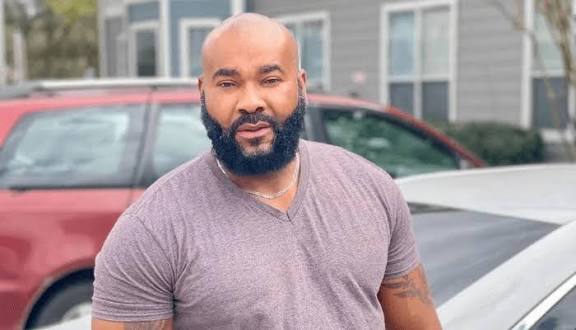
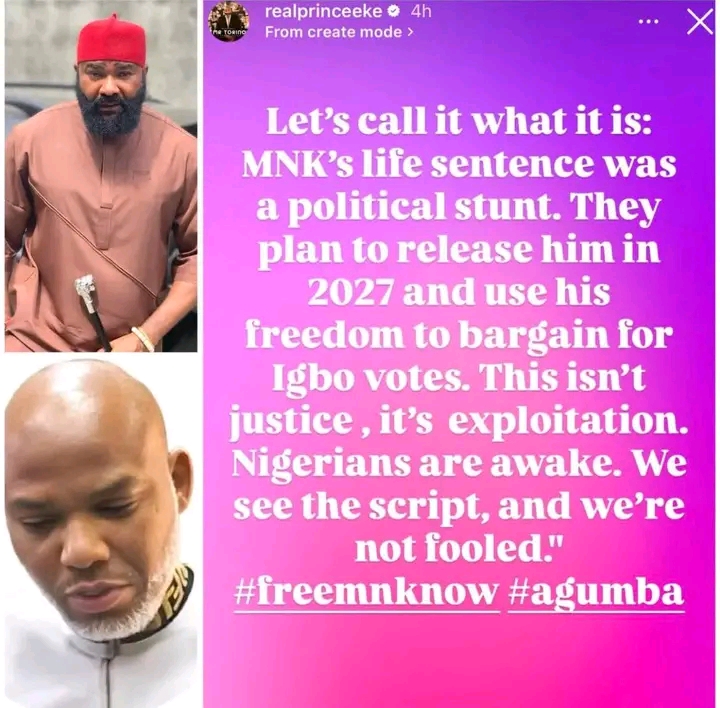
Sometimes the loudest tremors don’t come from protests or headlines. They start in small places, a phone buzzing, a post on Instagram, a celebrity speaking truths most people whisper. That’s what happened when Prince Eke dropped his statement about Nnamdi Kanu. He didn’t dance around it. He didn’t phrase it in political jargon. He said straight up, they plan to release Kanu and use his freedom to win Igbo votes in 2027. And just like that, the streets, social media, WhatsApp groups, cafés, and markets started vibrating.
People paused, they screenshot, debated, laughed, scrolled, argued. Whether it was hype or a leak, nobody could ignore it.
The timing made it heavier. It wasn’t just celebrity commentary, it was exposure. The idea that a man’s freedom could be part of a political bargain, years in advance of an election, hit raw nerves. The whispers that usually lived behind closed doors suddenly had daylight.
And Nigerians noticed because politics here is never just legal—it’s emotion, it’s timing, it’s influence, and sometimes it’s performance. Eke’s post reminded everyone that sometimes a voice from entertainment can be louder than any political press conference.
Nnamdi Kanu’s Life Imprisonment — A Sentence That Shook the Nation
Nnamdi Kanu’s life imprisonment didn’t just hit the headlines—it shook conversations in every corner of the Southeast. People didn’t just read about it; they felt it. Markets, campuses, barbershops, WhatsApp threads, and social media exploded with reactions. Some saw it as justice served, others as a political maneuver, a warning, or a stunt. The life sentence was heavy, literal and symbolic, and it reframed how millions of Nigerians, particularly the Igbo, saw the intersection of law, politics, and ethnicity.
For many, it wasn’t just the sentence but the timing that stung. Observers noticed that while others convicted of similar offenses had been freed, Kanu’s detention dragged on. Social media buzzed with “why him, why now?” conversations. The sentence raised questions about fairness, political calculation, and the underlying forces shaping Nigerian justice. People began to read between the lines, to sense that Kanu’s punishment might be more than legal—it could be political, symbolic, and deeply strategic.
The courtroom decision didn’t just end a trial—it ignited speculation. Every actor involved, from politicians to civil society, suddenly became part of a larger narrative. Citizens debated motives, loyalties, and implications. The sentence, intended to close a legal chapter, opened a political one. It became a pivot point, a reference, a lens through which 2027 electoral strategies, youth mobilization, and public trust would now be measured.
The Claim That Cuts Deep
Eke called Kanu’s life sentence a political stunt. That phrase doesn’t just sting—it slices. A stunt is fake, it’s show, it’s performance for someone else’s audience. And by adding 2027 to the timeline, Eke didn’t just point to injustice, he hinted at calculation. Suddenly Kanu’s freedom isn’t legal or human rights-centered. It’s electoral currency. Loyalty and emotion become tools, and the stakes feel immediate.
People who shrugged it off as “celebrity noise” couldn’t ignore it completely. Nigerian politics has a way of turning whispers into power. Promises get timed, votes get swung, allegiances get tested. The post put a mirror to the hidden corridors of influence, showing a choreography most of us only sense in fragments. Timing, loyalty, and manipulation were all suddenly visible through a single Instagram post.
The streets felt it. Cafés, barbershops, college compounds, and WhatsApp threads all caught a new rhythm. Conversations shifted from gossip to speculation. People wanted to know if someone was scripting the Southeast electorate like a movie, and Eke’s voice had just become the trailer.
Political Leverage — Numbers That Speak Louder Than Words
Politicians love numbers, they measure everything, and the Southeast has weight. Kanu isn’t just a man, he’s a symbol. Grievances, marginalization, unhealed wounds—they all mix into the energy around him. Promising or hinting at his release becomes more than just a gesture. It’s symbolic leverage.
Youth groups are threatening no-vote campaigns. They claim they can mobilize millions if Kanu isn’t freed. That might sound like fantasy to outsiders, but social media, encrypted chats, street organizing, and community networks make it plausible. This isn’t just chatter. It’s a warning. And Eke’s post amplified it, turning speculation into a tangible, visible force.
Politicians reading this know that loyalty in the Southeast isn’t free. Hearts and votes are influenced by emotion and symbolic justice. Even a partial follow-through on youth threats could change electoral calculations. Suddenly what seems like a legal or human rights issue becomes a political fulcrum. Timing, messaging, and perception matter as much as law.
Igbo Youth — The Wild Card of the Streets
The youth are unpredictable, energized, and connected. The idea that 10 million of them could withhold votes if Kanu isn’t released isn’t just rhetoric. It’s potential reality. They’ve studied elections, know leverage, and understand timing. Their threat is part organization, part emotion, part street culture. They speak in networks, hashtags, gatherings, and whispers that spread faster than any campaign memo. Every market, every campus, every online forum echoes with talk of strategy and loyalty, and this energy is difficult to ignore for anyone trying to measure influence in the Southeast.
Eke didn’t invent this energy. He amplified it, framed it in the context of electoral calculation. Suddenly the Southeast electorate is alive, unpredictable, and human. Cafés, markets, campuses, and online forums are debating if loyalty can be bought or if justice must come first. Conversations that used to be whispers in small circles now carry weight, and the potential power of youth mobilization is visible in real time.
This makes the alleged 2027 plan more than strategy—it becomes an experiment in human response, emotion, and street politics. The youth aren’t just numbers; they are actors with agency, capable of shaping outcomes by sentiment, perception, and sheer collective energy. Any political calculation that ignores this reality risks misjudging the pulse of the Southeast completely.
Ohanaeze — The Moral Brake
But not everyone is moving to street rhythm. Ohanaeze Ndigbo, the apex Igbo socio-cultural body, acts as the moral compass. They caution against turning Kanu’s freedom into political currency. Justice isn’t for sale, they say. Their stance is crucial because it creates a tension between the impatient youth and elders who value principle. The moral argument here is clear: symbolic gestures can’t replace the process, and shortcuts can damage long-term trust.
Eke’s post exposed this split in the Igbo landscape. The youth push for immediate action, the institutions urge caution. Politicians are squeezed in the middle. Messy, unpredictable, human—this tension is alive in the public consciousness. Leaders who try to capitalize on emotion without respecting principle risk alienating both constituencies and damaging their legitimacy.
This isn’t neat, it isn’t scripted. It’s the pulse of society negotiating ethics against emotion. The push and pull between principle and urgency, between elders and youth, defines the political climate, and it’s exactly this human unpredictability that makes any 2027 strategy uncertain. Observers and actors alike must account for not only votes but the moral currents that ripple through communities.
IPOB Watching — The Silent Eye in the Room
IPOB doesn’t sit idle. They warn politicians not to exploit Kanu for personal gain. Some leaders, insiders say, may prefer him detained to maintain influence. IPOB monitors sincerity versus performance, making manipulation risky. Every promise or calculation around Kanu is under scrutiny. Political theater can backfire if IPOB deems actions opportunistic, and this adds an extra layer of unpredictability to the Southeast landscape.
Eke’s post intersects perfectly here. By highlighting a potential 2027 strategy, he shines a light on opportunism. Politicians now face scrutiny from the streets, social media, activists, and IPOB itself. Moves that might have been quietly executed are now visible to millions. Every statement can be questioned, every gesture interpreted, and every action dissected for authenticity.
The narrative isn’t just political—it’s human, social, and unpredictable. IPOB’s vigilance forces a layer of accountability, making it impossible for any political actor to treat Kanu’s detention lightly. In this environment, even subtle missteps can become amplified, and strategy must contend with not only law and policy but the moral and emotional weight of the communities involved.
The Government’s Tightrope
The federal government now walks a razor’s edge. Concede and risk legitimizing agitation and angering other regions. Resist and risk youth backlash, distrust, unrest. Every move is scrutinized and interpreted. Eke’s statement brought what might have been behind closed doors into daylight, making every potential calculation a matter of public perception. Timing, symbolism, and perception now carry as much weight as law.
The streets feel it, the youth feel it, IPOB feels it, politicians feel it. A single post shifted energy from speculation to visible tension. Decision-makers are navigating a landscape where every gesture, every whisper, and every word can either calm or inflame the human currents shaping political outcomes.
In this environment, the government must calculate carefully. Policies and public statements are no longer isolated—they are part of a living, reactive ecosystem. The unpredictability of human response, coupled with political ambition and street mobilization, creates a scenario where misreading emotion or sentiment could have real consequences.
Why This Matters — Stakes on the Streets
Eke’s post didn’t just expose a political possibility—it reflected human energy. Youth, elders, IPOB, government, celebrities—all interacting in unpredictable ways. The 2027 election is no longer just about campaigns or policies. It’s about human response, trust, and perceived justice. Symbolic acts, street energy, and emotional loyalty might weigh heavier than manifestos.
The story resonates because it’s messy. It’s real. It’s unpredictable. The human element is always fluid, and decisions are rarely made in isolation from emotion, history, and street-level pressure. Observers can measure votes, but human reaction is harder to quantify, and that uncertainty gives youth and community movements extraordinary influence.
Ultimately, this matters because it reminds Nigerians that politics isn’t only law and order—it’s emotion, street energy, and vigilance. Every calculation must account for unpredictability, every promise weighed against human response. In this environment, strategy is only as effective as it respects the pulse of the people it seeks to engage.
Conclusion — From Whisper to Storm
Prince Eke didn’t just speak, he exposed tension. Kanu’s freedom, youth threats, IPOB vigilance, Ohanaeze caution, government calculations—they converge in a messy, unpredictable human landscape. 2027 may hinge on things beyond manifestos.
The streets, the votes, the emotion, the ethics—they are alive, unpredictable, and watching. Every calculation, every strategy, and every promise is filtered through human response and scrutiny. The script, if it exists, has been glimpsed. The actors, seen and unseen, are moving. Nigerians are awake, watching, and debating.
Decisions, manipulation, trust, justice—the stakes are real, human, and volatile. A whisper became a storm. And nobody can ignore it.



Discussion about this post