
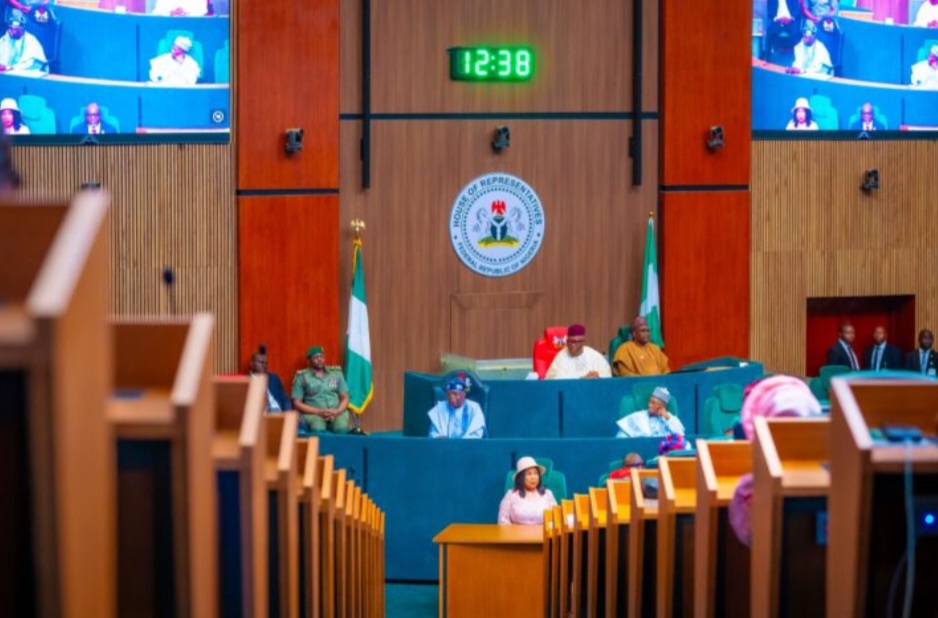
The national assembly is preparing to vote on a fresh batch of constitution amendment bills covering issues from policing and elections to citizenship and local government reforms.
Lawmakers in both chambers have been working on the proposals for months, after a series of zonal hearings and stakeholder meetings held earlier in the year.
The bills, 44 in total, are part of another round of amendments to the 1999 constitution.
The last major update took place in 2023 when 16 alteration bills were signed into law by former president, Muhammadu Buhari.
Deputy speaker and chair of the review committee, Benjamin Kalu, has repeatedly said the current process will be completed before the year runs out.
The review covers broad thematic areas such as local government autonomy, judiciary reforms, electoral changes, security restructuring and the role of traditional rulers.
One of the major proposals seeks to give local government councils a clearer position as a tier of government.
Supporters of the bill argue that several councils remain under the influence of state governments, a situation they say limits accountability and weakens grassroots representation.
Another proposal recommends the creation of the office of state auditors-general for local governments and the FCT, which its promoters believe will strengthen financial oversight at the community level.
Some bills focus on correcting or updating the names of local government areas in states such as Delta, Oyo, Kaduna, Osun and Ekiti.
Others aim to address long-standing issues around inclusive governance, including a bill seeking automatic citizenship rights for foreign men married to Nigerian women.
The supporters of the citizenship bill say the current arrangement favours only foreign wives of Nigerian men and should be harmonised.
There is also a proposal to introduce citizenship by investment, which would allow qualified foreign investors to apply for Nigerian nationality once they meet financial and developmental conditions set by government.
In a push to expand women’s participation in politics, one bill recommends special seats for women in all levels of the parliament.
The electoral reform segment includes a bill to permit independent candidacy in presidential, governorship, legislative and local government elections.
Another proposes the establishment of an electoral offences commission to investigate and prosecute breaches linked to elections.
A separate bill seeks to redefine how state electoral commissions are constituted and strengthen their authority.
For institutional reforms, lawmakers will consider a proposal to expand the Federal Civil Service Commission to ensure every state, including the FCT, has a representative.
Another bill seeks to guarantee that every local government in a state has at least one seat in the state house of assembly.
There is also a bill to separate the office of the attorney-general from the office of the minister or commissioner for justice, a move supporters believe will protect the independence of prosecutors.
A proposal dealing with the qualifications of governors and deputy governors aims to prevent situations where a joint ticket is disqualified because of the actions or documents of one running mate.
Security reforms also feature prominently, with one bill seeking the creation of state and community police systems.
Another focuses on ensuring the financial independence of the armed forces.
Under legislative reforms, proposals include timelines for submitting appropriation bills, rules for inaugurating new legislators and provisions for removing presiding officers of state assemblies.
A bill also seeks to end instances where the executive assumes law-making powers during transitional periods.
Judicial reforms form one of the largest clusters in the amendment round.
The bills include proposals for faster handling of election petitions, changes to the jurisdiction of appellate courts, direct funding for courts through the National Judicial Council, and a smoother succession process for judicial offices.
There are also proposals targeting improved pensions for retired judges and expanded jurisdiction for certain courts to handle electoral offences.
Human rights issues feature in bills designed to further define acts constituting torture, protect the rights of unborn children when a pregnant woman faces the death penalty, and recognise the right to a clean and safe environment.
On devolution of powers, lawmakers will debate bills that seek to move road construction (excluding major federal highways), tourism and quarantine matters to the concurrent list, allowing federal and state governments to share responsibility.
Traditional institutions also appear in the list, with proposals for a National Council of Traditional Rulers and a mandatory five percent allocation to traditional rulers in each state.
Fiscal reform proposals would compel government agencies to submit annual financial reports to the auditor-general within a set time frame.
Another requires public disclosure of audit reports at both federal and state levels.
The constitution review process is expected to continue at the national assembly before final harmonisation and transmission of approved amendments to state assemblies for concurrence.




Discussion about this post