
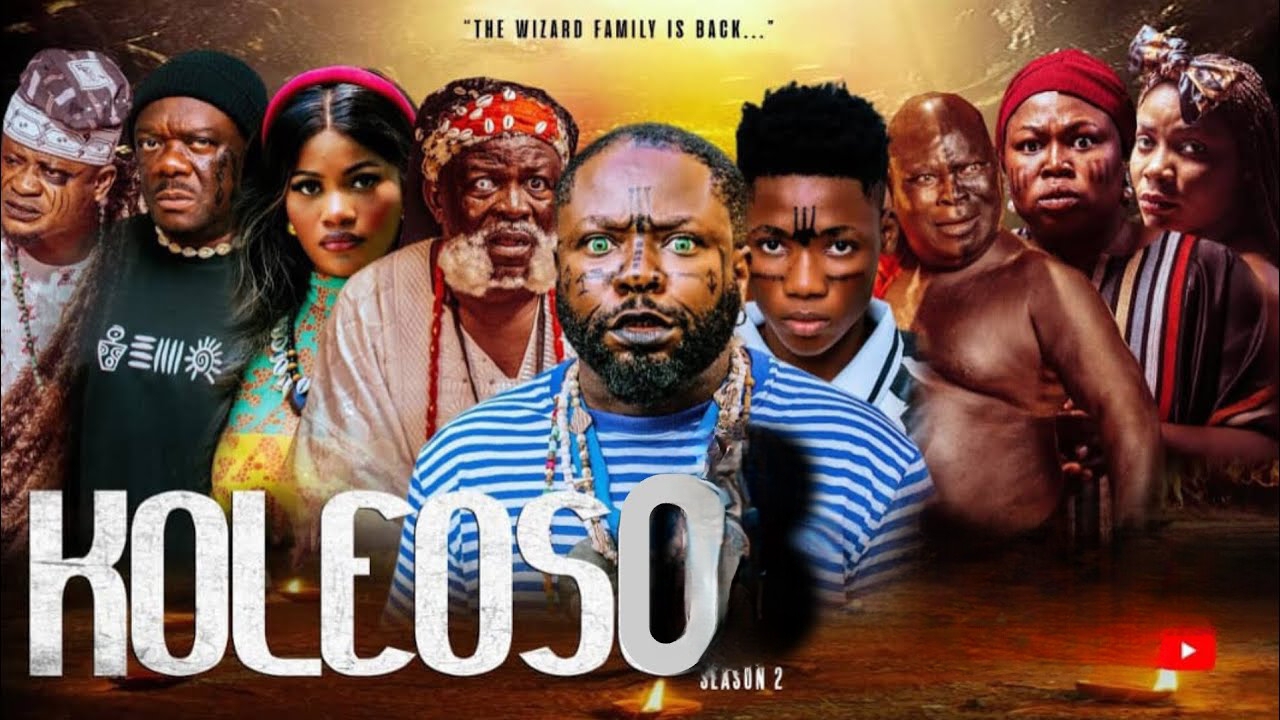
In 2025, a Yoruba series quietly captured the attention of millions of Nigerians and became one of the most searched online. Koleoso, created and led by Ibrahim Yekini, stands out as a series that blends culture, mysticism, and family dynamics into a compelling digital experience. Its popularity has grown steadily, fueled by its unique approach to storytelling and its deep connection to Yoruba traditions.
The series does not rely only on supernatural elements to attract viewers. Audiences are drawn by the way it explores power, ambition, and human choices within a cultural context that feels authentic and familiar. Each character carries weight and purpose, creating a sense of anticipation that makes every episode an event rather than just another release.
Koleoso’s impact extends beyond its story. The series has redefined online Yoruba cinema through record-breaking views on YouTube and recognition from industry awards. It has created a space where cultural storytelling meets modern technology, allowing audiences to engage with local narratives in a global digital environment.
What makes Koleoso stand out is not simply its drama or mysticism but the way it invites viewers to become part of a larger conversation. Fans discuss, share, and speculate on developments while celebrating the performances of actors who bring the story to life. This engagement has turned the series into a cultural phenomenon that continues to grow with each release.
Koleoso: The Heir of Power and Conflict
Koleoso’s significance is rooted in the way he embodies inherited authority and the weight of expectation. He is both son and successor, student and master, navigating the complexities of mystical inheritance with skill and cunning. Viewers are drawn to the subtle layers of his character, noticing the ways he balances ambition with loyalty, power with restraint, and aggression with strategy. His supernatural abilities are not merely plot devices; they are reflections of his psychological and emotional journey, giving audiences insight into the tension between choice and destiny.
His interactions with his father, Osogbemi, define much of his early trajectory. Every lesson, every ritual, every confrontation is a test of Koleoso’s ability to not only wield power but to understand the responsibilities it entails. He becomes a lens through which audiences explore questions of morality, leadership, and justice. Even as his supernatural feats dazzle, it is his judgment, cunning, and adaptability that make him compelling. Viewers watch him with fascination, invested in the evolution of a character whose power is matched only by the ethical dilemmas it creates.
The tension between Koleoso and his siblings adds layers of narrative richness. Oshobola’s mischievous manipulation, Efun’s resistance to inherited power, and the inevitable clash of ambitions within the family unit create constant conflict. Each character’s approach to power highlights different aspects of human behavior under pressure. Koleoso’s dominance is mirrored against his sister’s cunning and his brother’s defiance, offering audiences a study in contrast: authority tempered by morality, ambition moderated by resistance, and strength weighed against empathy.
Koleoso’s rivalry with external figures, particularly the antagonist Jaweshoro, underscores the scale of his character’s significance. The series juxtaposes his inherited and earned abilities against forces that challenge not only his skills but his ethical framework.
Osogbemi: Patriarch of Tradition and Authority
Osogbemi’s presence is foundational to Koleoso. He is more than a father; he is the embodiment of expectation, discipline, and the moral architecture of the series’ universe. Played with gravitas by Saliu Gbolagade, he commands scenes without overshadowing the younger characters, his authority shaping every narrative turn. He represents the intersection of power and tradition, showing audiences how legacy can be both empowering and constraining.
The patriarch’s interactions with Koleoso illuminate the tension between inherited power and personal choice. Osogbemi’s teachings are strict, often ruthless, yet they are essential in defining the moral stakes of the series. Viewers watch as the father and son negotiate authority, loyalty, and responsibility, understanding that the balance of power within the family mirrors larger questions of ethical governance and spiritual stewardship. These sequences are less about spectacle and more about the subtle psychology of power and obedience.
Osogbemi’s influence is not limited to his children. His antics and family beliefs shape the moral compass of the broader universe in which the series operates. Allies and rivals alike respond to the patriarch’s decisions, creating ripple effects that drive suspense and maintain engagement.
The series uses Osogbemi as a central axis, a character whose presence ensures that every action has consequence and every choice carries weight. His legacy is a thematic backbone, reinforcing why the series resonates with audiences.
Oshobola: Mischief, Humor, and Moral Ambiguity
Oshobola, portrayed by Kemity, is a character who defies simple categorization. She is at once alluring, cunning, and comically relatable, a figure whose actions constantly shift the emotional tenor of the series. Audiences are drawn to her because she embodies temptation and chaos while simultaneously grounding the story in human absurdity.
Her humor, largely delivered through broken English, punctuates intense supernatural sequences with levity, making the narrative more dynamic and accessible. In a story dominated by mystical power, she reminds viewers that personality and cleverness can rival strength.
Her moral ambiguity is central to her appeal. Oshobola leverages her mystical inheritance for personal gain, establishing schemes and manipulating those around her. Yet she is not purely villainous; she possesses motivations that feel deeply human, reflecting desires for autonomy, attention, and influence. This duality invites viewers to engage in constant reassessment of her character. Is she ally or adversary, comic relief or calculated strategist? The ambiguity keeps audiences invested, creating tension that is psychological as much as it is supernatural.
Oshobola’s interactions with Koleoso are particularly compelling. She challenges him in ways that his father and rivals cannot, using wit and cunning to provoke, distract, or undermine. Their sibling dynamic illustrates themes of rivalry, loyalty, and ethical contrast. Where Koleoso embodies power tempered by emerging moral reasoning, Oshobola embodies unrestrained ambition tempered by charm and cleverness. This interplay generates both tension and humor, deepening viewer engagement and establishing her as a vital component of the series’ success.
Beyond her personal actions, Oshobola represents the intersection of tradition and contemporary sensibilities. Her use of mystical power is informed by family heritage but applied with modern pragmatism and creativity. She shows audiences that legacy is not monolithic; it is interpreted, manipulated, and personalized. In doing so, she reinforces one of Koleoso’s central motifs: the negotiation between inherited obligation and individual agency, a theme that resonates culturally and emotionally with viewers.
Efun: Protégé, Modernity, and the Fusion of Real and Reel
Efun, played by Akinfolarin Olamide, is not only a young prodigy on-screen but also a real-life protégé of Ibrahim Yekini (Itele) and Kemity (Oluwakemi Apesin). This dual mentorship enriches her performance and adds layers of authenticity to her character. On-screen, she learns from Koleoso and Oshobola, navigating mystical legacies, ethical challenges, and personal growth.
Off-screen, her close tutelage under Itele and Kemity mirrors the apprenticeship narrative, making her development both believable and compelling to audiences.
Her character embodies the tension between inherited mystical power and modern aspirations. Efun approaches her abilities with discipline and reflection, balancing reverence for tradition with her personal moral compass.
Audiences are drawn to her learning process, watching her absorb the guidance of mentors while gradually asserting her own judgment. This apprenticeship is central to the series’ narrative appeal, illustrating that power must be cultivated and ethically applied rather than inherited blindly.
The mentor-protégé dynamic is crucial for understanding Efun’s relationships. Her interactions with Koleoso and Oshobola highlight contrasting styles of leadership and application of supernatural power. She observes, questions, and occasionally challenges her mentors, providing viewers with insight into ethical decision-making within a world dominated by mystical and familial pressures. Her ability to navigate humor, cunning, and moral responsibility makes her one of the most relatable and admired characters in the series.
The real-life connection between Akinfolarin Olamide, Itele, and Kemity also enhances audience engagement. Fans recognize the authenticity of her learning process and the visible chemistry on-screen, making her journey feel lived-in rather than scripted. This blending of real mentorship with fictional apprenticeship strengthens the narrative resonance of Koleoso and contributes to its unprecedented popularity as Nigeria’s most-watched Yoruba series. Efun becomes both a character and a symbol, reflecting the power of guidance, dedication, and intergenerational learning within the creative and mystical universe of the series.
Osu: Love, Vulnerability, and Mystical Tension
Yetunde Barnabas’s portrayal of Osu adds another layer of complexity to the series. Osu is a young woman caught between spiritual entanglement and human desire, a figure whose narrative bridges the supernatural and the emotional. She embodies vulnerability, choice, and the unpredictability of consequences when ordinary life intersects with extraordinary power. Audiences are drawn to her because she humanizes the cosmic stakes, showing that mystical conflicts have very real emotional costs.
Her involvement with Koleoso introduces both tension and empathy. As a love interest and focal point of rival mystical forces, she operates at the center of the narrative’s interpersonal stakes. Her actions influence decisions, incite conflict, and create moral dilemmas that ripple across the series. Osu’s presence reinforces the stakes of supernatural power, reminding viewers that control over magic and destiny cannot eliminate vulnerability or emotional risk. She is simultaneously catalyst and conscience, a character who demands careful attention from audiences invested in both story and character.
Jaweshoro: Rivalry and Escalation
Fatai Odua’s portrayal of Jaweshoro establishes him as a counterbalance to the Osogbemi family. As a rival warlock figure, he introduces external tension that challenges Koleoso’s abilities and moral judgment. His presence transforms the story from an inward-looking family drama into a broader conflict of mystical powers. The suspense in Koleoso is amplified by Jaweshoro’s unpredictability, as his actions directly threaten the security, authority, and ambitions of the central characters.
Jaweshoro’s significance lies in his embodiment of competing philosophies and power structures. He mirrors Osogbemi in his dedication to strength and control but applies his influence differently, creating a foil that highlights Koleoso’s evolution. Every confrontation is a narrative laboratory, allowing viewers to see how Koleoso, Oshobola, and even Efun respond to external pressure. Jaweshoro is not merely an antagonist; he is a reflection of the challenges inherent in power itself, a force against which the central characters measure their growth, ingenuity, and morality.
YouTube Records: The Digital Phenomenon of Koleoso
Koleoso has not merely attracted casual viewers; it has shattered digital engagement records for Yoruba-language content in Nigeria. Each part released on Itele D Icon’s official YouTube channel and Itele Studios uploads consistently garnered millions of views within hours, reflecting the series’ grassroots appeal and viral potential. Part 5, for example, surpassed 1 million views in just eight hours, an extraordinary feat for a Yoruba series released online. The rapid accumulation of views highlights how audience investment is tied not only to the supernatural drama but to the strength and magnetism of its characters.
Beyond individual episodes, the series’ overall digital footprint positioned it among Nigeria’s most-searched titles of 2025, competing with international streaming content. Search trends indicate consistent audience curiosity and engagement, with many viewers exploring multiple parts in sequence, generating continuous spikes in daily views. This pattern reflects a fan culture around the characters, where Koleoso, Oshobola, and Efun are not just story elements but central figures whose decisions and interactions drive sustained interest.
Ibrahim Yekini’s personal recognition as a YouTube creator further amplifies the series’ significance. Ranked No. 2 among top Nigerian YouTube creators in 2025, his influence extends beyond acting and directing into cultural leadership within online cinema. Viewers are drawn not only to the narrative itself but to his persona and creative brand. The combination of character-driven storytelling and strategic online presence created a feedback loop of engagement, discussion, and anticipation for new releases.
This digital visibility reinforces the notion that Koleoso is a phenomenon rather than a standard series. It is measurable through views, search rankings, and fan interactions, but its cultural resonance is amplified because viewers are invested in the characters’ growth and the actors’ real-life mentorship dynamics, particularly the relationship between Itele, Kemity, and Akinfolarin Olamide. The online platform becomes both stage and community, reflecting how Yoruba storytelling has adapted and thrived in the digital era.
OAFP Awards 2025: Recognition Beyond Views
The Odunlade Adekola Film Production Awards 2025 cemented Koleoso’s critical and industry recognition, confirming that its popularity is matched by professional acclaim. The series and its cast took home several major honors, celebrating both artistic achievement and cultural impact.
Ibrahim Yekini (Itele) was awarded Best Actor, acknowledging his portrayal of Koleoso and his creative leadership in directing, writing, and producing the series. His performance was celebrated for blending intensity, moral ambiguity, and supernatural gravitas, making him the linchpin of the series’ narrative success.
Kemity (Oluwakemi Apesin) won Female Comedy Actor of the Year, a recognition of her role as Oshobola. Her comedic timing, particularly through the delivery of broken English, combined with her manipulative brilliance, distinguished her performance as both entertaining and narratively significant. Fans and critics alike lauded her for making moral ambiguity engaging and relatable.
Saliu Gbolagade, the actor behind Osogbemi, received a special Legendary Award. His recognition extended beyond acting excellence to lifetime achievement acknowledgment, including plaques and generous on-stage donations. This award highlighted his embodiment of patriarchal authority, tradition, and mentorship—an anchor for both the story and the broader Yoruba film landscape.
Finally, Koleoso as a series was recognized as Best Series/Movie of the Year, a distinction that validated both its commercial and artistic impact. The OAFP awards emphasized the series’ mastery of storytelling, supernatural intrigue, and audience engagement, acknowledging that Koleoso had redefined digital Yoruba cinema by combining character depth, mystical realism, and viral appeal.
Why Nigerians Love Koleoso: Cultural Resonance and Engagement
The appeal of Koleoso extends beyond supernatural spectacle; it is a story deeply rooted in Yoruba cultural identity, moral reflection, and character-driven storytelling. Viewers are drawn to the series because it blends mysticism, humor, moral dilemmas, and relatable human ambition into a tapestry that resonates on multiple levels. Its popularity is not accidental—it is a carefully constructed convergence of story, culture, and authenticity.
Beyond characters, Nigerians love the series because it speaks to shared cultural experiences. The depiction of Yoruba spiritualism, mystical beliefs, and traditional practices resonates with audiences who recognize these elements in everyday folklore, festivals, and family histories. By blending the familiar with the extraordinary, Koleoso creates a world that is both fantastical and intimately recognizable, giving viewers a sense of pride in seeing their culture represented on a massive digital platform.
Digital accessibility has also fueled its popularity. YouTube, the primary platform for Koleoso, allows audiences across Nigeria and the diaspora to watch episodes at any time, share clips, and engage in discussions online. The series’ viral viewership, including millions of views in hours for certain episodes, has created a communal experience where fans celebrate plot twists, debate outcomes, and anticipate new releases together. This sense of shared viewing and participation amplifies love for the series beyond the screen.
Closing Reflection: Koleoso’s Enduring Appeal
Koleoso has become more than just a popular series; it is a cultural touchstone for many Nigerians. By blending Yoruba traditions, mystical storytelling, and relatable human experiences, the series has connected deeply with audiences across generations. Its appeal shows that local narratives, when crafted thoughtfully, can compete with global content while retaining a distinct cultural identity.
The real-life mentorship between Itele, Kemity, and Akinfolarin Olamide adds another layer to the series’ resonance. Viewers see not only characters learning and growing on-screen but also performers guided and nurtured off-screen, which gives authenticity and depth to the story. This mentorship emphasizes the value of guidance and talent development within Nollywood.
Koleoso’s record-breaking digital presence, particularly on YouTube, illustrates how accessible storytelling can reach wide audiences and create communal engagement. Fans follow each release, discuss plot developments, and celebrate moments together, turning the series into a shared cultural experience.
Recognition at the OAFP Awards 2025 underscores its significance within the industry. The combination of audience love, professional acclaim, and cultural relevance confirms why Koleoso is currently Nigeria’s most-watched Yoruba series and suggests its lasting impact on both viewers and the Nigerian film landscape.




Discussion about this post