
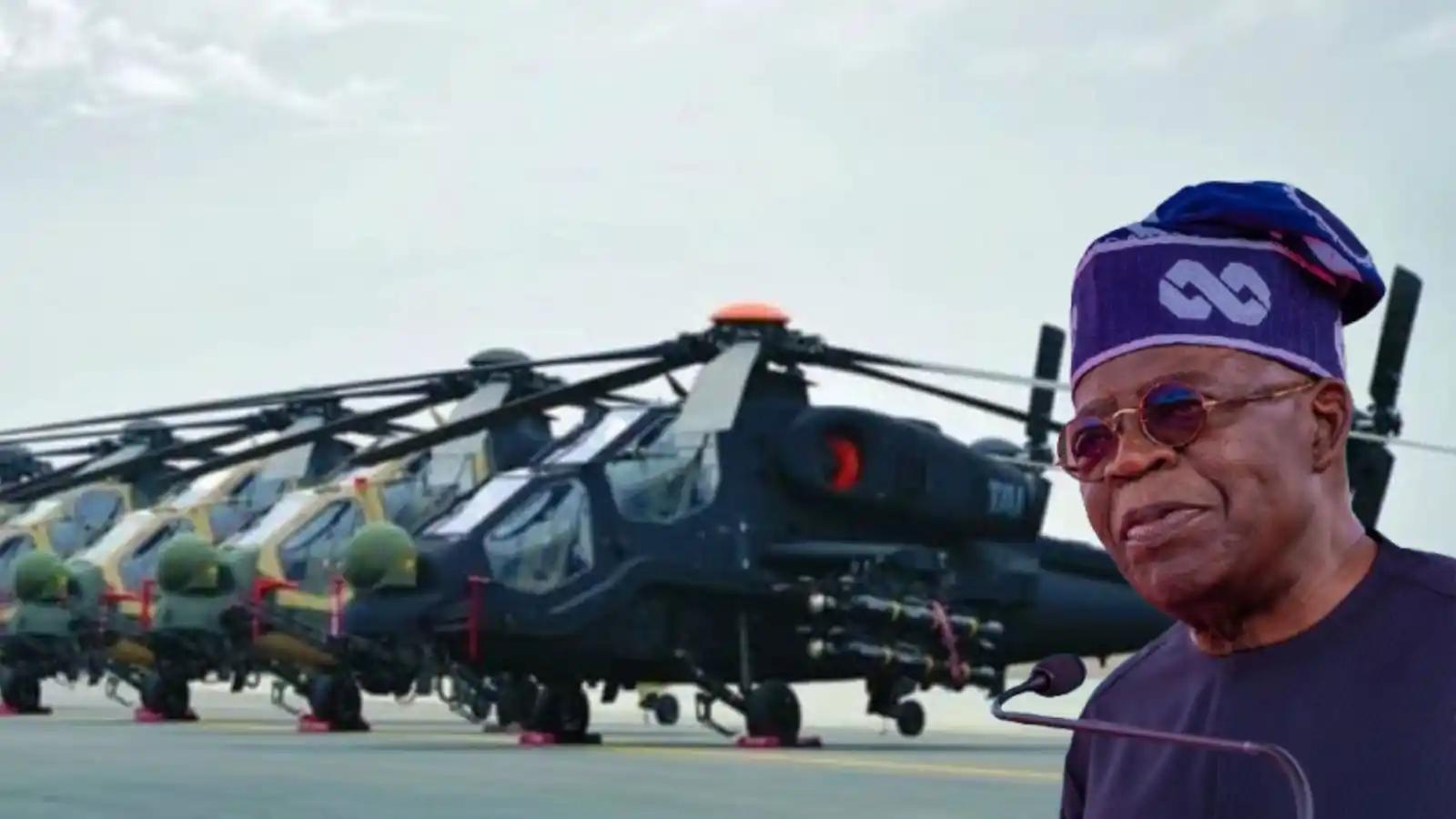
There is a quiet over the skies of Nigeria that feels heavier than usual. The cities pulse with their usual rhythm, but in the hinterlands where insecurity has etched deep scars, a tension lingers. Conversations whisper about change without knowing its shape.
The announcement by President Bola Ahmed Tinubu that four American attack helicopters are soon to arrive casts a shadow that stretches across farmlands, urban streets, and military bases alike. It is a symbol and a question. Can machines of war alter the currents of fear that have long flowed through these regions? Can they become instruments of protection rather than instruments of anxiety? The answer remains suspended, waiting for the rotors to touch Nigerian soil.
This is not merely an acquisition of equipment. It is a statement about ambition, about intent, and about a vision of order that stretches beyond the reach of conventional forces. Helicopters are instruments of mobility and oversight, capable of observing, striking, and responding where foot soldiers cannot reach.
For citizens who have endured prolonged insecurity, they offer hope but also a challenge to expectations. The line between hope and skepticism is thin, and every detail of delivery and deployment will be watched with scrutiny.
The Strategic Rationale for Helicopter Procurement
Nigeria has faced evolving security challenges that demand versatility and rapid response. Insurgencies in the northern regions have displaced thousands and undermined confidence in state protection. Banditry and kidnappings in central and southern states have created corridors of fear that conventional policing struggles to contain. Attack helicopters promise to compress the time between intelligence and action. They are designed to observe, track, and respond in ways that ground forces alone cannot manage. Each aircraft embodies the potential to tilt a situation from chaos to control.
The helicopters are part of a broader modernization strategy for the Nigerian military. Previous years have shown the limitations of relying solely on conventional ground operations. Advanced aerial technology brings reconnaissance, precision targeting, and communication capabilities that strengthen operational cohesion. Nigeria’s acquisition of Agusta 109S Trekker helicopters earlier in the year and other surveillance aircraft laid the groundwork for integrating these new assets into ongoing counter-insurgency campaigns. Technology is not an end but a force multiplier that enhances the capacity of human operators.
International partnerships play a crucial role in the acquisition process. Procuring helicopters from the United States ensures access to training, maintenance expertise, and operational standards. Cooperation extends beyond hardware to knowledge, strategic alignment, and mutual security objectives. It also positions Nigeria within a framework of international defence collaboration that strengthens intelligence sharing, logistical support, and global credibility. These partnerships add layers of strategic depth to Nigeria’s security architecture.
Timing and symbolism are equally important. After years of persistent criticism over security lapses, the announcement demonstrates a commitment to concrete measures. It reassures the public while challenging military leadership to integrate these assets efficiently. The helicopters represent both practical capacity and symbolic reassurance. How effectively they are deployed will test planning, coordination, and Nigeria’s ability to turn potential into action.
Procurement Challenges and the Path to Acquisition
Securing four attack helicopters from the United States was not a simple transaction. It involved navigating complex procurement channels, addressing cost constraints, and managing the intricate demands of international military sales. Each helicopter represents millions of dollars, requiring careful budgetary allocation and justification to both national oversight bodies and the public. Delays in previous acquisitions underscore the difficulty of balancing fiscal responsibility with operational urgency. The government’s commitment to transparency and due process shapes the pace and structure of the procurement.
The limited availability of such advanced aircraft added another layer of complexity. Global demand for attack helicopters is high, and manufacturers prioritize contracts based on delivery capacity and strategic partnerships. Nigeria had to negotiate carefully to ensure timely delivery without compromising on specifications or capabilities. This process demanded diplomatic engagement, detailed technical assessment, and precise planning to align procurement timelines with training and deployment schedules.
Additionally, coordinating support infrastructure posed a significant challenge. Helicopters are not stand-alone instruments; they require maintenance facilities, trained personnel, fuel supply chains, and operational bases. Each element needed careful planning to prevent bottlenecks that could render the aircraft idle. These considerations extended the procurement timeline but were essential to ensure that the helicopters would function effectively upon arrival.
The government also engaged with multiple international partners, including Turkey, to explore complementary security assistance. This broader engagement reflects a strategic approach to acquisition, combining hardware procurement with regional support networks, intelligence sharing, and maintenance collaborations. The challenge was not merely to buy machines but to embed them into a functional security ecosystem capable of responding to Nigeria’s diverse threats.
Training and Readiness: Preparing Pilots and Personnel
The arrival of the helicopters will not mark the end of preparation. Pilots and operational crews require rigorous training to master the complex systems, weapons, and navigation technologies embedded in these aircraft. Flight hours, simulated missions, and coordinated drills are critical to ensure that the crew can respond efficiently under pressure. The success of deployment depends on the human element as much as the machines themselves.
Training extends beyond the pilots to include ground crews and command staff. Maintenance, rapid refueling, and mission planning all involve coordinated teams who must operate seamlessly under stress. Missteps in any part of this chain could compromise missions, highlighting the necessity of investing in human capital alongside technological assets. The Nigerian military is tasked with building a comprehensive training curriculum that accounts for both the tactical and strategic dimensions of helicopter operations.
Operational readiness also requires adaptation to Nigeria’s diverse terrain. From the semi-arid plains of the North to the forests and riverine regions in the South, each landscape presents unique challenges for navigation, targeting, and rapid response. Exercises must replicate these environments to ensure pilots can operate effectively in real-world conditions. This careful preparation transforms the helicopters from potential instruments into fully integrated tools of security enforcement.
Finally, coordination with other security units is essential. Helicopter operations cannot function in isolation. They must complement state police, federal operations, and community vigilance efforts. Integrated drills and communication protocols establish the framework for real-time decision-making, ensuring that aerial support translates into actionable security outcomes on the ground.
Geopolitical Implications of the U.S. Helicopter Deal
Nigeria’s acquisition of helicopters from the United States carries implications beyond domestic security. It signals a deepening of defense cooperation between the two nations, reinforcing strategic alignment in counter-terrorism, intelligence sharing, and regional security initiatives. The transaction demonstrates Nigeria’s capacity to engage with global partners for high-value defense equipment, positioning the country as a proactive player in West African security dynamics.
This move may influence Nigeria’s relationships with neighboring countries as well. The demonstration of advanced aerial capabilities can act as both deterrent and reassurance, affecting cross-border security collaborations. Regional leaders observe these developments closely, understanding that Nigeria’s enhanced military capacity has ripple effects for both joint operations and the balance of power in the region.
The deal also situates Nigeria within a global discourse on defense modernization. As countries worldwide grapple with rising threats and technological advancements, the integration of sophisticated aerial platforms is a visible marker of strategic intent. It reflects a commitment to keeping pace with international standards, both in capability and in the professionalism of military operations.
Additionally, the procurement may attract scrutiny from civil society and opposition groups. Questions about costs, transparency, and prioritization of resources are inevitable in a country facing multiple development challenges. Navigating these perceptions requires careful public communication to underscore the strategic necessity of the acquisition and its anticipated benefits for national security.
Operational Integration and Deployment Strategies
Once the helicopters arrive, the next challenge will be integrating them into Nigeria’s existing military framework. Decisions about deployment zones, mission priorities, and operational protocols will determine how effectively these assets address the most pressing security threats. Planning involves mapping high-risk areas, evaluating historical patterns of insurgency and banditry, and coordinating with ground forces to ensure responsive action.
Helicopters can be deployed for reconnaissance, rapid strike operations, and surveillance of remote areas. This flexibility allows the military to adapt to dynamic threats and respond to incidents that would otherwise require extensive mobilization of ground forces. The strategic deployment of these assets will test the ability of commanders to balance immediate operational needs with broader security objectives.
Maintenance schedules, spare parts logistics, and fuel supply will also influence deployment efficiency. Operational readiness is not simply a function of having aircraft available. It requires a holistic approach that ensures helicopters are mission-ready at all times. Any disruption in these support systems can limit the effectiveness of aerial interventions.
Finally, integration with state and community policing frameworks will be critical. Helicopter operations must complement intelligence from local sources, community reporting, and law enforcement patrols. A synchronized approach maximizes operational impact and enhances public confidence in the government’s ability to provide security. The success of deployment will depend on the coordination of aerial and ground forces in real time.
Anticipated Operational Impact on Insurgency and Banditry
The introduction of advanced attack helicopters has the potential to shift the operational dynamics of insurgent and bandit groups. Rapid deployment capabilities allow the military to respond to threats before they escalate, reducing casualties, property damage, and displacement.
Helicopters can project power into areas previously inaccessible due to terrain or security constraints, creating a deterrent effect that reshapes the operational calculus of criminal actors.
In northern states where insurgency has persisted for years, aerial assets provide real-time surveillance and precision strike capacity. Helicopters can identify strongholds, monitor movements, and coordinate with ground units for rapid intervention. This capability allows for more proactive operations, targeting not just reactive responses but strategic dismantling of criminal networks. The potential to contain threats before they manifest fully represents a significant shift in security methodology.
Banditry and kidnappings in central Nigeria also stand to be affected. Quick aerial response reduces the time criminals have to execute attacks or escape, enhancing the effectiveness of law enforcement and military collaboration. Helicopters provide both visibility and rapid extraction capabilities, allowing forces to disrupt criminal operations and reinforce community confidence. The integration of these assets is as much psychological as it is tactical, demonstrating state presence and resolve.
Operational success will require continuous assessment. Intelligence gathering, mission planning, and coordination with local forces are essential to translate helicopter capability into tangible results. The anticipated impact is not automatic; it hinges on strategic execution, adaptability, and responsiveness. When deployed effectively, these helicopters can alter the security landscape, but they remain one component in a broader framework of national defense strategy.
Final Thoughts: Looking Ahead
The arrival of four American attack helicopters in Nigeria represents an important step in strengthening the country’s security capacity. They provide the tools for faster response, improved surveillance, and better coordination in tackling threats across the nation. While their presence alone cannot solve all challenges, they symbolize a commitment to addressing insecurity with tangible resources.
Successful integration of these helicopters will depend on careful planning, effective training, and close coordination with ground and state policing units. The technology amplifies capability, but human skill, strategy, and intelligence remain essential. How these elements come together will determine the real impact on communities that have long faced insecurity.
The announcement also reflects Nigeria’s broader engagement with international partners. Collaborating with the United States reinforces the government’s approach to modernization, operational support, and global defense cooperation. At the same time, public perception and confidence in security measures will continue to shape the narrative around these investments.
The helicopters are a part of a larger security strategy rather than a standalone solution. Their arrival offers an opportunity to strengthen operations, enhance response times, and reassure citizens. The measure of success will be practical outcomes on the ground, demonstrating that ambition, planning, and investment can translate into a safer environment for communities across Nigeria.




Discussion about this post