
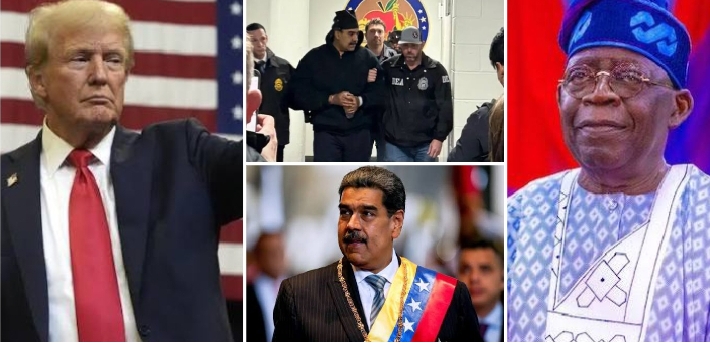
On January 3, 2026, global attention turned to Venezuela as Nicolás Maduro, the country’s president, was captured during a highly publicized U.S. operation. The arrest marked an extraordinary moment in international politics, drawing reactions from governments, legal experts, and observers around the world.
For countries far from Caracas, including Nigeria, the event presented a new set of questions about diplomacy, regional influence, and the ways distant decisions can reverberate across continents.
This narrative seeks to explore, in precise and evidence-based terms, how Trump’s operation, the arrest of Nicolás Maduro, and the subsequent U.S. strategy impact Nigeria’s economy, its fiscal stability, and its role in regional diplomacy. Through immersive article and detailed analysis, the account maps a sequence of cause and effect.
The Operation That Shook the World
The military precision of the U.S. operation was designed to be decisive. In the early hours of January 3, U.S. forces executed a coordinated strike involving air and special operations units. Maduro and his wife were detained and transported to the United States, where federal prosecutors indicated charges of narco-terrorism and weapons offenses awaited.
The news, first announced by the White House, traveled around the globe at the speed of modern media. The impact was not limited to Latin America. Each step of the operation sent tremors through oil markets, financial systems, and diplomatic circles. Nigeria, as Africa’s largest oil producer, observed keenly, aware that global oil flows are its economic lifeblood.
Markets reacted almost immediately. Brent crude, long sensitive to Venezuelan production disruptions, oscillated in response to speculation about U.S. control of Venezuelan oil reserves.
Investors in Lagos and Abuja monitored the price of oil, knowing that Nigeria’s budget and foreign exchange reserves depended on stability. The operation’s ramifications were far-reaching. The seizure of a sitting president by a foreign power challenged the norms of international law and sovereignty. For Nigeria, the event was not abstract. The interlinked nature of energy markets meant that every barrel extracted or withheld in Venezuela could translate into gains or losses for Nigerian coffers.
The operation also reframed U.S. foreign policy. By announcing that America would temporarily oversee Venezuelan governance to secure oil production and stabilize the country, the Trump administration signaled a direct engagement in hemispheric politics. For Nigeria, this was a demonstration of how global powers manage resources and exert influence, offering both a cautionary tale and a template. Analysts in Lagos considered what similar disruptions could mean if mirrored in African oil economies, where production volatility already pressures fiscal and monetary policy.
Legal and diplomatic concerns shadowed the operation. Many nations criticized the move as a violation of sovereignty. International legal scholars questioned its legitimacy, suggesting the action might trigger debates in the United Nations Security Council. Nigeria’s diplomats and economic planners watched these discussions carefully, mindful that the precedent set could influence Africa’s own energy and security frameworks.
Diplomatic Weight and International Law Implications: Nigeria on the Global Stage
Operation Absolute Resolve challenged the foundational principles of international law. The capture of a sitting president by a foreign power without United Nations endorsement or regional consensus sparked widespread debate. Nigeria, as a leading voice in Africa, now finds itself navigating complex diplomatic waters. Its stance in international forums signals both its adherence to sovereignty norms and its ability to protect strategic interests. Each statement, resolution, and vote becomes part of a larger calculus, influencing relationships with Washington, Beijing, Moscow, and key European capitals.
Legal scholars emphasize the precedent set by such unilateral interventions. Questions of territorial integrity, the use of force, and extraterritorial jurisdiction dominate discourse. Nigeria’s foreign policy apparatus monitors these debates closely. Decisions made today could impact Nigeria’s position in the African Union, ECOWAS, and UN discussions on sovereignty, peacekeeping, and regional stability. A carefully calibrated response allows Nigeria to assert its influence without overcommitting to positions that may limit its flexibility in future global crises.
The arrest also underscores the leverage that major powers wield over smaller economies. Control of strategic resources, enforcement of sanctions, and military intervention serve as instruments of influence that can shape policy far from the epicenter of action. For Nigeria, the event is a reminder that diplomacy and economic negotiation are inseparable. Engagement with global powers must anticipate shifts in policy, market behavior, and the enforcement of international norms.
Nigeria’s diplomatic weight rests on a blend of credibility, strategic foresight, and alignment with regional and global principles. The arrest of Maduro serves as both caution and opportunity, illustrating how assertive action by distant powers can redefine alliances and expectations. Nigeria’s ability to respond thoughtfully will determine not only immediate economic and political outcomes but also its long-term standing as a regional leader and a global interlocutor.
Oil Markets in Turbulence: Nigeria’s Vulnerability
Venezuela possesses the world’s largest proven oil reserves. Control of these reserves, now under temporary U.S. oversight, presents a shift in supply that resonates across global markets. Analysts in Abuja and Lagos immediately began modeling scenarios. If Venezuelan output increases, prices may soften, creating a downward pressure that would directly impact Nigeria’s budget. The 2026 national budget, calibrated at an assumed oil price of sixty-four dollars per barrel, faced immediate risk. Any reduction in price translates into decreased revenue for government spending, foreign exchange earnings, and social programs.
Nigeria’s economy, heavily reliant on crude exports, feels each fluctuation with magnified intensity. The arrest and U.S. control of Venezuelan production introduced both uncertainty and opportunity. If markets stabilize at lower prices, the nation must confront potential deficits. Oil-dependent states may experience delayed or reduced allocations. Investment plans might stall as energy companies adjust forecasts in anticipation of price volatility. The stakes are high, and decisions made in Abuja in response to these market shifts will have tangible consequences for infrastructure, health, education, and social welfare.
The operation also highlighted Nigeria’s exposure to external shocks. Historical lessons from past price slumps, whether triggered by OPEC decisions or geopolitical events, underscore the fragility of the budgetary framework. Economists in Lagos point to the need for immediate contingency planning. Strategic reserves, hedging mechanisms, and fiscal buffers gain renewed importance. The arrest of Maduro, though thousands of miles away, acts as a stark reminder of how closely Nigeria’s economic stability is tied to global oil dynamics.
Beyond the direct market effects, the operation has implications for Nigeria’s energy diplomacy. Organization of the Petroleum Exporting Countries (OPEC) members monitor Venezuelan output and U.S. involvement, anticipating adjustments to quotas and global supply expectations. Nigeria’s negotiators must now factor in not just production numbers, but also geopolitical realities and power balances.
Fiscal Pressures and Budgetary Challenges
Nigeria’s reliance on oil revenue magnifies the fiscal pressure created by global market disruptions. A drop in crude prices can widen budget deficits, forcing the government to make difficult choices between borrowing, austerity, or reallocating resources. Ministries overseeing health, education, and infrastructure face the real possibility of delayed funding. In Abuja, budget planners review revenue projections, stress-test assumptions, and revise spending frameworks in response to shifting international dynamics.
The arrest of Maduro is a reminder that domestic economic stability is often at the mercy of distant events. A single military operation can trigger a cascade of fiscal consequences, from foreign exchange fluctuations to liquidity constraints. For Nigeria, the calculus is not hypothetical. Policymakers understand that oil revenues directly finance public services and that volatility in global markets affects not just macroeconomic indicators, but also the daily lives of citizens.
Fiscal planning must now incorporate both risk and uncertainty. Hedging strategies for oil revenue, adjustments to exchange rates, and reconsideration of borrowing strategies become urgent. The arrest of Maduro demonstrates that external events demand a nimble and anticipatory economic policy. Nigeria’s approach to these pressures will define its resilience in the months ahead.
Strategic response extends beyond reactive budget adjustments. Nigeria’s policymakers are forced to evaluate longer-term fiscal sustainability. Diversification efforts, investment in renewable energy, and strengthening non-oil sectors gain new urgency.
Closing Reflection: Nigeria in a New Global Landscape
The arrest of Nicolás Maduro signals more than a geopolitical event; it marks a shift in how distant actions ripple through economies and governance structures. For Nigeria, it underscores the need to anticipate external shocks and integrate them into planning, from budget projections to energy policy. The nation must assess vulnerabilities without panic, identifying opportunities to strengthen resilience while safeguarding strategic interests.
Beyond economics, the event illuminates the intricacies of diplomacy and influence. Nigeria faces a landscape where international decisions, sometimes unilateral and abrupt, reshape alliances, priorities, and regional expectations. The challenge lies in navigating these currents thoughtfully, ensuring that national voice and authority remain decisive even amid uncertainty.
The operation serves as a reminder that global interconnectedness is both a constraint and a resource. Nigeria’s capacity to adapt, coordinate internally, and engage strategically with the international community will define how it positions itself in a world where distant events can directly affect local realities. In this moment, preparation, foresight, and measured action are the nation’s strongest assets.



Discussion about this post