
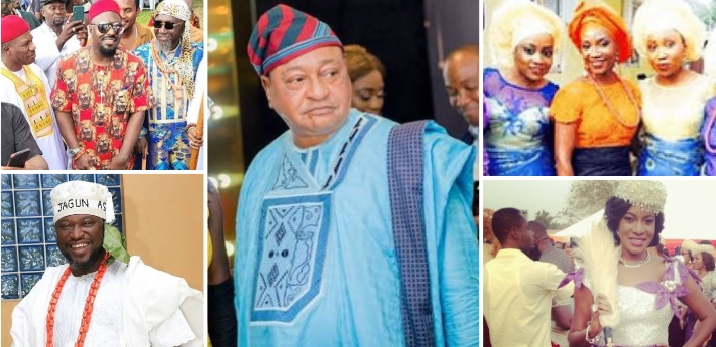
In Lagos there are moments when a familiar name drifts beyond cinema screens and begins to circulate in quieter places, palace courtyards, family meetings, lineage debates and whispered historical memory, and when that happens the name no longer belongs only to pop culture, it begins to pull against centuries of tradition. Jide Kosoko is one of those names that feels ordinary to film lovers yet unusually weighty to people who understand Lagos Island history, and the recent revival of conversations around the Oloja of Lagos has placed that name in a space where art and ancestry collide.
What makes the moment intriguing is not noise or controversy but restraint, the kind of restraint that surrounds traditional succession discussions in Yoruba land, where legitimacy is not declared loudly but argued patiently through bloodlines, precedent and recognition. The phrase Oloja elect does not announce a coronation, it suggests a pause, a waiting period where history, law and politics have not yet aligned, and in that pause public curiosity grows.
This is not a story about celebrity ambition or Nollywood reaching for royal relevance, it is about how Nigeria’s entertainment class has always existed beside traditional power rather than outside it, sometimes born into it, sometimes honoured by it, sometimes misunderstood by a modern audience that assumes titles are decorative rather than deeply symbolic.
To understand why the Kosoko name still stirs Lagos Island, and why other actors quietly carry titles that outlast any filmography, one must step back into how tradition confers memory, how communities reward visibility, and how fame becomes woven into ancestral systems without ever replacing them.
Jide Kosoko and the Weight of a Royal Surname
Jide Kosoko has spent decades appearing on screen as kings, chiefs, warriors and patriarchs, yet long before cameras arrived he was already marked by lineage. The title Omoba attached to his name is not a stage flourish or a courtesy label, it is a Yoruba acknowledgement of royal descent, a quiet signal that his ancestry traces back to the Kosoko royal house of Lagos, one of the most historically significant ruling lineages on Lagos Island.
The Kosoko dynasty is inseparable from the story of Lagos itself, from internal royal conflicts of the nineteenth century to colonial interventions that reshaped traditional authority, and membership in that lineage carries obligations that have little to do with personal fame. When people speak of Jide Kosoko they are often referring to an actor, but when elders speak of the Kosoko family they are speaking of custodianship, inheritance and unresolved succession threads that never truly disappear.
It is within this context that Prince Abiola Olojo Kosoko emerges, not as a celebrity figure but as a royal candidate whose name resurfaced during family and kingmaker processes connected to the Oloja of Lagos stool. The declaration of Oloja elect in January 2026 did not crown him, it placed him within a procedural tradition that recognises selection without installation, a condition that remains unresolved years later.
For Jide Kosoko the moment is not about personal elevation, he is not the Oloja elect, but it is about proximity to a living historical process, one that reminds the public that some Nollywood figures do not borrow royal imagery for roles, they come from families where royal questions never fully rest.
What Oloja of Lagos Really Represents
The title Oloja of Lagos is often misunderstood by outsiders who assume all traditional titles function like kingship, but within Lagos Island the Oloja represents a strand of indigenous authority that predates modern political boundaries. It is not an executive office, not a ceremonial decoration, but a culturally grounded position tied to land, community identity and customary leadership within defined historical frameworks.
Oloja is not the Oba of Lagos, and this distinction matters deeply to those who understand Yoruba governance structures. Where the Oba sits at the apex of monarchy, the Oloja belongs to a lineage based custodial system that reflects earlier settlement patterns and internal royal stratification, making the title both sensitive and symbolic.
The phrase elect signals completion of internal processes but not legal recognition, because in modern Nigeria traditional installations must align with state chieftaincy laws. Until formal approval occurs, the title remains in abeyance, respected within family circles but unresolved in public governance terms, a delicate balance between tradition and contemporary authority.
This liminal state explains why discussions around the Oloja of Lagos are careful, restrained and often confusing to the public, and why the Kosoko name reappears without fanfare, because within Yoruba tradition legitimacy is rarely rushed, and waiting is part of the process.
Nollywood and the Long Relationship With Traditional Power
Long before Nigerian cinema gained international recognition, performers were already embedded in cultural systems that respected traditional authority. Many early actors came from families with deep community roots, and their transition into entertainment did not erase those ties, it simply placed them under brighter light.
In Nigeria fame does not automatically conflict with tradition, in many cases it amplifies it, because communities view visibility as a form of representation. When an actor becomes nationally recognised, the hometown often experiences shared pride, and traditional rulers respond by acknowledging that symbolic service through chieftaincy honours.
These titles are not trophies, they are social contracts, expecting the recipient to embody dignity, restraint and communal responsibility beyond the screen. This is why many actors receive titles quietly, during festivals or palace ceremonies, with little media orchestration.
What emerges is a pattern where Nollywood exists not as a disruptive modern force but as an extension of cultural storytelling, and traditional institutions respond by incorporating visible storytellers into their symbolic hierarchy.
How and Why Communities Confer Titles on Actors
Chieftaincy titles across Nigeria operate on layered logic that blends honour, expectation and identity. They may be hereditary, honorary or service based, but they are rarely casual. For entertainers the most common pathway is recognition for cultural promotion, philanthropy or positive representation of a community’s values.
Communities often confer titles during significant cultural events, moments when collective identity is being reaffirmed, making the ceremony less about the individual and more about shared pride. The actor becomes a vessel through which the community’s narrative travels beyond geographic boundaries.
These honours do not grant political authority or legal power, but they create cultural obligations, including respect for tradition, participation in community matters when possible, and avoidance of actions that could bring dishonour to the title.
In this sense the relationship between Nollywood and chieftaincy is reciprocal, visibility is exchanged for responsibility, and prestige is balanced with expectation.
Enyinna Nwigwe and the Symbolism of Chi Turu Ugo
When Enyinna Nwigwe was conferred with the title Chi Turu Ugo the meaning resonated beyond ceremony. The title translates to One Crowned by God, a phrase that speaks to destiny rather than achievement, reflecting an Igbo worldview where personal success is often interpreted through spiritual alignment and communal affirmation.
The ceremony in December 2021 placed Enyinna within a symbolic framework that acknowledged not only his acting career but the manner in which he carried himself publicly. Titles like this are rarely about box office performance, they are about perceived character, humility and the absence of scandal.
For the Logara community the conferment was a statement of pride, a way of inscribing their name into national consciousness through a familiar face, while binding that face to communal ethics.
Chika Ike and the Meaning of Akwa Ugo
Chika Ike’s title Akwa Ugo One of Amoli Kingdom reflects an Igbo tradition of honouring women who embody elegance, influence and positive example. The title does not suggest rulership but elevation, a recognition of how presence and conduct can shape perception.
Conferred in 2013, the honour positioned her as a symbolic ambassador of her community’s values, particularly in relation to womanhood, resilience and public comportment. Such titles often carry moral expectations, requiring the holder to navigate fame with caution and dignity.
In this context the title functions less as decoration and more as a reminder that public life carries communal reflection, especially for women whose visibility is often scrutinised more harshly.
Jim Iyke and the Cross Border Reach of Igbo Titles
Jim Iyke’s Ohadike One of Ndigbo title, conferred in Ghana, illustrates how Nigerian traditional systems extend into diaspora communities. Eze Ndigbo institutions abroad function as cultural anchors, preserving identity and honouring individuals who project Igbo presence internationally.
The title Ohadike evokes strength and warrior spirit, qualities associated with assertiveness and protection. Its conferment during a Yam Festival context reinforces the idea that tradition travels with people, adapting without losing symbolic weight.
For Jim Iyke the moment was less about a personal milestone and more about representing Nigerian cultural continuity beyond national borders.
Femi Branch and the Historical Echo of Jagun Asa
Femi Branch’s title Jagun Asa of Edeland situates him within a Yoruba martial and leadership tradition, where Jagun titles historically referred to war leadership and strategic responsibility. While modern contexts reinterpret these meanings symbolically, the historical resonance remains.
The ceremony in Oyo State connected cinematic portrayal with ancestral symbolism, acknowledging an actor who often plays authoritative roles while recognising his respect for Yoruba cultural values off screen.
Such titles underscore how Yoruba chieftaincy often blends historical memory with contemporary representation, allowing ancient titles to survive through modern figures.
Genevieve Nnaji and the Quiet Power of Eze Ada
Genevieve Nnaji’s Eze Ada One of Amuzu Nweafor title reflects a subtler form of honour, one rooted in feminine authority and cultural pride. Unlike louder chieftaincy ceremonies, her conferment was understated, mirroring her public persona.
The title Eze Ada positions a woman as a cultural crown, not in dominance but in symbolic centrality, reinforcing how Igbo tradition recognises influence without requiring overt hierarchy.
In this case the title reinforced a long standing perception of Genevieve as an emblem of Nigerian cinema’s dignity and global reach.
Other Nollywood Figures and the Pattern of Recognition
Across Nigeria many other actors have received titles that follow similar logic, including
• Ngozi Ezeonu honoured as Ada Ife in Imo State
• Victor Osuagwu recognised as Ochi bu Ndu One of Udo Community
• Rachael Okonkwo conferred with Ugo Oma Ndi Igbo
• Ini Edo honoured by a traditional ruler alongside industry peers
Each case reflects a moment where community pride intersects with national visibility, producing honours that outlast trending headlines.
Why These Titles Still Matter in Modern Nigeria
In an era dominated by digital influence and fleeting attention, traditional titles endure because they operate outside speed. They are not granted instantly, they are deliberated, contextualised and embedded within collective memory.
For Nollywood actors these titles serve as cultural anchors, grounding public identity in something older than fame and more demanding than applause. They remind both the holder and the audience that visibility carries responsibility, and that success is most meaningful when recognised by one’s roots.
This is why the discussion around Jide Kosoko and the Oloja of Lagos elect status resonates, it is not about coronation headlines, it is about continuity, legitimacy and the enduring dialogue between modern storytelling and ancestral authority.
Final Reflection: Tradition Does Not Compete With Fame
What Nigeria’s entertainment landscape reveals is not a clash between celebrity and tradition but a negotiation, one where fame becomes a tool tradition uses to remain visible, and tradition becomes a framework fame uses to remain grounded.
From Lagos Island royal lineages to Igbo community honours and Yoruba warrior titles, the pattern remains consistent, recognition follows responsibility, and titles carry memory rather than power.
As long as Nollywood continues to shape cultural imagination, traditional institutions will continue to respond, not by resisting modernity but by weaving it into ancient systems that understand patience, symbolism and the long view of history.



Discussion about this post