
Makoko sits on the edge of Lagos Lagoon like a floating city stitched together from timber and rusted sheets of metal, a community whose rhythms have been dictated by tides and trade for decades. In the mornings, children weave through narrow walkways, fishmongers balance baskets on canoes, and the scent of grilled tilapia mingles with the lagoon’s salt air. Life moves slowly, predictably, anchored in tradition yet vulnerable to forces beyond the community’s control.
Yet beneath this tranquil surface, tension has been gathering, a quiet current that was invisible to the casual observer. Notices, letters, and warnings were sent or claimed to have been sent, but to many residents they seemed like whispers lost to the wind. Nobody expected the sudden arrival of the bulldozers, the grinding sound of metal against home, the abrupt disappearance of streets and houses that had held memories for generations.
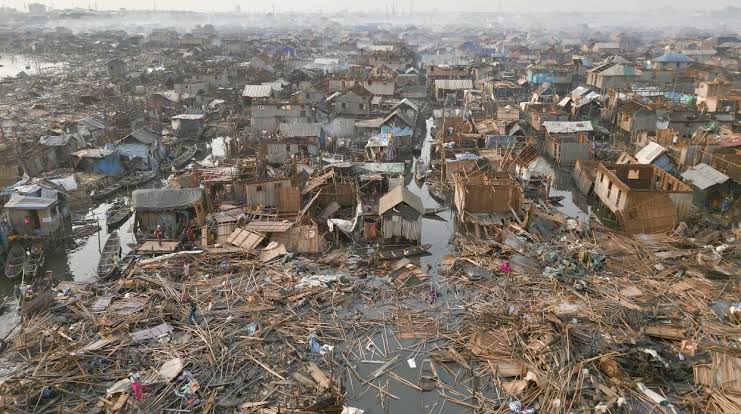
When the demolitions began, it was not just structures that were destroyed; it was the stability of thousands of lives. Over 10,000 residents found themselves adrift, their homes replaced by rubble, their routines disrupted, their sense of safety removed with a cruel efficiency. The spectacle was immediate, shocking, and incomplete, leaving behind a silence louder than the machinery itself.
Makoko now sits at the center of a storm. Questions of legality, morality, and governance swirl above the community. Who is responsible? Who benefits? And what becomes of 10,000 lives whose homes vanished in the space of a morning? These questions linger as residents attempt to navigate the aftermath, and the answers are as murky as the waters upon which Makoko floats.
Makoko and the Machinery of Demolition
The morning of the first major demolition in late December 2025 was both ordinary and catastrophic. Residents woke to the familiar calls of traders and the lapping of lagoon waters only to discover that their homes had been marked, cordoned off, or in some cases, obliterated entirely. Bulldozers moved with mechanical precision, tearing through over 3,000 homes, reducing families’ belongings to splintered timber and twisted metal.
For the people of Makoko, these structures were more than shelters; they were livelihoods. The platforms where fish were sold, the small shops, the spaces where meals were prepared and memories forged—all were erased in a matter of hours. Mothers with infants, elders who had lived in the community for decades, and children attending local schools found themselves without continuity, adrift in the open air, on canoes, or in temporary shelters like churches and schools that were not designed to accommodate them.
The impact of the demolitions extended beyond the physical. With homes destroyed, social networks fragmented. Informal community governance structures collapsed under the pressure of displacement, leaving families to fend for themselves while navigating the dual threats of exposure and scarcity. The dense network of walkways and boats that had once facilitated commerce now offered little more than passage across a devastated landscape.
Authorities justified these demolitions as necessary for safety and urban renewal. High-tension power lines, sanitation hazards, and unregulated construction were cited as rationales. Yet for the residents of Makoko, these explanations came too late. Their homes, their livelihoods, and their sense of permanence were gone, and no adequate resettlement plan accompanied the destruction. 10,000 lives were suddenly in flux, navigating an environment that no longer offered the protections they once relied upon.
Human Stories Adrift in Makoko
Families displaced by the demolitions tell stories that reveal the human cost behind statistics. A mother of twins now sleeps on a wooden canoe tethered to a neighbor’s floating platform, cradling her children while the water sways beneath her. Another family, whose home had been home for three generations, has moved into a classroom at a local primary school. The children attend lessons when the teachers allow, but the classroom walls now serve as both shelter and boundary.
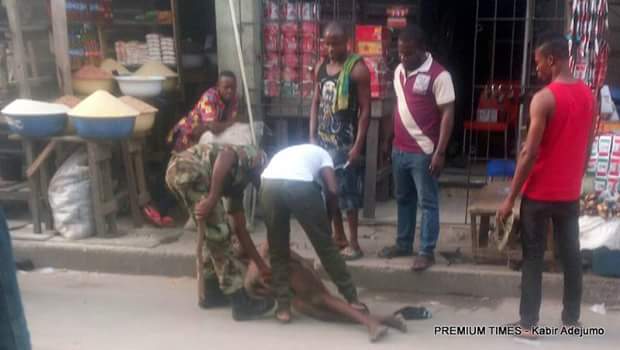
Injury and trauma were immediate consequences. Tear gas was deployed during protests at the Lagos State House of Assembly and the Governor’s office. Several residents, including the elderly and infants, suffered injuries. Reports of deaths circulated, though precise figures remain unclear. The psychological toll mirrors the physical, as people struggle to reconcile a life they once knew with the uncertainty imposed by sudden displacement.
Communities that once relied on the dense fabric of Makoko’s social life now face isolation. Trading networks that supplied the Lagos market faltered, small-scale fishing operations were interrupted, and communal rituals tied to the lagoon were disrupted. The demolition did not only remove structures but also the informal systems that allowed life to function in precarious spaces.
Despite the chaos, there are glimpses of resilience. Neighbors share food, boats are repurposed as sleeping platforms, and local charities attempt to provide emergency support. Each day becomes a negotiation with circumstance, with 10,000 lives learning anew how to exist in a space reshaped by demolition, policy, and the absence of long-term planning.
Legal and Human Rights Controversies
The legality of the demolitions in Makoko is fiercely contested. Civil society organizations, human rights groups, and some international observers argue that these actions violate constitutional rights to housing, dignity, and safety. Forced evictions without meaningful consultation, proper notice, or resettlement plans contravene both Nigerian law and international human rights standards.
Past court rulings had restricted forced evictions in waterfront communities, yet demolitions proceeded regardless. Legal advocates point out that procedural requirements were not met, and residents who had sought redress found themselves facing demolition notices that were unclear or inadequately communicated. The tension between law and action has left many questioning the mechanisms that allowed such widespread displacement to occur.
Authorities maintain that notices were issued years in advance and that safety concerns justified immediate action. Yet residents report minimal warning, confusion over deadlines, and lack of meaningful communication. The discrepancy between government claims and resident experiences has fueled protests, criticism, and a wider debate on governance in Lagos’ informal settlements.
The legal dimension extends to broader implications. If 10,000 lives can be uprooted in Makoko without meaningful consultation or compensation, similar communities across Lagos may be at risk. The conflict underscores the fragile balance between urban development, governance, and human rights, and illustrates the potential for legal protections to be overridden by enforcement priorities.
Broader Pattern of Evictions Across Lagos
Makoko’s demolition is not an isolated incident. Across Lagos, similar operations have swept through informal settlements like Oworonshoki, Ilaje‑Otumara, and Baba‑Ijora, leaving trails of displacement and uncertainty. Residents of these communities describe the experience as a recurring pattern, a cycle in which low-income populations are removed with minimal warning and limited support, their livelihoods disrupted while the city’s authorities pursue urban development objectives.
These mass evictions reveal a persistent tension between urban planning and the realities of Lagos’ growing population. Informal settlements provide essential housing and economic opportunities for tens of thousands of residents. They are hubs of trade, labor, and culture, yet they are often treated as temporary obstacles in the eyes of city planners. Bulldozers move through homes without recognizing the social networks, traditions, or resilience that sustain these communities.
Human rights organizations warn that the evictions reflect systemic inequality. Residents in high-income districts are rarely displaced in this manner, yet communities like Makoko bear the brunt of policy enforcement. Across Lagos, the pattern is repeated: homes vanish, residents are forced into precarious shelter, and the city’s formal infrastructure expands in ways that prioritize aesthetics, safety, or investment over the well-being of 10,000 lives in each affected settlement.
Civil society groups have documented these events in painstaking detail, arguing that what is framed as safety or urban renewal is in practice a selective form of enforcement. Residents, stripped of homes and stability, navigate uncertainty while broader structural issues, including housing shortages and poverty, remain unaddressed. In Lagos, the cycle of demolition and displacement continues, with Makoko serving as both a symbol and a cautionary tale of what thousands of lives endure when urban priorities clash with human rights.
Aftermath, Recovery, and Ongoing Controversy
The aftermath of Makoko’s demolition is a complex landscape of adaptation, trauma, and ongoing protest. Families displaced by the operations continue to seek shelter in boats, churches, schools, and open spaces, improvising solutions while grappling with the absence of a formal resettlement plan. Children navigate flooded walkways and makeshift paths, elders struggle with the physical and emotional strain, and parents attempt to maintain some semblance of normalcy for their families.
Recovery is slow and uneven. Non-governmental organizations and local charities have stepped in to provide food, temporary shelter, and medical support. Yet these efforts, while crucial, do not replace the stability lost to demolition. Livelihoods disrupted by the destruction of shops, fishing platforms, and trade hubs remain a significant challenge. Residents who once relied on the lagoon for income are forced to seek alternatives, often in unfamiliar areas or under conditions that are less secure.
Controversy continues to swirl around the actions of Lagos authorities. Questions about the legality of the demolitions, the adequacy of prior notices, and the absence of long-term resettlement plans have not been fully addressed. Protests continue in some parts of the city, legal challenges have been filed, and media coverage highlights the human consequences of urban policy decisions. For many observers, Makoko represents more than a local crisis; it is evidence of structural inequities and governance challenges in Nigeria’s largest city.
Despite the ongoing controversy, life persists in Makoko. Canoes remain a lifeline, informal trading continues where possible, and families attempt to reclaim a sense of community amidst the chaos. Yet the scars of demolition are visible not only in the physical environment but also in the collective psyche of the displaced. For 10,000 lives, the challenge of recovery is as much about regaining dignity and stability as it is about rebuilding structures.
Reflection and Broader Lessons
Makoko’s demolition invites reflection on the balance between urban development and human rights. Cities like Lagos face pressure to modernize infrastructure, manage population density, and enforce safety regulations. Yet the cost of these policies is rarely evenly distributed. Low-income communities bear the brunt, their lives upended in the name of progress while systemic solutions to housing, employment, and social support lag behind.
The story of Makoko illustrates the importance of procedural justice, transparency, and meaningful engagement with residents. Displacement of 10,000 lives highlights the human stakes often overlooked in urban planning debates. It raises critical questions about how governments reconcile development priorities with the social, economic, and emotional well-being of the people who inhabit informal settlements.
Broader lessons emerge for policy makers, civil society, and urban planners. Inclusive planning, early consultation, adequate resettlement programs, and respect for legal protections are essential to prevent crises like Makoko from repeating across Lagos. The challenge extends beyond the city, reflecting a global pattern in rapidly growing urban areas where informal settlements are often treated as obstacles rather than communities with intrinsic value.
Ultimately, Makoko serves as both a cautionary tale and a mirror. It reflects the vulnerabilities of marginalized populations and the consequences of disregarding human dignity in the pursuit of urban renewal. For the 10,000 lives displaced, the experience is a profound disruption, but it is also a call to action for a city, a country, and a global audience to recognize that progress should not come at the expense of the most vulnerable.