
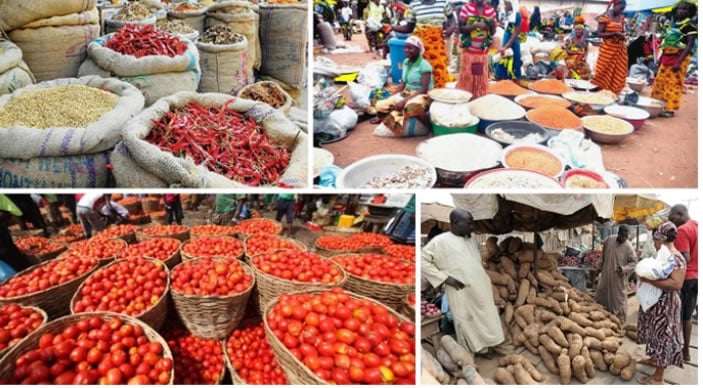
Nigeria’s holy month of Ramadan has begun. The new month’s presence is felt everywhere, from the streets to the villages. Muslim faithfuls have been sprinting up and down in preparation for the holy month. Coincidentally, ‘Lent’—the period of fasting for Christian believers—is held in the same month as Ramadan.
The Sultan of Sokoto, Alhaji Muhammadu Sa’ad Abubakar III, on Wednesday, February 18, declared that Ramadan 2026 would start after the council confirmed the sighting of the Crescent Moon.
He also urged Muslims to dedicate the holy month to fervent prayers, spiritual reflection, and acts of charity, seeking divine guidance and peace for Nigeria.
However, other Nigerians, particularly faithful Muslims who interacted with WITHIN NIGERIA, expressed anxiety and worry about the country’s economic plight. They mentioned food inflation, poverty, and increased hunger as factors shaping the holy month of Ramadan.
A 31-year-old Nigerian Muslim named Rahman Yusuf told WITHIN NIGERIA that food costs had increased, arguing the cost inflation is sudden and unexpected because no one plans for it.
According to Yusuf, the development will only jeopardize the plans of individuals who want to stock their homes with food, including those who wish to provide food to the poor.
Yusuf, a welder in Irojo, revealed that he learned about the unexpected increase on Tuesday when his wife went to Atakunmosa market to buy some food, among other things.
“My friends and I give money to buy enormous amounts of food. We will now share what we have purchased because food goods are cheaper at wholesale and retail.
Yusuf expressed sadness that a bag of beans that sold for ₦90,000 now costs ₦120,000.
Another Muslim devotee, Oyenike Monsurat, told WITHIN NIGERIA that living or surviving in Nigeria is extremely expensive.
Monsurat, a local government employee, expressed concern about workers’ salary disparities despite the implementation of a new minimum wage.
According to Monsurat, the impact of the new minimum wage is not being felt as predicted due to increases in the cost of goods and services.
“Ramadan is here. Lent is here. Consumption of nutritious foods and fruits is very crucial throughout the fasting period. It is regrettable that most Nigerians cannot afford healthy cuisine during this period”.
She urged all levels of government to prioritize projects that alleviate people’s suffering.
Kabiru Lawal, a 28-year-old phone repairer, told WITHIN NIGERIA that the current economic circumstances in the country makes it demoralizing for Muslim believers to observe Ramadan.
According to Lawal, many faithfuls are already bankrupt and struggling to make ends meet as a result of the country’s hardships, which will undoubtedly have an impact on their mental health.
Lawal urged public authorities and wealthy Nigerians to sympathize with the impoverished and make substantial donations to improve their lives.




Discussion about this post