
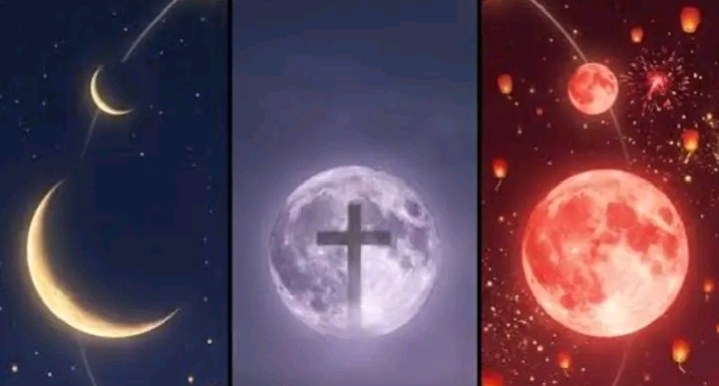
In February 2026, an unusual convergence of sacred time unfolds across continents as three of the world’s most widely observed spiritual and cultural seasons begin within hours of one another. On 17 February 2026, Lunar New Year ushers in the Year of the Fire Horse across East Asia and in diaspora communities worldwide. At sunset on 17 February or 18 February 2026, depending on moon sighting in different regions, Ramadan begins for nearly 2 billion Muslims. On 18 February 2026, Christians mark Ash Wednesday, the first day of Lent, initiating 40 days of reflection before Easter.
The overlap is not symbolic choreography designed by religious authorities, nor is it a mystical sign hidden in the heavens. It is the outcome of three separate calendar systems that operate according to different astronomical logics yet occasionally brush against one another in rare alignment. Historians and calendar analysts note that a similarly tight clustering of these observances occurred in 1863 and will not repeat until around 2189. The rarity of the moment lies in the mathematics of time itself, where lunar cycles, solar reckonings, and ecclesiastical calculations intersect within the framework of the modern Gregorian calendar.
What makes this convergence compelling is not only its statistical scarcity but its human dimension. Billions of people will step into seasons of fasting, celebration, repentance, renewal, and family gathering almost simultaneously. Lanterns will glow in cities from Beijing to Singapore. Mosques from Jakarta to Kano will welcome worshippers for the first night of Ramadan prayers. Churches from Manila to Madrid will trace ash crosses on foreheads. For a brief stretch in mid February 2026, the world shares a synchronized rhythm of sacred beginnings.
To understand how such a moment became possible, one must step into the mechanics of calendars and the histories that shaped them. The story unfolds in distinct layers, each revealing how different civilizations marked time and how those systems drifted across centuries until they met again in 2026.
The Lunar New Year and the Lunisolar Framework
Lunar New Year in 2026 begins on 17 February, marking the first new moon between 21 January and 20 February according to the traditional Chinese lunisolar calendar. The year that begins is associated with the Fire Horse, a combination of one of the 12 zodiac animals and one of the 5 elemental cycles that rotate in a 60 year pattern. This calendar is not purely lunar because it adjusts itself to the solar year by inserting leap months when necessary to prevent seasonal drift. Without these corrections, the festival would slowly migrate across the seasons as Ramadan does.
The lunisolar method allows Lunar New Year to remain anchored to late winter, usually between 21 January and 20 February. The system has been in use in East Asia for centuries, shaping agricultural rhythms and cultural observances long before the adoption of the Gregorian calendar. In 2026, astronomical calculations place the relevant new moon on 17 February, aligning the first day of the lunar month with that date in many East Asian regions.
Communities celebrate with reunion dinners, ancestral remembrance, temple visits, and public festivities that often extend over 15 days until the Lantern Festival. The holiday signals renewal, prosperity, and collective identity. In 2026, as families gather under red decorations and fireworks fill the night skies, their celebrations unfold just as two other major faith traditions prepare to enter solemn seasons of fasting and prayer.
The key to understanding this convergence lies in the calendar’s partial anchoring to the solar year. Because Lunar New Year never drifts too far from late January or February, its position in 2026 places it within reach of other movable religious observances that depend on lunar phases.
Ramadan and the Pure Lunar Calendar
Ramadan follows the Islamic calendar, which consists of 12 lunar months totaling about 354 or 355 days. Each month begins with the sighting of the crescent moon, making the calendar approximately 11 days shorter than the solar year. This difference means Ramadan moves earlier by about 11 days each Gregorian year. Over 33 solar years, Ramadan completes a full cycle through all seasons.
In 2026, astronomical projections indicate that the new moon marking the start of Ramadan occurs around 17 February, with fasting expected to begin on 18 or 19 February depending on regional moon sighting authorities. The holy month commemorates the first revelation of the Quran to the Prophet Muhammad and requires daily fasting from dawn to sunset. It is accompanied by nightly prayers, charitable giving, and communal meals known as iftar.
Because the Islamic calendar does not correct itself to the solar year, Ramadan gradually shifts through winter, spring, summer, and autumn over decades. In the early 2010s, it fell in the heat of July and August in many regions. By 2026, it has returned to late winter in the Northern Hemisphere. This gradual backward drift across the Gregorian calendar creates occasional moments when Ramadan draws near to observances rooted in solar or lunisolar systems.
The rarity of 2026 lies in how closely Ramadan’s lunar drift approaches the fixed late winter window of Lunar New Year and the movable date of Ash Wednesday. It is not that these calendars were designed to converge, but that independent cycles sometimes overlap like gears turning at different speeds that align only at long intervals.
Lent and the Calculation of Easter
Lent begins on Ash Wednesday, which falls 46 days before Easter Sunday. Easter itself is calculated as the first Sunday after the first full moon occurring on or after 21 March, the date recognized as the spring equinox in ecclesiastical reckoning. This formula was established at the Council of Nicaea in 325 and refined through later calendar reforms, including the adoption of the Gregorian calendar in 1582.
In 2026, Easter Sunday falls on 5 April. Counting back 46 days places Ash Wednesday on 18 February 2026. Lent then continues until Holy Thursday in early April, marking 40 days of penitential observance excluding Sundays. The date of Lent changes every year because Easter depends on the interplay between the solar year and lunar phases.
Unlike Ramadan, Lent does not drift steadily backward through the calendar. Instead, it oscillates within a defined range between early February and early March. This variability creates the possibility of coincidence with other lunar based observances, yet the probability of aligning closely with both Ramadan and Lunar New Year remains low.
In 2026, the lunar full moon used to calculate Easter and the lunar new moon that marks Ramadan occur within a short span of days in mid February. This convergence of lunar markers compresses the starting points of Lent and Ramadan while Lunar New Year remains anchored to the same lunar cycle.
The Gregorian Framework as Meeting Ground
The Gregorian calendar, introduced in 1582 and gradually adopted worldwide, provides the common civil framework that makes the convergence visible. Without a shared calendar, these observances would continue according to their own systems without apparent alignment. The Gregorian year of 2026 becomes the canvas upon which these independent cycles appear to meet.
The last similarly tight clustering occurred in 1863, when historical records indicate that Lunar New Year, the beginning of Ramadan, and Ash Wednesday fell within a narrow window. After that year, the shifting cycles diverged again for more than 160 years. Analysts project that a comparable overlap will not recur until around 2189, when the long term patterns once again draw the dates into proximity.
Such intervals highlight how calendar systems, though built from astronomical observations, operate like vast mechanical structures. Each cycle repeats according to its own length, and only after many decades do their patterns synchronize closely enough to create a rare alignment.
The Human Dimension of Overlapping Sacred Time
Statistics and astronomical tables capture the mechanics, yet they do not fully explain why the 2026 convergence resonates globally. On the evening of 17 February 2026, streets in Shanghai and Seoul glow with lantern light while families exchange red envelopes symbolizing good fortune. At the same time, in Jakarta, Cairo, Lagos, and Istanbul, Muslims look toward the horizon for the crescent moon that signals the beginning of Ramadan. The next morning, on 18 February, Christians gather in cathedrals and parish churches to receive ashes and begin Lenten disciplines.
These parallel beginnings generate a rare sense of shared transition. While practices differ profoundly, themes of renewal, moral reflection, generosity, and communal solidarity echo across traditions. The overlap does not erase theological distinctions, nor does it blend rituals into a single narrative. It simply compresses distinct rhythms of sacred life into a single week on the civil calendar.
For diaspora communities in multicultural cities, the effect is especially visible. In places such as Singapore, London, Toronto, and Kuala Lumpur, public spaces accommodate lantern festivals, Ramadan bazaars, and church services almost simultaneously. Media coverage draws attention to the unusual timing, sparking curiosity about how calendars function and how faith traditions navigate time.
Debunking Myths and Misinterpretations
Whenever rare alignments occur, speculation follows. Some interpret the convergence as prophetic or as evidence of cosmic design. Yet historians and astronomers emphasize that the 2026 event is a predictable outcome of calendar mathematics. The Islamic lunar year, the lunisolar East Asian system, and the ecclesiastical calculation of Easter operate according to known cycles. Their meeting in February 2026 requires no supernatural explanation.
The reference to 1863 is grounded in historical date reconstruction rather than folklore. Calendar software and archival records allow researchers to trace the positions of lunar phases and movable feasts across centuries. The projection of 2189 as the next similar clustering is likewise based on repeating patterns in these cycles.
Understanding the science behind the dates does not diminish their cultural meaning. Instead, it underscores the shared human effort to measure time according to celestial movements. Across civilizations, societies looked upward to the moon and sun to structure communal life. The 2026 alignment reflects that common heritage.
Global Implications and Social Context
In practical terms, the convergence influences travel, commerce, and public life in regions where these observances carry national significance. Lunar New Year triggers one of the largest annual human migrations in the world as millions travel to reunite with family. Ramadan reshapes daily routines across Muslim majority countries, shifting work hours and nightlife patterns. Lent affects liturgical schedules and charitable campaigns in Christian communities.
When these seasons begin simultaneously, governments and businesses navigate overlapping public holidays and social rhythms. In 2026, multinational companies operating across Asia, the Middle East, Europe, and Africa will adapt to diverse observances within the same fiscal quarter. Media outlets will frame the week as an extraordinary global moment, reinforcing awareness of religious diversity.
Beyond logistics, the alignment invites reflection on pluralism in an interconnected world. The fact that billions of people enter spiritually significant periods together highlights both difference and shared humanity. Each tradition retains its integrity while participating in a broader tapestry of global time.
Looking Forward to 2189
The projection that a similar clustering will not occur again until around 2189 reminds observers of the vast temporal scales at play. Few alive in 2026 will witness the next alignment. The 163 year gap between 1863 and 2026 illustrates how slowly these cycles intersect. Each generation experiences only a handful of such anomalies, if any.
The future convergence in 2189 will unfold in a world transformed by technology and social change. Yet the underlying astronomical mechanics will remain constant. The moon will continue its phases, the equinox will return each March, and human communities will continue marking sacred time according to inherited traditions.
Closing Thoughts
The 2026 calendar shock is less about spectacle and more about perspective. It reveals how independent systems of timekeeping can converge unexpectedly after decades of drift. On 17 and 18 February 2026, Lunar New Year, Ramadan, and Lent begin within hours of each other, echoing a pattern last seen in 1863 and unlikely to recur until around 2189.
This alignment arises from the interplay of a lunisolar calendar anchored to late winter, a purely lunar calendar that moves backward by about 11 days each year, and a Christian liturgical calculation tied to the spring equinox and a full moon. Their meeting on the Gregorian stage is a reminder that time itself is layered and plural.
For one week in February 2026, lanterns, crescent moons, and ash crosses share the same horizon of dates. The moment carries no hidden prophecy, only the quiet elegance of astronomical cycles aligning across centuries. In that brief overlap, the world witnesses how diverse traditions, shaped by different histories and beliefs, can enter seasons of renewal together while remaining distinct.




Discussion about this post