
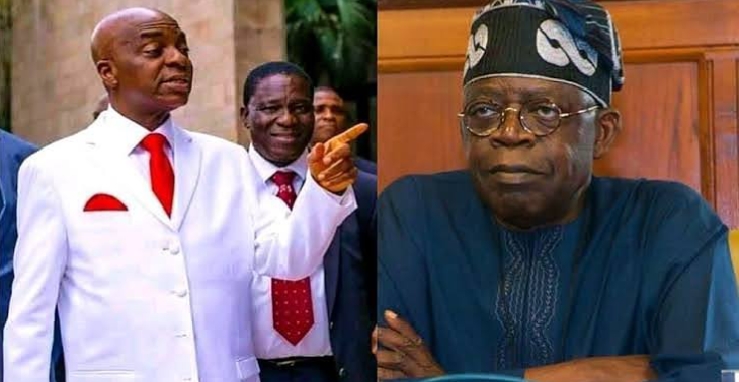
Religious leaders in Nigeria have long played a role in shaping public discourse and influencing national opinion, yet many maintain a careful balance between spiritual guidance and political commentary. Bishop David Oyedepo, founder and presiding bishop of Living Faith Church Worldwide, also known as Winners’ Chapel, has been a prominent figure in this landscape for decades, commanding attention with his sermons and public statements that reach millions across the country.
After nearly three years of relative political silence, Oyedepo’s message on February 18, 2026, caught widespread attention. His words sparked conversation, debate, and reflection across Nigeria, raising questions about governance, public accountability, and the role of religious voices in political life.
While his statement was brief and delivered in a familiar sermon setting, the timing, content, and context amplified its significance. This article examines the circumstances, the content of his remarks, the reactions they provoked, and their broader implications for governance and civil society in Nigeria.
Who Is Bishop David Oyedepo
Bishop David Oyedepo is one of Nigeria’s most influential religious leaders. He established Living Faith Church Worldwide in 1981, which has grown into one of the largest Pentecostal organizations in Africa with millions of adherents. The church’s headquarters, Faith Tabernacle in Ota, Ogun State, is a sprawling complex capable of holding tens of thousands of worshippers, reflecting the reach and impact of Oyedepo’s ministry. Beyond religious teaching, Oyedepo has historically been involved in education, philanthropy, and publishing, leveraging his influence to shape both spiritual and social narratives in Nigeria.
He has also authored books, run educational institutions, and maintained an active voice on matters of public morality and civic responsibility. Despite his public presence, he has typically avoided direct political criticism, choosing instead to frame messages in moral or spiritual terms. This long-standing pattern of restraint made his February 2026 remarks a particularly notable departure and a subject of intense public scrutiny.
What Happened on February 18, 2026
On Wednesday, February 18, 2026, during a regular sermon at the Faith Tabernacle in Ota, Ogun State, Bishop Oyedepo directly criticised the performance of President Tinubu’s government — his first outspoken political comment in about three years.
The Exact Message
In the sermon, Oyedepo asked his congregation a direct question about the government’s performance. Oyedepo’s words, according to reports online:
“You’re not doing well; you’re not doing well. They must tell you that you’re not doing well… Is this government doing well?”
When he asked whether the government was doing well, the congregation reportedly responded with a loud “No,” and he repeated his statement.
This repetition (“You’re not doing well”) is what made the comment widely shared and discussed on social media and news platforms.
Media outlets noted that the congregation’s immediate response reflected both affirmation and shared concern, indicating that the issues Oyedepo raised resonated with his audience. The phrasing was simple yet pointed, avoiding complex policy analysis but clearly signaling dissatisfaction.
Context: Why the Criticism Is Significant
Break From Years of Political Silence
For nearly three years prior to February 18, 2026, Oyedepo had largely avoided commenting publicly on government performance, focusing instead on spiritual teaching, moral guidance, and internal church matters. While he occasionally addressed social issues, his previous remarks had not directly critiqued the sitting government. Nigeria during this period faced persistent challenges, including rising cost of living, economic stagnation, and security threats across several regions. The absence of direct criticism from a figure of Oyedepo’s influence made this intervention particularly noteworthy, signaling a shift in engagement with political issues.
Amplifying Public Dissatisfaction
By addressing government performance in such a direct manner, Oyedepo’s words mirrored sentiments felt privately by many citizens. His remark “You’re not doing well” encapsulated frustration over governance, security, and economic concerns in a phrase that was both simple and memorable. The context of repeated economic hardship, insecurity, and political uncertainty provided a backdrop that heightened the perceived urgency and significance of his commentary.
Main Themes in His Criticism
Oyedepo’s sermon touched on broader issues beyond the performance of President Tinubu, reflecting enduring challenges across Nigeria:
Economic Hardship
The Nigerian economy has faced high inflation, rising cost of living, and declining purchasing power over recent years. Many citizens report that wages have not kept pace with prices, leading to widespread economic stress. Oyedepo’s remarks resonated in this context, reflecting public perception that government policies have not sufficiently addressed everyday economic challenges. While he did not provide detailed economic analysis during the sermon, his acknowledgment of dissatisfaction aligned with broader concerns raised by economists, civil society groups, and media commentators.
Insecurity Concerns
Security remains a critical concern across Nigeria, with violent attacks, kidnappings, and insurgency affecting communities in multiple regions. Christian communities in particular have voiced concerns about targeted attacks in the north and central regions. Oyedepo’s comments indirectly drew attention to these issues, emphasizing the gap between government assurances and lived experiences of citizens in areas affected by violence. This underscores how religious leaders often serve as amplifiers of public concern when formal channels of accountability are perceived as insufficient.
Governance and Accountability
Oyedepo’s question to his congregation about government performance implicitly highlighted issues of accountability and governance. By asking the audience to reflect on whether the government was “doing well,” he shifted attention from abstract policy debates to practical outcomes experienced by ordinary citizens. This method resonates strongly in a society where religious platforms often intersect with civic life, providing a space for reflection and discussion that can influence public opinion.
Reactions and Public Responses
The sermon generated immediate discussion online and offline, eliciting a wide range of reactions.
Support and Praise
Many Nigerians lauded Bishop Oyedepo for speaking out boldly on matters that concern ordinary citizens. Supporters argued that his comments gave voice to widespread frustrations regarding economic hardship, insecurity, and governance. Observers noted that religious leaders’ involvement in public debate can draw attention to pressing issues in ways that traditional political channels may not, particularly when those leaders have credibility and a platform that reaches millions.
Criticism and Debate
Other voices argued that clergy should avoid public commentary on political issues, suggesting that spiritual leaders should remain neutral and focus primarily on moral guidance. Some questioned the timing or necessity of the remarks, while others debated whether clips circulating online accurately reflected a current sermon. Despite these criticisms, multiple credible reports confirmed that the February 18, 2026 sermon was indeed the event in question, and the remarks were new rather than recycled commentary.
Overall, the responses reflected the polarized nature of political discourse in Nigeria, with social media platforms serving as key arenas for both support and opposition. The conversation surrounding Oyedepo’s remarks illustrates how influential religious voices can shape national debates and influence civic engagement.
Why This Matters in Nigeria’s Political Climate
Religious communities in Nigeria wield considerable influence, not only in spiritual matters but also in social, economic, and political spheres. When a figure like Bishop Oyedepo publicly critiques government performance, it signals a shift from private guidance to public dialogue. Such statements can influence perceptions of governance, shape voter attitudes, and encourage civic participation. Analysts note that moments like this reflect broader trends in political engagement among religious leaders, especially concerning issues of security, economic well-being, and public accountability. The visibility and reach of such figures mean that their commentary often extends beyond congregational settings to national discourse, impacting media coverage, political commentary, and public debate.
Broader Debate on President Tinubu’s Leadership
Oyedepo’s remarks did not occur in isolation. Nigeria has experienced ongoing debate about President Tinubu’s performance across multiple sectors:
Some commentators acknowledge government successes, particularly in infrastructure projects and policy implementation, but argue that communication about these achievements has been inadequate.
Others contend that government policies have contributed to economic hardship or failed to address insecurity effectively, fueling dissatisfaction among citizens.
Civil society organizations, media analysts, and other religious leaders have similarly voiced concerns about governance, creating a broader context in which Oyedepo’s comments gained resonance.
By aligning with public concerns, Oyedepo amplified issues already under discussion while providing a moral and spiritual lens through which citizens could interpret the government’s performance.
Closing Thoughts
Bishop David Oyedepo’s February 18, 2026 sermon marked his first direct political critique of President Bola Tinubu in nearly three years. His repeated statement “You’re not doing well” prompted widespread discussion, highlighting concerns about economic hardship, insecurity, and governance. The reaction was mixed, with both supporters praising his courage and critics questioning the appropriateness of clergy involvement in political discourse.
The sermon underscores the significant role that religious leaders play in shaping public opinion in Nigeria, illustrating how faith platforms intersect with civic engagement and accountability. As the conversation continues, Oyedepo’s remarks serve as a touchstone for broader debates about governance, public dissatisfaction, and the influence of religious authority in national affairs.



Discussion about this post