
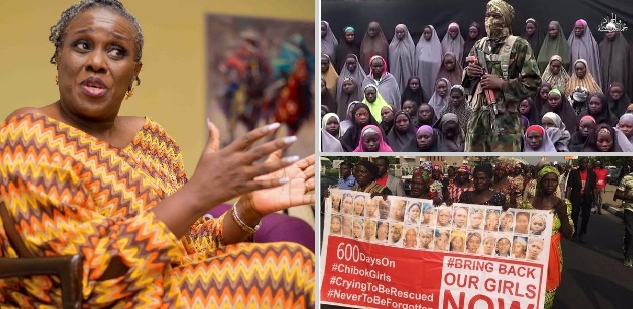
The story of Chibok in Nigeria is one that the world cannot forget, because it represents both unimaginable tragedy and enduring hope. On April 14, 2014, the abduction of 276 schoolgirls from Government Secondary School, Chibok, in Borno State shocked the international community and sparked the global #BringBackOurGirls campaign. While much of the media attention focused on the immediate rescue efforts and political responses, less has been told about the lives of those who remained, the mothers and families of the kidnapped girls, who had to navigate trauma, threats, and social disruption on a daily basis.
In 2026, the narrative takes a new turn with the release of a feature‑length documentary titled Mothers of Chibok, a project that seeks to shed light on the human experiences of the women left behind. The documentary is both a cultural milestone and a testament to the courage of Nigerian women, and veteran Nollywood actress Joke Silva is at the forefront, championing the film’s vision and impact.
What Mothers of Chibok Is
Unlike many films inspired by real events that choose dramatization over lived experience, Mothers of Chibok is a documentary, not a fictional story. This distinction is crucial because it allows audiences to engage with the realities faced by the mothers, their communities, and the broader societal pressures resulting from ongoing insurgency in northeastern Nigeria. The film is directed by Joel Benson, also known as Kachi, an Emmy‑winning filmmaker who previously created the acclaimed virtual reality documentary Daughters of Chibok. Benson’s work is known for its immersive storytelling and for presenting subjects with dignity and depth, and Mothers of Chibok follows in that tradition. By focusing on the lives of the mothers rather than retelling the 2014 abduction itself, the film shifts the lens from a singular event of violence to the continuous human struggle and resilience that followed it.
The documentary captures everyday realities: the mothers tending farms to sustain their families, working collectively to support one another, raising children in environments still fraught with insecurity, and navigating economic and social obstacles. The focus on ordinary acts of courage highlights that heroism is not always defined by extraordinary feats in history books but often by the persistent, daily efforts to survive and protect loved ones. By documenting these realities, Mothers of Chibok serves as a vital historical record, capturing not only a moment in time but also the ongoing resilience of a community.
Story Focus and Humanization
Central to the film is the humanization of the mothers’ experiences. Rather than presenting their lives solely through the lens of victimhood, the documentary showcases their agency, strength, and determination. These women continue to operate within dangerous environments, facing the lingering threat of Boko Haram and the complex dynamics of a region affected by decades of insurgency. The film highlights how they manage farms, support community initiatives, educate their other children, and sustain hope while grappling with immense personal loss. This approach allows audiences to engage empathetically with their stories, seeing them not just as mothers of kidnapped girls but as individuals navigating adversity with resilience and grace.
By choosing this focus, Mothers of Chibok emphasizes continuity rather than closure. Many narratives about the Chibok abduction end with the rescue of some of the girls, but Benson’s documentary draws attention to the fact that for many families, the struggle continues years later. Audiences witness the mothers’ persistence in advocating for their daughters, negotiating with authorities, and maintaining daily life despite the emotional toll. The film also explores how the social fabric of Chibok has adapted and shifted, providing a richer understanding of the community as a living, breathing network rather than a static backdrop to tragedy.
Joke Silva’s Involvement
Joke Silva’s role as an executive producer is significant both culturally and symbolically. Silva, a veteran actress with decades of influence in Nollywood, has consistently leveraged her platform to support projects with social impact. In Mothers of Chibok, her involvement extends beyond financial or professional contributions; she actively champions the narrative, ensuring that the mothers’ voices remain central to the film’s message. Silva has spoken publicly about the transformative potential of the documentary, emphasizing that audiences can gain a deeper understanding of the mothers’ journey, courage, and the ongoing challenges they face in the face of persistent threats.
Her engagement reflects a broader commitment to Nigerian storytelling that is authentic and socially conscious. By associating with Mothers of Chibok, Silva contributes to creating a cinematic space where difficult realities can be explored respectfully, and where the intersection of gender, culture, and socio‑political dynamics is made visible. Her presence on the project also draws attention to the documentary from a wider audience, bridging the worlds of Nollywood cinema and socially engaged filmmaking, and enhancing the potential for broader discussions on resilience, community, and the human cost of conflict.
Directorial Vision and Production
Joel Benson’s approach to documentary filmmaking ensures that Mothers of Chibok is both visually compelling and emotionally resonant. Using immersive techniques that have become his hallmark, Benson employs storytelling that allows audiences to connect intimately with the subjects while preserving the dignity and agency of the women featured. The production process involved extensive research, interviews, and on‑location filming in communities surrounding Chibok, capturing authentic interactions, rituals, and everyday labor that reflect the lived experiences of the mothers.
Benson’s earlier project, Daughters of Chibok, utilized virtual reality to immerse audiences in the environments and perspectives of the abducted girls. While Mothers of Chibok is a traditional feature‑length documentary, it retains the same commitment to perspective driven storytelling, highlighting personal narratives and collective experiences in a way that transcends typical news coverage. The documentary is structured to follow multiple storylines simultaneously, showing how different families cope with loss, maintain hope, and assert agency, allowing viewers to witness a spectrum of responses rather than a monolithic narrative.
Release and Distribution
Mothers of Chibok is scheduled for cinema release on February 27, 2026, with distribution across Nigeria and Ghana, representing one of the broadest theatrical rollouts for a Nigerian documentary to date. This wide release ensures that the film reaches audiences beyond festival circuits, allowing it to contribute to national discourse on resilience, education, and the ongoing impacts of conflict in northeastern Nigeria. Prior to its theatrical release, the documentary premiered at multiple international film festivals, where it received accolades including the Encounters Al Jazeera Best African Feature‑Length Documentary Award, signaling its critical recognition and the global relevance of the story.
The strategic distribution highlights the evolving landscape of Nigerian cinema, where documentaries increasingly occupy spaces traditionally reserved for fictional narratives. By bringing Mothers of Chibok to cinemas, the filmmakers position the documentary as both an educational tool and a cinematic experience, enabling viewers to engage collectively with the mothers’ stories while raising awareness about broader societal issues. The release also reinforces the role of film as a medium that can amplify voices often overlooked in mainstream narratives, especially those of women living under persistent socio‑political pressures.
Cultural Importance
The significance of Mothers of Chibok extends beyond the immediate story of the Chibok abduction. It offers a lens through which audiences can explore themes of resilience, motherhood, and community cohesion in contexts of ongoing adversity. By focusing on the women who were left behind, the documentary challenges dominant narratives that often prioritize sensationalist or trauma centered reporting. Instead, it emphasizes continuity, human dignity, and collective agency, showing that even in the face of unimaginable loss, life continues, and communities adapt in extraordinary ways.
Through its portrayal of these mothers, the documentary contributes to a broader conversation about the role of women in conflict zones and the importance of supporting local communities in rebuilding lives after trauma. It underscores that recovery is not limited to physical rescue but includes psychological, social, and economic dimensions that require sustained attention and intervention. In this sense, the film is both a human document and a social commentary, offering insight into the complex interplay between resilience, survival, and cultural continuity in modern Nigeria.
Narrative and Storytelling Approach
The storytelling in Mothers of Chibok is deliberately non linear and multi layered, reflecting the multifaceted nature of the mothers’ experiences. Rather than adopting a singular point of view, the documentary weaves together interviews, observational footage, and contextual scenes of daily life, allowing viewers to understand the social, economic, and emotional environment in which the mothers operate. The narrative prioritizes lived experience, capturing not only moments of struggle but also scenes of humor, solidarity, and achievement that reveal the full spectrum of human life.
By employing this approach, the filmmakers avoid portraying the mothers merely as victims, instead positioning them as protagonists of their own stories. Audiences see the mothers negotiating local markets, tending farms, advocating for their children’s education, and interacting with community leaders. The documentary creates space for nuanced portrayals of agency, illustrating that strength can manifest in persistence, care, and community leadership, not only in acts of visible heroism.
Audience Engagement
The documentary also serves as a bridge between local and international audiences, highlighting how stories from northeastern Nigeria resonate globally. The involvement of a celebrated actress like Joke Silva amplifies the film’s reach, attracting viewers who might otherwise be unfamiliar with the Chibok narrative or the ongoing challenges faced by affected communities. It raises awareness about education, gender roles, and security challenges in Nigeria while providing a template for how cinema can humanize complex social issues without reducing subjects to symbols or statistics.
Audiences are encouraged to reflect on the broader structural conditions that shape the lives of the mothers, including governmental support systems, community networks, and the role of civil society in post conflict recovery. By centering women’s voices, the documentary challenges narratives that focus solely on male actors or political leaders, foregrounding the perspectives and labor of those who often sustain community resilience in the face of adversity.
The Road Ahead for Nigerian Documentary Cinema
The release of Mothers of Chibok signals a new era for Nigerian documentary filmmaking, demonstrating that local stories with global resonance can be produced with high technical standards and international appeal. As the documentary reaches cinemas across Nigeria and Ghana, it sets a precedent for the distribution of socially engaged films, expanding the market for documentaries that are both educational and artistically compelling. It also illustrates the potential for partnerships between filmmakers and established cultural figures like Joke Silva, whose influence can bridge audiences and enhance public discourse.
In the years to come, the success of Mothers of Chibok could inspire other filmmakers to tackle sensitive and underrepresented stories, from women’s rights to community resilience, and to pursue cinematic approaches that prioritize authenticity, empathy, and human dignity. By situating these narratives within recognizable social and historical contexts, filmmakers can contribute to collective memory, policy awareness, and societal reflection in ways that traditional journalism alone cannot achieve.
Takeaway
Mothers of Chibok is more than a documentary about a tragic event; it is a celebration of resilience, a chronicle of human courage, and a testament to the ongoing struggles and triumphs of Nigerian women in northeastern communities. Joke Silva’s involvement as executive producer amplifies the documentary’s impact, ensuring that the mothers’ stories are treated with sensitivity, respect, and cultural authenticity. The film’s wide release on February 27, 2026, its critical accolades, and the immersive storytelling by Joel Benson position Mothers of Chibok as a landmark achievement in African documentary cinema.
Through its narrative focus on the mothers’ lives, work, and perseverance, the film provides audiences with a deeper understanding of the human dimensions of conflict, while challenging conventional narratives of victimhood and loss. It reminds viewers that even amid tragedy, ordinary acts of strength, community support, and hope constitute powerful stories of survival.
Mothers of Chibok reaffirms that cinema can be a transformative medium, capable of humanizing complex social issues and inspiring both empathy and action, leaving a lasting imprint on cultural memory and public consciousness.




Discussion about this post