

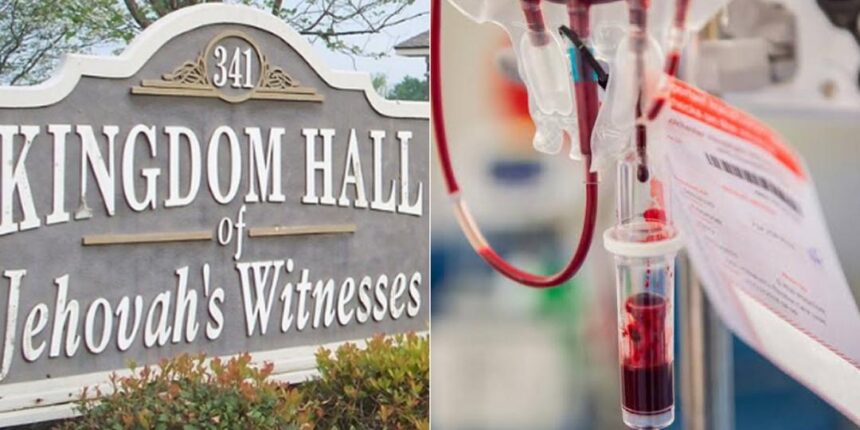
The topic of blood transfusions within the Jehovah’s Witnesses community has long been one of the most debated issues at the intersection of religion, medicine, and law. For decades, members of this faith have been required to abstain from all forms of blood transfusion based on their interpretation of biblical scriptures, creating a tension that has both ethical and human consequences.
Acts 15:29 explicitly instructs believers to abstain from blood while Genesis 9:4 and Leviticus 17:10-14 emphasize the sacredness of blood and its spiritual significance. These passages have historically been interpreted by the Governing Body of Jehovah’s Witnesses as a strict prohibition not only against receiving blood from others but also against using one’s own stored blood during surgical procedures. The result of this strict adherence has been global attention, with medical professionals, courts, and the public grappling with the conflict between protecting life and respecting religious convictions, creating situations that are both legally complex and emotionally charged.
The 2026 change regarding self-donated blood transfusions represents a remarkable point in this ongoing narrative, offering a pathway to reconcile faith and health without abandoning core beliefs.
Historical Practices Before 2026
Before the 2026 update, Jehovah’s Witnesses held a blanket prohibition on transfusions, forbidding whole blood as well as all primary components including red blood cells, white blood cells, platelets, and plasma. Members were also prohibited from donating their own blood for later use in surgery, a practice known in medical terms as autologous transfusion. The religious reasoning was consistent: any blood outside the body was considered sacred, and its reintroduction was seen as violating divine command. This policy extended to elective surgeries and emergencies alike, meaning that even when a life was at risk, individuals were instructed to refuse transfusions, a mandate that created profound moral and emotional challenges for families. Legal cases arose frequently when minors required life-saving procedures, and hospitals often found themselves navigating a maze of ethical dilemmas while seeking to respect parental authority and the religious convictions of patients.
The consequences of this rigid stance were far-reaching. In countries such as the United States, courts often had to issue emergency orders to allow transfusions for children whose parents refused treatment on religious grounds, generating headlines and public debate about the limits of religious liberty. Hospitals in Europe and Africa reported similar challenges, with physicians struggling to provide care while adhering to legal and ethical guidelines. For members, the fear of spiritual repercussions compounded the physical risk, creating a unique psychological burden that weighed heavily on those facing surgery or medical emergencies. These historical practices illustrate how deeply held beliefs can shape medical decision-making and the human experience, demonstrating both the strength of faith and the complexity of applying doctrinal principles in real-world scenarios.
The Change Announced in 2026
In March 2026, the Governing Body of Jehovah’s Witnesses issued guidance clarifying that self-donated blood transfusions, or autologous transfusions, are now permissible at the discretion of individual members. This development allows baptized members to donate their own blood prior to surgery and have it returned during or after the procedure if needed. Leaders emphasized that this is a matter of personal conscience, not a requirement, and that members may choose whether to utilize this option without fear of spiritual condemnation. The guidance specifically maintains that blood from other people remains strictly forbidden, including whole blood and all primary components, ensuring that the central prohibition remains intact. Sources confirm that this shift does not represent a doctrinal reversal but is instead a careful adjustment designed to allow members greater medical flexibility without undermining religious principles.
The 2026 clarification reflects both medical awareness and pastoral sensitivity. By allowing self-donation, the Governing Body acknowledges the realities of modern healthcare while maintaining the sacred value of blood as taught in scripture. The decision demonstrates a nuanced approach to balancing faith and life, offering members a path to preserve health without compromising conscience. For many within the community, this guidance is both reassuring and transformative, providing an option that was previously considered entirely off-limits. The policy change highlights the adaptability of religious interpretation in response to practical human needs and underscores the importance of personal conscience in navigating ethical dilemmas that have historically caused conflict both within families and between patients and medical professionals.
Understanding Self-Donation in Practice
Self-donation, medically known as autologous transfusion, is a well-established practice that allows a patient to provide their own blood for later use during surgery. Typically, the patient donates blood weeks in advance of the operation, and the blood is stored under controlled conditions. During or after the surgery, the patient can receive the stored blood as needed, reducing the risk of transfusion reactions, infection, or immunological complications that can occur when receiving donor blood. Before 2026, Jehovah’s Witnesses regarded even their own stored blood as off-limits, viewing it as sacred once it left the body. The 2026 guidance changes this by allowing individual members to make decisions about using their own blood, framing it as a personal choice guided by conscience rather than as a religious obligation or expectation.
This approach aligns medical safety with spiritual observance. Autologous transfusion has been recognized for decades as an effective means to reduce medical risk, and by permitting this within the constraints of faith, Jehovah’s Witnesses members gain access to a safer surgical option without feeling they are compromising their beliefs. Hospitals treating members can now discuss self-donation as a viable solution while respecting the prohibition against donor blood, creating clearer communication pathways between patients, families, and healthcare providers. The change also has psychological significance, as it alleviates the fear and anxiety that historically accompanied surgical decisions, offering a humane and reasoned compromise between health and religious adherence.
Implications for Members and Medical Practice
The implications of this update extend to both individual members and healthcare providers. For members, it allows greater autonomy over personal health decisions, giving them the ability to undergo elective or emergency procedures without fear of spiritual reprisal. This is particularly important in life-threatening situations where refusing transfusions may have previously resulted in preventable harm. Families now have a framework within which they can plan medical care in a manner that respects religious principles while protecting life.
For medical professionals, the guidance provides clarity and reduces the potential for conflict or legal intervention. Hospitals now have an established protocol for handling Jehovah’s Witnesses patients seeking self-donation transfusions, ensuring that the medical team can act swiftly and ethically. Globally, countries such as the United States, the United Kingdom, and Nigeria may experience a reduction in court cases involving parental refusal of transfusions for minors, decreasing the burden on legal systems and providing clearer ethical guidelines for practitioners. The update therefore represents a careful negotiation between faith, law, and medicine, exemplifying how religious doctrine can adapt to support practical human welfare while maintaining theological integrity.
Controversies and Reactions
The March 2026 update allowing self-donated blood transfusions has sparked a range of reactions both within and outside the Jehovah’s Witnesses community. Among supporters, the move is seen as a progressive adjustment, one that aligns faith with practical medical realities while maintaining the sanctity of blood as taught in scripture. Many members have expressed relief at having an option that protects their health without violating conscience, noting that it provides flexibility during elective surgeries or unforeseen medical emergencies. For families who have historically faced the agonizing decision of refusing life-saving treatments, the policy offers hope and a sense of moral clarity. Supporters point out that the guidance is not coercive, allowing members to exercise individual judgment and reinforcing the principle that faith and personal conscience can coexist harmoniously with scientific knowledge.
Critics, however, have voiced concern that the change does not go far enough. While self-donated transfusions are now permitted, the prohibition against receiving blood from others remains absolute, keeping the majority of blood transfusion options off-limits. Some medical professionals argue that this limitation may still lead to preventable harm in emergency situations where autologous blood is not available or sufficient. Religious scholars have observed that the decision reflects a delicate compromise, balancing doctrinal fidelity with medical realities. They suggest that it illustrates the challenges faith communities face when attempting to adapt practices that have deep spiritual significance without compromising foundational beliefs. The controversy is compounded by ongoing public scrutiny, as media coverage highlights the tension between modern healthcare standards and strict religious observance, a dynamic that has persisted for decades.
Globally, the discussion has prompted broader ethical debates. In countries like the United States, court cases historically forced intervention when minors were at risk due to parental refusal of transfusions. In the United Kingdom, hospitals often faced dilemmas between patient autonomy, parental authority, and public health standards. In Nigeria, legal systems have been tested in cases where cultural understanding intersects with religious conviction, particularly in rural areas where healthcare infrastructure may be limited. The 2026 guidance is widely expected to reduce such conflicts, yet critics caution that the prohibition on donor blood will continue to raise challenging scenarios, particularly in complex surgeries or traumatic emergencies where self-donation may not suffice. The mixed reactions reflect the ongoing struggle to balance religious liberty, medical ethics, and the protection of life in diverse cultural and legal contexts.
Comparison with Past Practices
A comparison between the pre-2026 and post-2026 stance on blood transfusions reveals the significance of this adjustment. Before the change, donor blood of any type was entirely forbidden, including whole blood and its primary components. Autologous transfusion was prohibited, meaning members could not donate their own blood for later use. Emergency procedures often placed physicians and families in direct conflict with religious obligations, resulting in legal battles and ethical dilemmas, particularly when minors were involved. Hospitals frequently struggled with these situations, attempting to respect faith while upholding the duty to preserve life. The tension between faith and medicine was a recurring global issue, and the moral, emotional, and legal burden fell heavily on families and medical professionals alike.
Post-2026, the landscape has shifted in important ways while still maintaining core prohibitions. Donor blood remains strictly forbidden, preserving the foundational tenet that blood from others may not enter the body. Self-donation and autologous transfusions are now permitted, giving members the opportunity to prepare for surgery while remaining consistent with their beliefs. Hospitals can plan elective procedures with reduced ethical tension and respond to emergencies with clearer guidance, knowing that individual members have the option to consent to self-donation. Legal conflicts are likely to decline, as the personal choice framework provides a morally defensible path that minimizes court intervention. While the doctrine itself remains intact, the practical approach to medical care has been adapted to recognize the realities of modern medicine, demonstrating a nuanced evolution rather than a complete doctrinal reversal.
Broader Societal Implications
The impact of this policy change extends beyond the individual member and the medical team. Societies around the world are grappling with the tension between religious freedom and public health, and Jehovah’s Witnesses have historically been at the center of these debates. By clarifying that self-donated transfusions are permissible, the community provides a model for how religious organizations can engage with medical science while maintaining spiritual principles. This may influence healthcare policy, as hospitals can adopt clearer protocols for treating members, reducing the uncertainty that has historically led to legal disputes. Public understanding of Jehovah’s Witnesses may also evolve, as observers see that the community is capable of nuanced decision-making that respects both faith and life.
Globally, this change may have a particularly profound effect in countries where court intervention has been common. In the United States, legal precedent often required judges to authorize transfusions for minors despite parental objection. In the United Kingdom, hospitals faced similar dilemmas where ethical guidelines and public health considerations clashed with religious convictions. In Nigeria, challenges have included reconciling urban medical standards with local cultural and religious norms. The 2026 guidance provides a framework that may reduce legal pressure, allowing families and hospitals to work collaboratively within a shared understanding of ethical and religious responsibility. This broader societal dimension illustrates that religious doctrine can evolve in ways that promote human welfare while remaining consistent with spiritual principles, highlighting the capacity for faith to engage constructively with contemporary social realities.
The Human Dimension
At the heart of this policy shift is the human experience. Families who have previously faced life-or-death decisions under strict blood prohibitions now have a pathway that allows them to act with moral clarity and compassion. Individual members gain the ability to make informed choices without fear of spiritual condemnation, alleviating psychological and emotional stress associated with medical interventions. Physicians, nurses, and healthcare teams benefit from clear guidance that respects religious observance while providing life-saving care. This human-centered approach emphasizes empathy, recognizing that doctrinal rules have tangible effects on real lives and that adjustments can protect both health and conscience.
The human dimension extends to children, who have historically been the focus of legal battles regarding parental refusal of transfusions. The 2026 guidance may reduce the likelihood of courts having to intervene in life-threatening cases, giving parents the ability to make choices that align with faith while safeguarding their children’s well-being.
Future Outlook
The 2026 guidance allowing self-donated blood transfusions represents a milestone in the intersection of faith, medicine, and human rights. While the prohibition on donor blood remains intact, permitting autologous transfusions provides members with life-saving options that respect conscience and faith. For medical professionals, the guidance offers clarity, reducing ethical dilemmas and the need for court intervention. Globally, families can navigate healthcare decisions with greater confidence, balancing spiritual conviction with the realities of modern medicine.
Looking forward, this development may serve as a precedent for other religious communities facing similar challenges. It demonstrates that doctrine can adapt responsibly in response to practical human needs without undermining theological integrity. The 2026 guidance is both a practical solution and a deeply human gesture, reflecting compassion, wisdom, and respect for individual conscience. Jehovah’s Witnesses have shown that faith can evolve in ways that prioritize life, honor scripture, and empower members to make informed and ethical decisions in a complex world. This nuanced approach represents a landmark moment in religious history, one that may influence ethical, legal, and medical discussions for years to come.