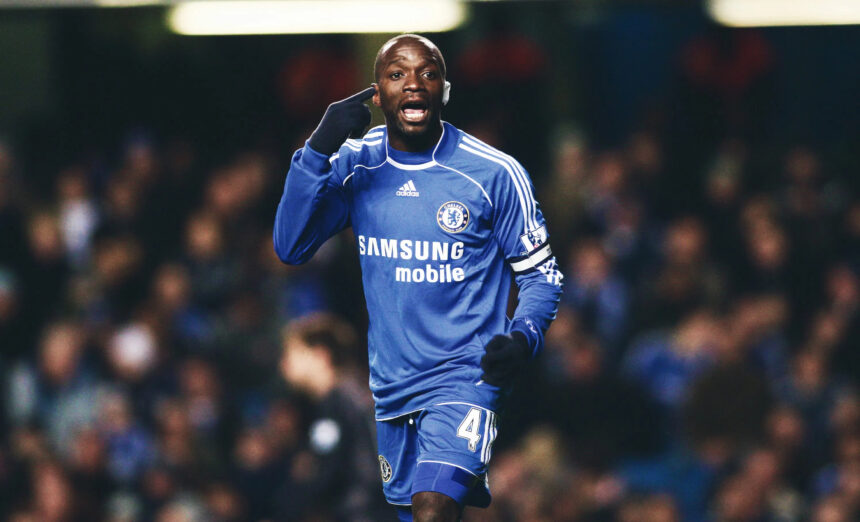
When people talk about the greatest midfielders in football history, the conversation usually drifts toward creators, scorers, and players who lived on highlight reels. Very rarely does it begin with the ones whose job was to protect the team, organise the chaos, and quietly control the game from deep. That is exactly why conversations about the most underrated defensive midfielders of all time still feel incomplete.
Defensive midfield is one of football’s most misunderstood roles. It is not built for applause. It is built for balance. These players read danger before it forms, manage space when others chase it, and keep teams functional when matches become uncomfortable. When they perform well, they make football look simple. When they are missing, everything suddenly feels broken.
Yet history has not always been kind to them. Many defensive midfielders who shaped eras, carried teams, and defined tactical systems are still remembered as supporting characters instead of central figures. Their influence was massive, but their reputation never quite caught up.
In this article, we will look closely at seven of the most underrated defensive midfielders of all time, players whose intelligence, discipline, and control deserve far more recognition than they usually receive. I will explain what made them special, why they were overlooked, and why football history looks different when their contributions are properly understood.
What “Underrated” Means for a Defensive Midfielder
The word “underrated” only makes sense when it is tied to context. In defensive midfield, it does not mean a player nobody knows. It means a player whose real influence on matches, systems, and team success was consistently bigger than the attention, praise, or historical credit they received. This position sits at the centre of football structure, yet it lives far away from football’s loudest narratives.
To understand why certain defensive midfielders deserve to be called underrated, the role itself has to be judged properly, not by popularity, not by highlight clips, and not by simple statistics.
Influence Without Visibility
Defensive midfielders operate in the parts of the pitch where problems are prevented, not celebrated. When they position well, attacks never fully develop. When they read the game correctly, dangerous passes never arrive. When they cover space intelligently, defenders look calmer and attackers look braver. None of this produces moments that trend online, yet all of it shapes the outcome of matches.
An underrated defensive midfielder is often the reason a team feels stable without most people knowing why. Their work removes drama instead of creating it, and football culture has always valued drama more than stability.
Statistics That Fail to Tell the Full Story
Traditional football statistics struggle badly with defensive midfielders. Tackle counts, interception numbers, and duels won only show fragments of what actually happens. A player who makes ten tackles may simply be chasing danger he helped create. Another who makes three interceptions may have prevented five attacks simply by standing in the right place.
Modern football has started to understand this better, with greater attention to positional impact, passing lanes blocked, space protected, and transitions delayed. But for most of football history, defensive midfielders were judged with tools that could not properly explain their value. That gap between performance and measurement is one of the biggest reasons many of them became underrated.
Essential to Success, Rarely Celebrated
Some defensive midfielders were the tactical foundations of dominant teams. Without them, those teams would not have functioned the same way. Yet when those eras are remembered, the spotlight usually stays on attackers, creative midfielders, and iconic goals.
This creates a strange historical imbalance. The team is remembered as great. The structure that allowed it to be great is quietly forgotten. An underrated defensive midfielder is often the player whose absence would have collapsed the system, even if his name never led the headlines.
Award Culture and Narrative Bias
Global football awards have never been kind to defensive roles. Narratives are built around goals, assists, and decisive moments that can be reduced to clips and statistics. Defensive midfield influence is harder to summarise in one image or one sentence, so it rarely becomes the centre of award discussions.
Because of this, many defensive midfielders finished their careers with trophy cabinets full of team honours but almost no individual recognition. Over time, that absence of awards slowly reshapes how history remembers them, even when their importance inside the game was unquestionable.
Modern Understanding, Late Recognition
Football analysis today is far better at explaining why defensive midfielders matter. Spatial control, pressing resistance, build-up support, transition protection, and positional discipline are now recognised as core elements of winning football. Unfortunately, many players who mastered these qualities played before this language became common.
As a result, their careers are often judged by outdated standards. They are remembered as “solid,” “reliable,” or “disciplined,” instead of what they truly were: intelligent controllers of football structure.
In essence, underrated does not mean forgotten. It means undervalued relative to influence. It refers to defensive midfielders whose presence shaped matches, titles, and systems, but whose reputation never fully matched their importance. The players that follow are not here because they lacked talent. They are here because their talent was expressed in a role football has only recently begun to properly respect.
7 Most Underrated Defensive Midfielders of All Time
Football conversations rarely start with the player who stopped the attack before it became dangerous. They usually start with the player who scored, assisted, or dribbled past three defenders. Yet, behind almost every great team in history sits a defensive midfielder whose job was to clean the mess, organise the shape, slow the game down, and quietly make everything else possible. These players rarely appear in highlight reels, rarely win individual awards, and rarely dominate social media debates, even though their influence often decides whether a team succeeds or collapses.
The strange part is that many of the best defensive midfielders of all time were not just good at defending. They were thinkers. They read passing lanes before the pass was played. They controlled tempo without touching the ball. They protected defenders, freed attackers, and balanced entire systems, often without getting any real credit for it. Because their work happens in between moments, history has a habit of underrating them.
This list is about those players. Not the ones whose names are shouted first, but the ones whose absence would have been felt immediately. The defensive midfielders who shaped matches, titles, and eras while quietly being overlooked in all-time conversations.
1. Sergio Busquets

Sergio Busquets built one of the most influential careers in football history while rarely looking like the most important player on the pitch. That contradiction explains his place on this list better than any statistic. He was never the fastest, never the strongest, and never the most dramatic. Yet for more than a decade, Barcelona and Spain both looked structurally lost whenever he was missing.
Busquets became a first-team regular under Pep Guardiola in 2008, stepping into a Barcelona side that would go on to dominate Europe with positional play, ball circulation, and collective intelligence. While Xavi and Iniesta received most of the spotlight, Busquets was the player who made their freedom possible. He operated in the space between defence and midfield, constantly adjusting his position to offer passing angles, block counterattacks, and protect the back line without ever needing to dive into reckless tackles.
His control of matches came through positioning rather than action. Busquets rarely chased the ball. He waited for it. He closed passing lanes before they looked dangerous. He forced opponents into sideways or backward decisions simply by standing in the correct place. His interceptions were often invisible until the replay showed how early he had read the pass. That ability to think two steps ahead made him one of the most efficient defensive midfielders the game has seen.
With Barcelona, Busquets won everything repeatedly: multiple LaLiga titles, multiple UEFA Champions League trophies, Copa del Rey triumphs, FIFA Club World Cups, and European Super Cups. With Spain, he was a core part of the squad that won the 2010 World Cup and the 2012 European Championship, two tournaments defined by control, patience, and tactical discipline rather than raw physical dominance.
Yet despite all of this, Busquets is rarely the first name mentioned when people debate the greatest midfielders of all time. His lack of goals, his calm body language, and his refusal to dramatise his game have worked against his reputation. Football culture often mistakes subtle dominance for simplicity. Busquets mastered the hardest part of midfield play: making elite football look easy.
Even in the later years of his Barcelona career, when the team declined structurally, his absence still exposed how irreplaceable his profile was. Younger replacements could run more, tackle harder, or carry the ball further, but they could not reproduce his positional discipline and spatial intelligence. That gap between what he did and how he is remembered is exactly why Sergio Busquets remains one of the most underrated defensive midfielders in football history.
2. Michael Carrick
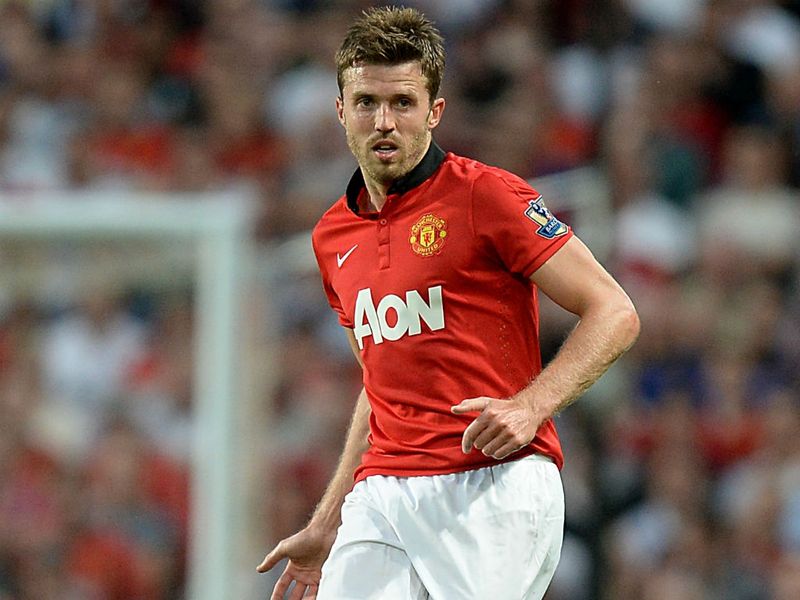
Michael Carrick spent over a decade at Manchester United controlling games in a way that rarely demanded attention but constantly deserved it. His style was built on calmness, awareness, and accuracy, not aggression or spectacle. In a club filled with stars, personalities, and headline players, Carrick became the one who quietly kept everything connected.
Carrick joined Manchester United from Tottenham in 2006 and immediately became part of a midfield that would dominate English football for years. He was never the loud leader. He did not demand the ball with gestures or emotion. Instead, he made himself available in the right positions, recycled possession cleanly, and ensured United always had structure in transition.
His passing range was one of his greatest strengths. Carrick could switch play with long diagonal balls, break lines with grounded passes through midfield, or slow the game down with short, controlled circulation. He understood when to accelerate attacks and when to protect leads. That awareness made him a perfect partner for more energetic or creative midfielders, because he balanced their risk with control.
Defensively, Carrick was often misunderstood. He was not a reckless tackler, but he was a highly effective interceptor. He read danger early, positioned himself between opponents and passing lanes, and allowed defenders to hold their shape instead of being dragged into midfield duels. When he was absent, United’s midfield often looked open and reactive. When he played, it looked organised.
His trophy record reflects how important he was: multiple Premier League titles, a Champions League win in 2008, FA Cups, League Cups, and Club World Cup success. Yet his name is rarely mentioned alongside United’s legendary midfielders in casual conversations. Paul Scholes is remembered for passing brilliance. Roy Keane is remembered for leadership and aggression. Carrick is often remembered simply as “reliable,” a word that quietly hides just how intelligent and influential he actually was.
Even after retirement, Carrick’s transition into coaching roles at Manchester United reinforced how deeply he understood the game. His reading of football was never accidental. It was always intentional. Michael Carrick remains underrated not because people forgot him, but because many never fully understood how much he was doing while others were shining.
3. Claude Makélélé
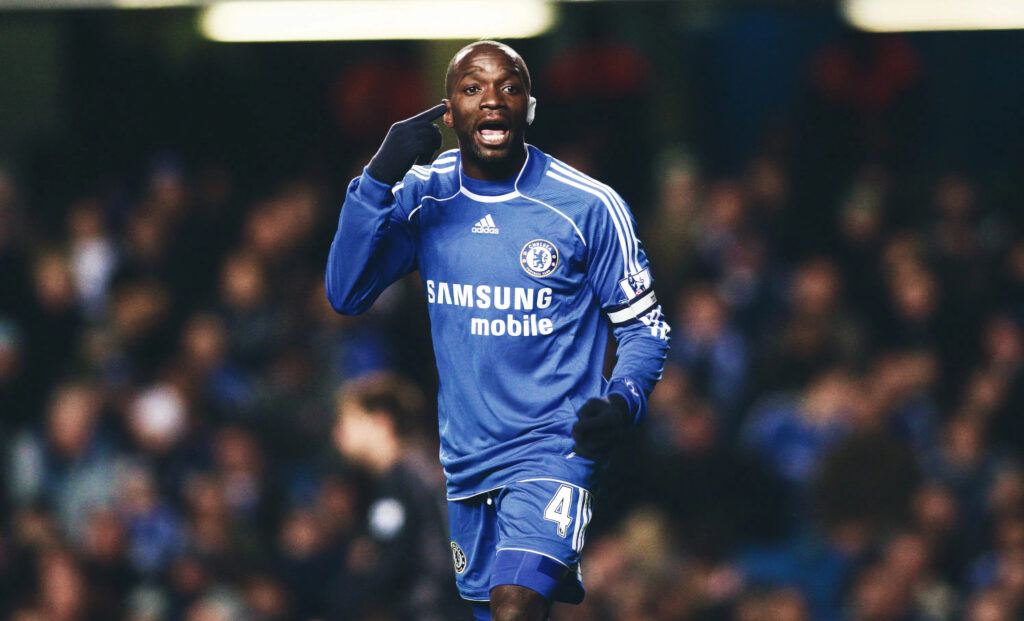
Claude Makélélé is the rare footballer whose influence became so clear that the role itself was renamed in his image. The term “Makélélé role” is now part of football language, yet his personal recognition has never quite matched the scale of his impact.
Makélélé’s career reached its defining stage at Real Madrid during the Galácticos era, where he was responsible for protecting a midfield filled with attacking luxury. While the spotlight focused on Zidane, Figo, Ronaldo, and Beckham, Makélélé was the player making sure the team did not collapse defensively. When he left Madrid for Chelsea, Real Madrid immediately struggled with balance, a moment that made his importance impossible to ignore.
At Chelsea, under Jose Mourinho, Makélélé became the foundation of one of the most dominant defensive teams in Premier League history. Chelsea conceded just 15 league goals in the 2004–05 season, a record that still stands. Makélélé’s positioning, anticipation, and discipline were central to that achievement. He rarely ventured forward unnecessarily. He rarely abandoned his zone. His job was to protect space, recover possession, and give the ball to players who could create.
What made Makélélé special was not physical dominance alone, but decision discipline. He knew when to step in and when to hold. He knew when to intercept and when to delay. His presence allowed full-backs to attack, centre-backs to stay compact, and creative midfielders to play with freedom. In modern terms, he was a system stabiliser.
Despite this, Makélélé never received the individual praise that players in more glamorous roles enjoyed. He was rarely discussed in Ballon d’Or conversations. He was rarely celebrated outside tactical circles. Yet coaches across Europe began to design midfields around the idea he represented.
His legacy is not just in trophies, but in how football itself evolved. Modern defensive midfielders are judged using a template he helped define. Claude Makélélé remains underrated not because his influence is unknown, but because it is often acknowledged without fully appreciating how revolutionary it truly was.
4. Martín Zubimendi

Martín Zubimendi’s rise has never followed the usual modern football script. He was not pushed into global conversations by marketing, social media clips, or goal contributions, yet inside coaching circles, scouting departments, and tactical discussions, his name has carried weight for several years because of how reliably he controls games without drawing attention to himself.
At Real Sociedad, he became the reference point of the midfield structure, not because he dominated matches in an obvious way, but because the team functioned better whenever he played. Build-up phases looked cleaner, defensive transitions were more stable, and the midfield rarely collapsed when pressure increased.
By 2025, this quiet reputation translated into Arsenal triggering his release clause, reported widely at around sixty million euros. That transfer did not reflect hype or fashion. It reflected long-term evaluation. Clubs viewed him as a solution to a structural problem rather than an upgrade in entertainment. His profile suited teams that wanted control, balance, and reliability in the deepest midfield role rather than a player whose influence depended on moments.
On the pitch, Zubimendi operates primarily as a positional pivot. He constantly adjusts his distance from the centre-backs to offer passing angles while remaining close enough to protect central space when possession is lost. His passing choices reflect awareness more than ambition. He recycles possession when the team needs rhythm, plays vertical passes only when the angle is clean, and uses switches to stretch pressing structures rather than to show range. His game is built around selecting the right action rather than the most impressive one.
Defensively, his value lies in prevention. He reads passing lanes early, occupies spaces that discourage progression, and forces opponents into less efficient areas. Tackles come as a result of positioning rather than recovery speed. This is why his performances often appear quiet. The opposition simply struggles to find central access, which reduces the number of emergency interventions required.
At Real Sociedad, his tactical responsibility was heavy. He balanced two opposing tasks: supporting build-up play while protecting defensive structure. That dual responsibility defines elite defensive midfielders, yet it rarely shows clearly in match highlights. Analysts consistently described him as the player who allowed others to attack with freedom because he maintained structural discipline. Reporting around his Arsenal move emphasised defensive awareness, composure, and passing range rather than creativity or flair, reinforcing how his reputation is rooted in reliability.
Zubimendi is often overlooked because his football does not generate moments that spread easily online. He does not arrive frequently in the box, he does not dominate duels aggressively, and he does not chase spectacular long passes. His value often appears in what does not happen: central breakthroughs, rushed turnovers, and chaotic transitions. That kind of influence is appreciated in professional environments but struggles to become mainstream debate material.
Even after his move to Arsenal, his role remains structural. He stabilises systems rather than transforms narratives. His career so far illustrates why intelligent midfield control often earns respect before it earns popularity.
5. Gilberto Silva
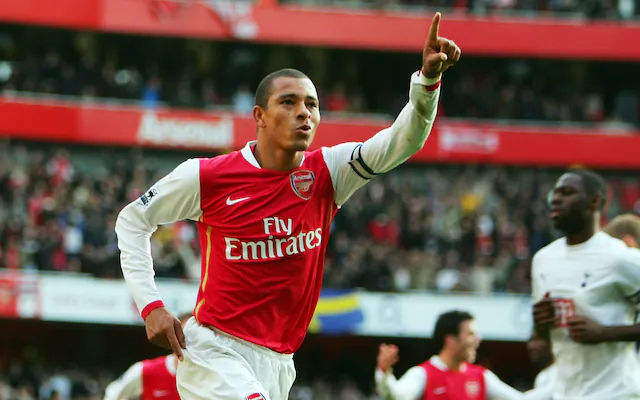
Gilberto Silva’s career remains one of the clearest examples of how defensive midfield excellence can be misunderstood. His achievements are not small by any standard. He won the World Cup with Brazil in 2002 and became a cornerstone of Arsenal’s Invincibles side, yet he is often absent from conversations about the greatest defensive midfielders because his style never demanded attention. His football was built around positioning, restraint, and discipline rather than confrontation or expression.
Arsenal’s nickname for him, “The Invisible Wall,” described his role accurately. He controlled space in front of the defence, screened passing lanes, and ensured that the team’s structure remained intact when possession changed. His primary responsibility was not to win applause but to prevent instability.
Gilberto’s defensive work focused on reading the game rather than reacting to it. He spent large parts of matches positioning himself between opponents and dangerous zones, guiding attacks away from central areas and delaying transitions until teammates could recover. This reduced the need for emergency tackles and made his performance look less dramatic, even though it was consistently effective.
During the Invincibles season, Arsenal’s attacking freedom was built on midfield stability. Gilberto allowed Vieira to attack without exposing the back line. He allowed full-backs to advance without leaving the defence isolated. He allowed the team to maintain balance across ninety minutes. The unbeaten run was not sustained by attacking flair alone. It was sustained by structural discipline in midfield.
Despite the trophies, his reputation remained muted because his influence was preventative. Football memory often rewards creation more than protection. Gilberto also played in Brazilian teams filled with attacking stars, which further pushed his contribution into the background, even though his discipline was essential to their balance.
In football discussions, a similar pattern often appears. Players who score or dribble receive the headlines, while those who stabilise teams quietly are treated as replaceable. Gilberto’s career shows how that bias plays out even at the highest level.
6. Mousa Dembélé
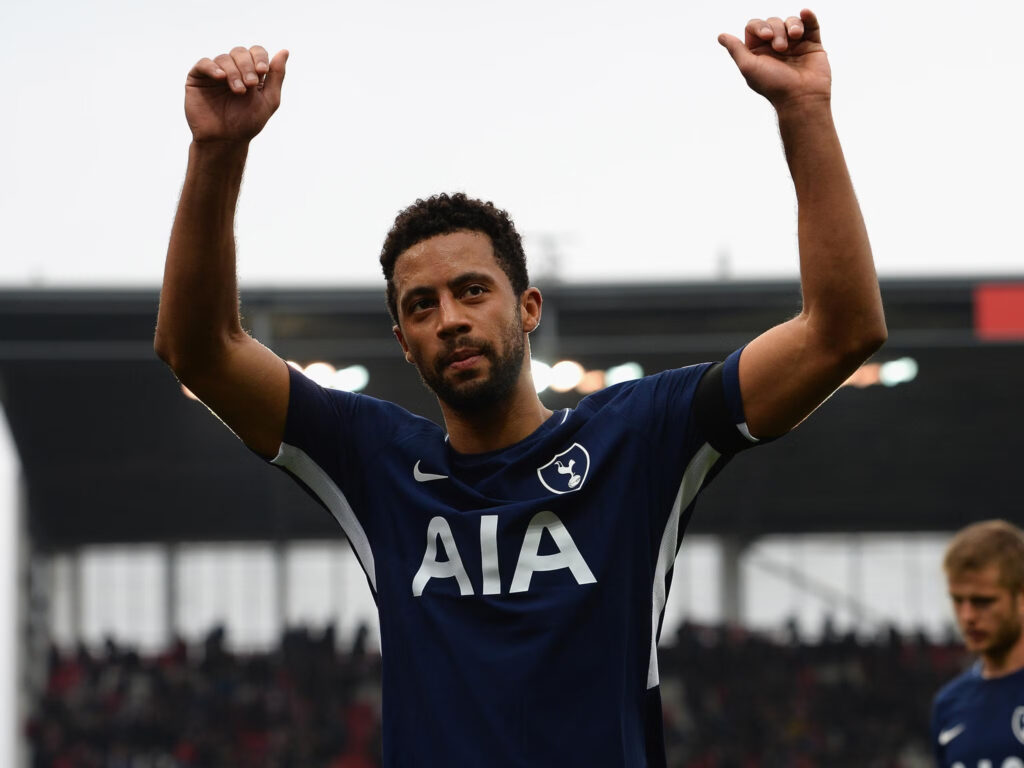
Mousa Sidi Yaya Dembélé was born 16 July 1987. He is a retired Belgian midfielder who, despite rarely dominating headlines, quietly carved out one of the most fascinating and technically impressive careers of his generation. A true “midfielder’s midfielder,” Dembélé combined elite ball control, physical strength, and tactical intelligence in a way few others have matched, and yet he has often been overlooked in broader discussions about the best midfield talents of the 2010s and early 2020s.
Dembélé began his professional career in Belgium with Germinal Beerschot before moving to the Netherlands, where his breakthrough came with Willem II and later AZ Alkmaar, winning an Eredivisie title and Johan Cruyff Shield in 2009 with AZ. His performances in the Eredivisie earned him a move to the English Premier League, first with Fulham and then with Tottenham Hotspur, where he spent the prime of his career. Over seven seasons in north London, he made nearly 250 appearances in all competitions and became the fulcrum of Spurs’ midfield, known most for his ability to receive the ball under pressure, hold off defenders, and drive play forward.
What sets Dembélé apart statistically, and partly explains why he’s so underrated, is how he influenced games without piling up the headline numbers. In the Premier League alone he recorded over 10,000 passes and 550 tackles, while winning an astonishing number of duels and maintaining an 81 % tackle success rate, elite figures for any midfielder. He also offered terrific ball progression and dribbling from midfield: across multiple seasons at Spurs he ranked in the 99th percentile for pass completion and successful dribbles in the Premier League, illustrating how effective he was at moving the ball even against intense pressing.
Despite these abilities, Dembélé was never a high goal or assist-producing midfielder; across Premier League play, he finished with 12 goals and 12 assists in 243 matches, modest offensive output that often causes casual observers to underestimate his impact. That relative lack of glamour numbers contributed to his underrated status, especially in an era that increasingly emphasizes goals and assists for midfielders.
His peers and opponents, however, painted a very different picture. Managers like Mauricio Pochettino compared him to legendary ball players, calling him one of a handful of “geniuses” he had coached, and teammates like Kevin De Bruyne hailed his strength and technical mastery. Defenders such as Antonio Rüdiger have publicly stated that Dembélé was one of the most difficult midfielders to play against, players who intuitively grasped his rarity even if mainstream narratives didn’t always follow.
Internationally, he was just as consistent for Belgium, earning 82 caps and representing his country at major tournaments, another testament to his sustained quality at the highest level.
Ultimately, Mousa Dembélé’s legacy as one of the most underrated midfielders comes from his unique blend of ball-retention, dribbling under pressure, defensive balance, and tactical calm, the kind of attributes that don’t always fill highlight reels but are indispensable over a long season. For coaches, teammates, and those who study the subtle art of controlling a game, he was often the heartbeat of the teams he played in, a rare midfielder whose true value was felt more than always seen.
7. Fernando Redondo

Fernando Redondo belongs to a rare category of midfielders whose reputation inside football is far stronger than his reputation in public memory. Among coaches, former players, and tactical analysts, he is regularly described as one of the most complete deep midfielders of his generation. Among casual fans, he is often reduced to a name attached to one famous backheel at Old Trafford. That contrast alone explains why he fits naturally into any serious discussion about the most underrated defensive midfielders of all time.
Redondo was born on 6 July 1969 in Adrogué, Argentina, and developed at Argentinos Juniors, a club known for producing technically intelligent players. From the beginning, his profile was different from the stereotypical South American midfielder. He combined defensive discipline with composure on the ball, and he played with a calmness that made pressure situations look manageable rather than chaotic. His move to Tenerife in 1992 became the first real stage where Europe began to understand his quality. At Tenerife, he was not only the midfield anchor but also the main organiser of possession. The team’s ability to compete against stronger Spanish sides in that period was closely linked to how Redondo controlled matches from deep positions, earning consecutive Player of the Year awards at the club.
When Real Madrid signed him in 1994, they were not buying a star for headlines. They were buying structure. Madrid in the mid-1990s had attacking talent and big personalities, but they needed a midfielder who could connect defence to attack without destabilising either side of the game. Redondo became that connector. He operated as a deep-lying midfielder who could sit in front of the defence, read the flow of the game, and decide how quickly or slowly Madrid should play. His passing range allowed Madrid to escape pressure without losing shape, while his positional discipline ensured that counterattacks rarely found the centre of the pitch open.
What separated Redondo from many defensive midfielders was how comfortable he was carrying the ball. He did not simply recover possession and release it immediately. He could step forward, draw pressure, and then choose the correct outlet. This ability forced opponents to make decisions, which in turn created space for teammates. His technical quality meant he was not limited to sideways distribution. He could play vertical passes into forwards, find wingers early, or recycle possession intelligently when the team needed to regain rhythm.
Defensively, Redondo relied more on anticipation than aggression. He read passing lanes, delayed attacks, and positioned himself to break transitions before they became dangerous. His tackling was clean and efficient, but it was never the headline part of his game because he rarely needed to make emergency challenges. This defensive intelligence allowed Real Madrid to maintain balance even when their full-backs and attacking midfielders pushed high.
His role in Madrid’s Champions League success cannot be overstated. He was central to the 1997–98 Champions League triumph and again in 1999–2000, when Madrid lifted their eighth European Cup. The famous quarter-final at Old Trafford in 2000 remains one of the most referenced performances of his career, not because of numbers but because of influence. His control of midfield that night allowed Madrid to dictate phases of the match in an environment where many teams lost composure. The backheel assist to Raúl became symbolic of his elegance, but the deeper story was how he managed the match tactically across ninety minutes.
Redondo’s international career with Argentina adds another layer to his underrated status. He was part of the 1993 Copa América winning squad and earned recognition at the 1992 Confederations Cup, where he won the Golden Ball. Yet he never became the long-term midfield face of Argentina in the way his quality suggested. His exclusion from the 1998 World Cup squad under Daniel Passarella became one of the most controversial decisions of that era. The reasons were never purely footballing, and that break in his international story meant his legacy lacked the World Cup narrative that often defines South American greats.
In 2000, his transfer from Real Madrid to AC Milan marked a turning point that further complicated how history remembers him. Madrid sold him despite fan opposition, and Milan believed they were acquiring the ideal midfielder to control Serie A and Europe. Unfortunately, a serious knee injury shortly after his arrival disrupted that plan almost immediately. Redondo spent long periods in rehabilitation, missing the continuity that defined his Madrid years. Although he later returned and was part of Milan’s Champions League and Serie A winning squads, he was never able to re-establish the same central influence he had enjoyed in Spain.
That injury period matters when discussing why he is underrated. Modern football memory is heavily shaped by longevity at the top and uninterrupted prime years. Redondo’s prime was shortened at club level just as he was entering a period where he could have dominated European midfield debates for several more seasons. Instead, his later achievements became supporting chapters rather than defining ones.
From a tactical perspective, Redondo helped shape how the deep midfield role was viewed in elite teams. He was not a pure destroyer and not a pure playmaker. He was a controller. His game showed that defensive midfield excellence could exist through intelligence, technique, and positional discipline rather than physical dominance alone. That model later became more common, but at the time, it was still developing.
The reason he remains underrated is not because his career lacked trophies or big moments. It is because his influence lived in organisation, structure, and control, areas that rarely dominate football storytelling. Redondo made star-filled teams functional. He made attacking football safer. He made pressure manageable. Those contributions do not age loudly in highlight culture, but they age very well in tactical understanding.
In any serious list of the most underrated defensive midfielders, Fernando Redondo is not just a nostalgic inclusion. He is a reference point for how the role can combine elegance with authority, intelligence with discipline, and creativity with responsibility. His career reminds football that some of the greatest midfielders in history were not the loudest ones, but the ones who made everything else work.
Why Defensive Midfielders Are Often Underappreciated
Defensive midfielders operate in the part of the pitch where football is decided quietly. They sit between defence and attack, responsible for protecting structure, managing space, and controlling rhythm, yet most of what they do does not translate into obvious moments for highlight reels. A striker scores and the stadium reacts. A winger dribbles and the crowd rises. A defensive midfielder cuts off a passing lane, delays a transition, or repositions the team by moving five yards to the left, and nothing appears to happen. That absence of visible drama is the first reason the role is so frequently undervalued.
Traditional football culture has always rewarded outcomes more than processes. Goals, assists, shots, and dribbles are easy to count, easy to remember, and easy to celebrate. Defensive midfield work is mostly preventative. The best performance often looks like the opponent never quite finding the pass they wanted to play. Because the mistake never happens, the intervention is rarely acknowledged. This creates a perception problem: fans and even some media narratives struggle to appreciate value that appears as stability rather than action.
Standard statistics deepen this problem. Tackles, interceptions, and clearances only capture fragments of defensive midfield influence. They do not show how often a player forced a pass sideways instead of forward. They do not show how many times a midfielder adjusted his position to protect a centre-back before danger developed. They do not show how a player slowed a counterattack just long enough for teammates to recover shape. Football research has repeatedly pointed out that many of the most important defensive contributions occur before a measurable defensive action is recorded.
There is also a historical bias built into award culture. The Ballon d’Or, FIFA Best Player awards, and most global honours have always leaned toward attacking profiles. Fabio Cannavaro’s 2006 Ballon d’Or remains the exception that proves the rule. Even then, his win was closely tied to Italy’s World Cup narrative rather than a broader appreciation of defensive craft. For defensive midfielders, the problem is even stronger. Their role is seen as supportive rather than defining, even when teams collapse without them.
Recent academic and performance analysis literature has consistently highlighted this imbalance. Studies published in sports analytics journals have shown that defensive midfielders contribute disproportionately to team stability, possession retention, and spatial control, yet receive less individual recognition because their influence is spread across multiple micro-actions rather than concentrated in decisive moments. Research from institutions working with professional clubs has also noted that coaches rate holding midfielders higher internally than fans or media do externally, because coaches measure contribution in tactical reliability rather than in visible impact.
Another reason defensive midfielders are undervalued is narrative. Football storytelling prefers clear heroes. The midfielder who scores long-range goals or plays final passes fits easily into a story. The midfielder who spends ninety minutes protecting zones, guiding teammates, and managing transitions fits less comfortably into simple narratives. Over time, this shapes public memory. Careers are remembered through moments, not through patterns of control.
There is also a stylistic bias. Players who defend aggressively with visible tackles are easier to praise than players who defend through positioning and anticipation. Yet positioning and anticipation are often more effective. The irony is that the better a defensive midfielder is at reading the game, the fewer dramatic interventions he needs to make, and the less attention he receives.
In African, European, and South American football discussions alike, this pattern repeats. Defensive midfielders are respected when teams lose them, but rarely celebrated while they are present. Their importance becomes obvious only in absence. That delayed appreciation is one of the clearest signs of structural undervaluation.
Modern football is slowly starting to challenge this bias, but the historical weight of attacking admiration still shapes how players are judged. Until the sport fully learns to value prevention, organisation, and rhythm management as much as finishing and creativity, defensive midfielders will continue to be among the most underappreciated figures in football history.
How Modern Analytics Is Rewriting Midfield Appreciation
The rise of advanced football analytics has begun to change how midfield influence is measured, especially for roles that traditional statistics failed to explain properly. Tracking data, spatial models, and possession-based metrics now offer a deeper picture of how defensive midfielders shape games without dominating conventional stat sheets.
One of the most important developments is positional tracking. Modern tracking systems record every player’s location multiple times per second, allowing analysts to study how space is controlled, closed, and created. In these models, defensive midfielders consistently emerge as central figures in pitch control maps. Even when they are not touching the ball, their positioning affects where opponents can safely pass and where teammates can advance. This has helped confirm something coaches always knew intuitively: presence can be as valuable as action.
Expected Threat models, often referred to as xT, have also changed evaluation. Instead of only measuring goals or assists, xT estimates how much a player’s actions increase the likelihood of a team creating a dangerous situation. Defensive midfielders often rank highly in xT contribution through progressive passes, intelligent ball circulation, and movement that shifts defensive structures. This shows that influence is not only about final passes, but about how attacks are built.
Pitch control models go even further. These models calculate which team controls each zone of the pitch at any given moment. Defensive midfielders consistently appear as major contributors to maintaining central control, especially during transitions. Research presentations at major sports analytics conferences have demonstrated that teams with strong central midfield control concede fewer high-quality chances, even when their defenders are not individually dominant. The defensive midfielder often becomes the silent anchor of this control.
There is also growing interest in possession value models that combine spatial data with decision outcomes. These models highlight how often defensive midfielders choose actions that preserve or improve team structure. A simple sideways pass may look safe, but if it prevents a dangerous turnover and maintains shape, it carries significant tactical value. Analytics now assigns weight to those decisions in ways traditional statistics never could.
Another major shift comes from transition analysis. Studies focusing on counterattacks show that the first two seconds after possession loss are critical. Defensive midfielders frequently play the key role in delaying or redirecting these transitions. Even without winning the ball, their positioning can reduce the quality of the opponent’s next action. This influence was invisible in old metrics, but is increasingly measurable in modern models.
Professional clubs now integrate these analytics into recruitment and performance evaluation. Many scouting reports emphasise spatial discipline, passing security under pressure, and transition management for defensive midfielders more than raw tackle counts. This explains why players who appear quiet to the public often receive strong internal ratings within elite clubs.
The wider public conversation, however, is only beginning to catch up. Analytics language has not fully entered mainstream football discussion, and when it does, it is often simplified. Yet the direction is clear. The sport is moving toward a more complete understanding of contribution, one that recognises structure, intelligence, and rhythm as fundamental to winning football.
This analytical shift does not rewrite history, but it reframes it. It helps modern audiences understand why players like Busquets, Redondo, Carrick, Gilberto Silva, and Zubimendi were so essential even when their numbers looked modest. It also explains why many of the most underrated defensive midfielders of all time were actually among the most influential players on the pitch.
As these models continue to evolve, the gap between public perception and tactical reality will continue to shrink. Defensive midfielders may never dominate highlight culture, but their place in football understanding is becoming harder to ignore. And for the first time, the numbers are beginning to speak the language their football always spoke quietly.
Conclusion
Football history has always loved its scorers, its dribblers, and its headline-makers. That preference is understandable, but it has also shaped a narrow way of remembering the game. Defensive midfielders have lived on the other side of that memory, doing work that keeps teams functioning while rarely receiving the same level of public admiration. Yet when the noise is stripped away, it becomes clear that many of the greatest teams in football history were built around players who controlled space, rhythm, and balance from the centre.
The seven midfielders discussed in this article represent that hidden value in different eras and styles. Some dominated through positional intelligence, others through calm distribution, and others through disciplined protection of their defence. What unites them is not just quality, but influence that extends far beyond statistics. They shaped how their teams played, how secure their systems felt, and how confidently attacking players could express themselves. Their presence turned structure into stability and chaos into control.
Modern analytics is finally helping football explain what these players have always contributed. Spatial data, pitch control models, and possession value metrics now show what the eye often missed. Influence does not always look dramatic. It often looks like prevention, balance, and intelligent positioning. As football understanding evolves, the gap between appreciation and contribution continues to narrow.
Recognising defensive midfielders properly does not require diminishing attackers. It simply requires expanding how greatness is defined. Football is not only about the moment the ball crosses the line. It is also about everything that made that moment possible. The quiet pivots who organised, protected, and connected the game deserve to be remembered not as supporting characters, but as central figures in football history.
When football is viewed through that wider lens, these midfielders stop being underrated names and start becoming what they always were: essential architects of the modern game.