This week, voting booths are open across all eleven time zones in Russia, but the outcome is already clear. What really matters is what happens once the votes are counted. That is why, in kitchens from Moscow to Kazan, families are quietly packing bags, checking passport dates, and whispering the word many Russians now fear: mobilization.
An Election With a Predetermined Outcome
Russia’s State Duma election runs from September 18 to 20. It is the first nationwide parliamentary vote since the full-scale invasion of Ukraine began in February 2022. Along with the 450 seats in the lower house, voters will also choose governors in eight regions and fill seats in 39 regional legislatures.
Although the election looks like a broad democratic process on paper, few people inside or outside Russia expect surprises. United Russia is expected to keep its constitutional majority, even as the campaign takes place during an intense crackdown that has targeted even officially registered opposition figures. The Yabloko party, one of the few still openly campaigning against the war, has drawn direct attention from the Kremlin for its stance.
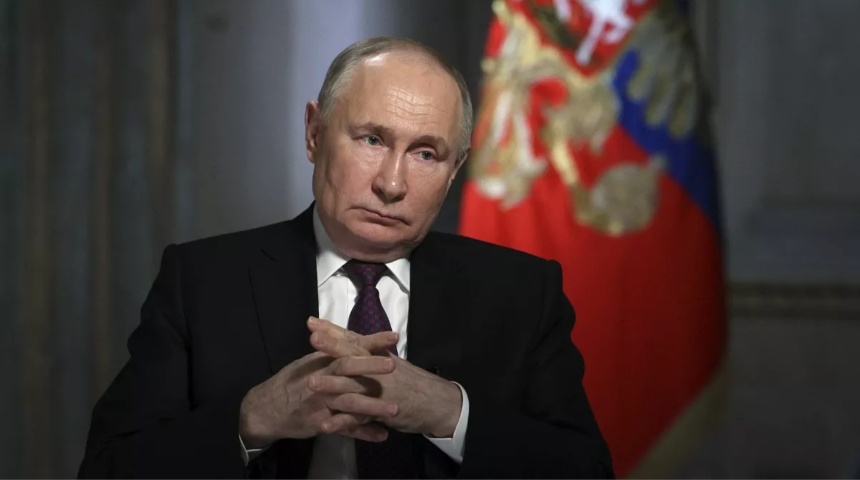
It’s important to clarify what this election is about, as international media have sometimes confused the issue. This is not a presidential election, Vladimir Putin secured his fifth term in March 2024 and won’t face re-election until 2030. This week’s vote is for parliament. But since the Duma mostly approves the Kremlin’s decisions, the election has become something else: a psychological deadline. Many Russians believe that after this date, the government will finally announce what it has been denying for months.
The War Has Finally Reached Ordinary Russians
For much of the invasion, the war in Ukraine felt distant to many Russians living far from the front lines. That has changed. In 2026, the war’s effects reached most Russians directly, with fuel shortages caused by Ukrainian drone attacks straining the state budget. Strikes on Wildberries warehouses, Russia’s equivalent of Amazon, destroyed goods worth hundreds of millions of dollars. On top of this, economic conditions have worsened: living standards have dropped, and unemployment, once masked by a wartime labor shortage, is now rising.
Against this backdrop, rumors about mobilization continue to spread. Russian authorities have repeatedly and clearly denied these claims. Still, more Ukrainian intelligence officials, Western analysts, and even some Russian commentators believe mobilization is likely to happen soon.
What Ukraine’s Intelligence Services Are Saying
These allegations have been building since midsummer. In August, Ukrainian President Volodymyr Zelensky told the public that Russia is preparing a new large-scale mobilization after this year’s parliamentary vote, based on an assessment from Ukraine’s Military Intelligence Directorate (HUR). According to this evaluation, Moscow plans to call up several hundred thousand people by the end of 2026, with a similar number in 2027, on top of its current contract recruitment efforts.
By September the Ukrainian authorities had been refining the figures even more. The Ukrainian military and foreign intelligence services state that the Russian General Staff has prepared a contingency plan for mobilising an extra 600,000 people in 2026 and 2027, about 300,000 for each year, although the officials themselves refer to this as a hypothetical scenario and not as an order that has actually been given. One of the Ukrainian deputy intelligence chiefs went even further by suggesting that such a call-up could be intended to provide troops for a new Russian offensive in the north as early as February 2027.
Some reports suggest even higher numbers. There are signs that Russia may launch a new wave of mobilization right after the September vote, likely in early October, with new recruits possibly ranging from 300,000 to 500,000. This is mainly because Russia’s contract recruitment system can no longer keep up with battlefield losses. One war blogger, cited by a research group, mentioned a figure as high as 1.2 million, but analysts caution that this number is still speculative and unconfirmed.
The Numbers Behind the Fear
The panic is not without reason; Russia’s losses in Ukraine have been huge by any measure. Since the invasion began in February 2022, Russian army losses have reached about 1.4 million troops, with up to 450,000 killed, according to Ukraine’s General Staff and the Center for Strategic and International Studies in Washington. CSIS also estimates that Russia has been losing over 30,000 personnel per month through 2026, while recruiting only about 27,000 new contract soldiers in the same period. This gap keeps growing.
That’s why Moscow has relied heavily on financial incentives, prisoners, and foreign volunteers instead of a formal draft since the chaos of September 2022, when the Kremlin’s first wartime call-up sparked protests and led hundreds of thousands of Russian men to flee the country. No one in the Kremlin wants a repeat of that. Still, few believe the current recruitment approach can last much longer.
There are already clear signs that preparations have begun. Human rights observers have reported more forced street recruiting since mid-August, with men being detained during document checks, at work, or even while walking home. Western intelligence sources have also noted mobilization-preparedness drills involving housing, food supplies, and arming residents, which reportedly took place in the Kaliningrad area last month.
“Almost Inevitable”
While not everybody completely dismisses the Kremlin’s denials, few people accept them at face value. The Russian analyst and historian Sergei Lukashevsky has stated that there is a very high chance of a limited mobilization after the “electoral event” and has even described it as “almost inevitable”. Similarly, the Austrian military expert Gustav Gressel expressed the same view, informing reporters that extensive secret preparations seem to have already begun.
It is not the case that all analysts consider the situation to be settled. One research group stated that the chances of a large-scale post-election mobilization are essentially even, on the grounds that Putin might not see the need for mass conscription if he thinks that Russian forces are still achieving acceptable territorial advances in Ukraine without doing so. They point out that the risk assessment is two-way: a formal draft would very likely trigger the kind of mass emigration and political revolt that the Kremlin has strived to prevent since 2022.
Putin has strongly rejected these reports. After the Shanghai Cooperation Organisation summit in Bishkek, he called the talk of mobilization “completely nonsense” and described it as an information campaign aimed at undermining Russia before the vote.
Russians Are Voting With Their Feet
Regardless of what the truth turns out to be, many ordinary Russians do not want to wait and see. More than 20,000 people crossed from Russia into Georgia at the Verkhny Lars checkpoint in a single day, driven by fears of a draft after the election. Organizations that help Russians move abroad have reported a sharp increase in inquiries since mid-July, well before voting began.
There is also a deeper story behind the exodus, about how much trust Russians still have in their president. Independent media report that the state-owned Russian Public Opinion Research Center stopped publishing its monthly ‘open-ended’ trust poll for Putin after his score dropped to 29.5 percent in April, the lowest since the war began. Notably, the ‘open-ended’ poll, where respondents name a trusted politician without prompts, shows much lower support than the ‘closed-ended’ poll, where Putin’s name is suggested, and support stays around 73 percent. The gap between these results says a lot about public opinion in Russia.
What Happens Next
Right now, voting is still underway, and the official result, a comfortable win for United Russia, is about to be announced. Across Russia, though, the real worry is not about who will be elected to the Duma, but about what the Kremlin will do once the cameras are gone, and the election is over.
If mobilization happens, whether it involves 300,000 people or more, it will be the biggest escalation in Russia’s wartime recruitment since the chaotic events of September 2022. For millions of Russian families who have spent this election period watching the calendar instead of the candidates, that is the vote that truly matters.