


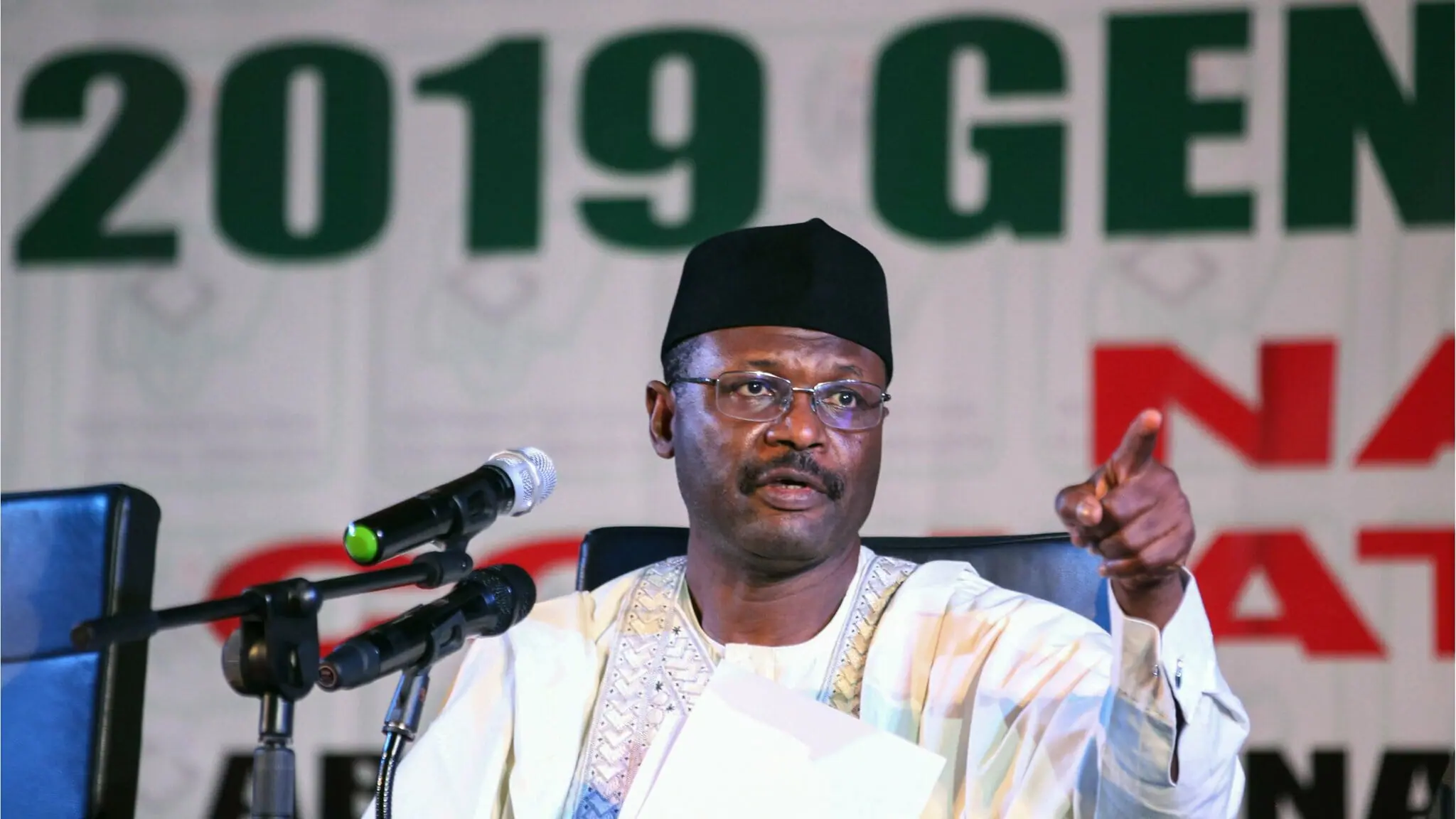

The Independent National Electoral Commission has broken its silence on President Muhammadu Buhari’s letter to it about the disputed Electoral Act Amendment Bill.
Buhari, who received the law on November 19, has until December 19 to sign it or withhold his assent and submit his thoughts and comments to the National Assembly.
And, if he refuses to sign the bill after 30 days, and the National Assembly does not support the President’s revisions or reservations, the Senate and House of Representatives can recall the measure and adopt it into law.
If the measure is passed in the form it was given to the President by two-thirds majority votes in both chambers, it becomes law without the President’s signature.
However, in response to the President’s letter on Wednesday, INEC National Commissioner and Chairman of its Information and Voter Education Committee, Festus Okoye, stated that the electoral management body is the end user of the electoral legal framework from a constitutional, legal, and administrative standpoint.
He stated that it was traditionally sensible, strategic, and vital to seek the commission’s and other critical agencies in the electoral matrix’s opinions before enacting a new legislative framework.
Okoye said, “Pursuant to Section 58(4) of the constitution of the Federal Republic of Nigeria, 1999 (as amended), the President has 30 days to assent to a bill presented to him by the National Assembly.
“The President has requested the commission and other critical national institutions to revert with detailed and considered views indicating whether or not the President should assent to the bill.
“This is the democratic way to go and the commission will make its views known to the President bearing in mind the overriding national interest and interest of our democracy.
“The commission will go through the bill and revert to the President within the time frame given to it.”
He said INEC was aware that Nigerians were waiting for this bill and also conscious of the fact that a comprehensive, clear, unambiguous and forward-looking electoral legal framework was germane to early preparations for elections.
He said the regulations and guidelines of the commission are drawn from the Electoral Act and without a new electoral legal framework, the work of the commission will be tentative and that will not be good for the electoral process.
Speaking on the cost implications, Okoye said that it was rather unfortunate that the issue of direct or indirect primary had overshadowed other fundamental issues in the bill.
He said, “However, it is difficult at this stage to speculate on the cost implications of direct primaries. As of today, the bill is inchoate until the President assents to it.
“It is the constitutional and legal responsibility of the commission to give effect to laws passed by the National Assembly.
“Moreover, direct primaries have been a feature of our electoral legal framework. The commission has monitored direct and indirect primaries organised by the different political parties. The commission does not dictate to political parties on the mode of primaries to adopt.
“The new system of direct primary election proposed in the bill domiciles the conditions for the conduct of the primaries with the political parties. In other words, the procedure adopted for the direct primaries shall be spelt out in a guidelines to be issued by the political party and filed with the commission at least 14 days before the primary election.”
Discussion about this post