


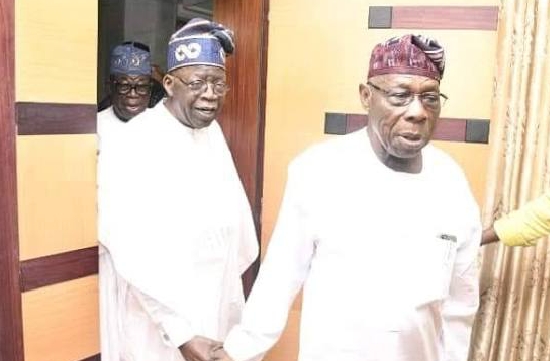

The morning light over Abeokuta had that reluctant calm before theatre begins—sunlight sliding across the courtyard of the Olusegun Obasanjo Presidential Library, where Nigeria’s past and present had gathered to exchange courtesies disguised as confessions. Cameras blinked like restless witnesses. Protocol officers whispered, sensing something symbolic was about to unfold. Then, Bola Ahmed Tinubu, the man who once accused this same host of throttling Lagos’s autonomy, leaned forward and said softly, “You are our father. We are your children.”
The sentence hung in the air longer than protocol required. Around him stood governors, aides, journalists—each watching, each calculating what this moment meant. Some smiled politely; others averted their eyes. But for Lagosians who remembered the political battles of the early 2000s, the words landed with a shock of recognition, tinged with disbelief. The man who once defied Obasanjo’s federal might was now invoking filial reverence before the same figure. It was more than reconciliation—it was irony incarnate.
The gesture might have been diplomatic, but its symbolism reached into the architecture of Nigeria’s political memory. It was a reminder that in this country, enmities age into alliances, and power is never permanent—it only rearranges its posture. What the cameras captured that day was not just a courtesy visit. It was a historical circle closing, a reckoning between two men whose political rivalry once defined an entire era.
The Long Wounds Between Lagos and Aso Rock
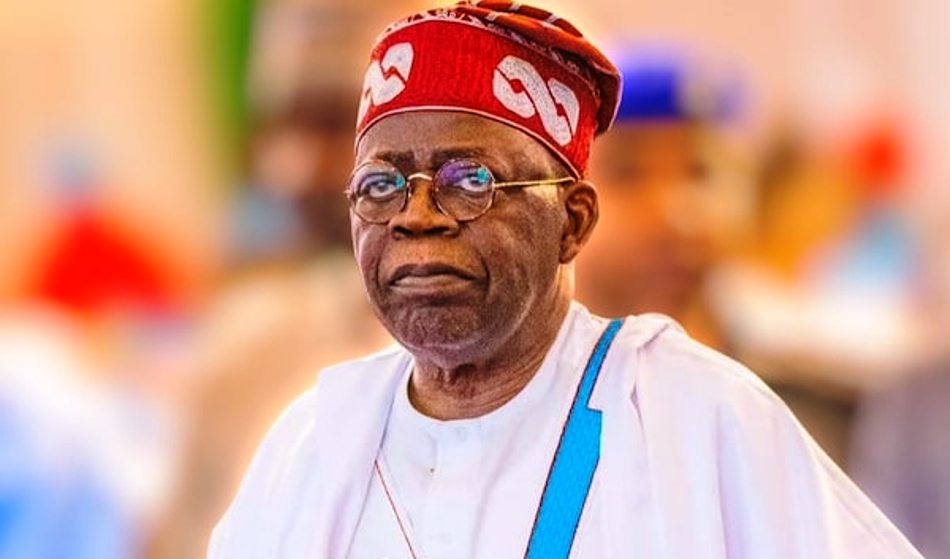
Before the handshake that stunned Lagos, there was a decade of silent hostility and loud confrontation between two of Nigeria’s most formidable political tacticians. Tinubu, as Lagos State Governor between 1999 and 2007, had come into power under the newly restored democracy, determined to make Lagos a model of subnational independence. Obasanjo, as President, was equally determined to reassert federal dominance after years of military fragmentation. Their paths were destined to collide.
The tension began with Lagos’s bold urban assertiveness—a city that prided itself on self-sufficiency and innovation under Tinubu’s leadership. But federal power under Obasanjo soon intervened. When Tinubu’s administration created additional local government areas to improve grassroots governance, the Federal Government declared them illegal. Then came the withholding of Lagos’s statutory federal allocations—a move that left civil servants unpaid and infrastructure projects starved of funds. Lagos erupted with anger, and Tinubu emerged as the face of resistance, portraying himself as the defender of democratic federalism.
Obasanjo, ever the political general, refused to blink. He framed Tinubu’s actions as reckless adventurism, the work of a governor testing the limits of unity. The standoff deepened. From State House Marina to Aso Rock, Nigeria’s young democracy quivered under the weight of their duel. Lagosians saw their governor’s defiance as heroic, a David against a Goliath of bureaucracy. Yet behind the public theatre lay the reality of two powerful men wrestling not just for control, but for the soul of Nigeria’s emerging democratic identity.
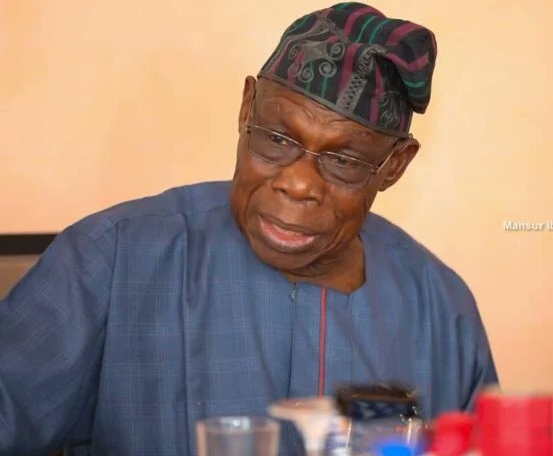
Each exchange between them—whether in press conferences or budget battles—added another layer to a relationship defined by mutual need and mistrust. Obasanjo saw Tinubu as too ambitious; Tinubu saw Obasanjo as too imperial. And yet, history would later prove that both men needed each other more than they could admit. The irony that Lagos trembled under in 2022 was born from those years of confrontation when pride, politics, and purpose danced in open conflict.
Tinubu’s 2022 Pilgrimage to Abeokuta
The convoy entered Abeokuta like a moving parable—sirens muffled, protocol sleek, and the air thick with political symbolism. Tinubu, then Nigeria’s most ambitious presidential hopeful, was not merely on a courtesy visit. This was pilgrimage dressed as politics, a journey into the heart of his past contradictions. The road to the Olusegun Obasanjo Presidential Library carried more than his motorcade; it carried history, irony, and the quiet suspense of redemption.
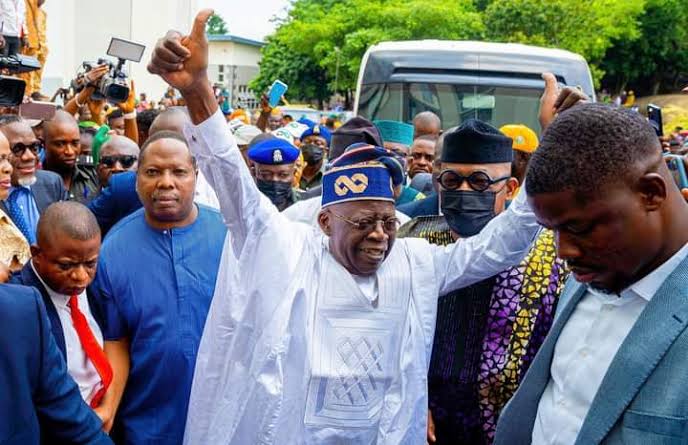
Those who remembered the early 2000s watched with a mix of admiration and bewilderment. Here was the same man who had once accused Obasanjo of tyranny, now walking the halls of reconciliation. Reporters stood outside the library compound, their notebooks trembling in their hands, aware that what was about to unfold would echo far beyond Ogun State. Tinubu’s every gesture was loaded with meaning. Every smile from Obasanjo carried the weight of a bygone rivalry.
Inside the room, the two men faced each other—one a retired general who had ruled twice, both as soldier and civilian; the other, a political strategist whose patience had outlived many empires. Tinubu bowed slightly, and the cameras clicked like mechanical witnesses. Then he said the words that would make Lagos tremble later that evening:
“You are our father. We are your children. I have come to pay homage.”
Those words did not simply dissolve their past; they reframed it. Lagosians who once saw Tinubu as the defiant governor standing alone against federal pressure now heard the same man calling his old adversary “father.” For a moment, the nation felt suspended between irony and reconciliation. Political analysts called it strategic humility; cultural observers saw it as Yoruba politeness; but the deeper truth was simpler—power, at its peak, must sometimes kneel to wisdom, or at least to appearance.
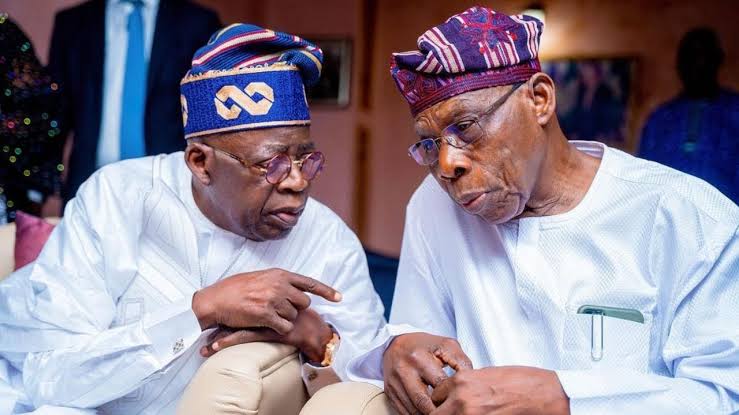
Obasanjo, ever the theatrical patriarch, accepted the gesture with a half-smile. The two exchanged pleasantries that sounded like forgiveness but felt like negotiation. Around them stood witnesses who understood the gravity of what was happening: the bridge between rebellion and reconciliation was being crossed before their eyes. What began decades ago as rivalry in Lagos had now matured into political theatre in Abeokuta.
Outside, the crowd murmured. For many, this was not just a handshake between two men—it was Lagos and Nigeria confronting their intertwined pasts. That day, the city that once defied Obasanjo’s federal might trembled not from fear, but from memory. The irony was complete, and the spectacle perfect.
The Irony Lagos Couldn’t Laugh Off
Lagos, that restless metropolis that measures time by tension, received the news like a gust through its narrow streets. The man who had once carried its grievances like a badge of honour had now embraced his old adversary in fatherly rhetoric. Newspapers splashed the moment across their front pages. Commentators dissected the symbolism on late-night radio. “The Lion of Bourdillon bows to the General of Ota,” one headline teased, half in jest, half in awe.
For ordinary Lagosians, the memory of the early battles was too fresh to ignore. They remembered the days when civil servants waited for withheld allocations; when Obasanjo’s presidency treated Lagos as the rebellious child of the federation. Tinubu’s defiance had then been their pride—a testament to a city’s refusal to be tamed. To now hear him call Obasanjo “father” felt like a reversal of emotional gravity. Was it forgiveness or fatigue? Reconciliation or political necessity?
Some saw it as a masterstroke of strategy. Tinubu, they argued, was not submitting but calculating. In a political landscape where power often flows from the blessings of elders, calling Obasanjo “father” was not surrender—it was acquisition. To gain the appearance of peace while securing the pathway to power was, in its own way, an art.
Others, however, saw a deeper irony—one that spoke to Nigeria’s cyclical amnesia. The same political class that once warred over principles had now found comfort in pragmatism. The handshake at Abeokuta seemed less about forgiveness and more about the choreography of ambition. Yet, beneath the public theatre, something more enduring was at play: the reconciliation of memory with necessity, of ego with endurance.
That day, Lagos trembled not because Tinubu bowed, but because the gesture reminded the nation that history is never finished—it only pauses between acts.
Power’s Circular Dance — From Defiance to Deference
History, when it comes to Nigerian politics, often moves in circles rather than lines. Enemies become allies, rivals share platforms, and words once spoken in rage are repurposed as courtesies. For Tinubu and Obasanjo, that circular dance was not coincidence — it was survival.
The 2022 visit to Abeokuta was preceded by months of political alignment. Tinubu’s presidential ambition needed the optics of national reconciliation. Obasanjo, long retired but still revered as a kingmaker, commanded symbolic authority few could ignore. Their handshake was therefore less about personal forgiveness and more about power choreography — a carefully rehearsed ritual for an audience that understood its subtext.
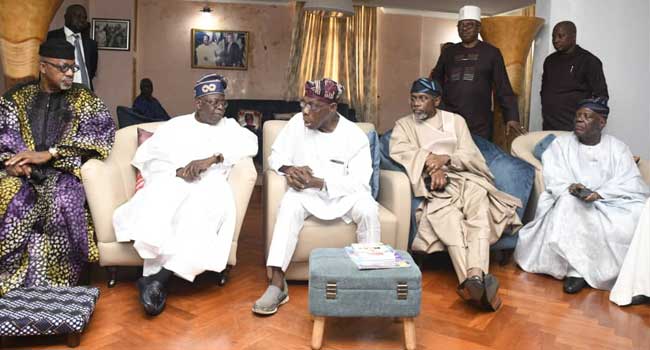
Political watchers saw the moment as vintage Yoruba diplomacy: elders and protégés playing out a script of respect, even when mutual suspicion lingered beneath the surface. But for Lagos, which once lived through their feud, the scene carried a moral irony. The same city that rose against central domination now watched its old champion fold his pride in the language of filial loyalty. It was the paradox of Nigerian politics — that strength sometimes dresses as submission.
Still, Tinubu’s move was not empty. In a culture where power often flows through the blessings of elders, humility can be a weapon. By calling Obasanjo “father,” he disarmed old enemies, softened old narratives, and recast himself as heir rather than antagonist. It was a performance that drew from Yoruba philosophy — where prostration can conceal defiance, and reverence can be strategic.
That day in Abeokuta, two generations of political mastery looked at each other and recognized themselves. The same tactical patience that once divided them now bound them. Lagos trembled not because its lion had bowed, but because the bow revealed how well the lion understood the theatre of power.
When History Watches Its Own Replay — The Meaning of Reconciliation in Nigerian Politics
Every few decades, Nigerian politics stages a familiar drama. The actors change costumes, their speeches take new tones, but the storyline remains eerily constant — reconciliation after rivalry, embrace after betrayal, homage after humiliation. From Awolowo and Akintola’s tragic split in the 1960s to Babangida’s later courtship of those he once detained, Nigerian politics has always rehearsed forgiveness as a form of strategy. Tinubu and Obasanjo’s moment fits neatly into that script — another episode where history folds back on itself.
This repetition is not accidental. In Nigeria’s political landscape, grudges are never final. They are suspended, stored, then reactivated when the logic of power demands it. The handshake that once seemed impossible becomes inevitable when interests converge. Tinubu’s public deference to Obasanjo was therefore not sentimental; it was institutional. It reflected how power in Nigeria renews itself — not by replacing the old order but by reabsorbing it.
That is why the scene in Abeokuta felt almost theatrical. Behind every smile, there was history’s echo — the sound of withheld funds, bitter letters, courtroom showdowns, and years of ideological estrangement. But beyond those layers stood a deeper truth: in Nigeria, politics is not about consistency but survival. To endure, one must know when to resist and when to bow. Tinubu’s genius, his critics and admirers alike would agree, has always been knowing the difference.
In calling Obasanjo “father,” he did not erase their feud; he framed it. He turned a history of defiance into a tableau of magnanimity, transforming an old battlefield into a public stage for renewal. Lagos trembled not because it doubted him — but because it understood what such gestures cost. For a man who once stood against the federal tide, humility was the rarest currency of all.
The irony was not lost on observers. Years before, Tinubu had accused Obasanjo of central tyranny, of strangling Lagos’s growth. Now, as he courted the presidency, he sought the same man’s blessing — proof that in Nigeria, yesterday’s resistance can become tomorrow’s ritual of respect. The cycle is eternal, the choreography unchanged. Power, like tradition, survives by remembering what it chooses to forget.
Closing Thoughts — The Bow That Echoed Through Lagos
Long after the cameras left Abeokuta, Lagos remained restless with memory. The city that had once survived on courage alone now watched its former governor master the subtleties of political grace. To some, his bow was betrayal; to others, brilliance. Yet beyond both readings lay the truth that Lagos had taught him: that pride and pragmatism often wear the same face.
What trembled that day was not Tinubu’s dignity, nor Lagos’s pride — it was the thin line that separates conviction from calculation in Nigerian politics. The man who once stared down the presidency had become the presidency itself, and the father he once defied had become his chosen symbol of reconciliation.
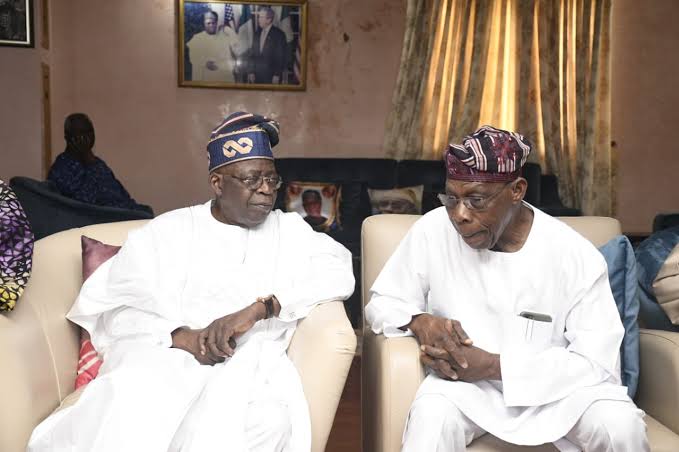
So the day Tinubu called Obasanjo “father,” Lagos did tremble — not out of fear or ridicule, but because it recognized the moment for what it was: history folding into irony, and irony finding its most eloquent stage in Nigeria’s eternal theatre of power.
Discussion about this post