


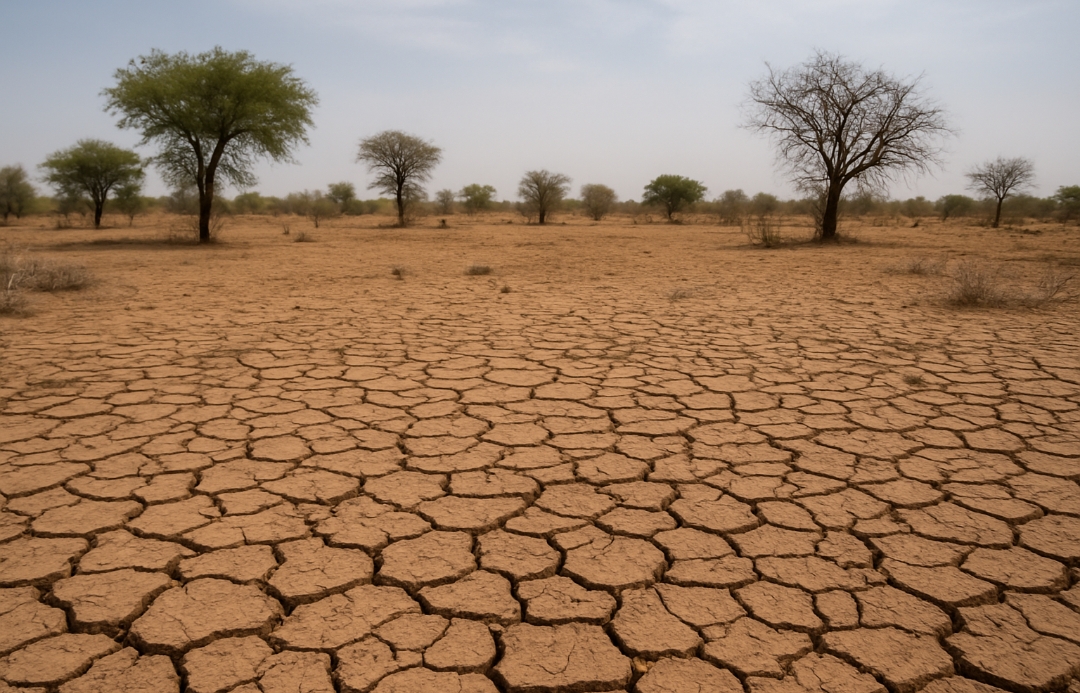

Desertification is steadily encroaching on northern Nigeria, threatening livelihoods and ecosystems in the region.
Experts say the phenomenon is driven by a combination of climatic changes and human activities that degrade the land.
Rising temperatures and reduced rainfall are major factors behind the worsening situation, making farming and grazing increasingly difficult.
Local farmers report that once-fertile land is turning barren, reducing the yields of staple crops such as millet, sorghum and maize.
Overgrazing, deforestation and unsustainable farming practices are accelerating soil degradation across the region.
When vegetation is removed faster than it can recover, the soil loses its nutrients and structure, making it more exposed and vulnerable to desertification.
Northern Nigeria has historically experienced arid conditions, but climate variability has intensified the problem in recent decades.
The United Nations Convention to Combat Desertification warns that if unchecked, desertification could lead to mass migration and food insecurity across the northern region.
Communities in Kano, Sokoto, and Borno states have reported that seasonal rivers and streams are drying up earlier than expected, affecting both agriculture and livestock.
Government agencies have initiated tree-planting campaigns and promoted alternative farming methods to slow land degradation.
Afforestation and the use of drought-resistant crops are increasingly seen as essential measures to sustain the livelihoods of people living in vulnerable areas.
Despite these efforts, population pressure and poverty continue to push people toward activities that further harm the environment.
In some areas, traditional practices like shifting cultivation are giving way to permanent farming on fragile soils, reducing natural regeneration of vegetation.
Meteorological data shows that annual rainfall in parts of northern Nigeria has declined over the past 20 years, while temperatures have increased, creating harsher growing conditions.
Community-based initiatives are being encouraged to monitor land use and educate farmers on soil conservation techniques.
Involving communities ensures that conservation practices are taken seriously and maintained over time, improving their effectiveness.
Desertification affects not only agriculture but also contributes to the loss of biodiversity, with some plant and animal species struggling to survive in degraded habitats.
Economic impacts are significant, as crop failures and livestock losses reduce household incomes and national food production.
Integrated approaches that combine environmental protection with rural development are being explored to address both ecological and social challenges.
Combining technology, education and traditional knowledge offers a sustainable path for land management in affected areas.
As desertification spreads, coordinated efforts involving government, communities and international partners are crucial to prevent irreversible damage.
Northern Nigeria faces a long-term struggle against desertification, and sustained action will be necessary to secure the region’s food, water and ecological resources.
Discussion about this post