The history of the Boko Haram crisis in Nigeria dates back to 2009 when the sect began its violent campaign against Nigeria. However, before the 2009 Boko Haram uprising, Nigeria was bedevilled by ethno-religious conflicts with devastating human and material losses. But the Boko Haram uprising of July 2009 was significant that it did not only set a precedent but also reinforced the attempts by conservative Islamic elements at imposing a variant of Islamic religious ideology on a secular state.
According to Abimbola Adesoji in her work “The Boko Haram Uprising and Islamic Revivalism in Nigeria” she posited that the Boko Haram uprising was not the first forceful attempt to impose a religious ideology on a secular Nigerian society. However, like the first significant attempt and subsequent small-scale attempts, it widened the scope of the efforts at Islamic revivalism. More significantly, despite the brutal suppression of previous attempts, the gallantry of the Boko Haram soldiers, the spread and swiftness of its military organization and the belief of its leadership – and perhaps its membership that it could successfully engage a modern state in a military duel all show an extraordinary commitment to the cause.
I agree with her position that the way and manner the Boko Haram sect has been able to engage a modern state in a military duel successfully shows not only an extraordinary commitment, but it further reinforces the conspiracy theory that states that some external forces might be the brain behind the resurgence of the activities of Boko Haram over the years.
Having stated the above, it is pertinent to do a critical analysis of the Boko Haram crisis and how the Nigerian Military has fared. In doing that, emphasis must be placed on certain variables such as quality of weaponry, professionalism, political will and effective military coordination.
Starting with the quality of weaponry of the Nigerian troops, there is no doubt that the Muhammadu Buhari administration has made a substantial investment in the procurement of arms and ammunition for the Nigerian Armed Forces since 2015. This commitment potentially eliminated that public concern about the lack of modern weapons in the prosecution of the Boko Haram war. But it wasn’t enough.
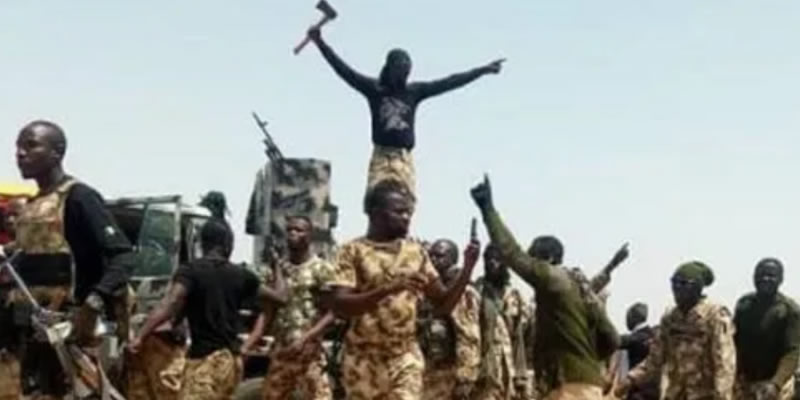
The issue of professionalism was also a factor that hindered the progress in the war against terrorism in Nigeria. This is so because, before the coming of the Muhammadu Buhari administration, we were regaled with tales on how soldiers would embark on tactical retreat and scamper for safety when they come face to face with the Boko Haram fighters. I dare say that the morale of the troops was at the lowest ebb and this translated into the inability of the troops to lead a sustained offensive against the Boko Haram terrorist group.
The political leadership at that time didn’t wield enough political willpower in ensuring the defeat of the Boko Haram sect. In some quarters, it was said that the lackadaisical attitude by the political leaders was deliberate. Be that as it was then, the Boko Haram group grew in strength and numbers and they laid siege to the country.
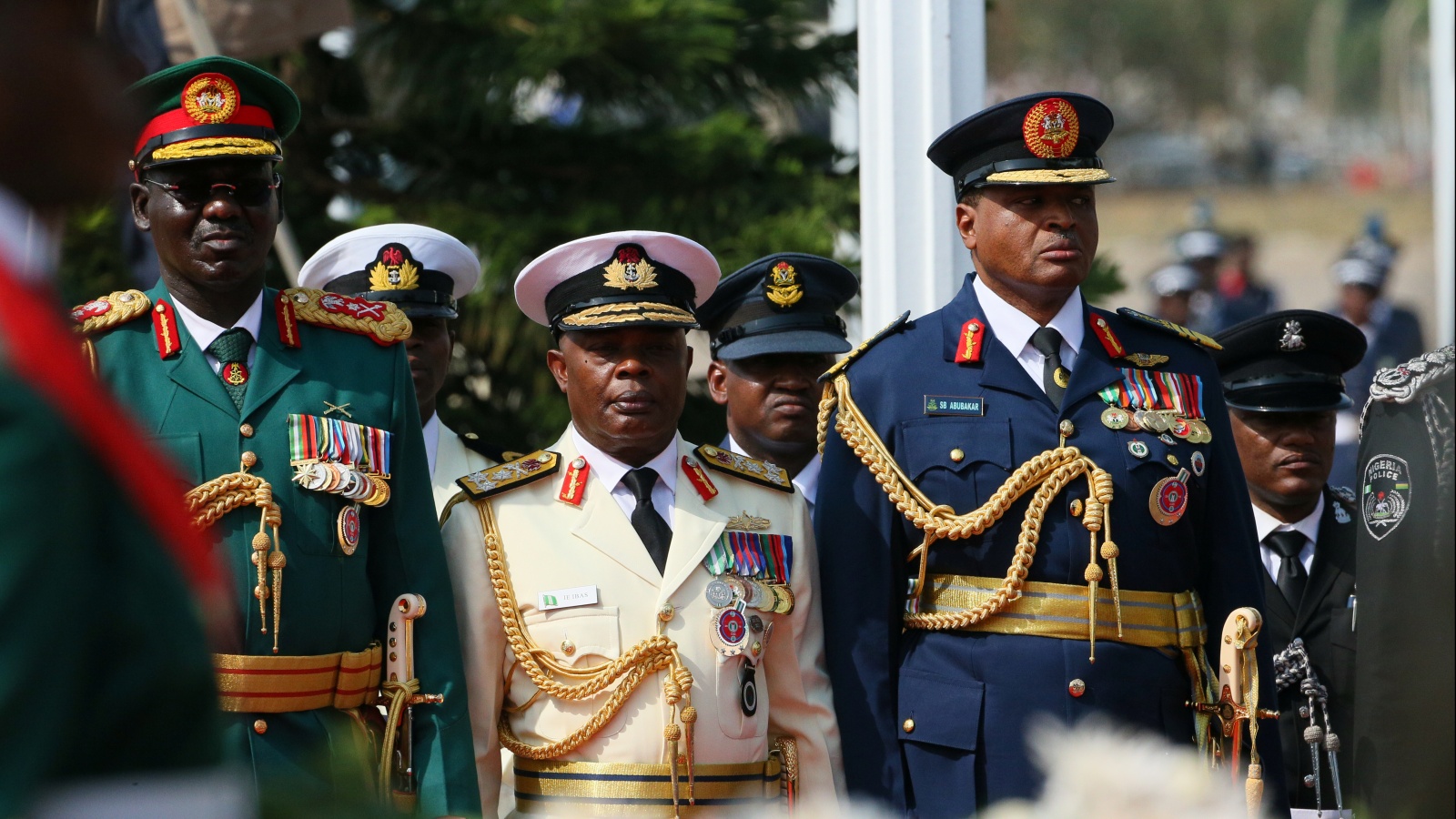
The issue of effective military coordination is one that if taken seriously, Nigeria would win the war against terrorism in no distant time. A good example can be seen in the recent relocation of the Chief of Army Staff to the theatre of operations, where several accounts state that he has been coordinating the counter-terrorism operations.
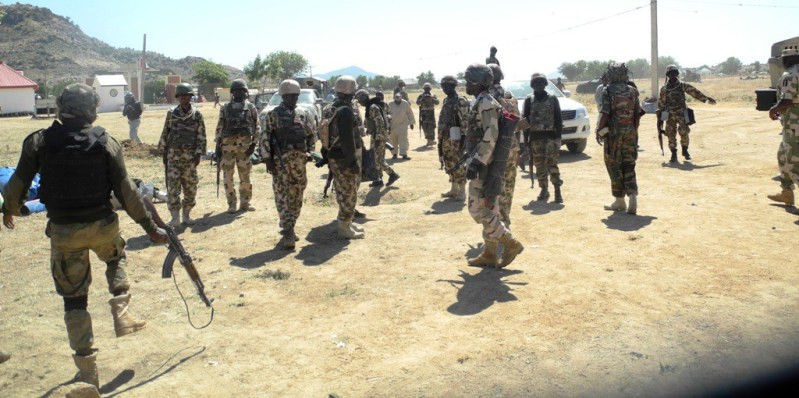
It must be stated that the last few months have witnessed a sustained military onslaught against the Boko Haram terrorist group and this is could be attributed to the presence of the Chief of Army Staff in the trenches with the troops, as well as the cooperation of other services like the Air Force, the DSS and the Nigerian police.
This is indeed commendable and reinforces the views of renowned peace and conflict studies expert, Prof Isaac Olawale Albert, who asserted that these collaborative efforts are often complex, requiring integration of the full range of multiple missions and occasionally crossing the boundaries of civilian, intelligence, homeland security, and military agencies.
In these situations, cross-functional and cross-agency teams jointly apply centralized control and decentralized execution to coordinate adaptable and agile efforts against security threats posed by Boko Haram. He further asserted that centralized control and decentralized execution exerts control through clear guidance and accountability. It also increases execution ability and agility by delegating authority to those with the precise knowledge and capability to execute.
So, therefore, inter agency collaboration in the war against terrorism in Nigeria has created and leveraged on superior knowledge in the battle space, it has also enabled the decision of superiority, and reduced operational risk, while increasing the pace, coherence, and effectiveness of military operations.
The Chief of Army Staff is singled for commendation in this regard because he has demonstrated that effective military coordination is essential for the final victory over the Boko Haram/ISWAP group.
Another example of effective military coordination is the decision by Chad and Niger to expel Boko Haram/ISWAP terrorist from the fringes of their countries. The implication of the above is that there would be no hiding place for training and regrouping.
This was made possible from the renewed commitment from the Multinational Joint Task Force at the instance of the Chief of Army Staff. Lt. Gen. Tukur Buratai, who has in recent times taken the bull by the horns by ensuring that there is effective military coordination in the theatre of operations in North-East Nigeria.
According to Ifure Ataifure, genuine leadership inspires confidence, trust and innate followership. It provides direction and sets the agenda, as well as defines timeframes of accomplishing identified targets. Nigerians often say an ideal leader is one who markets himself as servant-leader to the people. But it takes courage to resist the temptation of bossiness to condescend to such levels.
Lt. Gen. Tukur Buratai in all gradations embodies the strength of leadership courage. Leading an Army to victories against terrorism and insurgencies in Nigeria is a grueling task. It demands much more than kitting troops; restocking armories’ and ferrying soldiers to the frontline for battles.
It requires courage to enforce Rules of Engagement (ROE), discipline, and implement indiscriminate redeployment of troops and even the courage to take the war to the doorsteps of the enemies. Gen. Buratai’s courage in leadership knows when to condescend to the level of his troops; knows when the spirit of his troops is dampened and what tonic he can administer to animate it.
This explains why he has made it a conscious policy to persistently visit troops at the frontline, spend nights and devote a good time to them in the open fields; hook them unto interpersonal interactions to understand their feelings and insight into their peculiar problems.
It is thus my considered opinion that the significant difference experienced so far in the war against terrorism in the North-East of Nigeria points in the direction of effective military control as led by the Chief of Army Staff, Lt. Gen. Tukur Buratai.
Agbese is a PhD student working on Oil and War in the United Kingdom.