

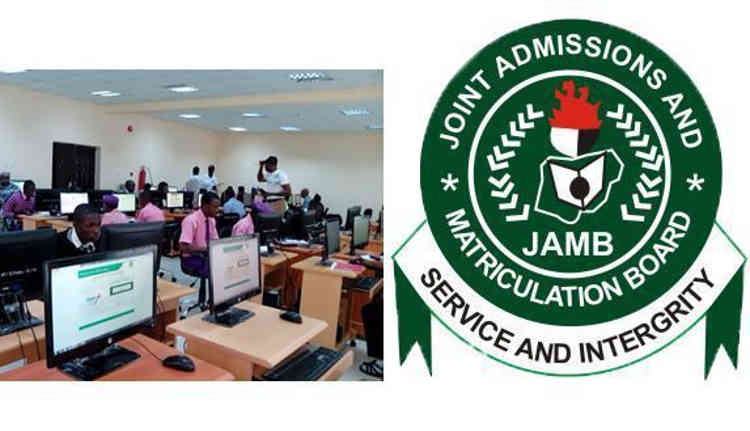
The Joint Admissions and Matriculation Board (JAMB) on Wednesday, October 8, screened 176 underage candidates who scored high marks in the 2025 Unified Tertiary Matriculation Examination (UTME).
Recall that the official age for university admission in Nigeria is 18 years, although the National Policy allows entry from the age of 16.
Findings revealed that a total of 41,027 candidates applied under the category of exceptionally brilliant underage candidates for the 2025 UTME, but only 599 scored 80 percent and above.
Some underage candidates were reportedly disqualified for not meeting the same benchmark in their O-Level or Post-UTME results, leaving only 176 confirmed for final assessment.
The screening was apparently carried out concurrently in Abuja, Owerri, and Lagos. The goal of the screening was to ensure that only outstanding and well-prepared individuals under the age of 16 were considered for admission to postsecondary institutions for the 2025/2026 academic year.
WITHIN NIGERIA observed that there are differing opinions on whether underage students should be admitted to university education.
Some suggested that underage pupils can benefit from accelerated learning possibilities, stating that early enrollment can give them a head start in their professions.
Others argued that underage students may not have the emotional maturity and social experience to thrive in a university setting. They also worry about potential negative impacts on the student’s physical and mental health, as well as potential gaps in their social development.
WITHIN NIGERIA contacted some Nigerians, particularly experts and those in academics, to share their views about the development.
Aderemi Ogunmodede, a lecturer at the University of Ilesa, told WITHIN NIGERIA that it is an aberration for JAMB to screen candidates for university admissions.
He stated that the university has autonomy either to admit or reject candidates for admission.
He further stated that the UTME may not fully capture a candidate’s ability or potential, especially since some students perform poorly under standardized testing conditions.
According to Ogunmodede, issues like computer-based test malfunctions, network failures, or errors in result processing can unfairly affect a candidate’s chances.
He concluded that giving JAMB too much control can slow down the admission process and reduce institutional independence and flexibility.
Eze Chidera, a public analyst and legal practitioner, while conversing with WITHIN NIGERIA, believes that age should not be a barrier to attaining certain educational heights.
Chidera argues that any student that passes any exam already proves that he or she is academically sound, and such a student should be allowed to climb the next academic ladder.
“Self-confidence and self-control are not affected by age. Vulnerability is also not defined by age. The claim that any child below 16 is vulnerable is not entirely true. Besides, the policy of denying students who pass the right exams into university is against the constitution under chapter 2 of the CFRN,” he concluded.
Rasheed Adegoke, an IT expert and public analyst, told WITHIN NIGERIA that the concept of someone who has put in the effort to gain knowledge and understanding to sit for a tough examination like JAMB and pass it being labelled as underage is very strange and illogical.
Adegoke argues that there is no empirical evidence that shows moral maturity is linked to age to automatically disqualify people below such a threshold.
He stressed that it is unfortunate that such an arbitrary limit or barrier has been set for admission purposes.
According to Adegoke, we should set standards that govern the level of attainment that must be met to classify a child as gifted, and stringent standards should be established in schools to prevent discretionary “double promotion” or skipping of a class year into fast-track completion.
“We should also mandate civic, moral, and citizenship or other mandatory curriculum that must be taken by all and which must not be skipped under any circumstances. However, using age as an admission barrier or criterion isn’t something I personally subscribe to. I am yet to see what value it adds to our educational outcomes,” he concluded.
Abidemi Adebamiwa, a journalist and public relations expert, praised JAMB for scrutinizing young candidates, especially because they had already been allowed to take the examinations.
He argued that once JAMB opens the door for them to compete, it is only fair to properly access and guide them through the next step, claiming the screening in this case is not discrimination but inclusion done responsibly.
Adebamiwa advocated that it should go beyond academics, stating that young minds entering an adult environment should be mentored properly.
“Although their brilliance deserves recognition, they also need mentorship and emotional support to thrive. Screening them makes sense, but supporting them afterward is what will truly make the process meaningful,” he concluded.
Lukoye Demola, a law teacher, told WITHIN NIGERIA that the Joint Admissions and Matriculation Board (JAMB)’s move to adopt screening processes for candidates under the legal age for university admission is, at its core, a positive initiative.
The Ife-born legal practitioner further disclosed that the policy resonates with the fundamental educational and psychological readiness that is essential for succeeding in higher education.
According to Lukoye, universities are tailored for individuals who exhibit a noteworthy level of maturity across three critical dimensions: intellectual, emotional, and social.
“Allowing the admission of underage candidates, typically those under 16 years old, could subject them to excessive academic and social pressures that may obstruct their comprehensive development and overall well-being,” a rather concerned Lukoye said.
By imposing this screening, JAMB is not only upholding strict academic standards, but also emphasizing the welfare of young learners, ensuring they are not overwhelmed in a difficult educational environment, he added.
“Nonetheless, I harbor concerns regarding the practical implementation of this policy. Nigeria’s educational landscape is highly variable; many students experience accelerated advancement through private institutions, while others may face delays in their academic journey due to socio-economic factors or inadequate infrastructure.
Sunday Charles Adeyemo, a medical doctor and academic enthusiast told WITHIN NIGERIA that he is in support of underage applicants being considered for university admission.
According to Adeyemo, students who write JAMB UTME and pass should be good enough to be considered for admission.
Adeyemo argued that Nigeria is a plural society with diverse ethnic groups, and maturation varies from one geopolitical zone to another; to peg the age of admission into university would amount to limiting the potentials of these young lads.
He stressed that students might end up being tools for bandits and terrorists because an idle hand is a devil’s workshop.
“In the UK, where such age restrictions exist, there are provisions for further education and apprenticeship programs in colleges sponsored by the government, which keep students busy until age 18. In a country where most universities often experience disruption in the academic calendar due to the ASUU strike, allowing these future leaders to start early won’t be out of place,” Adeyemo further disclosed.
Josiah Ucheawaji told WITHIN NIGERIA that the screening is in order, especially if the country will avoid policy somersaults where the ‘goalpost’ is shifted when there is personal interest and then maintained with all strictness when there are no interests to protect.
According to Ucheawaji, there are rationales for JAMB screening of underage candidates for university admissions. Some of the rationale is legal (Child Rights Act of 2003), which fixes adulthood at 18 years.
The associate professor at Adeleke University disclosed that JAMB and NUC have jointly agreed on 16 years, which is 2 years below the stipulated 18 years of age.
“I feel that the child rights act is to protect underage people from a lot of vices in the university setting. University education requires maturity in the affective domain, cognitive development, and social adaptation that many underage students may not attain”.
“I also feel that JAMB and NUC are trying to align with global education norms, where most universities expect entrants to be around 17–18 years old with post-secondary school completion.”
Wale Tijani, PhD, a lecturer and educator, told WITHIN NIGERIA that JAMB is entitled by law to conduct and regulate admission into tertiary institutions in the country.
According to Tijani, the examination body, in line with the National Policy on Education and the regulatory framework of the Federal Ministry of Education, conducts exams and sets requirements for admission in the country.
He, however appealed that the screening process should be fair and transparent and gives room for redress.
“I believe the admission age into the university still stands at 16 (for exceptional students, though). Anyone below this age, as stipulated, should not be allowed into the system except on a rare occasion objectively. Such exceptionality must be objective and independently verifiable,” he added.
Tunde Omole, a child advocate and education rights activist, told WITHIN that he does not subscribe to the idea of pegging the age of admissions of students into institutions of higher learning.
He, however, differed in that some students are exceptionally gifted in learning and character and should not be denied the opportunity of progressing in their chosen course of study.
“We have seen and read about exceptional situations in Nigeria and globally where some students are deemed to be underage but are excelling academically and regarded as geniuses, and they grow to contribute to the holistic development of humanity and society in their chosen field.”
I will suggest that the policy should be reviewed and ensure that the purpose of putting it in place should not be a clog in the wheel of educational progress of our teeming adolescents and young people, he urged.
Ayoade Adewopo told WITHIN NIGERIA that the recent decision by the JAMB to screen 176 underage candidates is a prudent and necessary measure that prioritizes the long-term welfare of these young scholars.
Adewopo, who acknowledged that some students’ intellectual gifts are undeniable, further posited that academic prowess is only one facet of the readiness required for the demanding environment of higher education.
According to Adewopo, university life presents significant social and emotional challenges, from navigating complex peer relationships and managing newfound independence to coping with academic pressure away from the support structure of home.
“A screening exercise is not a punitive barrier but a vital diagnostic tool to ensure that a student’s overall development is in step with their cognitive abilities, thereby safeguarding them from potential psychological distress and social isolation that could derail their academic journey.”
“Furthermore, this proactive approach by JAMB serves to protect the integrity of the educational experience for all students. Placing a chronologically and emotionally immature student into a lecture hall or a dormitory designed for older adolescents can create disruptive dynamics for both the individual and their peers.”
The screening process allows educators to identify those exceptionally mature young students who are truly prepared, while also guiding others toward a more suitable transitional path, such as specialized foundation programs.
“Ultimately, JAMB’s initiative should be applauded as a forward-thinking policy that champions holistic student success over mere procedural admission. By implementing this screening, the board is acting as a responsible guardian, making a crucial investment in the future of these gifted children.”
Abioye Oyewusi, a lecturer at Adeleke University, told WITHIN NIGERIA that the law prohibiting underage admittance into tertiary institutions is good and should be appropriately enforced.
Oyewusi stated that there is a required level of composure and maturity that is required for excellence and survival at tertiary institutions, which is missing from most underage applicants.
“Having academically gifted but mentally and emotionally underdeveloped ‘kids’ roaming the corridors of our ivory towers opens the way for abuse and manipulation of these vulnerable children. The corrective step should start at the primary level. Schools at all levels must ensure students are of the appropriate age for each class grade.”