

Some nights feel normal until they explode. Eruku on November 18, 2025, looked like any other evening: lights glowing from the Christ Apostolic Church, soft murmurs of prayer, people settling into service. But around 6 p.m., the quiet cracked. Gunshots tore through the calm, screams bounced off walls, and what was supposed to be a sanctuary became a blood shedding zone.
Nobody knew it then, but by sunrise, the story would be all over timelines, WhatsApp groups, Instagram stories. Ordinary Nigerians watched in horror. Celebrities, who usually post fun stuff or shout-outs, started speaking up. And man, their words were heavy — some angry, some heartbroken, some flat-out begging for justice.
Chaos in the Holy Space
The attackers weren’t many, but five men with guns were enough. They stormed the church like they owned it. Worshippers ran, hid under pews, tried to grab kids, tried to make sense of a situation that didn’t make sense. Belongings were snatched, panic became the only soundtrack, and the evening service ended in blood and fear.
Three were dead that night: Tunde Asabe, Segun Alaja, and Aderemi. The reports about the missing were sketchy — some said up to ten people had been kidnapped, maybe even the pastor. A young girl lay shot in the neck. Segun Alaja, the vigilante, was rushed to ECWA Hospital. People couldn’t stop asking: Why now? Why here?
Police and local vigilantes eventually forced the bandits to run into the bush, and the military came later. But for the Eruku people, it was too late. Weeks of distress calls had been ignored. Frustration and fear simmered like soup on a hot stove.
Celebrities Feeling the Pain
When news spread, social media turned into a chorus of outrage and heartbreak.
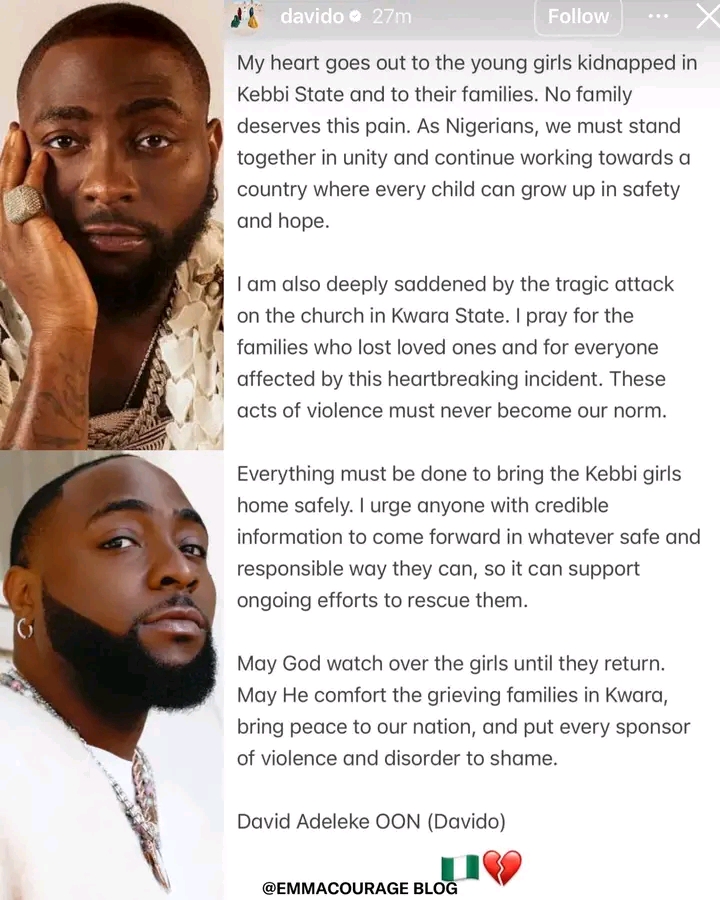
Davido didn’t hold back, He said no family should go through this and prayed for the girls abducted in Kebbi, too. Then he went further, calling for shame to hit anyone sponsoring such madness. That wasn’t just words — that was raw anger wrapped in hope.
Funke Akindele cried, She literally shared her heartbreak watching the livestream — especially the old woman trying to run, struggling, and shaking. She pleaded, “They are harmless citizens… for God’s sake!” Her message didn’t need polish; it felt like someone next to you screaming in disbelief.
Falz had the political edge, He said the government was showing unwillingness to protect its citizens and basically asked, how many more people must die before you act? Social media activists and Verydarkman joined in, highlighting gaps in security and questioning how people got assault rifles so easily.
Faith and Fury
Gospel singers didn’t just mourn; they demanded divine intervention.
Nathaniel Bassey posted prayers calling for judgment on bandits, kidnappers, and sponsors of terror. Dunsin Oyekan referenced Psalms and practically shouted at God and humans alike: “Enough is enough.” Pastor Jerry Eze was fiery: “About time, God of judgement spare no enemy of Nigeria … Enough of this Banditry, Terrorism and Wickedness.”
Faith here wasn’t soft, It was sharp, urgent, angry. It was faith saying, we need justice now, and if humans can’t do it, something higher must.
Comedy and Critique
Even comedians got serious.
AY called Nigeria a crime scene, pointing out attacks on schools, churches, and public officers. Mr Macaroni went harder, calling the government callous and tone-deaf. They weren’t joking; their usual humor vanished. The anger in their posts reflected what ordinary citizens were screaming on the streets.
Even social media campaigns picked up. Aproko Doctor launched #EndTerroristsKillingInNigeria, rallying public attention and creating a digital army of outrage.
Personal Stakes Hit Close
Some reactions weren’t just moral or political; they were deeply personal.
Bukola Arugba revealed three relatives were abducted — her aunt and a cousin’s son among them. Her posts weren’t polished; they were raw, angry, and demanding honesty from authorities who had downplayed the attack.
Jaywon, who had faced backlash for speaking about insecurity earlier in 2025, added his voice again. Other celebrities like Kate Henshaw and Kiddwaya called out leadership failure and social media spectatorship, reminding Nigerians that sitting online isn’t enough.
Heartbreak All Around
Others expressed despair in ways that hit like gut punches. Victoria Orenze referenced the dead, abducted girls, and suffering — “My heart hurts,” she wrote. Saskay felt like hope had abandoned the nation: “Maybe God has forsaken Nigeria. This is too much to bear.” The emotional weight of these posts was messy, raw, human.
It wasn’t just grief. It was fear, anger, frustration, and exhaustion all in one. Social media became the mirror reflecting a nation too tired to keep quiet, too pained to remain still.
Outrage into Action
The voices of celebrities gave oxygen to protests and public calls for action. Youths blocked roads, demanded accountability, and insisted government officials respond properly. Social media amplified the pressure, turning private heartbreak into national scrutiny.
Collectively, the celebrities weren’t just commenting; they were mobilizing. Their influence became a tool to challenge impunity and demand change. #EndTerroristsKillingInNigeria was no longer just a hashtag; it became a moral statement.
Moral Reckoning
The Eruku attack revealed something bigger than a violent incident. It highlighted leadership failure, community vulnerability, and a nation’s fatigue. But the public outcry — amplified by celebrities — showed that grief could be transformed into pressure for justice.
Faith, anger, empathy, and moral insistence collided in these reactions. Celebrities, sometimes raw and imperfect, reminded the nation that silence isn’t neutral. Their words became a mirror, showing Nigeria what it looks like to care deeply, visibly, and urgently.
Leaving With This: From Chaos to Conscience
Eruku was a tragedy. But beyond the dead and missing, beyond the fear and grief, the story of this attack lives in the collective conscience. Celebrities transformed pain into voice, and voice into demand. They reminded the country that tragedy can’t become routine, that faith can speak loudly, and that moral courage often starts in the public eye.
Panic, prayer, and protest converged in one small town that day — but the ripples reached the far corners of a nation watching, feeling, and slowly demanding accountability.




Discussion about this post