


A wave had settled over Toronto the November 2025 night Olamide spoke. Words carried more than sound—they carried weight, legacy, and expectation. When he named Wizkid the greatest Afrobeats artist after Fela, the room seemed to pause, the air thick with questions unasked. No fanfare announced a battle; no drum heralded a victor. Yet the implications rippled instantly, reaching beyond studio walls into the streets of Lagos, the global stages of London and New York, and the minds of rivals watching from every corner of Afrobeats.
There was no immediate applause, no instant agreement. Only the slow recognition that history had been referenced and perhaps rewritten in a single breath. The declaration was not merely praise—it was a judgment, a reckoning. And within that reckoning lay questions about the positioning of Burna Boy and Davido, two giants whose own shadows stretch across continents. Would this judgment reshape perceptions of influence, artistry, and legacy? Or would it ignite subtle contests invisible to the casual observer?
Even casual listeners understood that Afrobeats had transformed. From Fela’s revolutionary horn lines and political defiance to Wizkid’s global collaborations and cross-genre experimentation, the genre had become a language of influence and ambition. Olamide’s words were a recognition of that evolution, but also a challenge, a spark that invited reflection. Greatness is rarely a solitary designation, and in naming one, others inevitably emerge under new scrutiny.
By the end of that declaration, it was clear that the discourse had only begun. The conversation would not be confined to tweets or headlines; it would wind through studios, streets, and international award stages. This story is about that unfolding, the historical context, the musical legacies, and the human choices that define greatness in Afrobeats. It is a narrative that navigates admiration, rivalry, and the invisible lines connecting music to memory, culture, and identity.
The Historical Weight of Fela Kuti and the Foundation of Afrobeats
Fela Kuti’s influence on contemporary music is often measured in decibels, but it resonates far beyond volume. His compositions intertwined political protest with infectious rhythm, creating a framework that Afrobeats artists inherit, contest, and reinterpret. From Lagos to Accra, from local clubs to international festivals, Fela’s soundscape remains the standard against which ambition is gauged. Every horn, percussion line, and lyrical protest is a thread in a tapestry of cultural assertion, a reminder that greatness demands both artistry and conscience.
Wizkid’s placement beside Fela in Olamide’s judgment is therefore not casual. It evokes a lineage, a musical genealogy tracing contemporary Afrobeats to its revolutionary roots. In studios across Nigeria, young producers nod knowingly; older musicians recall the sweat of rehearsals in crowded clubs where Fela’s music was both mantra and challenge. Wizkid embodies the global translation of that legacy, the bridge between past rebellion and contemporary celebration.
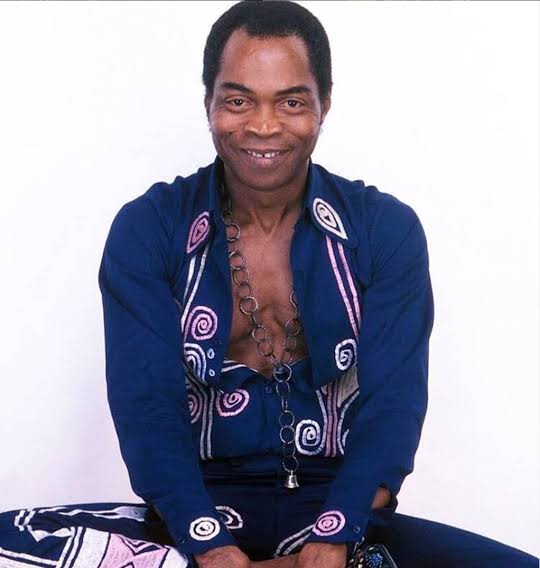
This positioning also highlights the complexities of comparison. Where Fela’s greatness was as much about sociopolitical disruption as sonic innovation, Wizkid’s renown emerges from global collaborations, chart-topping hits, and strategic brand building. Olamide’s recognition implicitly weighs both, suggesting that impact can be measured across dimensions, not merely within tradition.
Afrobeats, like any evolving genre, thrives on conversation between past and present. Olamide’s judgment illuminates the tension inherent in that dialogue: the reverence for foundational figures and the acknowledgment of those who expand the boundaries. It is not just praise; it is a codified understanding of cultural stewardship. The statement demands analysis not only of individual talent but also of influence, reach, and the ways music shapes collective memory.
Wizkid’s Global Ascendancy and the Metrics of Influence
Wizkid’s rise is a study in strategy, adaptability, and international resonance. From his early Lagos recordings to collaborations with Drake, Beyoncé, and international pop icons, his sound has traveled beyond borders without abandoning its roots. Recognition beside Fela by Olamide therefore reads as acknowledgment of cultural translation as much as musical innovation. The global metrics of streams, awards, and sold-out shows all testify to a level of influence few artists achieve.
The comparison to Fela is complicated by context. Fela’s Africa was politically charged, with state surveillance, social unrest, and cultural resistance shaping every beat. Wizkid’s Africa is globalized, digitized, and commercially networked, where influence often intersects with brand, social media, and market positioning. Yet Olamide’s judgment seems to bypass these distinctions, highlighting the continuity of impact rather than method. Impact becomes the language of greatness, and Wizkid’s fluency in it earns him the nod.
Global influence, however, is not merely about numbers or collaborations. It encompasses cultural imagination, the ability to create symbols and soundscapes that resonate across societies. Olamide’s judgment signals recognition of that capacity in Wizkid, implicitly urging peers to consider their own trajectories not only through domestic dominance but through sustained, cross-continental resonance. The ripple effect touches creative choices, collaborations, and strategic positioning in an ever-competitive global market.

Olamide’s Role as Arbiter and the Politics of Praise
Olamide occupies a unique position within Afrobeats, straddling creation, mentorship, and cultural commentary. His collaborations with Wizkid have spanned over a decade, blending personal artistic experience with public influence. In naming Wizkid beside Fela, Olamide acts as both witness and judge, using his authority not only to celebrate but to frame a narrative of legacy. This duality gives weight to his words, transforming casual praise into historical assertion.
The declaration also exposes the subtle politics of Afrobeats recognition. In a landscape crowded with talent and ambition, endorsements carry strategic significance. They shape audience perception, influence media narratives, and, indirectly, affect award considerations. Burna Boy and Davido, with their own expansive careers, are inevitably filtered through this lens. The judgment creates a hierarchy, but one rooted in aesthetic and cultural influence rather than mere competition.
Olamide’s assessment reflects the interconnectedness of collaboration and admiration. Musical alliances often blur lines between personal preference and cultural authority. By positioning Wizkid beside Fela, Olamide validates the artist’s international reach and enduring relevance, signaling to peers that greatness is both historical and contemporary. The choice is both celebratory and instructive, a subtle commentary on ambition, timing, and cultural literacy in Afrobeats.

Burna Boy and Davido in the Shadow of Olamide’s Verdict
The Afrobeats landscape is crowded with figures whose influence stretches across continents, yet few are measured in the same breath as Fela or now Wizkid. Burna Boy’s rise has been meteoric, defined by Afro-fusion mastery that blends highlife, reggae, dancehall, and pop sensibilities. He commands global attention through deliberate collaborations, festival appearances, and an outspoken persona that mirrors the intensity of Fela’s early career, though reframed for a different era. Davido, in contrast, merges commercial appeal with cultural fidelity, delivering melodies that dominate both airwaves and digital platforms while remaining rooted in Nigerian rhythms. Both are giants, yet Olamide’s statement implicitly questions how they compare when a contemporary peer—Wizkid—is positioned beside a legend.
The weight of Olamide’s judgment extends beyond popularity metrics. By placing Wizkid alongside Fela, he signals that greatness in Afrobeats is measured not merely by streams, social media virality, or awards, but by the ability to bridge history and modernity. For Burna Boy and Davido, this recalibration forces reflection: how does one honor roots while simultaneously carving a global identity? The judgment challenges them to reconcile domestic dominance with international resonance, a balance that can define enduring legacy.
Artists thrive in dialogue with their contemporaries, and Olamide’s pronouncement acts as both mirror and challenge. It positions Wizkid as the focal point for narrative discourse, compelling rivals to assess the interplay between cultural preservation and innovation. Burna Boy’s socially conscious themes and Davido’s melodic versatility now exist within the broader conversation of generational succession, highlighting the subtle politics of recognition and the unspoken metrics by which Afrobeats greatness is assessed.
Yet, this judgment is not a declaration of defeat for Burna Boy or Davido. Instead, it illuminates the competitive interdependence that fuels creative evolution. By situating Wizkid in Fela’s shadow, Olamide establishes a framework through which contemporary artists can be evaluated, inspiring recalibration of strategies, collaborations, and artistic experimentation. This is the quiet gravity of influence—an invisible pressure that shapes both perception and creative output across the genre.

The Metrics of Greatness and Cultural Resonance
Determining Afrobeats’ hierarchy is never straightforward. It is a balance of artistry, global reach, historical awareness, and cultural resonance. Wizkid’s placement beside Fela by Olamide highlights the criteria: international impact, consistency, and the ability to maintain authentic African roots while engaging global audiences. His collaborations with artists like Drake and Beyoncé are not merely commercial achievements—they are symbolic translations of cultural identity into a universal lexicon. Olamide’s judgment recognizes both achievement and the symbolic weight carried by musical diplomacy.
For Burna Boy and Davido, the metrics of greatness are similarly multifaceted. Burna Boy’s Grammy recognition and chart performance testify to commercial and critical acclaim, yet Olamide’s perspective emphasizes qualitative influence—how music shapes cultural perception, inspires other artists, and defines eras. Davido’s domestic dominance similarly illustrates reach and loyalty, though global positioning remains a nuanced terrain where perception intersects with legacy. The comparative framework Olamide sets invites analysis of long-term relevance rather than short-term acclaim.
Cultural resonance extends beyond music itself. Fashion, public persona, activism, and the narratives artists cultivate all contribute to the weight of legacy. By crowning Wizkid after Fela, Olamide gestures toward a synthesis of these dimensions. He underscores the significance of adaptability, foresight, and the capacity to define generational identity. In this light, the judgment is as much about cultural leadership as it is about musical output, highlighting the interplay between artistry and societal influence.
Finally, metrics of greatness involve public interpretation. Fans, critics, and contemporaries collectively negotiate the meaning of legacy, amplifying or contesting judgments like Olamide’s. In positioning Wizkid, he both acknowledges popular consensus and asserts an authoritative narrative that invites debate. This interplay between authority and perception demonstrates that Afrobeats greatness is a living construct, evolving with each collaboration, performance, and international recognition.
Rivalries and Collaborations Shaping Legacy
Afrobeats thrives on relationships—both competitive and collaborative. The positioning of Wizkid beside Fela in Olamide’s statement implicitly casts Burna Boy and Davido into relational frameworks. Rivalry and collaboration operate as twin engines, driving creative evolution and influencing public perception. History has shown that great artists often emerge through negotiation of these dynamics, whether through direct musical partnerships or implicit positioning within cultural hierarchies.
Collaborations between these artists have punctuated Afrobeats’ evolution. Olamide himself has long partnered with Wizkid, blending YBNL rap sensibilities with melodic Afrobeat flows. Burna Boy’s collaborations often merge Afro-fusion and global pop, while Davido’s partnerships traverse electronic, pop, and hip-hop landscapes. Each choice reflects strategy, taste, and cultural negotiation, highlighting how individual trajectories are inseparable from the ecosystem of relationships surrounding them.
Rivalry, in contrast, fuels public fascination and narrative depth. Fans compare catalogues, performances, and awards, while critics parse influence and innovation. Olamide’s judgment intensifies this landscape, offering a definitive—or at least authoritative—lens through which to measure contemporary greatness. Burna Boy and Davido are cast not as losers but as active participants in a narrative where creative rivalry intersects with historical consciousness. The dynamics push artists to refine their craft, innovate strategically, and expand cultural reach.
Closeout: The Verdict that bridges Eras and redefines Greatness
Olamide’s declaration positions Wizkid not merely as a chart-topper, but as a bridge between eras—a living link from Fela’s revolutionary pulse to the contemporary rhythms that dominate the world stage. For Burna Boy and Davido, it is a quiet reckoning: greatness is measured not only in numbers or hits, but in the way one shapes culture, inspires peers, and defines the sound of a generation.
In that single pronouncement, Afrobeats is cast as a continuum where history and modernity collide, where legends converse across decades, and where influence is as much about presence as it is about acclaim. The judgment lingers like a chord unresolved, inviting reflection, stirring ambition, and redefining what it means to leave a mark. In Olamide’s eyes, Wizkid stands beside Fela—not to overshadow, but to illuminate the path forward for an entire generation of artists and audiences alike.
The story is far from finished. Yet in that judgment, one truth resonates: greatness is never inherited; it is observed, challenged, and forever rewritten.