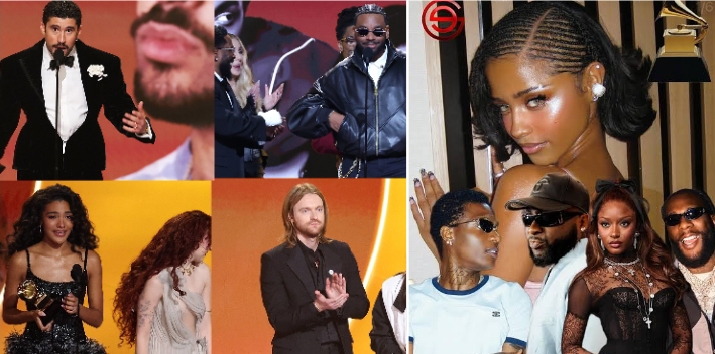
The air in Los Angeles felt charged with anticipation on the evening of February 1, 2026. The 68th Annual Grammy Awards promised more than a showcase of musical talent, it was shaping up as a night where reputations would be solidified and expectations defied. Fans had stayed up late, analysts had debated, and industry insiders whispered about the potential surprises waiting to unfold on the stage.
The lights, the cameras, the red carpet chatter all set the stage for moments that would be dissected for months to come. What was expected to be a celebration of familiar names became a battlefield of talent, timing, and judgment. From pop sensations to global heavyweights, from hip-hop innovators to African music icons, every nomination carried weight, and every win told a story.
The Grammys have long been a mirror of the music industry, reflecting trends, power shifts, and cultural impact. In 2026, the awards carried an even deeper resonance. Latin music, global rhythms, African pop, and electronic innovations were all vying for attention alongside the traditional pillars of rock, pop, R&B, and country. While some categories seemed predictable, others unfolded with shock, leaving viewers and critics in a mix of awe and debate. The Big Four categories set the tone, and the ripple effects across the other fields underscored a night of both recognition and controversy. African artists, in particular, commanded the spotlight, both for their groundbreaking work and for their near misses, highlighting the continent’s growing but still precarious foothold on the global stage.
As the ceremony progressed, patterns emerged. Artists who had been building momentum for years finally claimed recognition, while some household names were left empty-handed. The Grammy voting process, often opaque and fiercely scrutinized, delivered outcomes that prompted intense discussion. Social media erupted with fan theories, praise, and critiques, as audiences dissected every decision. Yet beneath the headlines and online chatter, the artistry and dedication of these musicians remained the true core of the night. Every performance, every award, every acceptance speech told a story of ambition, risk, and the ongoing evolution of music in a world where genres intertwine and borders blur.
This comprehensive recap examines the 2026 Grammys across all major and genre categories. From the Big Four to pop, rock, hip-hop, R&B, global, African, country, jazz, soundtrack, and technical honors, every winner and notable nominee is explored in detail. The narrative reflects not just the results but the cultural significance, the surprises, and the broader implications for the music industry in 2026. For those seeking an in-depth, fact-based analysis of the ceremony, this account presents a full picture, sequence by sequence, of the night that reshaped expectations and celebrated artistry in its many forms.
Big Four Shockers and the Grammys’ Power Moves
The night opened with the most anticipated announcements, the Big Four, where record, album, and song of the year and the Best New Artist award carried more than just trophies. Record of the Year was awarded to Bad Bunny for “DtMF,” a track that had dominated global charts with its fusion of reggaeton and experimental rhythms. The win surprised some who had predicted a traditional pop favorite, yet it underscored the Academy’s increasing recognition of Latin music and global influence. Fans celebrated the acknowledgment of Bad Bunny’s artistry, while critics debated the nuances of the production and cultural impact.
Album of the Year followed in a similar vein with Debí Tirar Más Fotos also by Bad Bunny taking home the award. The album’s eclectic mix of soundscapes, collaborations, and lyrical innovation made it a defining record of 2025, yet few expected it to secure the top honor over heavyweight competitors. This dual victory placed Bad Bunny at the center of the night, signaling a shift in Grammy recognition toward artists who bridge continental and cultural gaps. Analysts noted that the album’s storytelling, sonic experimentation, and sheer popularity gave it an edge in a category often criticized for being conservative.
Song of the Year was awarded to Billie Eilish for “Wildflower,” written alongside her brother Finneas. The track exemplified Eilish’s continued ability to craft emotionally resonant music that connects across demographics. Unlike Record and Album of the Year, this category highlighted songwriting over production, emphasizing lyrical depth and compositional brilliance. Critics praised the Academy’s choice, noting how the song’s themes of vulnerability and resilience resonated widely, yet some questioned whether it truly represented the year’s most impactful musical moment.
Best New Artist crowned Olivia Dean, a singer-songwriter whose soulful pop had gained attention for its lyrical honesty and nuanced vocal delivery. The win placed Dean in the lineage of breakthrough artists who immediately make a lasting impression. Observers noted her presence as a bridge between mainstream pop and nuanced storytelling, signaling the Academy’s interest in elevating new voices with global resonance. Her victory contrasted with more commercially dominant nominees, underlining that talent, innovation, and artistry remain central to Grammy considerations.
Key Takeaways:
- Bad Bunny dominates both Record and Album of the Year, signaling global influence
- Billie Eilish recognized for songwriting excellence with Song of the Year
- Olivia Dean emerges as a breakthrough talent bridging pop and storytelling
Big Four results highlight a balance between innovation, popularity, and cultural resonance
Pop and Mainstream Winners and Surprises
Pop music took the stage with sweeping victories that celebrated established icons and rising stars. Lady Gaga dominated with Mayhem winning Best Pop Vocal Album and “Abracadabra” securing Best Dance Pop Recording. Critics acknowledged the album’s ability to merge theatricality with modern pop sensibilities, offering both nostalgic appeal and contemporary flair. The dual recognition cemented Gaga’s enduring influence and her ability to innovate within an ever-evolving genre.
Solo performances were equally noteworthy with Lola Young taking home Best Pop Solo Performance for “Messy.” The track highlighted Young’s emotive voice and storytelling skills, a rare combination that captivated voters. Observers remarked on her ability to compete alongside globally recognized icons, signaling her potential for future dominance in mainstream pop. Meanwhile, the duo and group category saw Cynthia Erivo and Ariana Grande claim Best Pop Duo/Group Performance for “Defying Gravity.” Their collaboration merged technical virtuosity with star power, creating a performance that resonated both musically and culturally.
The pop categories also produced notable surprises. While some expected established artists to sweep all awards, the Academy’s recognition of Lola Young, alongside Gaga and Erivo & Grande, demonstrated a balance between honoring legacy and encouraging emerging talent. Fan reactions varied widely, with debates about which tracks were more deserving and whether innovation or popularity should carry more weight. The pop field in 2026 reflected a genre in transition, embracing diversity in style, representation, and global influence.
Pop’s broader impact was evident in its ripple effect across the night. By celebrating both newcomers and icons, the Grammys highlighted how mainstream music continues to evolve while honoring artists who push boundaries. Pop music, with its mass appeal and versatility, anchored the ceremony and set a standard for innovation, emotional depth, and cultural relevance, reminding audiences that the genre remains a barometer for global trends.
Key Takeaways:
- Lady Gaga wins both Best Pop Vocal Album and Best Dance Pop Recording
- Lola Young recognized for emotive solo performance
- Cynthia Erivo and Ariana Grande’s collaboration celebrated in duo/group category
Pop results reflect balance between legacy acts and emerging talent
Hip-Hop, Rap, and R&B: Dominance and Dual Victories
Kendrick Lamar led the hip-hop and rap field with multiple wins, including Best Rap Album for GNX and Best Melodic Rap Performance with SZA on “Luther.” His continued recognition underscored his position as a transformative figure in the genre, merging lyrical depth with experimental sound. The collaboration with SZA highlighted the Academy’s appreciation for artistry that blends styles and challenges conventional structures within hip-hop.
Best Rap Performance went to Clipse, Pusha T & Malice featuring Kendrick Lamar and Pharrell for “Chains & Whips.” The track showcased technical mastery, lyrical interplay, and cultural resonance, a combination that voters found compelling. Observers noted the significance of honoring veteran artists alongside contemporary innovators, signaling a broader acknowledgment of hip-hop’s layered history. The performance awards reflected not just popularity but technical skill, innovation, and influence within the genre.
R&B achievements were equally notable. Leon Thomas won Best R&B Album for MUTT, a record celebrated for its eclectic sound, emotional honesty, and genre-blurring elements. Kehlani’s “Folded” achieved both Best R&B Performance and Best R&B Song, an uncommon double victory that highlighted the track’s universal resonance and vocal precision. Critics noted that the recognition of these artists reflected an emphasis on both emotional depth and musical craftsmanship within the Academy’s evaluation.
The night’s R&B and hip-hop results also carried broader implications. By awarding a mix of veteran icons and rising stars, the Grammys signaled that innovation, collaboration, and cultural impact remain central criteria. The dual recognition for artists such as Kendrick Lamar and Kehlani illustrated the Academy’s commitment to honoring multifaceted talent, while also reflecting trends in music consumption, collaboration, and global reach.
Key Takeaways:
- Kendrick Lamar recognized for both album and collaborative track
- Clipse, Pusha T & Malice honored for lyrical and technical excellence
- Leon Thomas and Kehlani showcase depth and vocal precision in R&B
Awards highlight balance between veteran icons and emerging innovators
Rock, Alternative, and Dance/Electronic: Innovation Honored
Turnstile’s Never Enough claimed Best Rock Album, signaling a resurgence of interest in contemporary rock infused with modern sensibilities. Their sound bridged classic rock energy with experimental production, resonating with both fans and critics. The recognition underscored the Academy’s acknowledgment of innovation within a genre often perceived as traditional.
Best Alternative Music Album went to The Cure for Songs of a Lost World, celebrating the band’s longevity and ability to remain culturally relevant. The award highlighted the enduring influence of alternative rock while acknowledging the evolution of the genre over decades. Observers noted the symbolic nature of this win, positioning The Cure as both a historical anchor and a contemporary voice.
In the electronic sphere, FKA twigs won Best Dance/Electronic Album with Eusexua, while Tame Impala’s “End of Summer” claimed Best Dance/Electronic Recording. Both winners reflected a commitment to innovation, sonic experimentation, and global influence. The recognition of these artists demonstrated that electronic music continues to expand its boundaries, merging artistry with technological sophistication.
The rock, alternative, and electronic results reflected a willingness to reward both legacy and innovation. By celebrating a range of sounds, the Grammys underscored that genre labels are flexible and that excellence can emerge from fusion, experimentation, and cross-generational influence. These categories, often overlooked by mainstream audiences, revealed the depth of talent recognized in 2026.
Key Takeaways:
- Turnstile bridges classic rock with modern experimentation
- The Cure demonstrates longevity and contemporary relevance
- FKA twigs and Tame Impala recognized for innovation in electronic music
Grammys reward both legacy acts and boundary-pushing new sounds
Global and African Music: Triumphs and Near Misses
The global music categories were among the most closely watched, highlighting the growing interconnectedness of the industry and the rise of international voices on the Grammy stage. Bad Bunny claimed Best Global Music Performance for “EoO,” reinforcing his status as a cross-continental superstar. His win underscored the Recording Academy’s commitment to recognizing music that resonates beyond language and borders, celebrating the power of rhythm, melody, and storytelling to unite audiences worldwide.
The Best Global Music Album went to Caetano Veloso & Maria Bethânia for Caetano e Bethânia Ao Vivo. Their live album captured decades of Brazilian musical heritage while embracing contemporary production values. The recognition demonstrated that international excellence is not limited to commercial success but also to cultural impact, performance quality, and the ability to preserve and innovate tradition. Analysts observed that this award, often dominated by non-African artists, highlighted both opportunity and challenge for African contenders.
African music, represented in Best African Music Performance, saw South Africa’s Tyla emerge victorious with “Push 2 Start.” The song’s fusion of pop sensibilities and Amapiano rhythms showcased the continent’s growing influence on the global stage. Tyla’s second win in this category, following her 2024 victory, cemented her as a prominent figure bridging African sound with international acclaim. Fans celebrated the win, noting that it emphasized both artistry and global reach, while industry insiders recognized the strategic positioning of African music in mainstream recognition.
However, the category also highlighted near misses for other African heavyweights. Nigerian artists Burna Boy with “Love,” Davido featuring Omah Lay on “With You,” and Ayra Starr featuring Wizkid with “Gimme Dat,” as well as Uganda’s Eddy Kenzo alongside Mehran Matin, were all nominated but fell short. In the global music album category, Burna Boy’s No Sign of Weakness and Senegal’s Youssou N’Dour with Eclairer le monde – Light the World were also unsuccessful. These results reflected both the increasing competitiveness of the global categories and the challenge African artists face in converting nominations into wins despite strong cultural and commercial impact.
Key Takeaways:
- Bad Bunny wins Best Global Music Performance, emphasizing cross-continental influence
- Caetano Veloso & Maria Bethânia recognized for cultural preservation and live performance excellence
- Tyla continues African dominance with her second Best African Music Performance win
Several African heavyweights including Burna Boy, Davido, Ayra Starr, and Eddy Kenzo miss out, highlighting competitiveness
Roots, Jazz, and Other Genres: Honoring Legacy and Innovation
Jon Batiste took home Best Americana Album for Big Money, delivering a record that blended traditional sounds with modern arrangements. His recognition exemplified the Academy’s approach to honoring works that respect heritage while embracing innovation. Critics noted that the album’s thematic depth and musical exploration elevated Americana music as a genre that continues to evolve without losing its roots.
In the blues field, Buddy Guy earned Best Traditional Blues Album for Ain’t Done With The Blues, while Robert Randolph secured Best Contemporary Blues Album for Preacher Kids. These victories highlighted the enduring relevance of blues in contemporary music, emphasizing virtuosity, emotional depth, and cultural legacy. Both artists demonstrated that innovation within tradition can captivate both longtime fans and new audiences, reinforcing blues as a vital part of the musical landscape.
I’m With Her won Best Folk Album with Wild And Clear And Blue, blending harmonies and storytelling in ways that modernized the genre without erasing its historical foundations. Reggae recognition went to Keznamdi for Blxxd & Fyah, reflecting global appreciation for Caribbean rhythms and contemporary reinterpretations. The Grammy spotlight on these genres emphasized the Academy’s commitment to musical diversity and its role in preserving and celebrating cultural expressions across the world.
Jazz accolades included Best Jazz Performance for Windows (Live) by Chick Corea, Christian McBride, and Brian Blade. The collaboration demonstrated the power of improvisation, technical mastery, and the interplay of seasoned artists. The award not only honored individual skill but also celebrated collective artistry, highlighting how jazz remains a dynamic, evolving form that continues to influence multiple genres.
Key Takeaways:
- Jon Batiste blends Americana tradition with modern musical exploration
- Buddy Guy and Robert Randolph recognized for blues innovation and legacy
- I’m With Her and Keznamdi modernize folk and reggae while preserving roots
Jazz award highlights improvisation, collaboration, and technical mastery
Country, Latin, and Regional Categories: Tradition Meets Contemporary
Country music maintained its prominence with Tyler Childers winning Best Country Song for “Bitin’ List” and Chris Stapleton taking Best Country Solo Performance for “Bad as I Used to Be.” Childers’ songwriting captured narrative depth, illustrating rural and emotional landscapes, while Stapleton’s vocal performance reinforced the power of technical skill and authenticity. Together, their wins emphasized a balance between lyrical storytelling and emotive delivery in country music.
Latin music accolades reflected cultural vibrancy and international resonance. Carín León won Best Musica Mexicana Album, Palabra De To’s (Seca), celebrating regional tradition while presenting contemporary appeal. Gloria Estefan’s Raices earned Best Tropical Latin Album, acknowledging her ongoing influence and ability to connect traditional rhythms with modern audiences. Both artists exemplified how Latin genres can maintain authenticity while appealing to global audiences, reinforcing the Grammys as a platform for cultural preservation and innovation.
Observers noted that country and Latin categories often highlight both legacy and emerging talent. The 2026 results balanced established icons with rising artists, signaling a Grammy approach that values both historical significance and contemporary creativity. The interplay of tradition and innovation demonstrated in these categories mirrored broader trends in music, where genres are fluid and cross-pollination is increasingly common.
The country and Latin results also contributed to the overall narrative of global recognition. By awarding artists who combine technical mastery with cultural resonance, the Academy reinforced its commitment to inclusivity and celebration of diverse musical traditions. Fans and critics alike recognized the significance of these wins, particularly in connecting regional music to a global audience.
Key Takeaways:
- Tyler Childers and Chris Stapleton highlight storytelling and technical skill in country music
- Carín León and Gloria Estefan recognized for authenticity and global appeal in Latin genres
Grammy approach balances legacy acts with emerging talent
Awards emphasize the intersection of tradition, innovation, and cultural resonance
Soundtrack, Visual Media, and Spoken Word: Music Beyond the Stage
The soundtrack categories demonstrated the Grammys’ reach into visual media. Best Compilation Soundtrack for Visual Media went to Sinners, featuring various artists, capturing a diverse range of cinematic moods and themes. Ludwig Göransson earned Best Score Soundtrack for Visual Media for the same project, reinforcing his mastery of orchestration and thematic cohesion. Both wins underscored the symbiotic relationship between film and music, highlighting how soundtracks can shape narratives and cultural perception.
Best Song Written for Visual Media was awarded to “Golden” from KPop Demon Hunters, a track that bridged global pop trends with cinematic storytelling. The recognition illustrated the Academy’s willingness to honor cross-cultural and cross-media achievements, acknowledging music as an integral part of visual storytelling. Fans praised the choice for its energy, composition, and relevance in bridging fandoms.
Spoken word and storytelling were celebrated with Dalai Lama’s Meditations: The Reflections Of His Holiness The Dalai Lama winning Best Audio Book, Narration & Storytelling Recording. This award emphasized intellectual and spiritual contributions, showing that the Grammys extend beyond conventional musical performance. The acknowledgment of spoken word projects reinforces the Academy’s broader mission to celebrate artistry in all forms of auditory experience.
Best Music Film went to Music by John Williams, produced by Steven Spielberg, highlighting the enduring connection between cinematic vision and musical brilliance. The win honored legacy, technical skill, and cultural impact, illustrating how visual media can serve as both a creative platform and a historical document. Together, these categories demonstrated the Grammys’ commitment to diverse formats, expanding the definition of musical excellence.
Key Takeaways:
- Sinners wins Best Compilation Soundtrack; Ludwig Göransson recognized for score excellence
- “Golden” bridges global pop with cinematic storytelling
- Dalai Lama’s Meditations honored for intellectual and spiritual contribution
Music by John Williams recognized for legacy, technical skill, and visual media impact
Creative and Technical Honors: Behind the Hits
Producer of the Year Non-Classical was awarded to Cirkut, whose innovative approach to sound design, production, and collaboration has shaped multiple chart-topping tracks. The award recognized both technical mastery and the ability to transform vision into sonic reality, celebrating the often-unsung architects behind major hits. Observers noted that Cirkut’s win reflected the Academy’s appreciation for innovation, consistency, and influence across genres.
Songwriter of the Year Non-Classical went to Amy Allen, whose skill in crafting memorable melodies, lyrics, and arrangements has left an indelible mark on contemporary music. Her recognition highlighted the importance of storytelling and emotional resonance in composition, underscoring that songwriting remains central to the music industry’s evolution. Fans and critics praised the choice, seeing it as a balance between commercial success and artistic integrity.
These creative and technical awards illustrate the depth of the Grammys beyond performance. By honoring those who work behind the scenes, the Academy emphasizes that music is not solely about the voice or face on stage, but about the combined efforts of visionaries, technicians, and innovators. This focus ensures a holistic view of excellence and influence in the industry.
Cirkut and Amy Allen’s wins also signal broader trends. They highlight the collaborative nature of modern music, the intersection of technology and creativity, and the continued recognition of professionals whose contributions shape the soundscape of contemporary music. The awards serve as reminders that every chart-topping hit relies on skill, foresight, and meticulous execution.
Key Takeaways:
- Cirkut honored as Producer of the Year Non-Classical for innovative sound design
- Amy Allen wins Songwriter of the Year Non-Classical, highlighting melody and emotional resonance
- Grammys emphasize behind-the-scenes contributions alongside performers
Awards reflect collaboration, technical skill, and influence in contemporary music
Special Honors: Celebrating Legendary Contributions
Beyond the competitive categories, the 2026 Grammys reserved space to honor artists whose careers have left indelible marks on music history. The Lifetime Achievement and Special Merit Awards recognized performers and innovators whose influence spans decades, genres, and continents. These honors are not based on a single release or chart performance but on enduring impact, technical mastery, and the ability to shape cultural and musical landscapes. The Academy used this platform to celebrate legacies, paying tribute to both pioneers and global icons who continue to inspire new generations.
Chaka Khan, an American singer and songwriter known as the “Queen of Funk,” was celebrated for her unparalleled voice, groundbreaking contributions to R&B, funk, and soul, and a career that has consistently pushed musical boundaries. Her recognition underscored the Grammy’s commitment to honoring artists whose influence transcends commercial success. Cher, also American, received recognition for her genre‑spanning career in pop and entertainment. Cher’s ability to reinvent herself over six decades has made her a cultural icon beyond music alone.
Whitney Houston, another American music legend, was honored posthumously for her profound vocal talent and lasting impact on pop, R&B, and gospel music. Her voice and global influence remain benchmarks in popular music. Fela Kuti, the Nigerian pioneer of Afrobeat, was celebrated posthumously as a revolutionary figure whose genre‑defining work combined funk, jazz, and traditional rhythms to challenge norms and influence music worldwide. His recognition highlighted African music’s foundational role in global sonic evolution. Carlos Santana, from Mexico, was honored for his fusion of Afro‑Latin, blues, rock, and jazz, while Paul Simon, an American singer‑songwriter and storyteller, was recognized for shaping folk, rock, and world music across seven decades.
These Special Honors serve as a reminder that while competitive awards capture moments, the Lifetime Achievement and Special Merit Awards celebrate enduring legacies. They reaffirm the Grammys’ role as both a mirror of current trends and a custodian of music history, honoring artists whose contributions continue to shape culture worldwide. For fans and industry observers, the 2026 special honors reinforced a narrative of cross‑generational influence, innovation, and global recognition.
Key Takeaways:
- Honorees include American, Mexican, and Nigerian music legends
- Chaka Khan, Cher, and Whitney Houston celebrated for decades of influence
- Fela Kuti recognized as a foundational figure in Afrobeat and global music
- Carlos Santana and Paul Simon honored for genre‑spanning careers
Awards highlight enduring impact beyond competitive categories
Leaving With This
The 2026 Grammys were a night of surprises and high drama. Big Four shockers like Bad Bunny’s dual wins, Billie Eilish’s Song of the Year, and Olivia Dean’s Best New Artist highlighted both global influence and fresh talent. Unexpected snubs reminded fans that nominations alone do not guarantee victory, keeping the industry buzzing with debate.
African artists saw a mix of triumph and near misses. South Africa’s Tyla won Best African Music Performance again with “Push 2 Start,” cementing her global appeal. Nigerian stars Burna Boy, Davido, Ayra Starr, and Omah Lay, along with Uganda’s Eddy Kenzo and Senegal’s Youssou N’Dour, earned nominations but came up short. Their recognition still signals the continent’s rising footprint on the world stage.
Overall, the night celebrated innovation, legacy, and international reach. Shocks, snubs, and breakthrough wins combined to remind the world that the Grammys are as unpredictable as they are influential, shaping trends and setting the tone for music in the year ahead.