
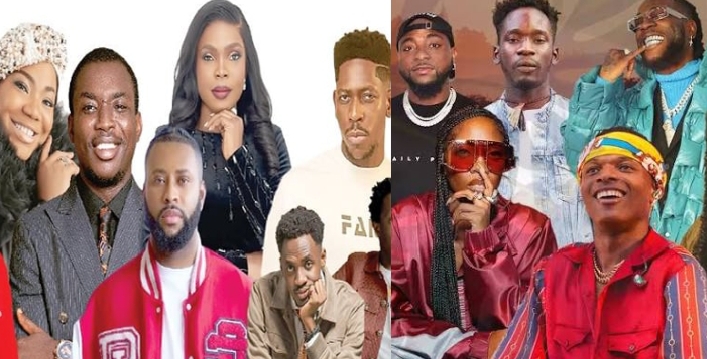
2025 ended on a note many people did not see coming. YouTube Nigeria, the digital pulse of the country, released its year-in-review and the numbers were something else. On one side you had Afrobeats, Nigeria’s global crown jewel, streaming like wildfire.
On the other side, gospel music, traditionally seen as niche in the digital space, pulled off a surprise takeover. It was a year where the usual hierarchy got shaken, and viewers proved they were not sticking to just one lane. People were listening, sharing, reacting, and the data told a story nobody could ignore.
No Turning Back II by Gaise Baba clocked over 41 million views after its May release. At the same time Rema, Asake, and Wizkid continued to dominate streams, showing that Afrobeats was not going anywhere. The stage was set for an unexpected genre battle, one that defined 2025 and shaped the way creators and artists approached YouTube Nigeria for years to come.
The Gospel Surge: Gaise Baba and the Faith Wave
No Turning Back II was more than a video, it was a cultural phenomenon. Released on May 16, 2025, Gaise Baba’s track resonated across Nigeria and the diaspora. The gospel anthem topped charts, surpassed streaming expectations, and became the most-watched video on YouTube Nigeria for the year. What made it exceptional was the timing. Afrobeats had long dominated trending lists, but here came gospel breaking through like never before.
Nathaniel Bassey, Mercy Chinwo, and Moses Bliss also had strong performances globally and on YouTube Nigeria, landing in the top 20 streamed artists for Q1 and Q2 of 2025. The gospel audience expanded beyond church walls, moving into everyday life, social media, and even playlists dominated by secular sounds.
By mid-year, data showed that gospel content had increased watch-time by over 25 percent compared to 2024, indicating a new hunger among viewers for spiritually resonant music that still carried top-tier production and relatable storytelling.
Afrobeats Holding The Crown: Rema, Asake, and the Mainstream
If gospel surprised, Afrobeats reminded the world it still ruled the global charts. Rema led the first quarter of 2025 with around 223 million streams on YouTube alone. Asake, Wizkid, and Davido continued to dominate trending pages, YouTube shorts, and official music videos. Songs like Shallipopi’s Laho and Davido’s With You featuring Omah Lay became cultural moments, drawing millions of views and repeated plays.
Afrobeats content was everywhere — it was on Instagram reels, TikTok transitions, radio charts, and even used in gaming montages. What made Afrobeats unshakable was its global footprint. Even as gospel pulled millions domestically, Afrobeats commanded a worldwide audience.
The sheer volume of streams, the consistent charting, and fan engagement proved that while gospel might have had the most-watched video, Afrobeats remained the backbone of Nigeria’s digital music economy.
Street-Level: People Don’t Stick To One
One thing 2025 made clear is that Nigerian viewers were no longer predictable. Some fans watched gospel in the morning, Afrobeats in the evening. Playlists were eclectic. Comments under Gaise Baba’s video included lyrics from Asake. Memes were shared from one genre to another. YouTube’s algorithm, which rewards engagement, amplified this cross-genre viewing.
Unlike previous years where Afrobeats would take the majority of the trending list, in 2025 there were alternating weeks dominated by gospel and weeks dominated by Afrobeats. Even within a single day, YouTube Nigeria’s trending charts displayed gospel songs at number one, followed by Afrobeats videos at two or three. The lines blurred, and creators had to adapt.
The Numbers Speak: Streams, Views, and Global Reach
Let’s break the numbers down. By the end of 2025:
- No Turning Back II: 41 million views by December 5
- Rema’s official music videos collectively surpassed 220 million streams globally
- Asake’s releases accumulated over 100 million views within six months of release
- Gospel creators like Mercy Chinwo and Nathaniel Bassey were landing among the top 20 most-streamed Nigerian artists
- Over 70 percent of Nigerian content views originated outside the country, highlighting the diaspora’s role in boosting streams
These statistics show a shared victory. Gospel had a breakthrough, Afrobeats maintained dominance. YouTube Nigeria’s 2025 metrics suggest that both genres were simultaneously capturing attention in ways that were unprecedented.
Nollywood and Non-Music Content: The Supporting Cast
While the focus is often on music, 2025 also saw Nollywood creators and lifestyle channels contributing to this digital ecosystem. Omoni Oboli TV, actor-led channels, and skit creators started trending alongside music videos.
Their presence indirectly influenced the music battles because they shaped cross-genre viewing habits. Viewers watching Nollywood clips often got recommendations for gospel or Afrobeats tracks. The digital ecosystem became more integrated, encouraging experimentation across genres.
Lessons For Creators and Artists
The unexpected battle between Afrobeats and gospel in 2025 had implications:
Production quality matters: Gospel videos with cinematic visuals could compete with Afrobeats tracks.
Cross-genre appeal is powerful: Artists learned that digital audiences do not silo themselves.
Timing releases strategically can maximize exposure, as seen with May releases dominating mid-year charts.
International audiences amplify success: Nigerian diaspora engagement was crucial for both genres.
Closing Reflection: The Battle That Was Not About Winning
By the close of 2025, the battle between Afrobeats and gospel was less about domination and more about coexistence. Both genres grew stronger because of the other. Creators understood that YouTube Nigeria’s audience in 2025 was eclectic, unpredictable, and ready for variety.
The year closed with a message: digital music success in Nigeria is not zero-sum. Afrobeats may dominate global streams, but gospel can lead national watch-time charts. Fans decide what matters, and 2025 proved that fans do not stick to one genre.
This unexpected genre battle has set the stage for 2026, where diversity, engagement, and cross-genre collaboration will define what it means to be a Nigerian YouTube creator.



Discussion about this post