
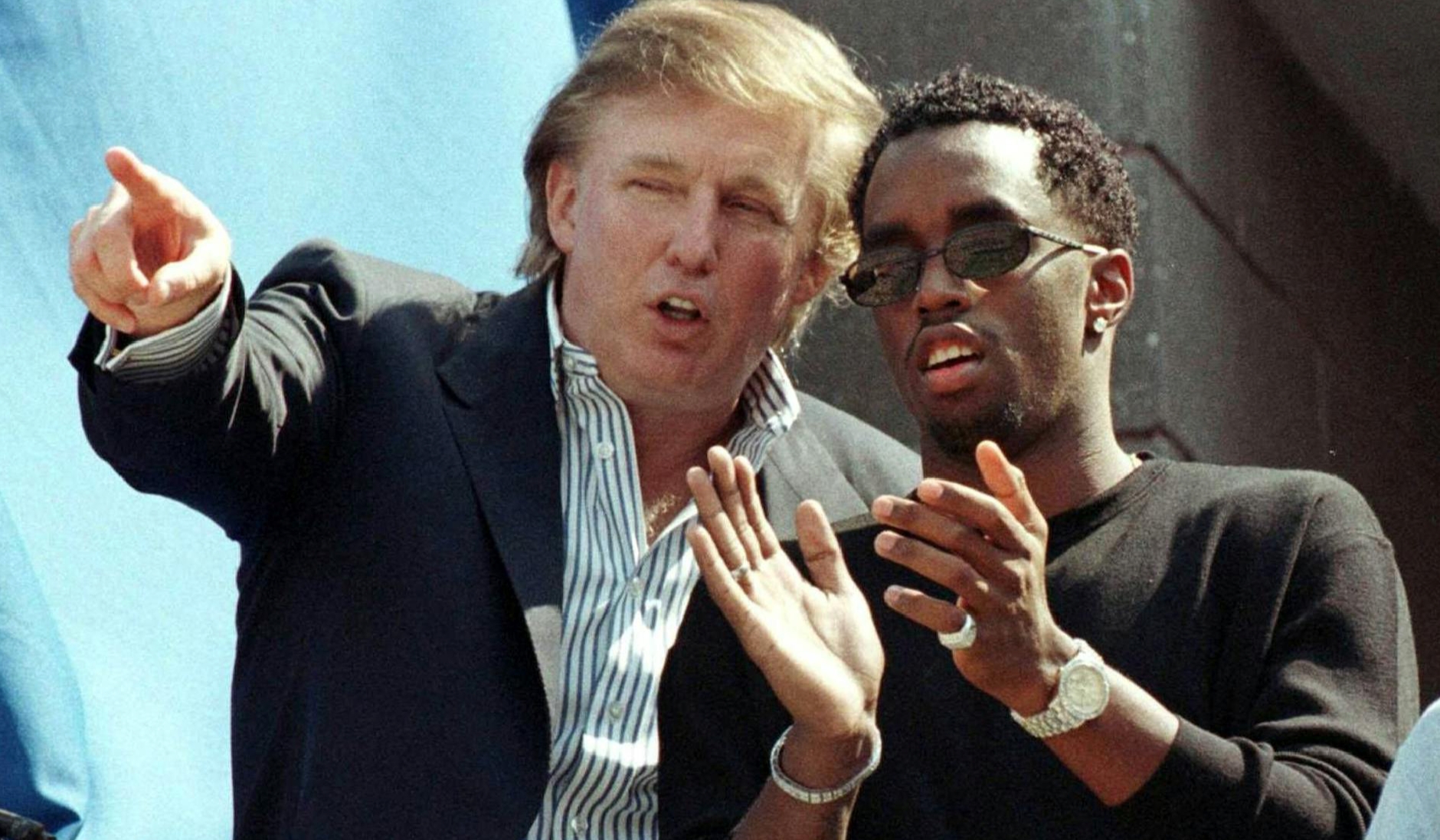
The letter did not arrive with cameras waiting or aides whispering into microphones. It arrived quietly, folded into the slow machinery of power where decisions are made without spectacle. In late 2025, as the consequences of a federal conviction settled into place, Sean Combs made a move that shifted his case away from judges and toward discretion. He reached for the one authority that exists outside the courtroom and above appeal.
For decades, his life unfolded in public view, yet this decision emerged almost unnoticed at first. There was no announcement, no strategic leak, no attempt to frame the narrative. Still, once the request surfaced, it carried a weight that far exceeded its simplicity. One letter, one plea, one outcome that could not be challenged.
What followed was not hesitation but a clear refusal, delivered publicly by a president whose decisions often resist predictability. The answer closed a door that opens rarely and only once, turning a private appeal into a definitive moment. This is how that sequence unfolded.
The Conviction That Redefined the Timeline
On July 2, 2025, a federal jury delivered its verdict in the long running case against Sean Combs. The outcome was measured but consequential. He was convicted on two federal counts related to transporting individuals for prostitution, while being acquitted of more severe allegations including racketeering and sex trafficking.
The distinction mattered legally and culturally. The case did not collapse, but it did not expand into the sweeping criminal portrait prosecutors had initially suggested. What remained was a narrow but serious conviction, one that carried mandatory consequences under federal law.
The verdict marked a pivot point. From that moment, the case stopped being about guilt or innocence and became about consequence, timing, and endurance.
Sentencing and the Weight of Numbers
In early October 2025, the sentencing phase concluded in federal court. The judge imposed a prison term of approximately fifty months, just over four years in federal custody. The sentence was not symbolic and not deferred. It carried immediate practical implications for a figure whose life had long been defined by control and access.
Federal sentencing does not invite theatrics. It reduces lives to months, calendars, and projections. Once imposed, the number becomes immovable unless overturned through narrow legal means.
With sentencing complete, the future compressed. What lay ahead was no longer hypothetical.
When Legal Avenues Narrowed
By October 2025, Combs’ legal team had begun preparing appeal documents, a routine step in federal cases of this scale. Appeals are deliberate and technical, often turning on procedural precision rather than factual reconsideration.
It was during this period that attention reportedly widened beyond the courtroom. Presidential clemency exists precisely for moments when legal remedies offer little immediate relief. It is discretionary, political, and personal, operating outside precedent and beyond judicial review.
For high profile defendants, considering clemency does not necessarily signal desperation. More often, it reflects realism. Appeals can stretch for years and rarely reduce sentences substantially. A pardon or commutation, by contrast, can act instantly. That reality framed the decision that followed.
The Letter to Trump
Sometime in late 2025, after sentencing but before the close of the year, Sean Combs wrote directly to President Donald Trump requesting a presidential pardon. The exact date of the letter has not been made public, nor has its wording been released.
What is confirmed comes from Trump himself. He later acknowledged receiving the letter and identified it as a personal request for clemency. The act of writing directly, rather than relying solely on formal review channels, suggested urgency and faith in personal discretion.
Presidential pardon requests typically move quietly through bureaucratic pathways. This one carried enough directness that it would eventually become public.
The request marked a shift from legal argument to personal appeal, an acknowledgment that law alone might not change the outcome.
Trump’s Public Response
In October 2025, shortly after sentencing, Donald Trump first publicly acknowledged that Sean Combs had asked him for a pardon, confirming that a request had been made. At the time, he did not commit to any course of action.
That ambiguity ended on January 8, 2026, when Trump addressed the matter more directly during conversations with reporters, including remarks cited by The New York Times. He confirmed receipt of Combs’ letter and stated clearly that he was not considering granting the pardon.
The language was firm and unambiguous. There was no indication of future review and no suggestion that the matter remained open. Trump also noted that other high profile figures had sought clemency and that he was not inclined to grant pardons broadly. With that statement, speculation ended.
Why the Refusal Mattered
Presidential pardons are not subject to explanation, yet Trump chose to address this one publicly. That choice reframed the request as a boundary rather than a possibility.
He did not revisit trial evidence or critique the verdict. Instead, he removed discretion from the equation by stating his position plainly. The refusal became final not through paperwork but through public declaration.
For Combs, this meant the clemency route was no longer viable. Once a president rules out a pardon publicly, the political cost of reversal becomes prohibitive. The door was closed.
Cultural Reaction and Industry Response
Within days of Trump’s January 2026 remarks, reactions surfaced across entertainment media. While no legal consequence followed these responses, they reflected the cultural resonance of the moment.
One of the most visible reactions came from rapper 50 Cent, whose public commentary drew attention to the denial and reinforced its finality. The reaction did not alter the legal landscape, but it underscored how the case extended beyond courtrooms into cultural space.
For many observers, the refusal signaled a shift. Celebrity alone no longer guaranteed exceptional treatment once federal law had spoken.
Where the Case Now Stands
As of January 2026, Sean Combs remains set to serve his sentence while pursuing appeals through the federal court system. The presidential pardon option has been publicly removed from consideration.
What remains is time, process, and the slow movement of appellate review. The justice system returns to impersonality, operating without discretion or intervention.
The letter has done its work. The answer has been given. What follows now unfolds without spectacle.




Discussion about this post