Saturday, 7 Mar 2026
  • My Feed
  • My Feed
  • My Interests
  • My Interests
  • My Saves
  • My Saves
  • History
  • History
  • Blog
  • Blog
Subscribe
WITHIN NIGERIA
  • HOME
  • Home
  • Home
  • FEATURES
  • Opinion

    White House Visit: What happened when Messi stood silent as Trump discussed US-Israel-Iran war and Ronaldo

    By
    Samuel David

    What to watch this weekend: 3 Nollywood films premiering in cinemas today

    By
    Ifeoluwa

    How to Survive #70,000 minimum wage: Experts advise Nigerian workers

    By
    Sodiq Lawal Chocomilo

    El-Rufai’s Troubles: What You Need To Know

    By
    Sodiq Lawal Chocomilo

    Celebrity Insights: Frank Edwards and Mo Abudu Speak on Showmax Shutting Down

    By
    Samuel David

    At 70, the unforgettable characters of Chiwetalu Agu that defined Nollywood

    By
    Ifeoluwa
  • Opinion

    Why Is MultiChoice Group ending Showmax? Losses, Strategy Shift, and what happens to Subscribers

    By
    Samuel David

    OGUN 2027: Yayi consensus sets the stage for creekside capital leadership

    By
    Abdulsalam Abdullahi Opeyemi

    DRUG NETWORKS EXPOSED: The rise from couriers to cartels in Nigeria’s cross-border trade

    By
    Abdulsalam Abdullahi Opeyemi

    CABINET SHUFFLE: Doris Uzoka-Anite shifts to her third ministry in three years

    By
    Abdulsalam Abdullahi Opeyemi

    NORTHERN UNREST: Shi’a demonstrations escalate from Gombe to Kano

    By
    Abdulsalam Abdullahi Opeyemi

    From Hero To Awaiting Trial: Abba Kyari’s NDLEA Ordeal

    By
    Sodiq Lawal Chocomilo
  • NEWS
  • Politics

    Full Breakdown of 67 Items seized from Nasir El-Rufai’s Abuja Residence by ICPC

    By
    Samuel David

    Enugu: Students, Staff Count Loses As Fire Guts Building At Federal College Of Education, Eha-Amufu

    By
    Nnadi Christopher Ikechukwu

    Inside the final scene of Kilanko everyone is talking about: Allwell Ademola’s last cinematic statement

    By
    Ifeoluwa

    How Oluwo of Iwo openly challenged Trump over Iran War

    By
    Samuel David

    From Kalakuta to Cupertino: How a 1971 Fela classic became the soundtrack for Apple’s MacBook Air

    By
    Ifeoluwa

    How To Apply For JAMB Direct Entry 2026

    By
    Sodiq Lawal Chocomilo
  • Politics

    11 Things You Might Not Know About Prof. Olu Ogunsakin, Chairman of State Police Committee

    By
    Sodiq Lawal Chocomilo

    Bishop Oyedepo and Pastor Adeboye’s shocking predictions on wars and global tension

    By
    Samuel David

    Crime on Campus: How 2 Federal Universities responded in February 2026

    By
    Samuel David

    Actress Olaide Oyedeji on BBL, broken relationships & becoming whole again in recent interview

    By
    Ifeoluwa

    “Businesses are folding up” – Nigerians storm IBEDC office, decry epileptic power supply

    By
    Sodiq Lawal Chocomilo

    How did renowned Nigerian photographer, Kola Onifoto, Die? Full details emerge

    By
    Samuel David
  • ENTERTAINMENT
  • Health

    From 7-month emergency birth to 1st birthday: Chizzy Alichi’s son’s survival story

    By
    Ifeoluwa

    Kenneth Okonkwo’s recent Live TV outburst at Rufai Oseni: What Triggered It?

    By
    Samuel David

    From Ministerial Nomination To ICPC Custody: How El-Rufai Fell Out With Tinubu Presidency

    By
    Nnadi Christopher Ikechukwu

    Meet ‘Taiwo Oyedele’: 13 Things To Know About The Minister of State for Finance Nominee

    By
    Sodiq Lawal Chocomilo
    FORM SLUMP: Remo Stars’ slide from NPFL title winners to survival fight

    FORM SLUMP: Remo Stars’ slide from NPFL title winners to survival fight

    By
    Abdulsalam Abdullahi Opeyemi
    GLOBAL REALIGNMENT: Artificial intelligence, national defence and the renewed push for sovereignty

    GLOBAL REALIGNMENT: Artificial intelligence, national defence and the renewed push for sovereignty

    By
    Abdulsalam Abdullahi Opeyemi
  • Health

    Courtroom Showdown: Nigerian Oil Tycoon Muhammadu Indimi vs. Twin Daughters — $43.5million at stake

    By
    Samuel David

    From Lumumba To Khamenei: Meet 7 Global Leaders Killed in Targeted and Rebel Operations

    By
    Sodiq Lawal Chocomilo

    Eight in Two Months: Remembering Nigerian Celebrities Who Died in 2026

    By
    Sodiq Lawal Chocomilo

    A Voice Silenced: Tribute to Oyo-born gospel artist, Taiwo of Adegbodu Twins

    By
    Sodiq Lawal Chocomilo

    How a custody courtroom clash escalated: Breaking down the N1bn legal notice against Davido

    By
    Ifeoluwa

    How Iran’s Supreme Leader’s death in US–Israel Airstrikes became a rallying cry in Northern Nigeria

    By
    Samuel David
  • FACT CHECK
  • Pages
    • Blog Index
    • Contact US
    • Search Page
    • 404 Page
    • Travel
    • Technology
    • World News
  • Pages
    • Blog Index
    • Contact US
    • Search Page
    • 404 Page
    • Travel
    • Technology
    • World News
  • MORE
    • VIDEOS
    • GIST
    • PIECE (ARTICLES)
  • 🔥
  • Entertainment
  • National
  • Metro
  • XTRA
  • General
  • photo
  • headline
  • Politics
  • video
  • Sports
Font ResizerAa
WITHIN NIGERIAWITHIN NIGERIA
  • My Saves
  • My Saves
  • My Interests
  • My Interests
  • My Feed
  • My Feed
  • History
  • History
  • Travel
  • Travel
  • Opinion
  • Opinion
  • Politics
  • Politics
  • Health
  • Health
  • Technology
  • Technology
  • World News
  • World News
Search
  • Pages
    • Home
    • Blog Index
    • Contact Us
    • Search Page
    • 404 Page
  • Pages
    • Home
    • Blog Index
    • Contact Us
    • Search Page
    • 404 Page
  • Personalized
    • My Feed
    • My Saves
    • My Interests
    • History
  • Personalized
    • My Feed
    • My Saves
    • My Interests
    • History
  • Categories
    • Opinion
    • Politics
    • Technology
    • Travel
    • Health
    • World News
  • Categories
    • Opinion
    • Politics
    • Technology
    • Travel
    • Health
    • World News
Have an existing account? Sign In
Follow US
© 2022 Foxiz News Network. Ruby Design Company. All Rights Reserved.
National

GLOBAL REALIGNMENT: Artificial intelligence, national defence and the renewed push for sovereignty

Last updated: March 4, 2026 6:24 am
Abdulsalam Abdullahi Opeyemi
Share
GLOBAL REALIGNMENT: Artificial intelligence, national defence and the renewed push for sovereignty
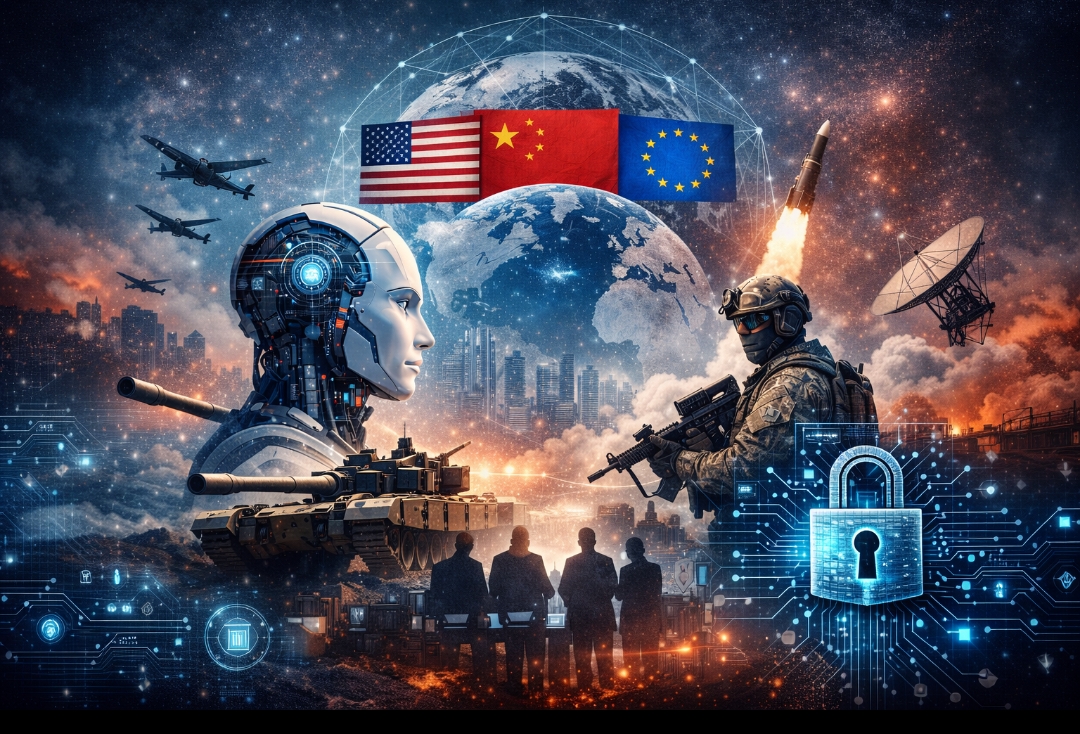
Artificial intelligence and national defence converge in a shifting global order, as states and technology firms negotiate the future of sovereignty and strategic power. PHOTO CREDIT: AI-generated image using ChatGPT
SHARE

Artificial intelligence is increasingly being treated not merely as a commercial innovation but as a strategic asset shaping national defence and the modern understanding of sovereignty.

Recent tensions between sections of the United States defence establishment and an American artificial intelligence company have drawn attention to deeper questions about who determines the limits of AI deployment when national security is involved.

Public reports indicate that disagreements emerged over contractual terms linked to military use, acceptable applications and the operational boundaries of advanced AI systems.

In response to concerns about deployment conditions, federal authorities reportedly suspended the use of the company’s technology within certain agencies and classified it as a potential supply chain risk.

The chief executive officer of a rival AI firm, Sam Altman, stated in a related context, “we have long believed that AI should not be used for mass surveillance or autonomous lethal weapons, and that humans must maintain meaningful control over high-stakes automated decisions. These are our core red lines”.

His remarks signalled that leading AI developers are asserting ethical constraints over how their systems may be applied, including in defence environments.

For decades, defence contractors supplied aircraft, satellites and digital systems while governments retained final authority over how such tools were deployed under law and oversight.

Artificial intelligence differs in structure because advanced models are built with embedded safeguards, usage limitations and enforceable conditions set by their creators.

When companies define “red lines” regarding military use, they effectively influence the operational scope within which governments can act.

This development marks a notable shift in the historical relationship between states and private defence suppliers.

The origins of the modern internet offer useful context for understanding this transition.

In the late 1960s, the United States Department of Defence funded ARPANET through the Advanced Research Projects Agency, later renamed the Defence Advanced Research Projects Agency, to create a resilient communication network.

That early project, initially designed for national security purposes, evolved into a global infrastructure shaped by universities, private firms and regulators.

Over time, governance of the internet became distributed across technical bodies, corporations and governments rather than remaining solely under state control.

Artificial intelligence is emerging under a different configuration.

Although governments continue to finance research and regulate exports, the most advanced AI systems are concentrated within a small number of private companies.

These systems depend on proprietary data, large-scale computing clusters and tightly managed update cycles, creating vertically integrated structures.

As AI becomes embedded in intelligence analysis, logistics planning, cyber operations and defence simulations, states increasingly rely on privately built cognitive infrastructure.

The resulting interdependence creates friction when corporate safeguards intersect with sovereign authority.

Similar debates have appeared beyond the United States.

In Israel, Project Nimbus, a cloud services agreement involving major technology firms, has generated public discussion about the integration of AI-enabled systems into state functions.

In the United Kingdom, recurring scrutiny of contracts with Palantir Technologies has raised questions about dependency, oversight and long-term control of sensitive analytics platforms.

Across these cases, artificial intelligence is no longer viewed as peripheral software but as core infrastructure influencing governance and security.

Competition among global powers further intensifies the issue.

Chinese AI firms operate within a policy environment that assumes close alignment between corporate and state objectives.

European companies navigate regulatory frameworks emphasising precaution, transparency and human rights protections.

If American firms maintain strict internal restrictions on defence use, policymakers may reconsider industrial strategies to ensure strategic autonomy.

Corporate governance choices therefore intersect with export controls, alliance structures and national innovation funding.

For smaller and developing states, the sovereignty challenge is more pronounced.

Most frontier AI systems are owned and operated by companies headquartered abroad, limiting the bargaining power of governments that depend on external access.

If major powers can experience contractual disruption, less powerful states face even greater vulnerability.

Digital sovereignty in the AI era may depend not only on regulatory capacity but also on negotiating durable access to foreign-controlled infrastructure.

The structural contrast with the early internet is instructive.

Whereas ARPANET began as publicly funded architecture later diffused across actors, AI’s foundational capabilities are privately concentrated and computationally expensive.

That concentration accelerates sovereignty debates because strategic dependence becomes visible sooner.

Governments may respond through contractual override clauses, expanded public research investment or targeted industrial policy to reduce reliance on single vendors.

Companies, in turn, may formalise governance mechanisms, including oversight boards and published usage commitments, to balance ethical standards with state partnerships.

The risk of fragmentation remains present.

If procurement disputes evolve into blacklists and retaliatory restrictions, AI ecosystems could divide along geopolitical lines, creating competing technological blocs.

Citizens also play a role in this conversation.

Public concern about surveillance, automated weapons and accountability has shaped corporate red lines and legislative interest.

At the same time, governments face expectations to preserve national security and strategic capacity.

The evolving debate illustrates that artificial intelligence has crossed from innovation to infrastructure.

As AI systems become embedded in statecraft, the relationship between corporate control and sovereign authority is being renegotiated.

The outcome will influence not only defence procurement but the broader architecture of global power.

Artificial intelligence may have emerged from laboratories and venture capital funding, but it now sits at the centre of questions about autonomy, accountability and national control.

In this environment, sovereignty politics is not returning by accident; it is being reshaped by the infrastructure of intelligence itself.


TAGGED:AI governanceartificial intelligencecyber securitydigital sovereigntymilitary technologynational defencesupply chain risk
Share This Article
Email Copy Link Print
Previous Article Courtroom Showdown: Nigerian Oil Tycoon Muhammadu Indimi vs. Twin Daughters — $43.5million at stake
Next Article FORM SLUMP: Remo Stars’ slide from NPFL title winners to survival fight FORM SLUMP: Remo Stars’ slide from NPFL title winners to survival fight
Leave a Comment

Leave a Reply Cancel reply

Your email address will not be published. Required fields are marked *

Your Trusted Source for Accurate and Timely Updates!

Our commitment to accuracy, impartiality, and delivering breaking news as it happens has earned us the trust of a vast audience. Stay ahead with real-time updates on the latest events, trends.
FacebookLike
XFollow
InstagramFollow
LinkedInFollow
MediumFollow
QuoraFollow
- Advertisement -
Ad image

You Might Also Like

National

Police dismiss IPOB Oct 1 sit-at-home call

By
Adejayan Gbenga Gsong
BREAKINGNational

BREAKING: Fayemi signs Amotekun bill into law

By
Adejayan Gbenga Gsong
National

N2.2bn fraud: Fayose gets permission for foreign medical trip

By
Adejayan Gbenga Gsong
National

Week-long ceasefire with Boko Haram ended yesterday — FG

By
Ola Peter
WITHIN NIGERIA
Facebook Twitter Youtube Rss Medium

About US


BuzzStream Live News: Your instant connection to breaking stories and live updates. Stay informed with our real-time coverage across politics, tech, entertainment, and more. Your reliable source for 24/7 news.
Top Categories
  • World News
  • World News
  • Opinion
  • Opinion
  • Politics
  • Politics
  • Tech
  • Tech
  • Health
  • Health
  • Travel
  • Travel
Usefull Links
  • Contact Us
  • Contact Us
  • Advertise with US
  • Advertise with US
  • Complaint
  • Complaint
  • Privacy Policy
  • Privacy Policy
  • Cookie Policy
  • Cookie Policy
  • Submit a Tip
  • Submit a Tip
© Foxiz News Network. Ruby Design Company. All Rights Reserved.