

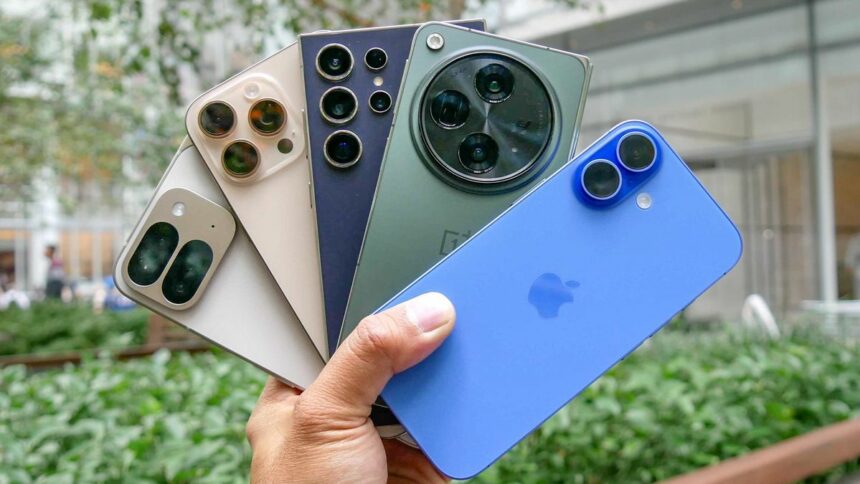
Nigeria’s rapidly expanding digital economy may face new pressure as developments in the global technology industry threaten to increase the cost of smartphones.
Market trends indicate that the surge in artificial intelligence development around the world is placing heavy demand on semiconductor components, a situation that may lead to higher prices for consumer electronic devices.
Industry observers expect the rising demand for chips used in artificial intelligence systems and data centres to reduce the supply available for smartphone manufacturers.
This imbalance between demand and supply is projected to increase production costs across the global smartphone industry.
As manufacturers adjust to these new costs, the impact is expected to reach retail markets, including Nigeria, where most devices are imported.
Technology dealers in Nigeria say the development could lead to a noticeable increase in the price of entry-level smartphones, which remain the most widely purchased category in the country.
Some projections suggest that budget devices could record price increases of up to 15 per cent if the supply pressures persist.
Such an increase would mean that devices previously considered affordable for many Nigerians may become more expensive within a short period.
Nigeria represents one of the largest smartphone markets in Africa, with millions of users depending on mobile devices for communication, financial transactions, and access to online services.
The importance of smartphones has increased in recent years as government agencies and private companies expand digital services across sectors such as banking, education, and commerce.
Many Nigerians rely on smartphones as their primary tool for accessing the internet, making device affordability an important factor in digital participation.
Data from recent industry reports show that smartphone penetration in Nigeria reached about 59 per cent in urban areas and approximately 26 per cent in rural communities in 2023.
Despite this progress, a significant portion of the population still depends on basic mobile phones or has limited access to internet-enabled devices.
A rise in smartphone prices could slow the pace at which new users transition to internet-enabled devices.
The global semiconductor supply chain has experienced periodic disruptions in recent years due to geopolitical tensions, manufacturing constraints, and rising demand for advanced computing technologies.
The expansion of artificial intelligence tools has added a new layer of demand for specialised chips required for data processing and machine learning operations.
Large technology companies and data centre operators are purchasing vast quantities of these chips to power artificial intelligence applications.
As a result, manufacturers producing consumer electronics must compete for limited supplies of essential components.
The increase in production costs linked to semiconductor shortages is already affecting several segments of the electronics industry.
Apart from smartphones, other devices such as computers, tablets, and network equipment are also influenced by fluctuations in semiconductor supply.
Global market research indicates that rising component prices may gradually reshape the pricing structure of smartphones across various regions.
Reports tracking industry trends suggest that the average selling price of smartphones worldwide may increase significantly in the coming years.
Analysts monitoring the sector have indicated that the long-standing category of very low-cost smartphones may gradually decline as manufacturing costs continue to rise.
The expected changes in pricing may affect consumers in developing economies more strongly because lower-priced devices dominate these markets.
Nigeria’s mobile device ecosystem remains largely dependent on imports, with limited local assembly capacity and no domestic semiconductor production.
This dependence means that changes in global supply conditions often translate directly into price adjustments within the Nigerian market.
Apart from global supply factors, domestic economic conditions may also influence smartphone pricing.
Exchange rate fluctuations are particularly important because smartphones and electronic components are purchased in foreign currencies before entering the Nigerian retail market.
When the local currency weakens against major international currencies, import costs increase for distributors and retailers.
These higher costs are often transferred to consumers through higher retail prices.
Taxes and import-related charges may also contribute to the final price of smartphones sold in Nigeria.
Value-added tax applied to electronic goods forms part of the total amount paid by consumers at the point of purchase.
As device prices increase, the tax component also rises proportionally, adding further pressure to retail costs.
Retailers typically review pricing structures whenever new shipments of devices arrive under different cost conditions.
This means that price changes may not occur immediately but often appear gradually as existing stock is replaced with newly imported units.
Global market projections also indicate that smartphone shipment volumes could decline if production costs continue to rise.
Lower shipment volumes may occur as manufacturers scale back production or adjust product strategies to manage costs.
Smaller smartphone manufacturers that rely heavily on shared operating systems and outsourced production are expected to experience stronger pressure from these market shifts.
Larger global manufacturers with stronger supply networks may be better positioned to manage component shortages and maintain production levels.
In Nigeria, the possible increase in smartphone prices may have wider implications for access to digital technology.
Mobile devices remain essential tools for participating in online education, digital entrepreneurship, social media communication, and financial technology services.
The country’s youthful population has increasingly turned to smartphones to access employment opportunities within the growing digital economy.
Affordable smartphones are also necessary for the adoption of advanced telecommunications services such as fifth-generation mobile networks.
Telecommunications operators have invested heavily in expanding broadband and high-speed data services across Nigeria.
However, the availability of compatible and affordable devices remains an important factor determining how widely such services are used.
If smartphone prices rise significantly, some consumers may delay upgrading their devices or remain with older mobile technologies.
Such delays could affect the pace at which digital services expand among different segments of the population.
Nigeria’s long-term digital transformation plans depend on both network infrastructure and consumer access to internet-enabled devices.
While infrastructure investments continue to expand broadband coverage across the country, device affordability will remain a key element shaping digital inclusion.
As global semiconductor demand continues to evolve alongside advances in artificial intelligence, developments in the technology supply chain are expected to remain an important factor influencing the cost of smartphones worldwide.