
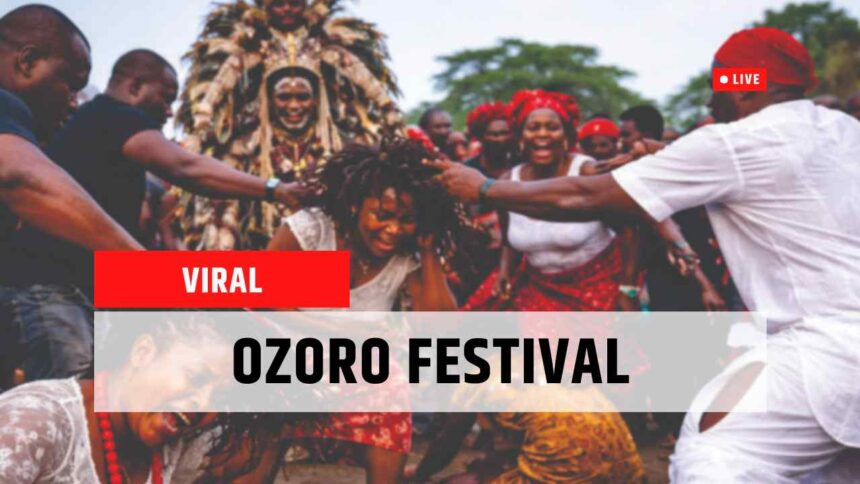
On Thursday, March 19, 2026, disturbing videos began circulating online showing women being assaulted and harassed during what was described as a local festival in Ozoro, a town in the Isoko North Local Government Area of Delta State. The clips, which spread rapidly across X formerly known as Twitter and other social media platforms, depicted scenes of women being chased, grabbed, and in some cases physically attacked while bystanders filmed instead of intervening.
The virality of these videos ignited nationwide outrage, prompting both citizens and public figures to speak out against the apparent acts of gender based violence. Social media became a platform not just for shock and condemnation but for calls for accountability justice and systemic reform to prevent such acts from happening again.
The outrage was compounded by the fact that the videos suggested the assaults were happening under the guise of a festival which was quickly labeled a “r@ping festival” by online users, a characterization that authorities and community leaders strongly denied as an official or traditional practice. The unfolding events highlighted not only the vulnerability of women during large public gatherings but also the urgent need for proactive policing and community vigilance in protecting the rights and dignity of women.
The Emergence of the Ozoro Festival Incident
The Ozoro festival incident first gained national attention when videos depicting groups of men targeting women during the festival were widely shared on social media platforms on March 19, 2026. Eyewitness accounts reported that young men moved in groups across the festival grounds targeting women who remained outdoors, while some victims were reportedly dragged, molested, and left in distress. The visual evidence, which was distressing to view, clearly captured the chaos and fear experienced by the victims, many of whom cried out for help as bystanders recorded the events rather than intervening.
These videos were instrumental in drawing public attention to the matter and prompted immediate online discussion around the prevalence of gender based violence in public spaces and the complicity of onlookers who failed to prevent the assaults. The viral nature of the content amplified the perceived severity of the event and created an urgent demand for both social and official responses to ensure justice for the victims and prevent future occurrences.
In response, the Delta State Police Command quickly issued statements describing the events as “alarming, disgusting and embarrassing” and reassured the public that a full investigation was underway. The Commissioner of Police emphasized that no cultural practice or festival justifies the violation of human rights and ordered that all those responsible be identified arrested and prosecuted. Authorities reported the arrest of the chief organiser and four others linked to the assaults, and the case was immediately transferred to the State Criminal Investigation Department for a deeper probe. This swift response, while necessary, highlighted the tension between local cultural practices and national legal and human rights standards, especially in situations where misinformation could misrepresent a traditional festival as condoning sexual violence.
Public Outrage and Social Media Mobilization
Once the videos gained traction, public outrage grew exponentially across social media platforms, with Nigerians expressing anger, disbelief, and grief at what had occurred. The hashtag #StopRapingWomen began trending as users demanded justice for the victims and accountability for both perpetrators and authorities. Many social media posts questioned why such acts could occur in 2026 and strongly rejected any justification framed as cultural or traditional. Discussions online emphasized that regardless of local customs, no community or festival has the right to condone or excuse the assault of women in public spaces, a principle enshrined in Nigerian law and basic human ethics. The social media conversation also brought to light broader societal concerns regarding gender based violence, the effectiveness of law enforcement, and the need for protective measures at large public gatherings, demonstrating that the Ozoro incident had resonated far beyond the immediate community.
Influencers and ordinary citizens alike expressed frustration at what they perceived as delayed or insufficient official action prior to viral exposure. Many questioned why systemic mechanisms failed to prevent the assaults and why women’s safety often relies on social media amplification before authorities take decisive steps. The collective outrage reflected both an emotional and ethical response to the assault and a demand for structural reforms to ensure that women can navigate public spaces without fear. Online advocacy called for public education campaigns increased awareness of rights and responsibilities, and a commitment from community leaders and law enforcement to actively safeguard citizens, particularly vulnerable groups, during communal gatherings and festivals.
Celebrity Reactions to the Outrage
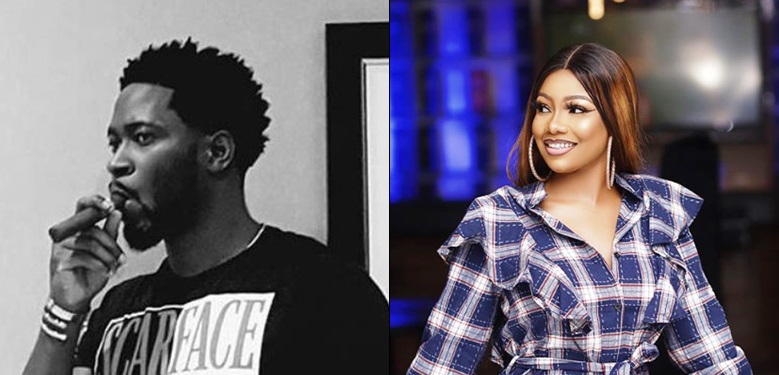
Nigerian celebrities quickly joined the public discourse, leveraging their influence to denounce the assaults and advocate for justice and systemic reform. Among the earliest reactions was from Spyro, a popular singer, who took to Instagram on March 20, 2026, to express shock and deep concern. In his post, he described the acts as heartbreaking and emphasized the need for action beyond verbal condemnation. He urged the Delta State Government, the Delta State Police, and all well meaning Nigerians to ensure that perpetrators are held accountable and that such crimes are investigated thoroughly. Spyro’s response highlighted the critical role celebrities play in amplifying public outrage, not only condemning acts of violence but also motivating authorities and citizens to pursue justice actively.
Similarly, Mr Jollof, a renowned comedian and actor, reacted strongly to the viral footage. He succinctly described the incidents as “barbaric,” capturing the visceral disgust shared by many Nigerians. His reaction reflected the wider sentiment of outrage and reinforced the urgency of demanding legal action against those responsible for assaulting women during the festival. Beyond these figures, multiple other public personalities and social media influencers spoke out against the assaults, emphasizing that no cultural or traditional framework can excuse sexual violence. Their statements highlighted the importance of using public platforms to challenge harmful narratives and foster societal awareness about gender based violence.
Adding another layer to celebrity involvement, Tacha, known for her outspoken advocacy and influence on social media, shared her reflections regarding both the assault and the response by authorities. She criticized any dismissive attitude shown by officials in handling such incidents and called for a more empathetic and proactive approach to protecting women’s rights. Tacha stressed that beyond condemnation, tangible actions such as prosecuting offenders, supporting survivors, and instituting preventive measures were necessary to prevent future tragedies. Her comments underscored the dual responsibility of citizens and authorities in combating gender based violence and ensured that her audience understood the gravity of the situation while amplifying calls for accountability and reform.
Wider Influencer and Public Engagement
In addition to high profile celebrities, ordinary citizens and influencers mobilized on social media to express outrage, support victims, and advocate for legal action. Many highlighted the incongruity of labeling the assaults as part of a festival in 2026, emphasizing that violent acts against women are never acceptable under any circumstances. These discussions extended beyond mere condemnation, evolving into active calls for systemic change, such as improved law enforcement responsiveness, community vigilance, and public education on gender based violence. Influencers repeatedly stressed that cultural practices should never be conflated with criminal behavior and that protecting the safety of women in all public gatherings is a shared societal responsibility.
These online conversations played a crucial role in ensuring that the story did not fade as just another viral incident. By sharing information providing context and demanding accountability, influencers ensured that the voices of victims and witnesses were amplified. The mobilization fostered public awareness of broader issues including sexual harassment, consent, and the inadequacies in protective mechanisms at community level. The sustained public attention has pressured authorities to act decisively and demonstrate transparency in investigation and prosecution.
Police and Institutional Response
The Delta State Police Command confirmed the arrest of the chief organiser and four other individuals linked to the assaults on March 20, 2026, transferring the matter to the State Criminal Investigation Department for in‑depth inquiry. Authorities reiterated that no traditional or cultural practice sanctions sexual assault and that the perpetrators would face prosecution under Nigerian criminal law. This firm statement was intended to reassure the public and demonstrate that criminal conduct, even during communal events, is subject to legal scrutiny. The official response included appeals for witnesses to provide statements to aid investigation, reflecting both a procedural and humanized approach to handling the matter, as authorities recognized the traumatic impact on victims and the broader community.
Federal government agencies, including the Ministry of Women Affairs and Social Development, issued statements condemning the assaults and reaffirming their commitment to the rights and protection of women. The statements emphasized that any form of gender based violence is criminal and must not be normalized or tolerated. The combined response from state and federal institutions reflected the seriousness with which the incident was treated and indicated that proactive measures were being taken to prevent a recurrence while providing justice for the victims.
The Human Impact and Societal Reflection
Beyond arrests and legal processes, the Ozoro festival assaults highlighted the human cost of public sexual violence. Victims experienced trauma that extended beyond physical harm, encompassing psychological stress, social stigma, and fear for personal safety. The public discourse generated by celebrities influencers and social media users brought attention to these human dimensions and emphasized the necessity of both immediate protection and long term support for survivors. Discussions on mental health, access to counseling, and community reintegration became central to ensuring that victims are not forgotten amid legal proceedings.
The incident also provoked reflection on community responsibility and cultural narratives. By differentiating between actual cultural practices and criminal behavior, community leaders alongside civil society actors sought to restore the reputation of Ozoro while condemning misconduct. This nuanced conversation emphasized that while cultural heritage is important, it cannot be used as a shield for violence, and that communities have a role in fostering safe environments during public celebrations.