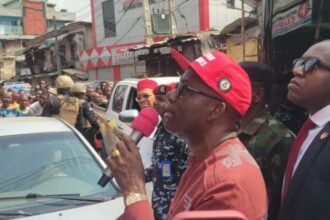
The political landscape of Nigeria in April 2026 was tense and electrified with anticipation as multiple opposition figures began positioning themselves for the upcoming 2027 general elections. On Wednesday, 8 April 2026, this tension crystallized into a highly visible and significant event when thousands of citizens, activists, and politicians gathered at the Independent National Electoral Commission headquarters in Maitama, Abuja. The protest was formally tagged #OccupyINEC and became a focal point for political discontent, demonstrating public frustration with the perceived lack of electoral fairness and broader governance issues. The energy on that afternoon was palpable as demonstrators moved through the streets holding placards and banners, chanting messages demanding accountability and justice in the electoral process, with one of the slogans reverberating repeatedly across the crowd being “Tinubu Must Go.”
This event was more than a routine protest; it became a reflection of Nigeria’s growing political fissures, highlighting the fault lines between the ruling party and opposition factions while engaging civil society in a collective expression of democratic urgency.
Background and Political Context: The Spark That Ignited the Protest
The protest did not emerge out of a vacuum but was deeply rooted in ongoing political disputes and systemic concerns that have been building over the past months.
The immediate catalyst for the #OccupyINEC protest was INEC’s decision regarding the ADC leadership. By derecognizing Senator David Mark’s faction, the commission effectively threw into question the legitimacy and operational capabilities of the party in the run-up to the 2027 elections. This decision was interpreted by many as an attempt to manipulate political outcomes in favor of the ruling party. ADC leaders publicly accused INEC of acting in a partisan manner and suggested that such actions undermined Nigeria’s democratic framework. Concerns were voiced that the electoral process might be manipulated to allow President Bola Tinubu and the ruling APC to dominate unchallenged, eliminating meaningful competition.
The protest, however, was not solely about party politics. Many demonstrators framed their actions as a defense of democracy itself, emphasizing the need for an independent electoral body and transparent electoral processes. The slogans, chants, and banners, including the prominently heard “Tinubu Must Go,” were understood as reflections of broader dissatisfaction with governance, economic hardship, and perceived political inequities rather than as direct calls for immediate removal of the President. Activists highlighted that the protest was about safeguarding democratic choice and ensuring that Nigeria did not slip toward a one-party dominance scenario where political plurality and civic participation would be undermined.
Key Figures and Groups on the Frontline
The protest drew a diverse group of participants, from seasoned politicians to ordinary citizens who wanted their voices heard. Leading the demonstration were prominent political figures such as Atiku Abubakar, the former Vice President whose political experience and influence carry considerable weight across Nigeria. Peter Obi, known for his previous presidential campaigns and strong grassroots support, was another key figure present, bringing both visibility and legitimacy to the demonstration. Rabiu Musa Kwankwaso, a former governor with decades of experience in Nigerian politics, also played a central role, demonstrating the cross-generational nature of the protest leadership.
ADC factional leader Senator David Mark was at the heart of the demonstration, his presence underscoring the protest’s immediate trigger while emphasizing the personal stakes involved. Other notable figures included former governors Rauf Aregbesola and Rotimi Amaechi, along with Aminu Tambuwal, former Speaker of the House of Representatives, and Dino Melaye, former senator. The inclusion of these high-profile individuals signaled that the protest was more than a symbolic act of dissent but a calculated political intervention with significant visibility. Alongside these leaders were civil society groups, human rights activists, and ordinary Nigerians, all unified under a common cause of demanding fairness, transparency, and accountability. The synergy between political elites and grassroots participants created an atmosphere of shared urgency and collective action.
The Nature of the Demonstration
The protest itself was energetic and largely peaceful, showcasing both organization and discipline. Demonstrators marched to the INEC headquarters in Maitama, carrying banners and signs with messages that called attention to electoral integrity and governance issues. The crowd chanted slogans not only criticizing specific decisions by the electoral commission but also addressing broader systemic concerns. Some participants even sang Nigeria’s former national anthem, “Arise, O Compatriots,” as a symbolic act of expressing dissatisfaction with current changes under the administration.
Observers noted the strategic use of symbolism throughout the demonstration. The choice of slogans, the choreography of the march, and the visual impact of banners all conveyed a layered message that combined criticism of INEC, concern over potential electoral manipulation, and dissatisfaction with governance under President Bola Tinubu. While the demonstration remained nonviolent, the sheer size of the crowd and the prominence of participating political figures meant that the protest could not be dismissed as inconsequential. It represented a coordinated effort to draw public attention and engage the ruling party in a dialogue about democratic processes.
The Protesters Demands
The primary demands emerging from the #OccupyINEC protest were focused on electoral fairness and the protection of democratic space. Protesters demanded that INEC act impartially and respect the rulings of courts in matters concerning party leadership and electoral participation. They emphasized the need for transparency in electoral processes and warned against any manipulation that could disadvantage opposition parties or limit political competition. These calls were not abstract but grounded in specific events, such as the derecognition of Senator David Mark’s ADC faction and broader concerns about systemic biases favoring the ruling party.
Leaders and participants were also keen to highlight that the protest was about more than the individual actions of any single political actor. By chanting “Tinubu Must Go,” demonstrators were articulating a sentiment of broader discontent with governance, accountability, and political fairness. The phrase became a rallying cry for civic engagement, representing both opposition to perceived injustices and a demand for a political environment where all parties could compete on a level playing field. Concerns about Nigeria sliding into a one-party state and the potential erosion of democratic choice were central to the messaging.
Government Response and Official Statements
The federal government responded quickly to the protest, framing it as politically motivated and dismissing the protesters’ claims. Festus Keyamo, Minister of Aviation and Aerospace Development, described the demonstration as an attempt to blackmail the government and suggested that Nigerians were not naive enough to be swayed by opposition theatrics. The ruling APC maintained that it would not yield to pressure from political rivals and emphasized its commitment to the status quo, dismissing claims of electoral manipulation.
Despite the strong rhetoric, there were no major incidents of violence, and reports indicated that the protest remained peaceful throughout the day. Security forces maintained presence around the INEC headquarters but did not engage in confrontations with protesters. The government’s approach highlighted a delicate balance between asserting authority and avoiding actions that could escalate political tensions. Analysts suggest that this measured response was designed to minimize backlash while signaling to opposition parties that dissent would not disrupt the broader political agenda.
Historical Context of Nigeria’s Electoral Disputes and Comparisons to Previous Protests
Nigeria’s political history is peppered with contentious elections, disputed results, and mass mobilizations of citizens seeking justice and fairness. Since the return to democratic rule in 1999, electoral controversies have repeatedly shaped public perception of governance and institutional integrity. Past elections, including the 2007, 2011, and 2019 cycles, revealed recurring patterns where accusations of vote rigging, ballot manipulation, and partiality by the Independent National Electoral Commission cast long shadows over the credibility of the democratic process.
Each dispute ignited waves of protests, legal battles, and civic activism, reflecting a populace unwilling to accept governance that lacks transparency or fairness.
One of the most vivid parallels to the 8 April 2026 #OccupyINEC protest occurred in 2019, when opposition parties and civil society activists staged mass demonstrations over perceived irregularities in the electoral process.
Citizens organized street rallies, online campaigns, and advocacy programs demanding accountability from INEC, echoing the contemporary concerns of 2026. Similarly, the 2015 pre-election period was marked by intense civic engagement, with protests and mobilizations aimed at curbing electoral malpractice and ensuring that political leadership transitioned peacefully and legitimately. These historical moments demonstrate that public protests in Nigeria are often intertwined with larger struggles over democratic consolidation and institutional credibility.
The legacy of previous electoral disputes also informs public expectations today. Citizens have grown increasingly vigilant, learning from past cycles that apathy or silence can lead to unchecked manipulation. Civil society organizations have evolved strategies to monitor elections, advocate for legal remedies, and provide platforms for citizen voices, ensuring that protests are not only symbolic but carry substantial political weight.
Political Implications for APC, ADC, and Other Parties Leading to 2027 Elections
The #OccupyINEC protest has far-reaching implications for political dynamics in Nigeria as the country approaches the 2027 general elections. For the ruling All Progressives Congress, the demonstration serves as both a warning and a measure of public sentiment. The presence of high-profile opposition leaders and thousands of demonstrators underscores that there is significant discontent with the current administration. APC strategists are likely interpreting the protest as a signal that complacency or overreliance on institutional advantages could be politically costly. The challenge for APC is to maintain control while avoiding the perception of suppressing dissent, as heavy-handed responses could exacerbate opposition narratives and fuel wider unrest.
For the African Democratic Congress, the protest represents both a tactical and symbolic victory. By placing the party’s grievances at the forefront of public discourse, ADC has reinforced its relevance and legitimacy despite INEC’s controversial decisions. The visibility of Senator David Mark and the support of allied opposition figures enhances ADC’s political leverage, signaling to voters and other parties that the party can mobilize both public sentiment and strategic alliances. ADC’s ability to sustain momentum in the coming months may determine whether it can effectively compete in constituencies where ruling party influence is strong, particularly if it manages to frame itself as a defender of democratic principles against perceived electoral manipulation.
Other opposition parties are also watching closely, assessing how the protest reshapes the political landscape. Parties such as the Labour Party, the Peoples Democratic Party, and regional political organizations may see opportunities to strengthen coalitions or adjust campaign strategies based on voter engagement demonstrated during the #OccupyINEC mobilization. The protest’s messaging about fairness, democracy, and electoral integrity resonates across party lines, creating potential common ground for coalition-building while simultaneously intensifying competition in the lead-up to 2027.
The timing of the protest is particularly consequential because it signals early mobilization in the electoral calendar, giving opposition parties a narrative advantage over the ruling APC. By centering public discourse on transparency, impartiality, and citizen empowerment, opposition parties can cultivate a sense of urgency and legitimacy that may influence voter perception months before formal campaigning begins. Conversely, APC faces the dual task of managing public image and reinforcing institutional control without alienating segments of the electorate who may view the protest as a legitimate expression of democratic concern.