Nigeria’s currency story rarely moves in isolation from government policy or global oil cycles, but a less discussed force sits quietly underneath those macro layers and that is the behavior of large private wealth holders whose companies sit directly on export pipelines, import channels, banking liquidity, and industrial production chains.
The naira responds not because these individuals set exchange rates directly, but because their decisions shift dollar inflows and dollar demand at scale in ways that amplify or soften existing pressure.
Understanding this requires following the structure of capital movement rather than headlines, and tracing how a single corporate expansion, import decision, or export disruption can ripple through foreign exchange expectations in Lagos parallel markets and official windows at the same time.
Dangote industrial cycle and structural FX rebalancing

Aliko Dangote through Aliko Dangote and Dangote Group represents the most significant private sector Foreign exchange (FX) shift in Nigeria’s modern economy. The commissioning of the Dangote Petroleum Refinery in 2023 marked a turning point in FX expectations because Nigeria historically spent a large portion of its foreign reserves importing refined petroleum products despite being a crude oil exporter. That structural contradiction meant constant dollar leakage.
By 2024 when partial domestic fuel production began feeding local demand, analysts observed that every reduction in fuel import volumes directly translated into reduced demand pressure in the foreign exchange market. The mechanism is simple but powerful. Nigeria previously required billions of dollars annually for fuel importation, and that demand competed with manufacturing, aviation, and general trade for limited FX supply. As domestic refining capacity increased, that competing demand theoretically reduced, creating space for naira stabilization under stable supply conditions.
However, the same system also introduces volatility when operational constraints appear. When crude supply allocation delays or logistics disruptions occur, import substitution weakens temporarily and fuel import demand returns, causing short term FX pressure spikes. The market reaction is often immediate because traders price in expected dollar demand before actual imports arrive.
BUA industrial expansion and import substitution pressure shift

Another major structural influence comes from Abdul Samad Rabiu through Abdul Samad Rabiu and BUA Group. The expansion of cement production capacity between 2020 and 2024 significantly altered Nigeria’s import profile, especially in construction materials that previously required substantial foreign exchange exposure.
BUA Cement expansion reduced dependency on imported clinker and cement related inputs over time, which decreased dollar demand in the industrial import segment. During periods when local production capacity increases faster than domestic demand, FX pressure typically eases because fewer import licenses translate into fewer FX auction demands. However, the reverse effect also occurs when infrastructure expansion requires imported machinery and energy inputs, temporarily increasing FX demand despite local production growth.
Market participants closely watch such cycles because large industrial expansions are often financed through mixed currency structures involving both naira funding and foreign equipment procurement. These procurement phases create temporary FX spikes even when long term import substitution is positive for currency stability.
Energy market billionaires and FX sensitivity loops
Nigeria’s energy sector has historically been one of the most FX sensitive areas of the economy. Prior to downstream restructuring, import dependence meant that any expansion in fuel distribution networks increased dollar demand. Prominent figures such as Femi Otedola, whose early wealth was tied to Forte Oil, operated within a system where fuel importation cycles directly correlated with FX market pressure.
During periods of global oil price volatility, especially between 2015 and 2016 when crude prices collapsed globally, Nigeria experienced simultaneous revenue reduction and currency pressure. In such environments, downstream operators faced rising import costs while government FX reserves tightened. The result was a double pressure loop where private sector importers demanded more dollars at the same time that national supply of dollars decreased.
Even after portfolio shifts into banking and other sectors, the legacy effect remains important because energy sector wealth is structurally tied to FX cycles. When fuel subsidy reforms or import pricing adjustments occur, downstream profitability changes instantly, affecting liquidity decisions and currency hedging behavior.
Banking billionaires and liquidity driven FX transmission
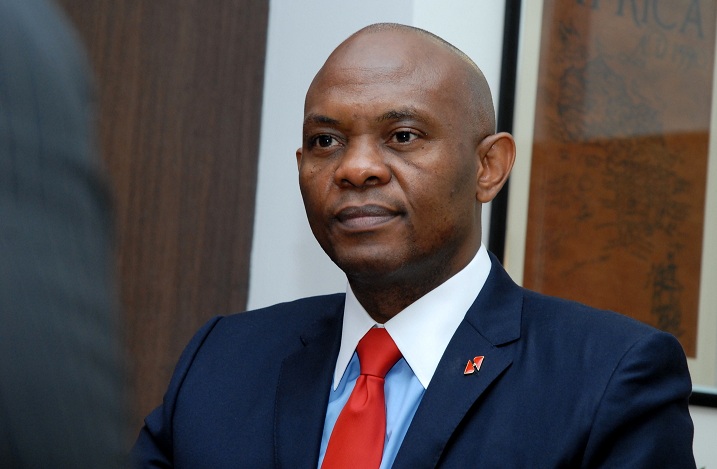
Another layer of influence comes through financial institutions controlled by major private investors such as Tony Elumelu and institutions like United Bank for Africa. Banking sector exposure to FX markets is not based on physical imports but on liquidity distribution, foreign correspondent banking flows, and trade financing.
When foreign portfolio investors enter Nigerian markets, banks intermediate inflows that temporarily increase FX supply, strengthening the naira. Conversely, when risk sentiment declines, foreign investors exit, and banks facilitate outflows that reduce FX liquidity. Because these flows are large and often concentrated in short time windows, they can produce sharp currency movements that appear disconnected from trade fundamentals.
Banks also respond to expectations. When depreciation risk increases, corporates demand more FX hedging instruments, increasing forward dollar demand. This expectation based demand can accelerate currency weakening even before actual shortages occur.
Oil revenue cycles and billionaire exposure amplification
Nigeria’s oil sector remains the foundational FX source, and billionaire exposure in this sector amplifies both upside and downside cycles. When crude prices rise, dollar inflows increase, government reserves strengthen, and private sector confidence improves. During such cycles, industrial expansion accelerates, imports increase for capital goods, and currency stability often follows due to stronger FX buffers.
When crude prices fall, as seen during global downturn phases such as 2020 pandemic disruptions, FX inflows shrink rapidly. Billionaire linked oil service companies and downstream operators experience revenue compression, leading to reduced investment appetite and increased capital preservation behavior. This shift often includes conversion of naira holdings into dollar assets, which intensifies FX pressure in parallel markets.
Market psychology and billionaire signaling effect
Beyond direct economic flows, billionaire statements and investment signals influence currency expectations. When major industrialists announce expansion projects, refinery milestones, or manufacturing investments, foreign investors interpret these as signals of structural FX improvement potential. This can attract portfolio inflows that strengthen currency sentiment.
However, when large investors publicly express concern about FX instability or operational challenges, markets often interpret this as forward looking stress, triggering precautionary dollar demand. The currency market therefore reacts not only to actual flows but also to perceived confidence among major capital holders.
Stock market channel
The Nigerian equities market acts as an indirect FX transmission mechanism. When stock valuations rise, foreign investors enter and dollar inflows increase. When valuations fall due to currency depreciation or macro instability, foreign investors exit and convert holdings back into dollars, increasing FX demand.
Because billionaire controlled firms dominate market capitalization, their stock performance influences foreign portfolio allocation decisions. Large swings in valuation can therefore create synchronized FX inflow or outflow cycles that affect naira liquidity within short timeframes.
Hedging cycles and self reinforcing currency pressure
One of the most important mechanisms in Nigeria’s FX system is anticipatory hedging. When large corporations anticipate currency depreciation, they convert naira holdings into dollars in advance. This behavior is rational at the firm level but collectively creates self reinforcing pressure at the macro level.
As more firms hedge simultaneously, FX demand increases, which validates depreciation expectations, encouraging further hedging. This cycle often accelerates currency movement beyond what trade fundamentals alone would suggest. Billionaire led firms, due to their scale, play a disproportionate role in initiating or amplifying these cycles.
Timeline based structural shifts shaping naira behavior
Between 2015 and 2016, global oil price collapse reduced Nigeria’s FX inflows significantly, triggering depreciation pressure that affected all import dependent billionaires. Between 2020 and 2021, pandemic disruptions created supply chain shocks that reduced export earnings while increasing import dependency. In 2023, currency redesign policies and FX market adjustments increased short term volatility. By 2024, partial operationalization of domestic refining capacity introduced a new structural variable that gradually reduced refined product import demand.
Each of these phases demonstrates that billionaire activity does not operate independently of macro cycles but instead amplifies the direction of movement depending on whether their operations are import intensive or export enhancing.
Final synthesis of billionaire FX influence in Nigeria
Currency movement in Nigeria ultimately reflects a balance between dollar inflow creation and dollar demand expansion, but billionaire controlled enterprises sit at the center of both forces. Industrial expansion reduces import pressure when localized successfully, while capital flight behavior and hedging increase pressure when uncertainty rises. Oil cycles, banking flows, manufacturing decisions, and energy transitions all converge through a small number of high impact corporate actors whose scale makes them macroeconomic variables in practice even if not in policy design.
The naira therefore does not move because of billionaires alone, but it moves faster and more sharply because of them whenever their decisions align with existing structural pressures in the economy.