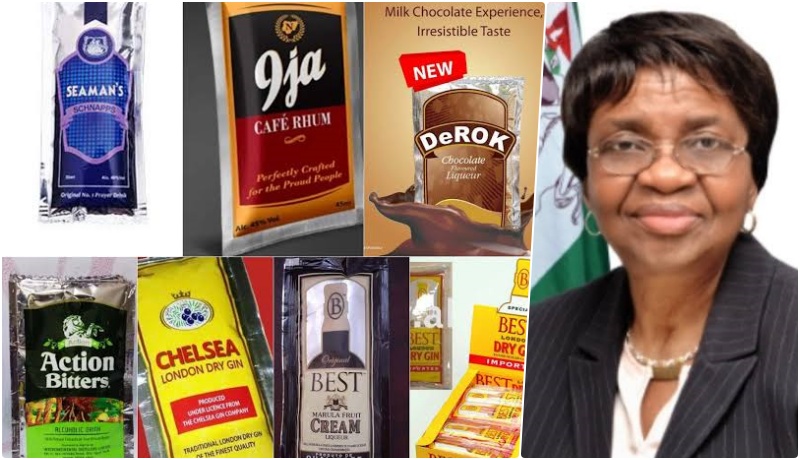
Recently, National Agency for Food, Drug Administration and Control (NAFDAC) and National Orientation Agency (NOA) launched a nationwide behavioural change campaign to enforce the ban on sachet alcohol across the 36 states and the Federal Capital Territory (FCT).
According to NOA, the move was aimed at protecting children and other vulnerable groups from the harmful effects of alcohol packaged in small, easily concealable containers.
Speaking at a joint press conference in Abuja recently, the Director-General of NOA, Mallam Lanre Issa-Onilu, said the campaign was not about restriction “for its own sake” but about safeguarding the future of young Nigerians.
In his words, “for too long, sachet alcohol has been dangerously accessible. It is inexpensive, portable and easy to conceal,” he said.
Issa-Onilu warned that in many rural and semi-urban communities, young persons found it easier to obtain high-strength alcohol than to access proper guidance and protection.
“When affordability meets vulnerability, the consequences are profound,” he added.
According to him, early exposure to alcohol increases the risk of addiction and long-term dependency, undermines education, and contributes to domestic instability, road crashes and declining productivity.
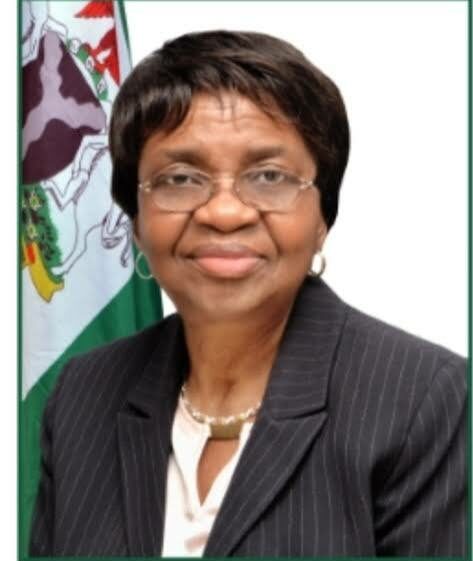
Also speaking, Director-General of NAFDAC, Professor Mojisola Adeyeye, said alcohol consumption among underage persons posed serious behavioural and social risks.
Adeyeye linked excessive alcohol intake to road crashes, risky sexual behaviour, poor academic performance, and other social challenges.
She said recent resolutions of Senate urged NAFDAC to ensure strict enforcement of the ban on sachet alcohol and alcoholic drinks in bottles below 200 millilitres.
However, despite the ban and subsequent campaign against the illicit product by both the National Orientation Agency, NOA and National Food for Drug Administration and Control, NAFDAC nothing has changed as far as the manufacturing, sale and consumption of satchet alcohol drinks is concerned.
WITHIN NIGERIA reporter who went round some popular joints in Enugu state where some young men usually come to buy and sip the product narrated that the situation has remained unchanged.
According to one of the sellers at Nsukka town who spoke to our reporter, “if anything has changed at all in this business, it is only the price of some products.
“We don’t know that Federal government has banned sale of these products. Our suppliers never told us anything about the ban. Nobody has ever come here, questioning us why we sell satchet alcohol drink.”
Explaining the seller told our reporter that ” as I speak with you, we even sell more than before. People enjoy these satchets now before because we have already entered into rainy season marked by coldness.”
However, when our reporter visited a joint at Obiagu, a slum in capital city of Enugu state, the story almost the same.
Sellers were plying their trade with no sign of restriction or embarrassment.
One of the sellers who spoke to our reporter under anonymity explained that ” I heard the news last year. This made me not to buy as much quantity as I used to. But few months after when I saw that there was any form of enforcement of the ban, I continued to purchase my normal quantity.”
Speaking further, he explained that ” it is even now that people are buying of these satchet alcohol drinks. Things are getting harder in this country and people are using it to cool their brains.”
Asked how many pieces he sells in a day, our source revealed that ” I sell more than one hundred satchet in a day. Some buy it and take it home, while many buy it and drink it here with some local meat delicacies. I only take about two satchet in a day. That’s if a friend buys for me.”
In some shops inside motor parks in Ogrute, Enugu-Ezike, Igbo-Eze North local government area, some of these banned products were conspicuously hung while many pure water hawkers.