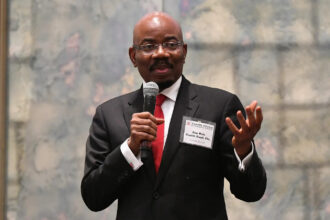
Africa’s richest man doesn’t move quietly. When Aliko Dangote makes a business trip, entire governments notice. His recent visit to Saudi Arabia, followed just days later by a formal meeting at the Saudi Ambassador’s residence in Abuja on April 24, 2026, has put the question on every financial analyst’s lips: what exactly is Dangote doing in the Kingdom, and what does he expect to get out of it?
The short answer is that this isn’t a speculative sidestep. It’s a calculated extension of the most ambitious industrial expansion plan Africa has ever seen.
The Timing Is Not a Coincidence
To understand the Aliko Dangote Saudi Arabia investment story, you have to look at where Dangote Group stands right now. The $20 billion Dangote Petroleum Refinery, the largest single-train refinery on the planet, hit 500,000 barrels per day by January 2025 and is targeting 650,000 bpd at full capacity. The refinery had already imported Saudi crude to optimise its processing mix, meaning the Saudi-Nigerian energy relationship was active before any formal investment talks began.
On top of that, the Group unveiled its Vision 2030: Supercharging Dangote Group for Long-Term Success plan in March 2026, setting a target of $100 billion in annual revenue by 2030. To get there, the plan calls for at least $40 billion in investment across two phases running from 2025 to 2030. Refinery capacity is slated to double from 650,000 bpd to 1.4 million bpd. Fertiliser production is planned to increase from 3 million tonnes per year to 12 million tonnes per year, which would make Dangote the world’s largest urea producer. Cement, rice, gas infrastructure, mining, power, everything is on the table.
That scale of expansion needs capital, technology partnerships, and guaranteed offtake markets. Saudi Arabia, it turns out, can offer all three.

What Dangote Wants from Saudi Arabia
When Dangote was in Riyadh with a Nigerian delegation and sat down with representatives of the Saudi Ministry of Investment, he made his priorities explicit. He said he was interested in the fertiliser and food industries and wanted to identify “the best areas that align with our business in Nigeria and Africa.”
That framing matters. He wasn’t looking to set up operations in Saudi Arabia as an end goal. The Saudi relationship is a feeder for Dangote Group’s broader African industrial ambitions.
Crude supply and refining partnerships: The Dangote Refinery already sources Saudi crude. A formalised supply agreement or joint venture with Saudi Aramco, which controls the world’s largest oil reserves, would give the refinery a stable, competitively priced feedstock as it expands to 1.4 million bpd. Saudi Arabia produces crude at among the lowest costs globally, and Dangote’s refinery economics improve significantly with long-term supply certainty.
Fertiliser technology and scale: Saudi Arabia’s Ma’aden is expanding phosphate production to 9 million tonnes per year through its Phosphate 3 mega-project. SABIC and Air Products are advancing blue ammonia projects in Jubail. Dangote wants to quadruple his own fertiliser output. The overlap is obvious: technology licensing, joint production, or offtake agreements in fertiliser could benefit both sides. Dangote’s African distribution network gives Saudi producers access to a continent that imports the majority of its fertiliser.
Capital from the Saudi Public Investment Fund: The PIF manages well over $700 billion in assets and has been actively hunting for African infrastructure opportunities. A sovereign wealth fund stake in Dangote’s refinery or petrochemical expansion, ahead of a potential Dangote Petroleum Refinery IPO, would be exactly the kind of deal both sides have reason to pursue.
Petrochemical alignment: Saudi Arabia is the fourth-largest petrochemicals producer globally, with SABIC’s revenues exceeding $40 billion annually. Dangote’s refinery is already scaling polypropylene output, targeting 2.4 million metric tonnes per year under its partnership with Honeywell. Saudi expertise in petrochemicals, and Saudi demand for new export markets aligns with what Dangote is building in Lekki.
What Saudi Arabia Wants from Dangote
This isn’t a one-directional courtship. Saudi investors have been eyeing Nigeria’s scale, Africa’s largest economy, 220 million people, chronically undersupplied in refined fuels, food, and industrial inputs, for years. Under Vision 2030, the Kingdom is aggressively diversifying away from oil dependence, and that means finding new markets and investment frontiers.
Ambassador Yousef Al-Balawi said it plainly after the April meeting: the discussions highlighted “investment openings within Dangote’s companies that may be of interest to Saudi investors.” The Dangote Group’s cement business alone operates across multiple African countries. Its fertiliser plant in Lagos is the largest in sub-Saharan Africa. The refinery, once listed, will attract institutional capital from across the Gulf.
Saudi Arabia imports over 80% of its food. A partnership with the world’s would-be largest urea producer, who also controls distribution across the continent that holds 60% of the world’s uncultivated arable land, is not peripheral to Saudi food security, it’s central to it.
The Business Strategy in Plain Terms
Strip away the diplomatic language, and the Dangote Saudi Arabia investment strategy is built on four pillars.
Supply security. Lock in long-term Saudi crude at favourable rates to feed an expanding refinery that will be processing 1.4 million barrels per day by 2028.
Technology transfer. Saudi Arabia’s petrochemical and fertiliser sectors run on world-class process technology. Dangote needs that expertise to scale production fast enough to meet his 2030 targets.
Capital access. The Saudi PIF and private Gulf investors represent a pool of patient capital that has few equivalents. An equity stake in Dangote’s refinery or fertiliser business gives them exposure to Africa’s industrial growth story at a stage before an IPO.
Market access, both ways. Saudi exports gain entry to African markets through Dangote’s distribution infrastructure. Dangote’s refined products and fertilisers gain credibility and potential offtake commitments from Gulf buyers.
Expected Returns: What Both Sides Stand to Gain
Nigeria’s fuel imports dropped to 3.1 million tonnes in Q1 2025, down from levels that once made it Africa’s top fuel importer, as the Dangote refinery ramped up. Petrol prices at Nigerian depots fell over 13% in the first months of 2025. That’s a market where demand is enormous and local supply was, until recently, almost nonexistent.
Dangote’s own projections put annual foreign exchange earnings from polypropylene and fertiliser exports at roughly $6.4 billion. If Saudi capital helps Dangote double refinery output and quadruple fertiliser production on schedule, those earnings could be substantially higher. For a Gulf investor used to oil price volatility, a stake in a refinery-to-consumer business serving 1.4 billion Africans looks like a diversifier worth having.
For Nigeria, the strategic returns go beyond any single deal. Every barrel of crude imported from Saudi Arabia rather than spot markets, every tonne of fertiliser produced locally rather than shipped from abroad, every joint venture that pulls Gulf capital into Nigerian manufacturing, each of these compresses the forex demand and import dependence that has been squeezing the Nigerian economy for decades.

The Bigger Picture
Dangote has been clear about his philosophy for years: he studied Brazil’s industrialisation model in the 1990s, saw what domestic manufacturing could do for a large developing economy, and rebuilt his business around it. The Saudi engagement is the same logic applied at a different scale and across borders. He’s not trying to become a Saudi industrialist. He’s trying to use Saudi partnerships, capital, crude, technology, and markets to finish building the industrial infrastructure that Africa’s largest economy still lacks.
The question of whether these talks produce binding agreements or remain in the warm-language stage of “growing momentum” will depend on specifics that haven’t been made public. What’s clear is that the conversations are serious, they’re bilateral, and they’re happening at the level of ambassadors and ministry officials on both sides.
At 69, with a $28 billion net worth and the most ambitious expansion plan in African business history on the table, Dangote is not making exploratory visits for the sake of it. When Africa’s richest man sits down with the Saudi Ministry of Investment, he already knows what he wants.