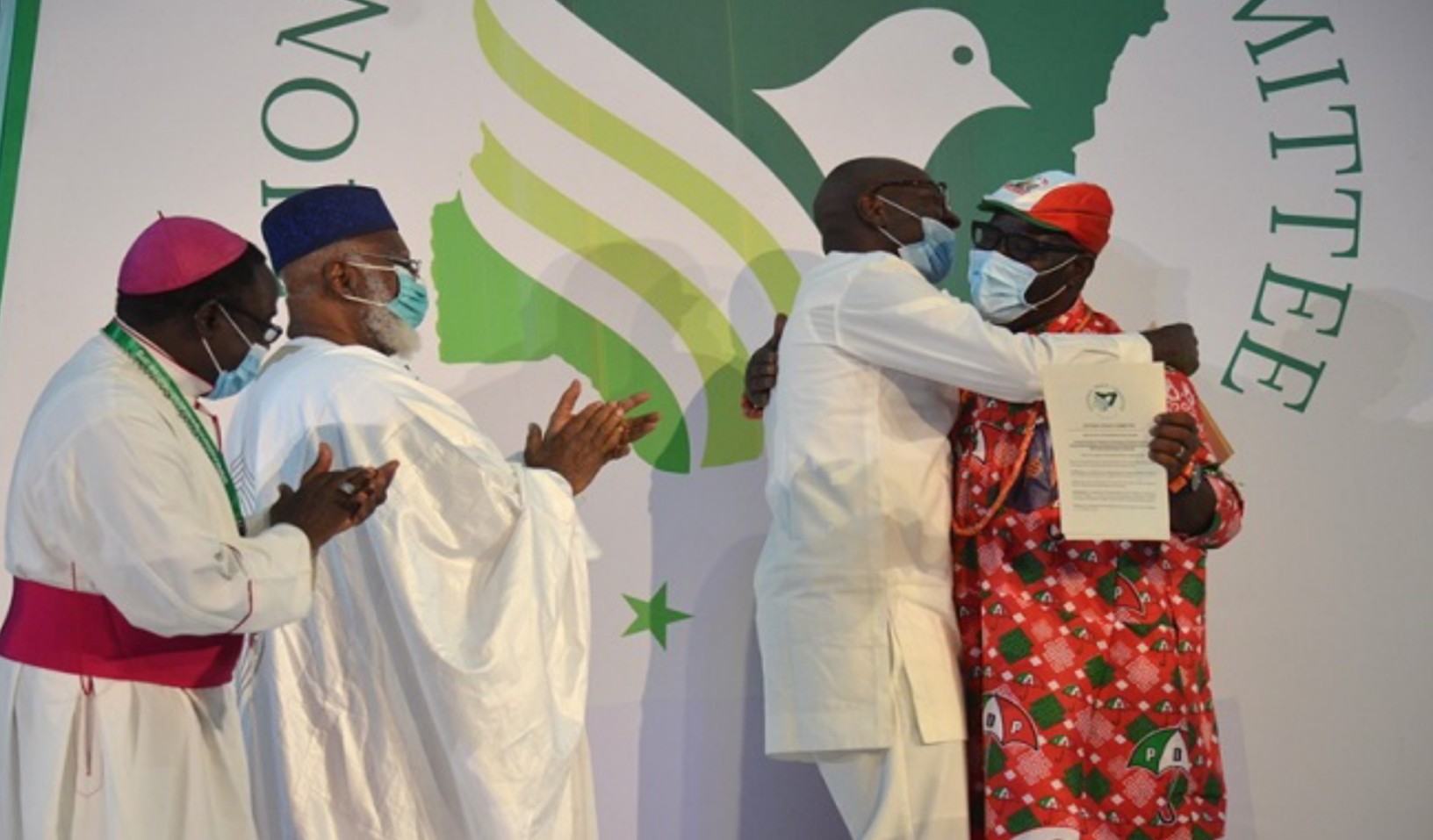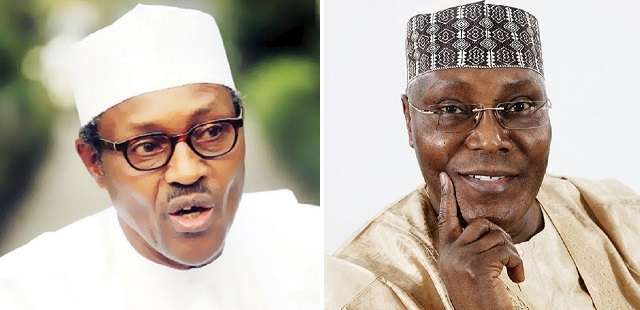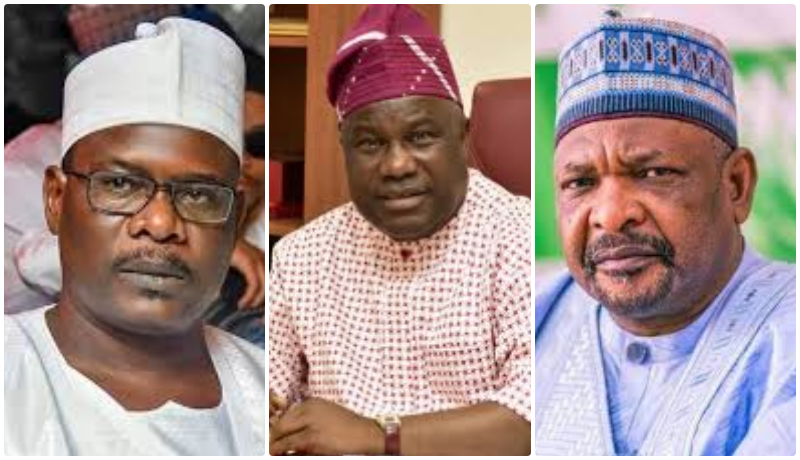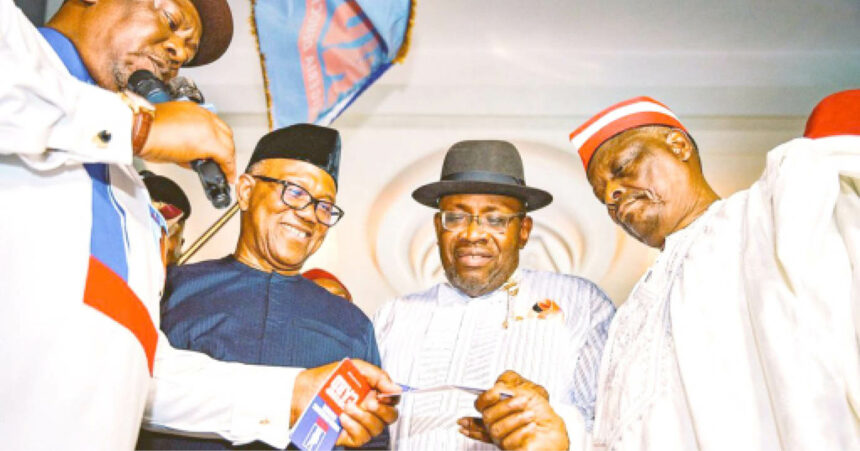
The recent movement of former presidential candidates, Peter Obi and Rabiu Musa Kwankwaso, into the Nigeria Democratic Congress (NDC) has intensified political discussions ahead of the 2027 general elections.
Their defection has also renewed debate over whether Nigeria’s opposition landscape may be entering another phase after years of dominance by a limited number of parties.
Since Nigeria’s return to democratic rule in 1999, presidential contests have largely revolved around two major political blocs despite the existence of several registered parties.
In recent months, however, many opposition parties have struggled with internal disputes, leadership disagreements, and organisational instability ahead of preparations for the next election cycle.
The prolonged crises affecting parties such as the Peoples Democratic Party, Labour Party, New Nigeria Peoples Party, African Democratic Congress and Social Democratic Party had raised concerns over the strength of opposition politics in the country.
Political observers say the emergence of the NDC has altered conversations around opposition realignment and coalition building.
The PDP, which governed Nigeria between 1999 and 2015, retained its status as the leading opposition party for several years after leaving power.
Its influence, however, began to weaken as politicians from both the ruling and opposition camps sought alternative political platforms.
Following the 2023 elections, the Labour Party gained increased national attention, while the NNPP also expanded its political relevance in parts of northern Nigeria.
The political environment later shifted again when influential politicians, including former Kaduna State governor, Nasir El-Rufai, became associated with newer political alignments outside the traditional structures.
The entry of prominent politicians into the NDC has further strengthened perceptions that the party may seek to position itself as another national opposition platform.
The Deputy National Publicity Secretary of the NDC, Abdulmumini Ohiare Abdulsalam, said the arrival of Obi and Kwankwaso represented the beginning of broader political expansion for the party.
“We have been expecting them, and their arrival is a plus for our party because they have the numbers,” Abdulsalam said.
“They both lead movements that appeal to the youth, women, and the larger society,” he added.
A national leader of the party, Senator Henry Seriake Dickson, also described the development as part of efforts to build a wider political movement.
“What we are witnessing is a powerful convergence: my role as a party organiser and builder, alongside two political heavyweights with immense grassroots support, popularity and political experience, as well as several other leaders in their own right across the country, all coming together under one platform,” Dickson stated.
He further said the objective was to establish a political structure with strong ideological identity comparable to notable parties across the world.
As the NDC gained public attention, questions also emerged regarding the circumstances surrounding its registration by the Independent National Electoral Commission.
A chieftain of the All Democratic Alliance, Umar Ardo, alleged that the NDC was not among the political associations initially shortlisted during the registration process.
“The NDC did not apply or participate in the registration process. The party was nowhere to be found,” Ardo claimed.
INEC sources, however, maintained that the registration followed a subsisting court order issued by the Federal High Court sitting in Lokoja, Kogi State.
According to the commission, the court directed that the NDC be formally registered as a political party.
Abdulsalam also stated that the NDC’s registration process dated back to 2017 before the temporary suspension of new party registrations by INEC.
He explained that a previous disagreement concerning the party’s logo had already been resolved through the courts in favour of the NDC.
The party has continued to record activities across several states through congresses, leadership elections, and defections from other political parties.
In Adamawa State, the NDC elected a 33-member executive committee to oversee the party’s affairs for the next three years.
In Cross River State, former Inter-Party Advisory Council chairman, Goddie Akpama, emerged as the NDC chairman through a consensus arrangement monitored by INEC officials.
The party has also witnessed defections in Bayelsa State involving former members of the APC, PDP, and APGA.
A political analyst, Professor Abubakar Kari, said the movement of Obi and Kwankwaso into another political platform could reshape opposition calculations ahead of 2027.
“Well, a lot of things have been said about this thing. But for me, first and foremost, what happened was not unexpected,” Kari said.
He noted that the ambitions of leading opposition figures may continue to influence coalition discussions before the next presidential election.
“Their goal of displacing Tinubu and the APC has become more difficult now. Because if you share your votes, if you divide your votes, it’s not the same thing as if you pool all your resources together and fight,” he said.
The evolving political alignments have continued to generate debate over whether the NDC can transform from a growing platform into a nationally competitive opposition force before 2027.