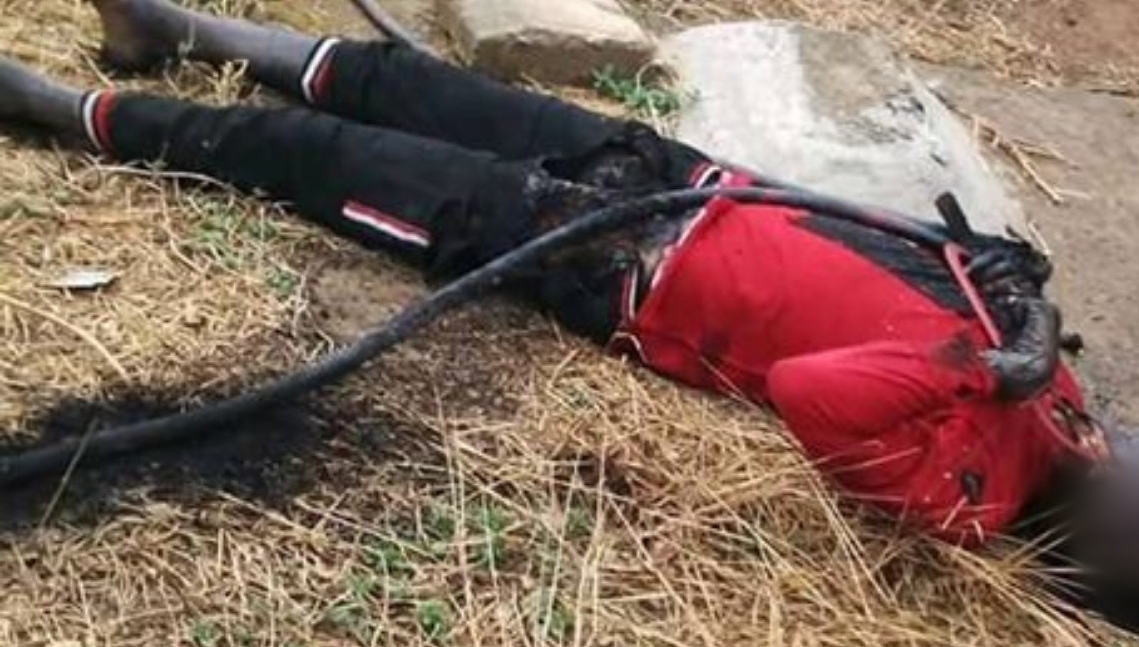
An unusual shift quietly unfolded on a university campus in Owerri recently, a shift that did not announce itself with warning sirens or official statements at first. It began with a student, a routine accusation, a familiar disciplinary response that many had seen before, yet this time the outcome refused to follow the expected pattern. Within hours, whispers moved faster than authority could respond, and what looked like another campus misunderstanding began to take on a heavier meaning that students could not ignore.
The atmosphere inside the Federal University of Technology Owerri, known widely as Federal University of Technology Owerri, did not remain still for long, as questions began to circulate around how a structured student discipline group could be connected to a death that now demanded answers. At the center of those questions stood Man O War Nigeria, a campus based security styled formation that operates under national supervision but is often seen through a different lens by students who interact with it daily. What unfolded next was not just about one incident, but about how structure, authority, and discipline collide inside Nigerian universities when boundaries are tested beyond their limits.
As the story unfolded across hours and days, it became clear that this was not a simple case that could be summarized in passing statements or reduced to campus rumor. It involved layers of command, decisions made under pressure, and a system that connects university units to national oversight bodies such as the Citizenship and Leadership Training Centre, formally known as Citizenship and Leadership Training Centre. Yet even with this structure in place, what happened raised a deeper question that students, officials, and observers could not easily dismiss. How does a system designed for discipline and leadership training become the center of a controversy involving a student death inside a federal university environment?.
Background Structure of Man O War in Universities
Man O War units in Nigerian universities operate as structured student formations built around discipline, leadership training, and campus assistance roles. At the university level, these units function under defined leadership positions that mirror paramilitary organization, with command authority resting on appointed student officers and supervising coordinators. Their presence is often justified as part of leadership development and campus order support, especially during large gatherings and institutional events.
The internal structure is layered, beginning with a campus commandant who oversees operations, supported by officers responsible for training, administration, operations, and coordination. Below this leadership tier are cadet ranks that students earn through participation in drills, consistency in training, and demonstration of discipline over time. These ranks are not merely symbolic within the unit, as they influence access to responsibilities and participation in operational activities within the campus environment.
Although these units exist within universities, they are linked to broader coordination systems that connect state commands and national leadership structures. This creates a chain of oversight that is intended to regulate conduct, training standards, and operational boundaries. However, the reality on some campuses often reveals gaps between policy design and field practice, especially when student led enforcement becomes involved in sensitive disciplinary situations involving peers.
Federal University of Technology Owerri Context
The Federal University of Technology Owerri, known as Federal University of Technology Owerri, has long maintained student organizations that support campus order and extracurricular discipline activities. Within this environment, Man O War presence has been visible through drills, campus assistance roles, and participation in structured training programs involving students from different departments. These activities are generally framed as part of leadership cultivation and discipline reinforcement within the student community.
Over time, however, the perception of such groups has evolved among students, especially when disciplinary actions extend beyond training spaces into hostel environments or informal enforcement situations. While official frameworks emphasize supervision and coordination, lived experiences on campus often reveal moments where boundaries become less clear. It is within this context that the events leading up to the incident on 31 May 2026 began to unfold, setting the stage for a situation that would soon draw widespread attention.
Sequence of Events Before Incident
Reports surrounding the events prior to the incident suggest that the situation began with an accusation involving a financial discrepancy of 13,000 naira. The allegation reportedly involved a 100 level student, Chinedu Chibuzor Christogonus, who was later identified within campus discussions as a participant in the Man O War system himself. The response to the accusation followed a familiar campus pattern where internal discipline mechanisms were activated to address misconduct claims.

What makes the sequence significant is not only the accusation but the decision to move the student into a controlled disciplinary setting for questioning. Within that environment, accounts suggest that interrogation escalated into physical restraint, a detail that has become central to ongoing investigations. The timeline indicates that this escalation occurred rapidly, leaving little room for external oversight before the situation intensified.
As hours progressed, the atmosphere around the disciplinary process reportedly became more tense, with students later describing a shift from routine questioning to a more forceful handling of the accused individual. It is within this narrowing space between discipline and enforcement that the foundation of the controversy began to take shape, setting off a chain of events that would soon extend beyond campus walls.
Detention Allegations Timeline
Allegations surrounding the detention process describe a scenario where the student was restrained during questioning after being accused of financial misconduct. Accounts circulating within the campus community suggest that physical force was applied during the process, although official confirmation of specific actions remains under investigation. The timeline places these events shortly before the student became unresponsive while still within custody.
What stands out in the sequence is the speed at which the situation escalated from accusation to detention to medical emergency. Witness narratives indicate that the student was not immediately released or transferred during the critical moments when his condition began to deteriorate. Instead, attention appears to have shifted only after visible signs of distress became apparent, prompting a delayed response that is now under scrutiny.
The absence of clear external intervention during this period has become a focal point of concern, particularly regarding whether established procedures for handling disciplinary cases were followed. As investigations continue, the timeline remains a critical element in understanding how control mechanisms within student led structures function under pressure.
Medical Response Collapse Account
Medical accounts emerging from the incident suggest that the student became unresponsive while still within the custody environment. Reports indicate that attempts were made to move him to a medical facility after his condition worsened, but the delay between collapse and treatment has become a significant point of inquiry. The confirmation of death at the hospital intensified the urgency of questions surrounding the handling of the situation.
The exact cause of the medical collapse has not been publicly finalized, as autopsy and forensic examinations remain part of ongoing investigations. However, preliminary accounts have placed emphasis on physical distress observed prior to the transfer. This has led investigators to examine whether timely medical intervention could have altered the outcome or whether critical delays contributed to the fatal result.
The medical dimension of the case now sits alongside disciplinary questions, creating a dual focus for authorities who must determine both cause of death and procedural responsibility. Within the university community, this aspect has deepened emotional reactions, as students attempt to reconcile familiar campus structures with an outcome that escalated beyond expectation.
Police Action Arrests Update
Following the incident, the Imo State Police Command confirmed that arrests were made in connection with the case. Three individuals linked to the campus Man O War structure were taken into custody as part of initial investigative steps. The case was subsequently transferred to the State Criminal Investigation Department for deeper forensic and procedural review.
Authorities have indicated that evidence collection is ongoing, with attention placed on understanding the exact sequence of actions that led to the student’s death. Investigators are also reviewing communication lines within the disciplinary structure to determine who authorized specific actions during the detention process. Additional arrests have not been ruled out as the investigation continues to expand.
The police response has been framed around establishing clarity rather than immediate conclusions, reflecting the complexity of the situation and the need for verified findings before final determinations are made. This approach has kept the case active within public discussion, as updates continue to emerge from official channels.
Campus Reaction Protest Wave
The reaction within Federal University of Technology Owerri was swift, with students organizing protests following confirmation of the death. Demonstrations spread across key areas of the campus, reflecting a mix of grief, anger, and demand for accountability. The protests were directed not only at the incident itself but also at the broader system that allowed the situation to escalate.
During the unrest, reports indicated that properties linked to campus disciplinary formations were affected, as tensions rose among students who viewed the incident as a failure of oversight. The university administration later moved to restore calm, while discussions around suspension of related activities began to circulate within institutional channels.
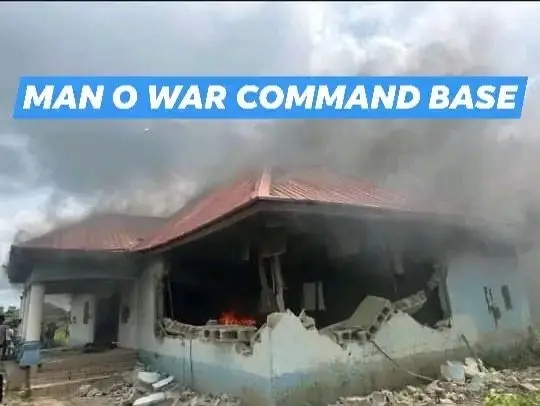
The protest wave reflected more than immediate reaction, as it exposed underlying concerns about how authority is exercised within student organizations that operate under structured but loosely enforced boundaries. As calm gradually returned, the emotional weight of the incident continued to shape conversations across campus spaces.
Governance Oversight Gap in Student Security Units
The structure of Man O War Nigeria within universities is designed to function under coordinated oversight from national leadership systems, yet implementation often varies across campuses. This gap between structure and practice has become central to understanding how disciplinary actions can escalate without timely intervention from higher supervisory bodies.
While the system is intended to support leadership training and campus order, its reliance on student participation introduces variables that can affect consistency in enforcement standards. Supervision mechanisms exist, but their effectiveness depends heavily on communication flow between university units and external command structures. When that flow is disrupted, accountability pathways become less immediate.
This structural gap does not imply absence of regulation, but rather highlights the challenges of maintaining uniform discipline across multiple institutions with varying internal cultures. The incident at Federal University of Technology Owerri has therefore become a reference point for examining how such gaps manifest under real pressure.
Legal Questions Under Investigation
Legal scrutiny surrounding the case focuses on whether the detention of the student followed lawful disciplinary procedures or whether it crossed into unauthorized physical restraint. Investigators are also examining whether the level of force applied during the incident exceeded acceptable boundaries for student based disciplinary action.
Another key question involves responsibility allocation within the command structure, particularly who authorized the detention and how decisions were communicated during the process. The timing of medical response is also under review, as authorities assess whether delays contributed to the fatal outcome.
These legal considerations are central to the ongoing investigation, as they determine whether the case is categorized as negligence, misconduct, or criminal action. The absence of final forensic conclusions means that legal interpretation remains open pending official findings.
Broader Implications for Nigerian Campuses
The incident has expanded discussion beyond a single university, raising questions about how student discipline systems operate across Nigerian campuses. Institutions that maintain similar structures are now facing renewed attention regarding oversight, training standards, and limits of authority within student organizations.
At the core of this broader conversation is the balance between leadership development and safety enforcement, especially when students are placed in positions that involve disciplinary responsibilities. The case has highlighted how quickly structured systems can become points of controversy when boundaries are not clearly enforced or monitored.
As debates continue, universities are being urged to reassess internal frameworks that govern student led security and disciplinary groups. The outcome of the investigation at Federal University of Technology Owerri is expected to influence future policy discussions across similar institutions.
Current Status of Investigation
The investigation remains active, with three suspects currently in custody and forensic examinations ongoing. Authorities continue to gather statements, review evidence, and reconstruct the sequence of events leading to the student’s death on 31 May 2026. No final determination has been released regarding the official cause of death.
Campus activities have largely stabilized following initial unrest, though discussions among students and stakeholders remain ongoing. The university community continues to await clarity as legal and medical processes progress through official channels.
The case now stands as an open investigation with multiple layers still under review, leaving unanswered questions at the center of public attention as authorities work toward a final conclusion that will determine accountability and structural review outcomes.