At a relatively busy kiosk in Garki, Enugu, Enugu state, more than a dozen customers queue to buy one thing or the other.
However, majority of them are there to buy satchet water, a common pre-filled drinking water packaged on a transparent satchet. At the same time, other residents are also there to buy bottled water which majority see as a mark of cleanliness and aristocratic disposition.
In any case, WITHIN NIGERIA gathered that whether at home, on the road or at public events, sachet water has gradually become the most easily accessible, affordable and reliable source of drinking water for millions of Nigerians.
It is also an open secret that for the affluent, bottled water is more than just convenience but represents status and sanitary assurance.
However, both source of drinking water has become a reliable source of water especially on the transit and even at home.
More convenient as these sources of water are, what has become so much worrisome to the citizens and indeed the environmental experts is how these bottles and satchet used to package them are being disposed.
By and large, as the world marks World Environment Day 2026 today WITHIN NIGERIA takes a deep look into the environmental effects of this new found life style in the country.
With the theme, “Inspired by Nature. For Climate. For Our Future,” our reporter gathered that the focus is on clean water, pollution reduction, and sustainable consumption systems.
There is no gainsaying the fact that millions of Nigerians still struggle to access safe drinking water, even at this 21st century.
It is as a result of this yawning gap that the satchet water and bottle water have come handy to bridge the gap.
As the owners of such business continue to cash in on the millions of Nigerians, the environment has also continued to suffer.
The industry has continued to evolve into a multi-billion-dollar industry and an environmental challenge, measured not only in litres consumed but also by tonnes of plastic produced and discarded in form of waste.
The Nigeria booming bottled and satchet water
According to findings, Nigeria consumes an estimated 13.7 million sachets of water daily, amounting to more than 2.5 billion litres annually.
WITHIN NIGERIA gathered that according to the National Environmental Standards and Regulations Enforcement Agency (NESREA), this is also a huge environmental challenge to the country in general and the industry in particular.
Findings also show that the bottled water sector is expanding rapidly, as per capita bottled water consumption reached alarming 26.54 litres in 2025. Demand is expected to rise further, as
Nigeria’s estimated 223 million population is projected to approach 400 million by 2050.
Environmental effects of the waste
The environmental effects of Sachet water (“pure water”) waste are indeed enormous and severe.
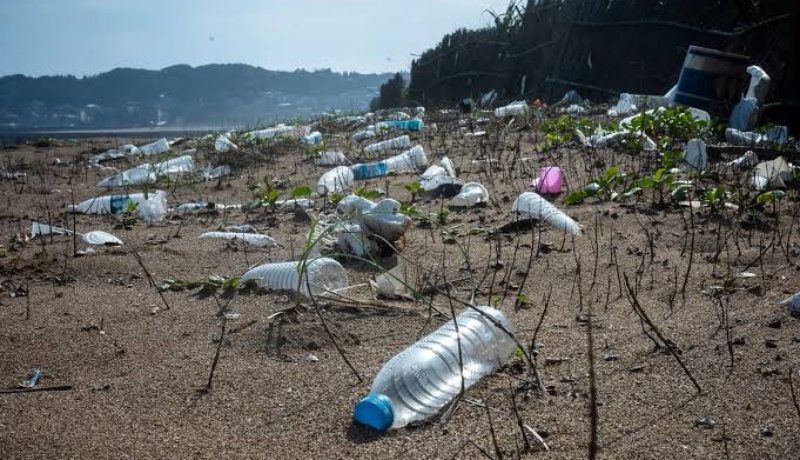
For the fact that these plastic sachets are non-biodegradable and improperly disposed of, they accumulate in communities, and indeed towns were waste are not properly managed, leading to blocked drainage systems.
The increasing incident of widespread flooding, soil degradation, and the contamination of aquatic ecosystems in Nigeria owe their sources to satchet and bottled water waste disposal.
Drainage Blockage and Flooding:
Beyond contamination and soil degradation, indiscriminately discarded sachets easily find their way into gutters and drainage channels. They mat together to form solid barriers that clog waterways, thereby increasing the risk of urban flooding and structural damage during the rainy season as we usually see today in Nigeria.
Soil and Land Degradation:
Polyethylene sachets and bottled water container are non-biodegradable. When not properly discarded or openly discarded on the land or buried in shallow landfills, they smother the soil, prevent water percolation, and trap heat, which severely disrupts the natural soil biophysical properties and microbial activity required for agriculture.
Environmental Pollution
Many a time, exposure to sunlight and physical weathering causes the plastic to break down into smaller fragments called microplastics rather than decomposing.
These particles in turn enter local water bodies, negatively impacting water quality and potentially entering the food chain when consumed by aquatic life.
Public Health Hazards
It is also discovered that clogged, stagnant drains created by plastic waste act as ideal breeding grounds for mosquitoes and other disease vectors, exacerbating the prevalence of illnesses like malaria.
Threat to Wildlife and Livestock
Stray animals frequently mistake empty sachets for food. Ingesting the non-digestible plastic leads to intestinal blockages, starvation, and fatalities in livestock and local wildlife.
Emissions from Incineration
Open burning—a common disposal method used to reduce the sheer volume of plastic waste—releases toxic emissions, including oxides of carbon, nitrogen, and sulfur, which degrade local air quality and contribute to greenhouse gas accumulation.